

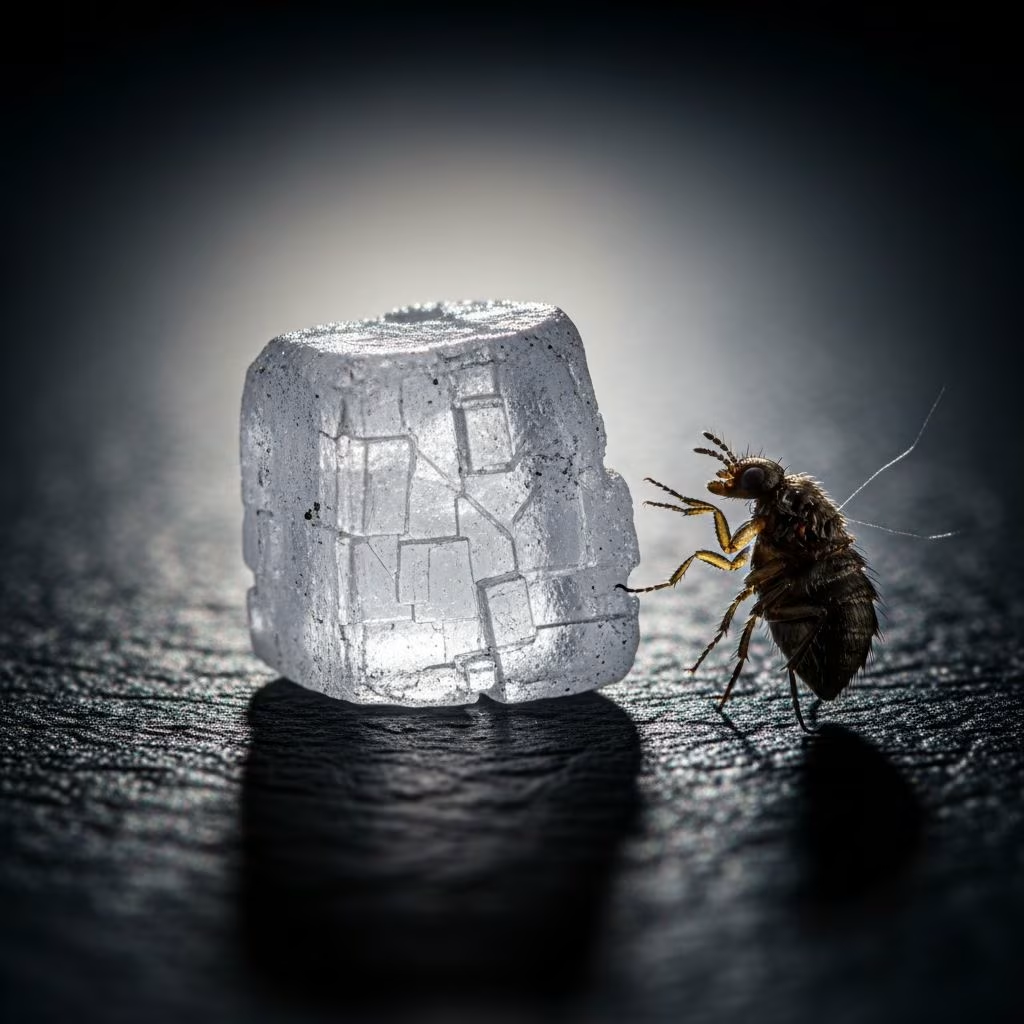
Fleas pose a significant challenge for pet owners, infesting homes and causing discomfort to animals and humans alike. Many seek natural solutions, leading to questions about everyday items like salt. Salt can dehydrate fleas, acting as a desiccant to draw out moisture from their bodies, potentially killing adults and larvae, but its overall effectiveness is limited, especially against eggs and pupae.
Understanding the Flea Life Cycle and Salt’s Role
To grasp why salt has mixed results, consider the flea’s four-stage life cycle: egg, larva, pupa, and adult. Adults, which comprise less than 5% of an infestation, live on hosts like pets, while eggs and larvae thrive in environments such as carpets and bedding. Salt works best on larvae by penetrating their softer exoskeletons and absorbing vital moisture, leading to desiccation and death. However, flea eggs possess protective coatings that resist salt penetration, and pupae encase themselves in resilient cocoons, rendering salt largely ineffective against these stages.
This incomplete coverage means salt alone cannot break the flea reproduction cycle. For instance, while adult fleas may succumb to dehydration upon contact, untreated eggs hatch into larvae days later, perpetuating the problem. Environmental factors like humidity in carpet fibers further diminish salt’s impact indoors, as high moisture levels counteract its drying effect.
How Salt Dehydrates Fleas: The Science Explained
Salt, particularly fine table or sea salt, functions as a desiccant due to its hygroscopic properties—it pulls water from surrounding environments. When fleas encounter salt crystals, the sodium chloride penetrates their exoskeleton, disrupting osmotic balance and causing fatal dehydration. Some anecdotal reports suggest salt crystals may also abrade flea cuticles, exacerbating fluid loss, though this mechanism lacks robust scientific backing.
Comparisons to diatomaceous earth (DE) are common but misguided. DE’s amorphous silica structure creates microscopic cuts for superior desiccation, whereas salt’s crystalline form is less efficient and potentially messier. Studies from early 1900s agricultural extensions recommended salt outdoors, combined with water to form brine that evaporates and desiccates soil-dwelling fleas, but this approach is impractical for indoor settings.
| Flea Stage | Salt Effectiveness | Reason |
|---|---|---|
| Adult | Moderate | Direct contact dehydrates; lives on host, hard to target environmentally |
| Larva | High | Soft body vulnerable to moisture loss |
| Egg | Low | Protective shell blocks penetration |
| Pupa | Very Low | Cocoon shields from desiccants |
Safe Application Methods for Home and Pets
Despite limitations, salt offers a low-cost starting point when used correctly. For environmental treatment, sprinkle a thin layer of fine, food-grade salt over carpets, rugs, and pet resting areas. Allow it to sit for 24-48 hours—or up to a week per some tips—then vacuum thoroughly to remove dead fleas and residue. Repeat weekly alongside regular vacuuming to target emerging larvae.
- Preparation: Use finely ground salt for better penetration; avoid iodized varieties with additives.
- Application: Apply lightly to prevent clumping; focus on high-traffic zones.
- Post-Treatment: Vacuum daily, disposing of bags outdoors to prevent re-infestation.
On pets, a diluted saltwater bath can help. Mix one cup of salt in one liter of lukewarm water, sponge affected areas like the belly and ears, wait a few minutes, then rinse. Repeat every 10-14 days, watching for skin irritation. Never use undiluted salt directly on pets, as it risks dryness, salt toxicity, or ingestion hazards.
Potential Risks and Drawbacks of Salt Treatments
Salt’s affordability comes with caveats. Indoors, it creates mess, potentially staining fabrics or corroding surfaces. Overuse on pets may dry skin, leading to itching or allergies, and large ingestions pose toxicity risks like electrolyte imbalances. PetMD warns that quantities needed for eggs and larvae often exceed safe levels for dogs and cats.
Moreover, salt fails as a standalone solution. It ignores hidden eggs in cracks or furniture, offering only temporary relief. High indoor humidity neutralizes its desiccant action, and wet methods (e.g., saltwater sprays) risk mold growth in carpets. Professional assessments note inconsistent results compared to targeted insecticides.
Superior Alternatives and Integrated Flea Management
For comprehensive control, integrate salt with proven methods. Veterinary-approved topicals, orals like spinosad, or collars target all life stages on pets. Environmentally, steam cleaning kills 100% of fleas and eggs via heat, while insect growth regulators (IGRs) prevent maturation.
- Flea Combs: Mechanically remove adults; drown in soapy water.
- Baking Soda: Absorbs moisture similarly to salt; vacuum after 24 hours.
- Dawn Dish Soap Baths: Suffocates fleas on contact; rinse well.
- Botanicals: Pyrethrins or citrus extracts from reliable sources.
Texas A&M AgriLife Extension emphasizes vacuuming as the foundation, removing 95% of eggs and larvae daily. Combine with pet treatments for 4-6 weeks to cover pupal emergence.
Preventing Flea Reinfestation Long-Term
Proactive measures trump reactive treatments. Bathe pets monthly, wash bedding weekly in hot water, and mow lawns to expose outdoor fleas to sunlight. Year-round preventives like fipronil reduce host attraction. Regular inspections of pets and yards catch issues early.
In multi-pet homes, treat all animals simultaneously. Seal cracks and use DE outdoors cautiously, as it outperforms salt without toxicity risks. Monitor with flea traps to gauge population drops.
FAQs on Salt and Flea Control
Does table salt work better than sea salt?
Both dehydrate similarly; fine table salt penetrates better, but food-grade sea salt is gentler on pets.
How long does salt take to kill fleas?
Effects begin within hours via dehydration, but full results require 24-48 hours of exposure.
Is salt safe for puppies or kittens?
Use diluted baths sparingly; consult a vet first, as young animals are more sensitive to irritation.
Can I mix salt with vinegar for fleas?
No evidence supports this; stick to proven dilutions to avoid skin reactions.
Why didn’t salt work in my home?
Likely due to eggs/pupae survival, humidity, or incomplete coverage—pair with IGRs.
In summary, while salt provides modest flea control through dehydration, its limitations necessitate a multi-faceted approach for eradication. Prioritize pet-safe, vet-recommended products alongside environmental sanitation for optimal results.
References
- Does Table Salt Kill Fleas? — C andor Pest Control. 2023-05-15. https://candorpestcontrol.com/blog/does-table-salt-kill-fleas/
- Does Salt Kill Fleas? — FleaScience. 2022-11-10. https://fleascience.com/flea-encyclopedia/life-cycle-of-fleas/adult-fleas/how-to-kill-fleas/does-salt-kill-fleas/
- Does Salt Kill Fleas? — Native Pest Management. 2024-10-15. https://www.nativepestmanagement.com/blog/2024/october/does-salt-kill-fleas-/
- Pest Control Tips: Using Salt to Kill Fleas — YouTube (eHowGarden). 2009-02-28. https://www.youtube.com/watch?v=PlwRzEzWxFw
- 11 Home Remedies for Fleas and Ticks That Actually Don’t Work — PetMD. 2023-07-20. https://www.petmd.com/parasites/flea-and-tick-treatments-that-dont-work
- Controlling Fleas — Texas A&M AgriLife Extension Service (.edu). 2024-01-12. https://agrilifeextension.tamu.edu/library/insects/controlling-fleas/



