

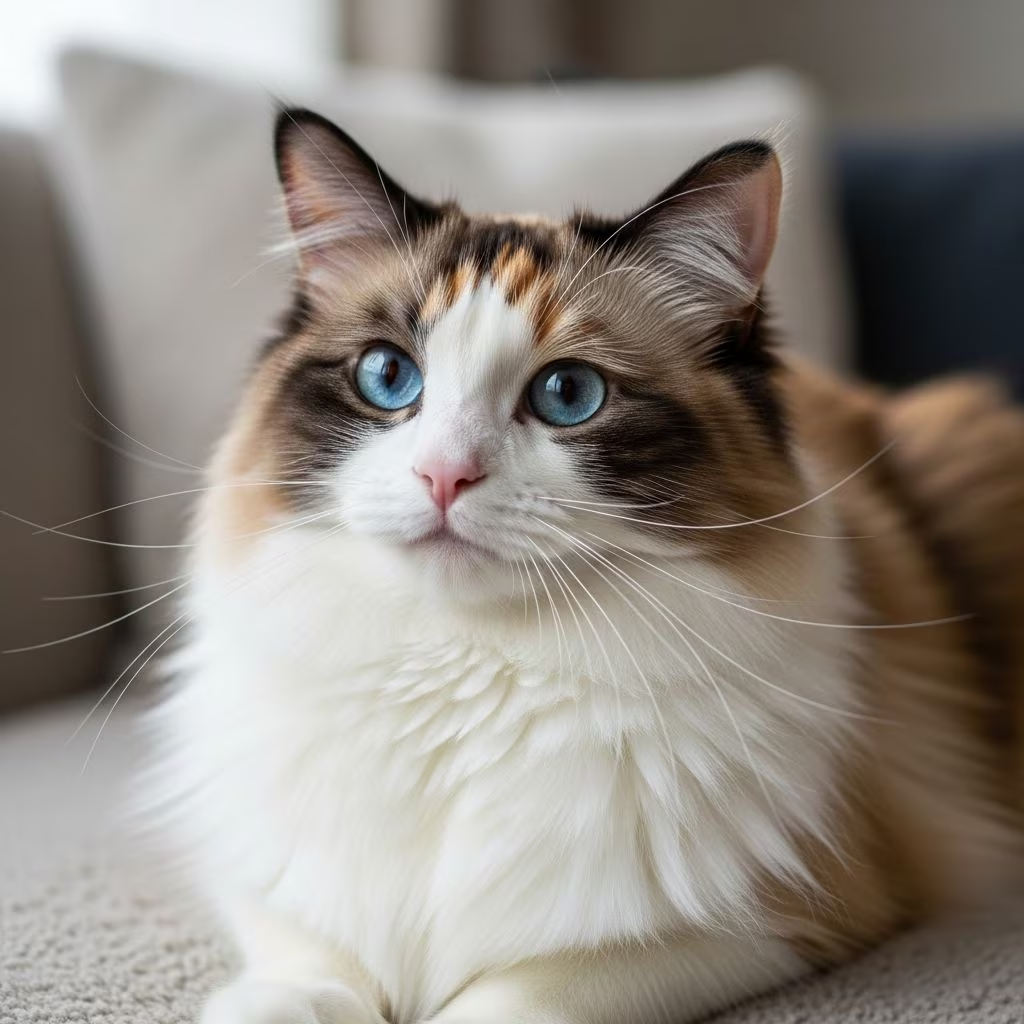
Ragdoll cats cannot have true calico coats due to their strict colorpoint genetics, which limit pigmentation to cooler body areas while mandating vivid blue eyes—a combination incompatible with the random tri-color patches defining calicos.
The Allure of Ragdoll Cats: A Breed Overview
Ragdolls stand out as one of the most beloved domestic cat breeds, renowned for their striking appearance and exceptionally gentle dispositions. Originating from the United States in the 1960s, these cats were selectively bred for traits that make them ideal companions in family settings. Their name derives from a unique behavior: when lifted, they often relax completely, going limp like a child’s ragdoll toy. This docility stems from early handling by their mother, fostering a lifelong trust in humans.
Physically, Ragdolls are large and muscular, with males typically weighing 12-20 pounds and females 8-15 pounds. They possess semi-long, plush coats that feel silky without an undercoat, reducing matting and shedding compared to other longhairs. Their heads are broad with medium-sized ears tilted forward, and their bodies form a rectangular shape supported by substantial boning. Most notably, all purebred Ragdolls feature large, oval blue eyes that convey an air of perpetual curiosity and calm.
Beyond looks, Ragdolls excel in temperament. They are affectionate without being clingy, often following owners room-to-room like loyal dogs. These cats thrive in multi-pet households and with children, rarely showing aggression or using claws during play. Their moderate activity level means they enjoy interactive toys and short bursts of vigorous play but prefer lounging nearby. Trainable traits include fetching and responding to calls, making them engaging pets for all ages.
Decoding Cat Coat Genetics: The Science Behind Colors
Understanding why Ragdolls avoid calico patterns requires grasping feline coat genetics. Cat fur color and pattern result from multiple genes interacting on the X chromosome and autosomal loci. The orange gene (O/o) dictates red versus non-red pigmentation, while black/brown (B) and dilution (D) genes modify shades. Calico cats exhibit tricolor patterns—black, red, and white—due to X-chromosome inactivation, where skin cells randomly silence one X, creating mosaic patches. This occurs almost exclusively in females (XX), as males (XY) lack a second X for mosaicism.
The white spotting gene (S/s) introduces unpigmented areas, allowing calico’s distinct blotches. In contrast, Ragdoll genetics emphasize the colorpoint trait (cs/cs), a temperature-sensitive mutation from Siamese ancestry. Here, melanin production cools in warmer body cores, paling the torso while darkening extremities like ears, face, legs, and tail. This Himalayan pattern mandates blue eyes, as eye color genes link to the same cs allele. Calico’s random, non-pointed distribution clashes with this mechanism, preventing true calicos in colorpoint breeds.
| Genetic Factor | Calico Cats | Ragdoll Cats |
|---|---|---|
| Primary Pattern | Random tri-color patches | Colorpoint (extremities only) |
| Sex Linkage | Nearly always female | Both sexes |
| Eye Color | Any | Blue (cs gene) |
| White Influence | Spotting gene (S) | Bicolor/mitted overlays |
Official Ragdoll Color Patterns: What Breed Standards Allow
Cat Fanciers’ Association (CFA) and other registries define Ragdoll standards rigidly to preserve breed integrity. Approved patterns fall into traditional colorpoint, mitted, bicolor, and van varieties, with points in seal, chocolate, blue, lilac, red, cream, and tortie/lynx combinations.
- Traditional Colorpoint: Pure points on face, ears, legs, tail; body pale cream/fawn.
- Mitted: White paws (front to wrists, rear to hocks), chin, and belly stripe; colored nose.
- Bicolor: White inverted V on face, more extensive white on body/paws.
- Van: Mostly white body with colored head/tail caps.
These incorporate white overlays but never form calico’s black-orange-white mosaic. Tortie points blend red/cream into darker shades on points only, lacking calico’s bold, widespread patches. All patterns require blue eyes and exclude solid or tabby bodies.
Why Calico Coats Are Absent in Purebred Ragdolls
The cs colorpoint gene blocks full-body pigmentation, rendering orange/black mosaics impossible without violating the point restriction. Even tortie lynx points—warm chocolate mottled with red/cream—confine markings to extremities, unlike calico’s torso-spanning blotches. White overlays mimic calico visually but follow predictable mitted/bicolor geometry, not random spotting.
Breeding for calico would introduce non-cs genes, disqualifying kittens from show standards and diluting blue eyes. Ragdolls descend from pointed parents (Persian/Birman influences), locking genetics. Rare mutations might produce anomalies, but registries reject them as non-breed standard.
Visual Similarities: Ragdoll Patterns That Echo Calico
While not calico, certain Ragdoll variants tempt misidentification. Seal tortie lynx points display cream bodies with chocolate-red mottling on points, plus white mits creating multi-tone effects. Bicolors with tortie points show white dominance accented by dark/reddish head/tail markings, resembling dilute calicos from afar.
Seal bicolor mitteds feature pale fawn bodies, seal points, even white mittens/belly, and blue eyes—stunning but patterned, not patchy. Photos often highlight these as “tortie Ragdolls,” fueling confusion. True calicos demand X-inactivation-driven randomness absent here.
Mixed-Breed Ragdolls: Possibilities for Calico Traits
Outcrosses with domestic shorthairs or calico-prone breeds can yield calico-like kittens. A Ragdoll x American Shorthair might inherit colorpoint dilution plus orange spotting, producing tri-color coats—though eyes may not stay blue, and size/temperament varies. These hybrids lack pedigrees, ineligible for CFA/TICA registration.
Genetic tests (e.g., Wisdom Panel) reveal Ragdoll ancestry in shelter cats showing calico fur, blending traits like floppy demeanor with patchwork coats. Adopters prize such mixes for unique looks and hybrid vigor.
Caring for Your Ragdoll: Coat Maintenance and Health
Ragdoll coats, though plush, resist tangles thanks to no undercoat. Weekly brushing distributes oils, controls shedding, and bonds with owners. Bathe rarely; use grooming wipes for spots. Dental care prevents plaque, as their trusting nature suits gentle toothbrushing.
Health-wise, screen for hypertrophic cardiomyopathy (HCM) via DNA tests, common in the breed. Obesity risks demand portioned high-protein diets; interactive feeders curb boredom eating. Lifespan averages 12-17 years with vet checkups.
Ragdoll Temperament: Perfect Family Companions
Ragdolls embody canine loyalty in feline form: greeting arrivals, sleeping curled nearby, sensing emotions. They play fetch vigorously yet flop relaxed post-session. Kid-friendly patience shines, but supervise toddlers to avoid tail pulls. Multi-cat homes succeed with slow introductions, leveraging low aggression.
Frequently Asked Questions (FAQs)
Are all Ragdoll cats blue-eyed?
Yes, breed standards require blue eyes from colorpoint genetics.
Can male Ragdolls be tortie or calico?
Males rarely show tortie points (XXY anomaly); calico impossible without mosaicism.
How do I identify a purebred Ragdoll?
Look for size, semi-long coat, blue eyes, point patterns, and papers from CFA/TICA.
Do Ragdolls shed a lot?
Moderately; single coat sheds seasonally but less than double-coated breeds.
Are Ragdolls good for apartments?
Absolutely—their calm nature adapts to small spaces with play outlets.
Choosing Your Ragdoll: Adoption vs. Breeder
Reputable breeders provide health guarantees, socialization, and pedigrees. Rescues offer adult Ragdolls needing homes—often purebreds surrendered due to allergies/moves. Prioritize HCM-negative lines; expect $800-$2,500 for kittens.
References
- What to Know About a Ragdoll Cat — WebMD. 2023. https://www.webmd.com/pets/cats/what-to-know-about-a-ragdoll-cat
- Ragdoll — Wikipedia. 2024-01-15. https://en.wikipedia.org/wiki/Ragdoll
- 7 Irresistible Ragdoll Cat Personality Traits — YouTube (RagdollLove). 2019-05-22. https://www.youtube.com/watch?v=SzsFaA9-pPM
- Ragdoll — The Cat Fanciers’ Association. 2024. https://cfa.org/breed/ragdoll/
- Ragdoll: Personality, Diet, Grooming, Training — Petplan. 2023. https://www.petplan.co.uk/cat-insurance/cat-breeds/ragdoll.html
- Ragdoll Facts — Wisdom Panel. 2024. https://www.wisdompanel.com/en-us/cat-breeds/ragdoll



