

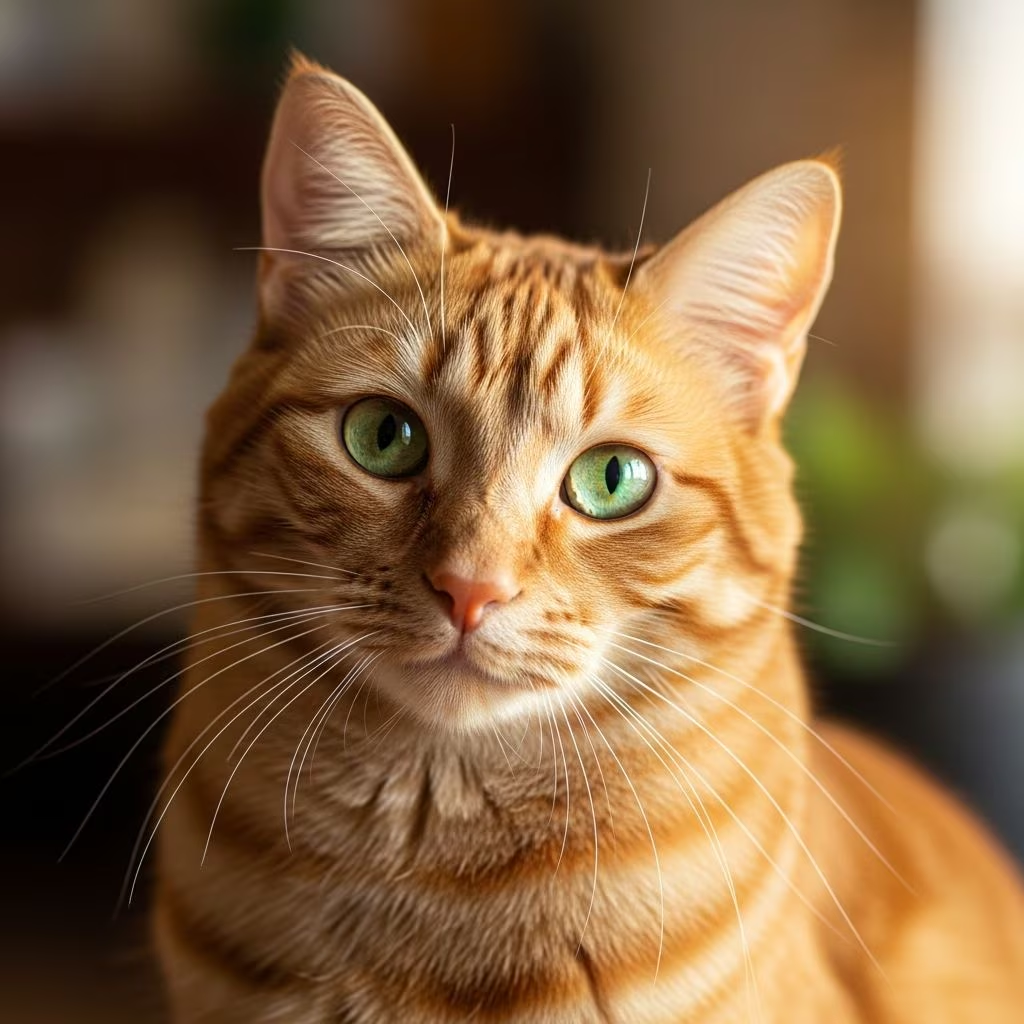
Orange cats, often called ginger or red tabbies, captivate cat lovers with their vibrant coats and playful personalities. A common myth persists: all orange cats are male. In reality, female orange cats do exist, though they are significantly rarer. This phenomenon stems from feline genetics tied to sex chromosomes, making about 80-90% of orange cats male.
Understanding why requires delving into basic genetics. The gene responsible for orange fur, known as the orange gene or O gene, resides on the X chromosome. Male cats (XY) need just one copy from their mother to be orange, while females (XX) require two copies—one from each parent—for a solid orange coat.
The Genetics of Orange Fur in Cats
Cat coat colors are determined by multiple genes, but orange coloration is uniquely sex-linked. The orange gene produces pheomelanin, the pigment creating reddish-yellow hues, as opposed to eumelanin for black or brown.
Recent breakthroughs have pinpointed the exact mutation. A 2025 study from Kyushu University identified a deletion in the ARHGAP36 gene on the X chromosome. This deletion, unique to orange cats, boosts ARHGAP36 activity, which inhibits melanogenesis pathways, shifting pigment production toward pheomelanin. Stanford researchers confirmed this, noting it’s a novel mechanism distinct from other mammals.
- Males (XY): Inherit one X from mother. One orange allele = full orange coat.
- Females (XX): Inherit X from both parents. Need two orange alleles for solid orange; one orange and one non-orange leads to tortie patterns.
This X-linkage explains the skew: random chance makes homozygous orange females only about 12-20% of orange cats.
Why Are Female Orange Cats So Rare?
The rarity boils down to probability. For a female kitten to be solid orange, her father must be orange (contributing his sole X with the gene) and her mother must carry the orange gene on one X (often a tortie or carrier).
| Genotype | Sex | Coat Color Probability |
|---|---|---|
| XOXo or XOXO | Female | Tortoiseshell or Solid Orange (rare) |
| XOY | Male | Solid Orange (common) |
| XoXo | Female | Non-Orange |
| XoY | Male | Non-Orange |
(XO = orange allele; Xo = non-orange.) Breeding two orange parents increases odds, but genetics involve complexities like X-inactivation.
X-chromosome inactivation in females randomly silences one X per cell, creating mosaics. A female with one orange X shows orange patches amid black, forming calico or tortoiseshell patterns—nearly always female.
Signs Your Orange Cat Might Be Female
Visual identification is tricky; orange cats look similar regardless of sex. Check genitals: females have a vertical slit, males a circular anus-prepuce distance.
- External Check: Lift tail gently. Females: urinary opening below anus, no scrotum. Males: scrotum visible, penis sheath.
- Vet Confirmation: Palpation or ultrasound for certainty, especially in kittens.
- DNA Test: Services like Basepaws analyze sex chromosomes accurately.
Myths abound—some claim female oranges are infertile (false) or meaner (unproven).
Fun Facts About Orange Cats
- Only 2-5% of cats are orange, amplifying rarity.
- ARHGAP36 mutation likely arose early in domestication; 12th-century art shows calicos.
- Orange cats overrepresented as males in shelters, per anecdotal vet reports.
- Personality lore: “ginger ninjas”—energetic, bold—but no genetic link proven, though ARHGAP36 brain expression intrigues.
- Tortoiseshell females (carriers) prized in folklore for sass.
Health Considerations for Orange Cats
Orange fur links to no specific diseases, but sex influences risks. Males face urinary issues more; females pyometra. The ARHGAP36 variant may subtly affect development, but no harms noted.
Recent 2024-2025 research assures the mutation is benign, preserving essential gene functions.
Breeding Orange Cats
Want orange kittens? Pair orange male with tortie female. Odds favor males, but females possible. Ethical breeding prioritizes health; avoid inbreeding.
Orange Cats in Culture and History
From Garfield to ancient Egyptian art, orange cats symbolize luck. Japanese Maneki-neko often ginger. The calico pattern, tied to orange genetics, exemplifies X-inactivation in textbooks.
Frequently Asked Questions (FAQs)
What percentage of orange cats are female?
About 1 in 5 (12-20%), due to needing two X-linked orange genes.
Can a female orange cat have orange kittens?
Yes, if she carries the gene; paired with orange male, ~50% orange kittens, skewed male.
Are orange cats always tabby?
Usually, as tabby pattern overlays; solid orange rare without stripes.
Is the orange gene harmful?
No, 2025 studies confirm the ARHGAP36 deletion is safe.
Why more orange males?
X-linkage: males express single copy fully; females need homozygous.
Conclusion
Orange cats can absolutely be female, defying the myth through fascinating genetics. From ARHGAP36 discoveries to cultural icons, these ginger gems enrich our world. Next orange tabby? Check sex—you might have a rare lady!
References
- Why Are Orange Cats More Likely to Be Male? — Encyclopaedia Britannica. 2025. https://www.britannica.com/science/Why-Are-Orange-Cats-More-Likely-to-Be-Male
- Are All Orange Cats Male? — Basepaws. 2024. https://basepaws.com/blog/are-all-orange-cats-male
- Orange cats come with genetic twist: X-linked mutation points to new … — Phys.org / Kyushu University. 2025-05. https://phys.org/news/2025-05-orange-cats-genetic-linked-mutation.html
- Scientists track down mutation that makes orange cats orange — Stanford Medicine. 2025-05. https://med.stanford.edu/news/all-news/2025/05/orange-cats.html
- What gene makes orange cats orange? Scientists figured it out — Science News. 2025. https://www.sciencenews.org/article/gene-mutation-orange-calico-cat-fur



