

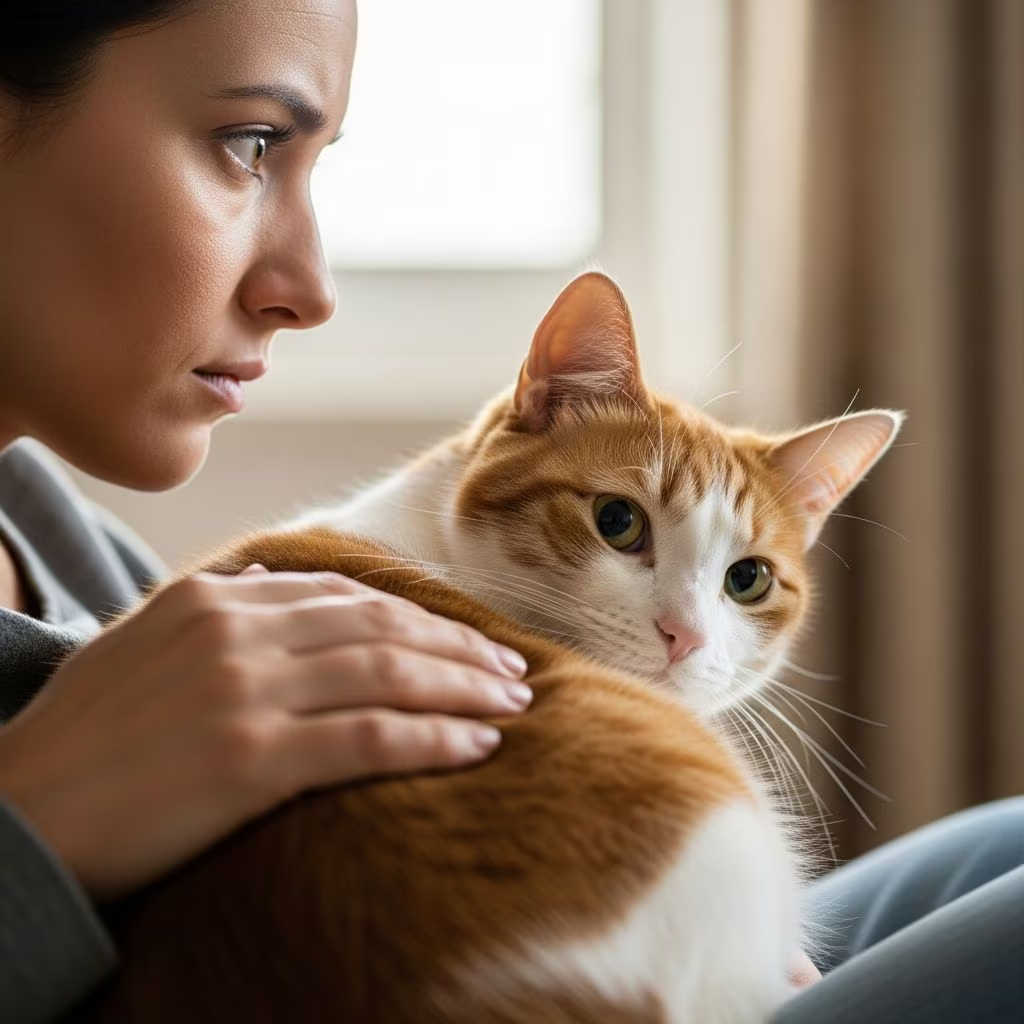
Your stress levels can indeed influence your cat’s behavior and health. Cats are highly sensitive to their owner’s emotional states, picking up on subtle cues like body language, tone, and pheromones, which can trigger stress responses in them.
How Do Cats Sense Human Stress?
Cats possess an acute ability to detect changes in their environment, including their owner’s stress. Through keen observation of body language, vocal tones, and even chemical signals like pheromones, cats mirror human emotions. Research shows that environmental stressors, including those from human interactions, lead to behavioral and physiological changes in cats.
The olfactory system plays a key role, as cats interpret scents from stressed humans similarly to predator cues. Chronic human stress can dysregulate a cat’s HPA axis, mimicking responses seen in feline interstitial cystitis (FIC).
- Body language cues: Tense posture or rapid movements signal danger.
- Vocal changes: Higher-pitched or erratic voices indicate agitation.
- Pheromone detection: Sweat and stress hormones alter human scent profiles.
Signs Your Cat Is Stressed Because of You
Stressed cats exhibit sickness behaviors (SB) such as vomiting, decreased appetite, and litter box avoidance, which increase significantly under short-term stressors like inconsistent routines often linked to owner stress. Cats with FIC show amplified responses, including lymphopenia and neutrophil:lymphocyte (N:L) ratio changes.
| Behavioral Sign | Physical Indicator | Common Trigger |
|---|---|---|
| Hiding or reduced activity | Increased heart rate, cortisol | Owner’s tense movements |
| Aggression or anxious postures | Vomiting hairballs/food | Erratic schedules |
| Litter box issues | Soft stool/diarrhea | Emotional pheromones |
| Over-grooming | Elevated cortisol | Chronic human stress |
Proactive cats may show ‘fight or flight’ reactions, while reactive ones withdraw, impacting welfare long-term.
Scientific Evidence: Human Stress and Feline Responses
A study at The Ohio State University exposed healthy cats and those with FIC to five-day stressors mimicking owner-induced chaos, like delayed feeding and unfamiliar handling. Both groups showed significant SB increases, with FIC cats displaying immune changes. This aligns with findings that unpredictable environments from stressed owners exacerbate issues.
Frontiers in Veterinary Science highlights how chronic stress from human sources dysregulates the SAM and HPA axes, leading to cortisol spikes, suppressed immunity, and behavioral disorders like depression-like symptoms in cats. Older cats face worsened cognitive dysfunction under such conditions.
Environmental enrichment counters these effects; Stella et al. noted reduced SB with stable routines and positive interactions, underscoring owner stress management.
Does Your Lifestyle Stress Your Cat?
Busy lifestyles with irregular hours, loud arguments, or frequent moves act as potent psychological stressors for cats, who thrive on predictability. Unenriched cages or homes with sudden changes parallel shelter stress, causing chronic cortisol elevation.
- Work-from-home stress: Pacing or phone yelling disrupts cat security.
- Family conflicts: Raised voices trigger hiding.
- Travel absences: Separation anxiety builds upon return.
Cats sensitive to surroundings, as per Ohio State research, respond to life stressors by becoming nervous, amplifying owner-induced tension.
10 Ways to Reduce Stress for You and Your Cat
- Establish routines: Consistent feeding and play times provide security, reducing SB as seen in enriched studies.
- Practice mindfulness: Calm demeanor influences cat behavior positively.
- Use pheromone diffusers: Synthetic feline pheromones mimic comforting scents to lower anxiety.
- Increase playtime: Daily interactive sessions release endorphins for both.
- Create safe spaces: Hiding spots allow retreat from stressors.
- Grooming sessions: Petting reduces cortisol; studies show mutual stress relief.
- Olfactory enrichment: Safe scents like catnip promote natural behaviors, countering stress signals.
- Limit changes: Gradual introductions to new elements prevent overwhelm.
- Exercise together: Wand toys simulate hunting, boosting welfare.
- Monitor health: Vet checks rule out medical issues mimicking stress.
Stress and Cat Health Problems
Prolonged stress from owner emotions contributes to FIC, idiopathic cystitis, and gastrointestinal issues. SB like appetite loss leads to weight decline, while immune suppression invites infections. Chronic HPA dysregulation causes ulcers, hyperalgesia, and cognitive decline in seniors.
Behavioral issues escalate to aggression or elimination problems, straining owner-cat bonds. Early intervention via enrichment prevents pathologies.
When to See a Vet for Cat Stress
Consult a vet if SB persists beyond 48 hours, includes blood in urine/stool, or weight loss occurs. Tools assess fear/anxiety; bloodwork checks cortisol/N:L ratios. Rule out underlying conditions like FIC before behavioral therapy.
Frequently Asked Questions (FAQs)
Can my anxiety cause my cat to act out?
Yes, anxious owners emit pheromones and alter routines, triggering cat stress responses like hiding or aggression.
How quickly does cat stress show from my mood?
Acute signs appear within hours; chronic effects build over days, with SB increases noted in 5-day studies.
Do all cats react to human stress?
No, but sensitive or FIC-prone cats show stronger responses, including physiological changes.
Can petting my stressed cat help me too?
Absolutely; interactions lower cortisol for both humans and cats.
What if my cat hides when I’m upset?
This indicates perceived threat; use calming aids and routines to rebuild trust.
References
- Effects of stressors on the behavior and physiology of domestic cats — Stella JL, Lord LK, Buffington CAT. 2014-08-28. https://pmc.ncbi.nlm.nih.gov/articles/PMC4157662/
- Dealing With Stress in Cats: What Is New About the Olfactory Strategy? — Meng F, et al. 2022-06-23. https://www.frontiersin.org/journals/veterinary-science/articles/10.3389/fvets.2022.928943/full
- Feline Life Stressors — Indoor Pet Initiative, The Ohio State University. Accessed 2026. https://indoorpet.osu.edu/cats/feline-life-stressors
- Tools for the Approach of Fear, Anxiety, and Stress in the Domestic Cat — Publisher: Veterinary Medicine International. 2023. https://onlinelibrary.wiley.com/doi/full/10.1155/vmi/9109397
- Pet your cat to reduce stress — Cornell University College of Veterinary Medicine. Accessed 2026. https://www.vet.cornell.edu/pet-your-cat-reduce-stress



