

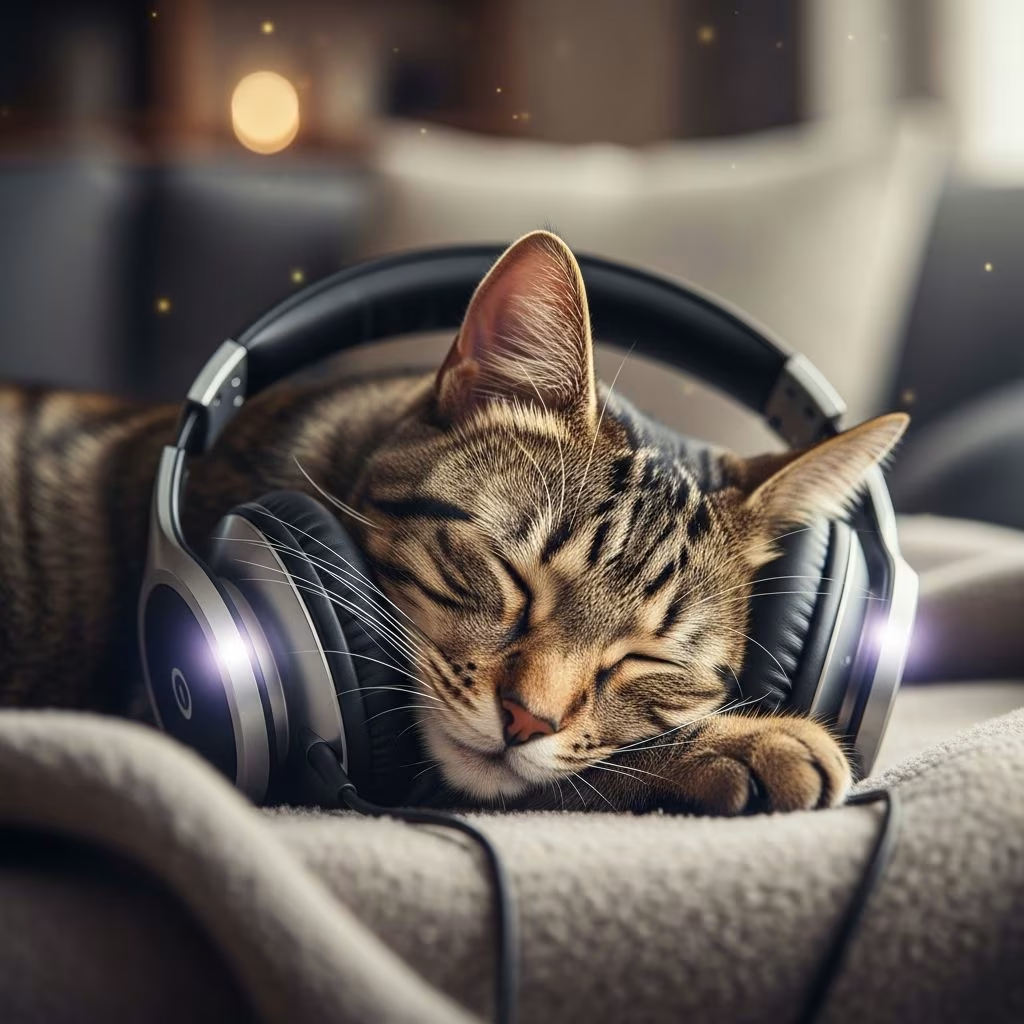
Cats often exhibit disrupted sleep patterns in home environments, but research indicates that specific types of music can promote relaxation and potentially improve sleep quality by lowering stress levels.
Decoding Feline Sleep Cycles
Cats are naturally crepuscular, meaning they peak in activity at twilight hours, yet household life can throw off this rhythm, leading to nocturnal antics or daytime lethargy. Understanding these patterns is key to addressing sleep issues effectively.
- Daily Sleep Needs: Adult cats require 12-16 hours of sleep per day, with kittens and seniors needing even more.
- Influencing Factors: Noise, light, diet, and human schedules all impact feline rest.
- Common Disruptions: Stress from changes like new pets or moves can cause insomnia-like behaviors.
Domestic adaptation often aligns cat activity with owners, but mismatches result in midnight disturbances that frustrate everyone involved.
Scientific Basis for Auditory Calming in Cats
Studies demonstrate that cats respond uniquely to sound due to their superior hearing range, which spans higher frequencies than humans. Music tailored to mimic purring (around 25-150 Hz) or nursing sounds elicits positive reactions like rubbing speakers or increased purring.
A University of Wisconsin study found cats showed positive behaviors 61 seconds faster to species-specific music than classical tunes. Physiological data from a clinical trial revealed lower pulse rates, reduced activity, and elevated heart rate variability (HRV)—indicators of calm—when exposed to feline-optimized music.
| Music Type | Average Positive Response Time | Key Physiological Effects |
|---|---|---|
| Cat-Specific | 110 seconds | Lower pulse, higher HRV, less activity |
| Classical | 171 seconds | Mild calming, potential habituation |
| No Music | N/A | Higher stress markers like NLR |
These findings align with veterinary research where cat music decreased stress scores during handling, unlike silence or classical alternatives.
Types of Sounds Proven Effective for Cats
Not all music suits felines; human-centric genres often fall flat or agitate due to pitch and tempo mismatches. Optimal choices incorporate cat comfort frequencies (60-80 dB) without triggering vigilance.
- Feline-Composed Tracks: Feature purring tempos, suckling rhythms, and bird-like chirps for innate appeal.
- Classical Selections: Slow pieces like adagios work moderately but less than custom music.
- Alternatives: Nature sounds, white noise, or soft ambient jazz if tailored appropriately.
Avoid abrupt volume shifts or high pitches, as they mimic predator alerts, prompting ear flicks or flight responses.
Practical Steps to Introduce Music for Sleep
Integrate audio therapy gradually into routines for best results. Consistency builds association with bedtime.
- Prepare Environment: Dim lights, comfortable bedding in a quiet spot.
- Select and Play: Start 30 minutes pre-sleep at low volume (under 50 dB); use apps or speakers.
- Monitor Reactions: Positive signs include relaxed posture, purring, or dozing; adjust if tail swishing occurs.
- Duration: 20-60 minutes nightly, fading as needed.
Streaming platforms offer dedicated playlists; observe for 1-2 weeks to gauge efficacy.
Enhancing Music with Holistic Approaches
Music amplifies when paired with other aids. A multi-faceted strategy addresses root causes holistically.
- Play Therapy: Evening sessions tire cats physically.
- Nutrition Timing: Last meal 3-4 hours before bed prevents hunger wakes.
- Pheromone Aids: Diffusers mimic calming scents for security.
- Space Optimization: Elevated perches or covered litter reduce disturbances.
Veterinary settings use similar combos, noting easier handling and normalized vitals post-music exposure.
Potential Limitations and Individual Variations
While promising, responses vary; not all cats doze off immediately, especially in novel situations like vet visits. Habituation to repeated tracks may diminish effects, necessitating rotation.
Senior cats or those with health issues (e.g., hyperthyroidism) might need vet evaluation first, as sleep woes signal underlying conditions.
Real-World Outcomes from Cat Owners
Anecdotes mirror science: many report fewer zoomies and deeper sleep after adopting cat tunes. One study proxy via biometrics across nine cats confirmed uniform calming across demographics.
Long-term, well-rested cats exhibit better mood, appetite, and owner bonds.
Frequently Asked Questions
Does classical music work as well as cat-specific music?
Classical offers mild benefits via slow tempos but lags behind species-tuned tracks in speed and depth of relaxation.
How long before seeing sleep improvements?
Many notice changes within days, but full routines take 1-2 weeks of consistency.
What if my cat seems bothered by music?
Lower volume, switch genres, or pause; consult a vet for sensitivities.
Is this safe for all cats, including kittens?
Yes, non-invasive and gentle; ideal for all ages when volume-controlled.
Can music replace vet care for sleep issues?
No, it’s complementary; persistent problems warrant professional checks.
Building Lasting Sleep Harmony
Harnessing music’s power fosters tranquil nights, backed by biometric and behavioral evidence. Experiment patiently—your cat’s purrs will signal success.
References
- How Music Therapy Can Help Your Cat Sleep Better — Animal Wellness Magazine. 2023. https://animalwellnessmagazine.com/how-music-therapy-can-help-your-cat-sleep-better/
- Do cats actually enjoy music while they’re sleeping — Dial A Vet. 2024. https://www.dialavet.com/vet-answers/post/cat-soothed-by-classical-music-52435
- Move over Mozart: Study shows cats prefer their own beat — University of Wisconsin News. 2015-07-21. https://news.wisc.edu/move-over-mozart-study-shows-cats-prefer-their-own-beat/
- Clinical Study Proves Benefits of Feline-Specific Music — Pet Acoustics. 2022. https://www.petacoustics.com/blog/clinical-study-proves-benefits-of-feline-specific-music-through-biometric-data
- Will Music Make Cats Sleep? Vet Approved Facts & FAQ — Catster. 2023. https://www.catster.com/lifestyle/will-music-make-cats-sleep/
- Effects of music on behavior and physiological stress response of domestic cats — SAGE Journals (Journal of Feline Medicine and Surgery). 2019-10-17. https://journals.sagepub.com/doi/10.1177/1098612X19828131



