
Can I Give My Dog Benadryl? Dosage & Safety Guide
Learn when and how to safely give your dog Benadryl for allergies and motion sickness.
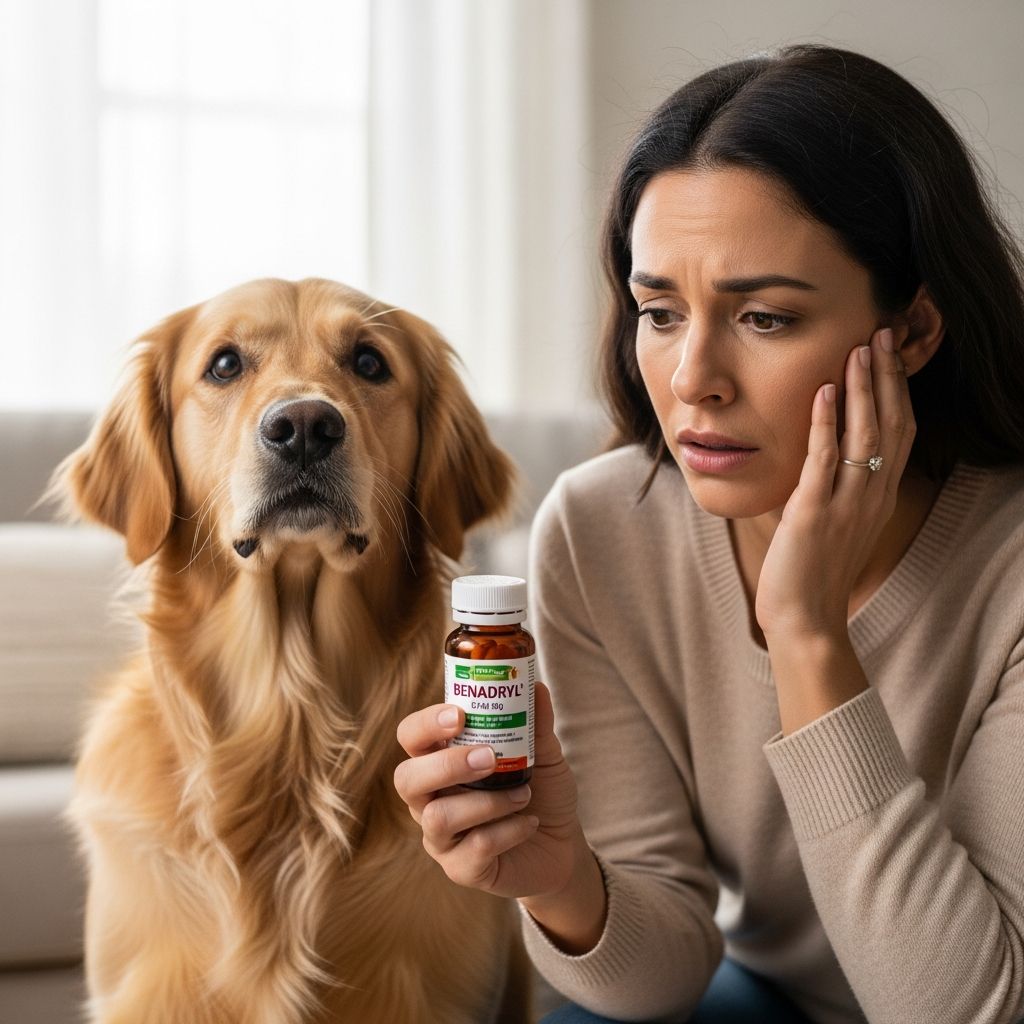
As a pet owner, you may have wondered whether you can give your dog Benadryl to help with seasonal allergies, itching, or anxiety. While Benadryl is a common over-the-counter antihistamine that many of us use for allergy relief, giving it to your dog requires careful consideration and veterinary guidance. Understanding when Benadryl is appropriate, how much to give, and what risks to watch for can help you make informed decisions about your dog’s health.
Understanding Benadryl for Dogs
Benadryl, whose active ingredient is diphenhydramine, is an antihistamine commonly used in both human and veterinary medicine. While generally well-tolerated by dogs with a wide safety margin, it’s important to recognize that Benadryl isn’t necessarily the answer to every canine health issue. Before considering Benadryl as a treatment option, it’s essential to consult with your veterinarian to determine if it’s the right choice for your specific dog and their condition.
Key Takeaways About Benadryl for Dogs
- Benadryl can be used to treat mild allergic reactions and motion sickness in dogs, but it’s not a universal solution and may not be effective for managing anxiety in all dogs
- Always consult your veterinarian before giving your dog Benadryl, especially if they have existing health conditions or take other medications
- The appropriate dosage depends on your dog’s weight and size, and veterinary confirmation is recommended
- More effective treatments may be available for managing allergies and anxiety in dogs; your vet can help explore alternatives
- For some dogs, Benadryl may have the opposite effect and increase anxiety rather than reduce it
- Benadryl should not be given to dogs with certain health conditions or those taking specific medications
Can Benadryl Be Used for Dog Allergies?
Benadryl can be an effective treatment option for dogs experiencing mild allergic symptoms. When taken orally, Benadryl helps ease mild allergic reactions triggered by common environmental irritants such as pollen, mold, and house dust mites. It’s particularly useful when combined with other allergy treatments as part of a comprehensive approach to managing your dog’s allergies.
Benadryl is also beneficial for treating mild allergic reactions caused by insect bites or stings. Additionally, both oral and injectable forms of Benadryl can be used as a pre-treatment for mild allergic vaccine reactions, helping prevent adverse responses to immunizations.
However, it’s important to note that Benadryl is only effective in approximately 7% of dog allergy cases. This means that while it may help some dogs, it won’t work for all allergy-prone canines. If your dog’s allergies don’t respond well to Benadryl, your veterinarian may recommend escalating to prescription medications or implementing other evidence-based treatment strategies tailored to your dog’s specific needs.
Is Benadryl Safe for Dogs?
Benadryl is typically very well-tolerated in dogs when used appropriately, with few side effects and a low risk of overdose when administered correctly. However, safety concerns arise when dogs have certain underlying health conditions or take specific medications that may interact negatively with diphenhydramine.
Your veterinarian needs to evaluate your dog’s complete health profile before recommending Benadryl. This is crucial because there are specific instances where Benadryl should not be used or should only be used with extreme caution:
- Cardiac conditions and cardiovascular disease
- Certain lung conditions
- Difficulties or problems with urination
- Use in conjunction with monoamine oxidase inhibitors
- Concurrent use with certain medications for fungal infections
- Pregnancy or nursing
- Glaucoma
- Enlarged prostate
- Hyperthyroidism
- Abnormal blood pressure conditions
Dogs with pre-existing health conditions such as heart disease, glaucoma, enlarged prostate, hyperthyroidism, and abnormal blood pressure are at higher risk of experiencing serious adverse effects from Benadryl overdose or inappropriate use.
Side Effects of Benadryl for Dogs
At normal recommended doses, Benadryl typically causes minimal side effects in dogs. The most common side effects observed include drowsiness and mild unsteadiness on their feet. These effects are generally harmless and often temporary as the dog’s body adjusts to the medication.
However, if a dog receives an excessive amount of Benadryl or overdoses, more serious symptoms can develop. Signs of Benadryl overdose or toxicity in dogs include:
- More pronounced sedation or, conversely, agitation and hyperactivity
- Severe unsteadiness and loss of coordination
- Disorientation and confusion
- Aggression or other unusual behavioral changes
- Slow or shallow breathing
- Vomiting
Additionally, for some dogs, Benadryl may paradoxically increase anxiety rather than calm them. If your dog exhibits any worrisome symptoms after receiving Benadryl, contact your veterinarian immediately for professional advice.
How Much Benadryl Can I Give My Dog?
Determining the correct Benadryl dosage for your dog is absolutely critical. Dosage should never be guessed or estimated based on what works for other dogs, as individual variation is significant and incorrect dosing can be dangerous.
The appropriate dosage of Benadryl for dogs is determined by your dog’s weight. According to the Merck Veterinary Manual, the standard dosing guideline is 2–4 mg of diphenhydramine per kilogram of body weight. For easier calculation with dogs measured in pounds, this translates to approximately 1–2 mg of Benadryl per pound of body weight.
To illustrate with a practical example: a 10-pound dog would receive approximately 10 mg of Benadryl per dose. A 25-pound dog would receive roughly 25 mg. However, these are general guidelines, and your veterinarian may adjust the dosage based on your specific dog’s individual factors, including age, overall health status, and any medications they’re currently taking.
Your veterinarian will determine the correct dosage for your pet and advise on the frequency of administration. Typically, Benadryl is given every 8–12 hours, but this should be confirmed with your vet. Always follow your veterinarian’s specific dosing instructions rather than relying solely on general guidelines.
Benadryl Formulations for Different Dog Sizes
Different formulations of Benadryl may be more appropriate for different dog sizes, particularly for small breeds.
Children’s Chewable Benadryl
Children’s chewable Benadryl tablets are excellent options for tiny dogs and small breeds. A full children’s chewable tablet contains 12.5 mg of diphenhydramine. For dogs weighing less than 10 pounds, these tablets can be cut in half to provide an appropriate dose of 6.25 mg. This formulation allows for easier dosing of very small dogs where standard adult tablets would deliver excessive amounts of medication.
Children’s Liquid Benadryl
Children’s liquid Benadryl contains only 2.5 mg/ml of diphenhydramine and may be significantly easier to administer to small dogs that resist taking pills or tablets. Liquid formulations allow for precise dosing adjustments and can be mixed into food or administered directly into the dog’s mouth using a syringe or dropper, making it a practical option for medication-resistant pets.
Important Formulation Considerations
When selecting any Benadryl formulation for your dog, use only plain Benadryl without additives or time-release/extended-release capabilities unless specifically directed otherwise by your veterinarian. Many commercial formulations contain additional ingredients such as alcohol or xylitol that can be toxic to dogs. Always read labels carefully and confirm with your veterinarian that the specific product you’re considering is safe for your dog.
Uses of Benadryl for Dogs
While allergy relief is the most common use, Benadryl has several veterinary applications in canine medicine:
Allergy Management
Benadryl can help manage mild-to-moderate allergies in dogs, including seasonal allergies, environmental allergies, food allergies, and allergic reactions to insect bites. It reduces itchiness and other allergy symptoms such as sneezing, hives, and swelling. However, because it’s only effective in about 7% of canine allergy cases, your veterinarian may recommend it as an initial approach before escalating to prescription medications.
Motion Sickness and Travel Anxiety
Because one of the common side effects of Benadryl in dogs is drowsiness, veterinarians may use it to alleviate dog anxiety associated with traveling, particularly during plane rides or car trips. Benadryl can also reduce nausea and vomiting associated with motion sickness, making travel more comfortable for anxious dogs.
Other Allergic Conditions
Benadryl may help with various allergic manifestations including stuffy or runny nose, swelling and inflammation, and even reactions to snake bites when appropriate.
When Benadryl May Not Be the Right Choice
It’s crucial to understand that Benadryl is not a cure-all medication and may not be the best treatment option for every canine condition. For managing anxiety in dogs, Benadryl may not be effective and could potentially have opposite effects in some animals. Similarly, if your dog’s allergies don’t respond to Benadryl, more effective prescription alternatives are available.
Your veterinarian can help you explore treatment options beyond Benadryl and recommend therapies specifically tailored to your dog’s individual needs and health status. In some cases, more targeted or prescription-strength treatments may provide better outcomes for your dog’s particular condition.
Important Precautions and Considerations
Before giving your dog any Benadryl, ensure you understand all relevant precautions. The effects of Benadryl can be detrimental to pregnant or nursing dogs, and it is not recommended under these circumstances. Similarly, Benadryl may not be safe for puppies, so veterinary consultation is essential before administration to young dogs.
If this is the first time you are giving your dog Benadryl, watch your pet closely to ensure they’re not experiencing any adverse reactions. Monitor for any of the side effects mentioned previously, and contact your veterinarian if you have concerns.
Although Benadryl has been utilized by veterinarians in many instances as an effective treatment for dogs experiencing allergic reactions, motion sickness, and anxiety, it must always be approved by your veterinarian before administering to your pet.
Frequently Asked Questions
Q: Can Benadryl overdose occur in dogs?
A: Yes, it is possible for a dog to ingest or be given a dangerous dose of Benadryl. Fortunately, if treated promptly by a veterinarian, Benadryl toxicity generally has an excellent outcome in healthy animals. Dogs with pre-existing health conditions may be more likely to become seriously ill from overdose.
Q: What should I do if I suspect my dog has overdosed on Benadryl?
A: Contact your veterinarian immediately if you suspect a Benadryl overdose. Seek emergency veterinary care if your dog is exhibiting severe symptoms such as difficulty breathing, severe unsteadiness, or loss of consciousness.
Q: Can I give my dog Benadryl liquid if it contains alcohol or xylitol?
A: No. Only use Benadryl liquid that is free of xylitol or alcohol, both of which are toxic to pets. Always check labels carefully and consult your veterinarian. Compounded diphenhydramine in liquid or chewable form may be a safer option.
Q: How often can I give my dog Benadryl?
A: Benadryl is typically given every 8–12 hours, but frequency should be determined by your veterinarian based on your dog’s specific condition and needs.
Q: Will Benadryl definitely help my dog’s allergies?
A: No. Benadryl is only effective in approximately 7% of canine allergy cases. If your dog’s allergies don’t respond to Benadryl, more effective prescription treatments are available.
Q: Is Benadryl safe for all dogs?
A: While generally safe, Benadryl should not be given to dogs with certain health conditions such as heart disease, glaucoma, enlarged prostate, or hyperthyroidism. Always consult your veterinarian first.
Conclusion
Benadryl can be a useful tool in your veterinarian’s arsenal for treating mild allergies and motion sickness in dogs when used appropriately and under professional guidance. However, it’s not a universal solution for all canine health issues, and it may not be suitable for every dog. The key to safe and effective use of Benadryl for your dog is consulting with your veterinarian, confirming appropriate dosages based on your dog’s weight and health status, and monitoring your pet closely for any adverse effects. Your veterinarian can help you determine whether Benadryl is the right choice for your dog’s specific condition and recommend alternative treatments if Benadryl isn’t effective or appropriate.
References
- Can I Give My Dog Benadryl? And if So, How Much? — PetMD. 2025. https://www.petmd.com/dog/care/can-i-give-my-dog-benadryl-and-if-so-how-much
- Diphenhydramine (Benadryl) for Dogs — PetMD. 2025. https://www.petmd.com/pet-medication/benadryl-vetadryl-diphenhydramine
- Benadryl for Dogs: How Much Can I Give My Dog? — Chewy. 2025. https://www.chewy.com/education/dog/health-and-wellness/benadryl-for-dogs
- Benadryl Overdose in Dogs — PetMD. 2025. https://www.petmd.com/dog/conditions/poisoning-toxicity/benadryl-overdose-dogs
- Benadryl For Dogs: Uses, Side Effects, and Dosage Information — American Kennel Club. 2025. https://www.akc.org/expert-advice/health/benadryl-for-dogs/
- Over-the-Counter (OTC) Medications That May Be Safe for Dogs — VCA Animal Hospitals. 2025. https://vcahospitals.com/know-your-pet/are-over-the-counter-medications-safe-for-my-dog
- Side Effects of Benadryl for Dogs — Canna-Pet. 2025. https://canna-pet.com/articles/side-effects-benadryl-dogs/
Similar Articles








Read full bio of Sneha Tete


