

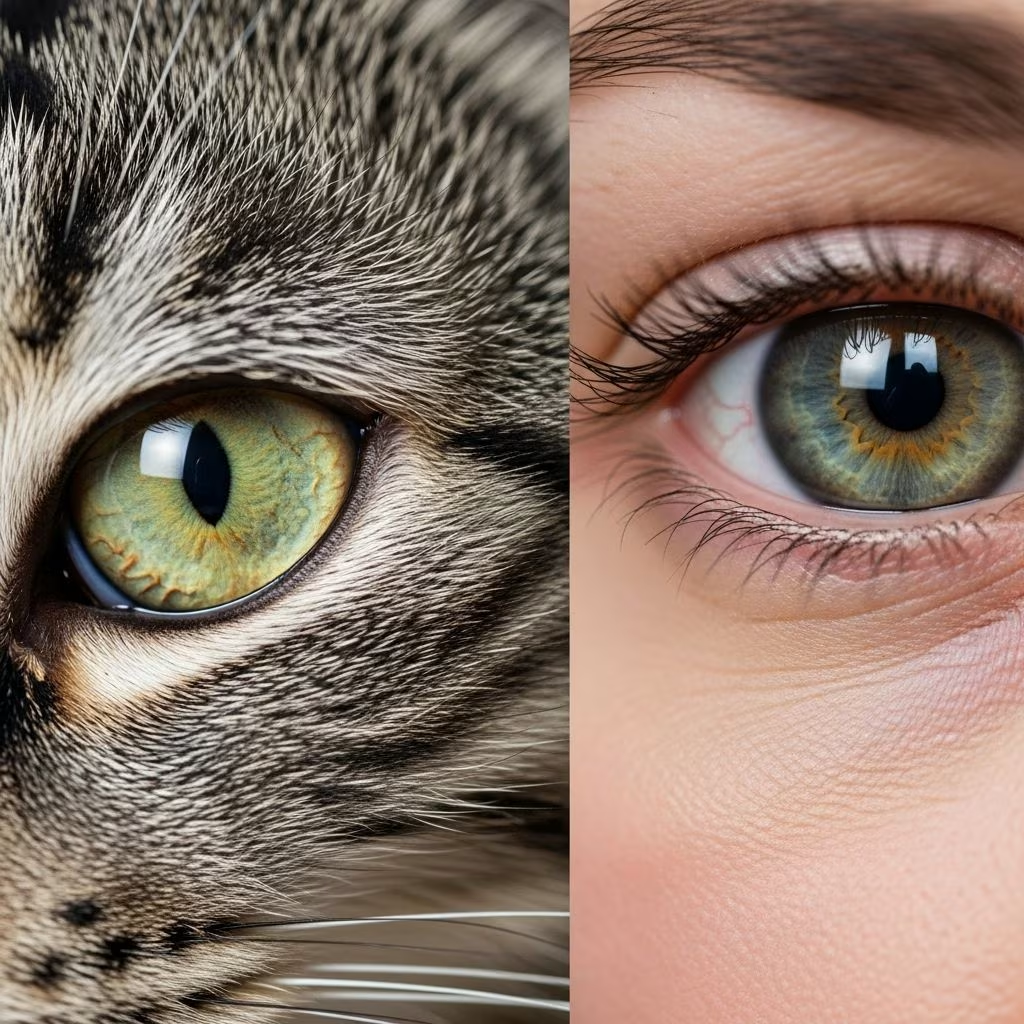
Feline conjunctivitis, commonly referred to as pink eye in cats, involves inflammation of the eye’s conjunctiva and raises concerns among pet owners about cross-species transmission. While most cases stem from cat-specific pathogens, certain bacterial strains pose a minimal risk to humans, particularly those with weakened immune systems. Transmission from cats to humans is exceedingly rare, but understanding the nuances ensures safer coexistence between pets and people.
Understanding Feline Conjunctivitis Basics
The conjunctiva is the thin, transparent membrane covering the inner eyelids and sclera in cats. When inflamed, it leads to redness, swelling, and discomfort, mimicking human pink eye but often driven by distinct causes. This condition affects cats of all ages, with kittens and stressed adults being particularly vulnerable. Early recognition and intervention prevent complications like corneal ulcers or chronic issues.
- Prevalence: Conjunctivitis ranks among the top ocular problems in feline veterinary visits.
- Duration: Acute cases resolve in 1-3 weeks with treatment; chronic forms may recur.
- Impact: Untreated infections spread rapidly in multi-cat environments.
Primary Causes of Pink Eye in Cats
Cat pink eye arises from infectious agents, irritants, or underlying health problems. Viral infections dominate, accounting for the majority of cases, followed by bacteria and less common parasites.
Viral Triggers
Feline herpesvirus-1 (FHV-1) tops the list as the leading viral culprit, akin to but distinct from human herpes simplex. It spreads via direct contact with infected secretions and lies dormant, reactivating under stress, illness, or immunosuppression. Feline calicivirus (FCV) follows closely, often paired with upper respiratory symptoms and highly transmissible through saliva, nasal discharge, or shared surfaces.
Bacterial Contributors
Bacteria like Chlamydophila felis and Mycoplasma species frequently cause or complicate viral infections, especially in young kittens. These pathogens thrive in crowded settings and require targeted antibiotics for resolution.
Parasitic and Non-Infectious Factors
Rarer parasites such as Thelazia eye worms or Leishmania protozoa affect outdoor cats, causing systemic and ocular symptoms. Environmental irritants—dust, smoke, chemicals—or trauma from scratches also provoke inflammation without contagion risk.
| Cause Type | Examples | Contagious to Cats? | Contagious to Humans? |
|---|---|---|---|
| Viral | FHV-1, FCV | Yes, highly | No |
| Bacterial | Chlamydophila felis, Mycoplasma | Yes | Rare, immunocompromised at risk |
| Parasitic | Thelazia, Leishmania | Variable | Rare |
| Irritants/Trauma | Dust, scratches | No | No |
Transmission Risks: Cats to Humans
Good news for cat lovers: the vast majority of feline pink eye pathogens are species-specific and cannot infect humans. FHV-1 and FCV do not cross to people, eliminating viral transmission worries. However, bacterial agents like Chlamydophila felis present a slim possibility, with documented cases mainly in immunocompromised individuals. Direct contact with ocular discharge heightens this low risk, underscoring hygiene’s importance.
Parasitic forms carry theoretical zoonotic potential but remain exceptional in practice. Overall, human infections from cat conjunctivitis are “incredibly rare,” per veterinary consensus.
Reverse Transmission: Humans to Cats
Conversely, cats rarely contract pink eye from human sources. Human conjunctivitis pathogens differ from feline ones, rendering transmission unlikely even in close households. Vigilant handwashing suffices as precaution.
Recognizing Symptoms in Your Cat
Spotting early signs enables prompt care. Watch for:
- Red, swollen eyes or eyelids
- Thick discharge (clear, yellow, or green)
- Excessive tearing or squinting
- Pawing at eyes or light sensitivity
- Cloudy cornea in severe cases
Unilateral onset is common, progressing bilaterally in infectious types. Accompanying sneezing or nasal discharge signals viral involvement.
Diagnosis and Veterinary Approaches
Vets diagnose via physical exam, fluorescein staining for ulcers, and swabs for cytology or PCR testing to pinpoint pathogens. Bloodwork rules out systemic issues. Accurate identification guides therapy, avoiding ineffective treatments.
Treatment Strategies for Feline Pink Eye
Tailored protocols address the root cause:
- Viral: Supportive care—cleaning, lubricants, antivirals like famciclovir for FHV-1. Lysine supplements may curb recurrences.
- Bacterial: Topical antibiotics (e.g., erythromycin, tetracycline ointments).
- Parasitic: Antiparasitics based on identification.
- Supportive: Artificial tears, pain relief, isolation.
Administering eye medications requires patience: wrap kitty in a towel, gently restrain, clean discharge first, then apply drops/ointments, allowing blinks to distribute. Improvement typically shows in 3-5 days; full courses prevent resistance.
Prevention Tips for Cat Owners
Proactive measures curb outbreaks:
- Vaccinations: Core shots for FHV-1 and FCV reduce severity.
- Hygiene: Handwashing post-handling, disinfect shared items.
- Isolation: Quarantine symptomatic cats 2-3 weeks.
- Environment: Dust-free, smoke-free homes; stress minimization via routines, enrichment.
- Monitoring: Routine eye checks, especially for multiples or shelters.
Special Considerations for Multi-Pet Homes
In households with dogs or other cats, infectious feline conjunctivitis spreads easily among felines but spares canines typically. Hygiene and separation protect all.
When to Seek Immediate Vet Care
Rush to the vet if symptoms worsen, vision impairs, or ulcers form. Kittens, seniors, or chronically ill cats demand urgent attention to avert blindness or sepsis.
Frequently Asked Questions (FAQs)
Can cats get pink eye in only one eye?
Yes, especially from trauma or irritants; infectious cases often spread to both.
Is cat pink eye always contagious?
No—allergic or traumatic forms aren’t; infectious ones are, mainly to other cats.
How long is a cat with pink eye contagious?
Viral shedders remain so for 1-3 weeks; carriers lifelong but intermittently.
Can over-the-counter human eye drops help cats?
No—avoid; they may harm. Use vet-prescribed only.
Does stress trigger pink eye recurrences?
Absolutely—FHV-1 flares with stress; manage via stable environments.
Long-Term Management for Chronic Cases
Recurrent conjunctivitis, often FHV-1 driven, necessitates ongoing strategies: daily L-lysine, stress reduction, and prompt antiviral therapy at flare onset. Regular vet check-ups monitor carriers.
References
- Can cats catch pink eye from people — Dial A Vet. 2023. https://www.dialavet.com/vet-answers/cats-catch-pink-eye-from-people-154481
- Can Cats Get Pink Eye? The Signs, Symptoms, and Treatments — Kinship. 2024. https://www.kinship.com/cat-health/can-cats-get-pink-eye
- Can Cats Get Pink Eye? — Pets Best Insurance. 2024. https://www.petsbest.com/blog/conjunctivitis-in-cats
- Conjunctivitis in Cats (Cat Pink Eye) — PetMD. 2025-01-15. https://www.petmd.com/cat/conditions/eyes/c_ct_conjunctivitis
- Conjunctivitis in Cats: Can Cats Get Pink Eye? — Hill’s Pet US. 2024. https://www.hillspet.com/cat-care/healthcare/conjunctivitis-in-cats



