

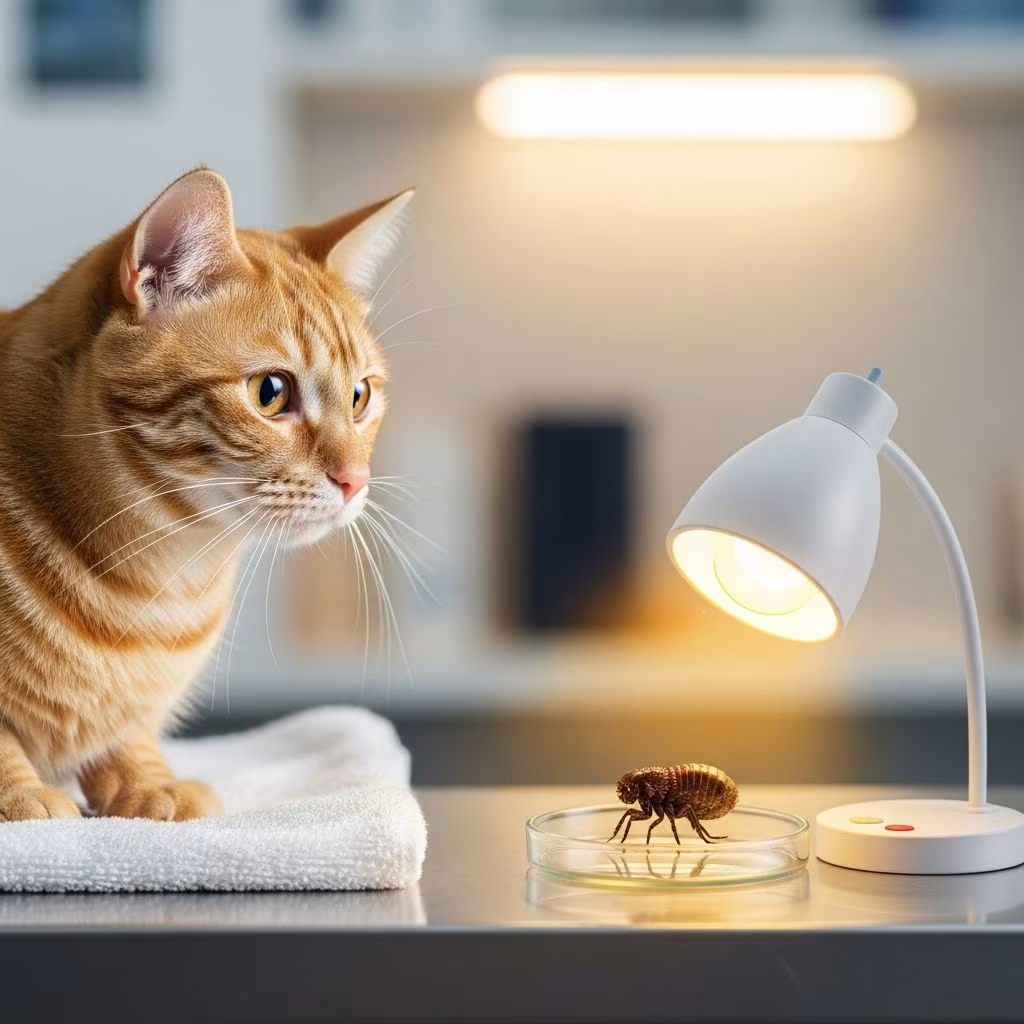
Fleas pose a persistent threat to cats, thriving in warm environments and rapidly multiplying if unchecked. While extreme heat disrupts their survival, applying it directly to feline hosts carries substantial dangers, making it an unreliable and risky choice for pet treatment. Instead, targeted environmental heat strategies combined with veterinary-approved interventions offer the safest path to eradication.
The Science Behind Temperature and Flea Survival
Fleas, particularly the cat flea (Ctenocephalides felis), exhibit precise thermal tolerances across their life stages. Adult fleas perish when exposed to temperatures exceeding 95°F (35°C) for prolonged periods, typically within two days under low humidity conditions. This threshold stems from their inability to regulate internal body heat, leading to dehydration and metabolic failure.
Flea eggs prove more resilient, surviving briefly up to 100.4°F (38°C), but they desiccate rapidly in dry air above 95°F. Larvae fare worse, with most failing to mature even if eggs hatch in marginal heat; those that spin cocoons ultimately die inside without emerging as adults. Pupae, encased in protective silk, demand even higher sustained temperatures around 120°F to ensure complete kill rates.
Optimal flea proliferation occurs between 70°F and 85°F (21°C-29°C) with moderate humidity, explaining summer infestations in temperate regions. Beyond these bounds, mortality accelerates: below 46°F (8°C), activity halts, and prolonged exposure under 32°F (0°C) proves fatal.
Why Heat Directly on Cats Fails and Endangers Pets
Although heat targets fleas effectively in inanimate objects, subjecting a live cat to lethal flea temperatures—over 95°F—invites catastrophe. Feline skin burns at around 104°F (40°C), with fur providing minimal insulation against rapid heat transfer. Prolonged exposure risks hyperthermia, organ damage, and painful dermal injuries, far outweighing any flea-killing benefits.
Practical challenges compound the issue. Fleas burrow deep into fur, evading uniform heating, while a cat’s body heat (typically 100.5°F-102.5°F) offers them a natural refuge. Movement during treatment further prevents consistent exposure, rendering the method inefficient. Veterinary consensus prioritizes pharmacological options over thermal risks for direct pet application.
Safe Heat Applications for Flea Control in the Home
Redirect heat efforts toward flea hotspots: bedding, upholstery, and carpets where eggs and larvae harbor. Laundry cycles exemplify this approach—wash in hot water (minimum 95°F) for 10 minutes, then dry on high heat (120°F+) for 30 minutes. Tumbling motion, desiccation, and detergents synergize to drown, damage, and dehydrate pests.
- Bedding and Fabrics: Process all pet-contact items weekly during infestations.
- Steam Cleaning: Devices emitting 120°F+ vapor penetrate cracks, killing pupae inaccessible to sprays.
- Dryers for Toys: Seal non-washables in bags and heat-treat to avoid re-infestation.
Outdoor summer heat naturally curbs populations when ambient temperatures surpass 95°F for over 40 hours monthly, particularly in sun-exposed areas. Enclosed spaces like vehicles or sheds amplify this effect through trapped warmth.
Professional Heat Remediation Services
For severe infestations, certified exterminators deploy industrial heaters to elevate indoor temperatures to 120°F-140°F for hours, achieving over 95% flea elimination in one session. Technicians monitor humidity and use fans for even distribution, targeting all life stages without chemicals. Pets must vacate premises during treatment, returning only after cooling and ventilation.
| Method | Temperature Needed | Duration | Effectiveness |
|---|---|---|---|
| Household Dryer | 120°F+ | 30+ minutes | Adults, eggs, larvae |
| Steam Cleaner | 120°F+ | Continuous pass | Pupae, hidden stages |
| Professional Heat | 130°F-140°F | 4-8 hours | 100% all stages |
| Outdoor Sun | 95°F+ | 40+ hours/month | Environmental control |
Veterinary-Recommended Treatments for Cats
Direct cat treatment demands precision to avoid resistance and side effects. Topical spot-ons (e.g., fipronil, imidacloprid) applied monthly disrupt flea nervous systems, killing adults and preventing egg maturation. Oral isoxazolines like fluralaner offer 1-3 month protection with systemic action.
Flea combs remove visible adults mechanically—comb daily into soapy water for drowning. Bathe with mild shampoos to dislodge debris, but avoid over-bathing to preserve skin oils. Integrated pest management (IPM) combines these with home sanitation for holistic control.
- Consult vets for prescription-strength options tailored to age, weight, and health.
- Monitor for resistance; rotate products if efficacy wanes.
- Vaccinate against flea allergy dermatitis in sensitive cats.
Preventing Flea Reinfestation Year-Round
Fleas complete cycles in 2-3 weeks under ideal conditions, with 95% off-host in environments. Vacuum daily, emptying bags outside, to destroy eggs and larvae. Mow lawns short and treat yards with nematodes—microscopic worms that devour flea larvae without harming pets.
Seasonal vigilance peaks in warm months, but indoor heating sustains populations year-round. Monthly preventatives on all pets block introductions. Regular grooming reveals early signs: flea dirt (black specks turning red in water), itching, or tapetal shine from anemia.
Frequently Asked Questions (FAQs)
Does a hot dryer kill fleas on cat bedding?
Yes, high-heat drying at 120°F for 30 minutes eliminates all stages, enhanced by prior hot washing.
Can I use a hairdryer on my cat for fleas?
No, it risks burns and uneven heating; opt for vet products instead.
What temperature kills flea eggs instantly?
Eggs require sustained 120°F+; brief exposure above 100°F suffices in dry conditions.
Are heat treatments safe for homes with cats?
Yes, if professionals handle it and cats are removed during the process.
How long do fleas live in hot weather?
Adults die within days above 95°F if humidity stays below 75%.
Holistic Flea Management Blueprint
Eradicating fleas demands a multi-pronged assault. Week 1: Bathe cat, comb thoroughly, launder all fabrics on hot cycles. Vacuum obsessively. Apply topical preventative. Weeks 2-4: Repeat sanitation, monitor with combs. Engage pros for heat if needed. Maintenance: Monthly preventatives, bi-weekly vacuums. This blueprint minimizes chemical reliance while maximizing efficacy.
Understanding flea biology empowers owners. Heat’s lethality is undeniable, but application precision safeguards feline companions. Pair thermal home tactics with pharma for unbeatable defense.
References
- Does heat kill fleas? – FleaScience — FleaScience. Accessed 2026. https://fleascience.com/flea-encyclopedia/life-cycle-of-fleas/adult-fleas/how-long-do-fleas-live-for/at-what-temperature-do-fleas-die/does-heat-kill-fleas/
- Does Heat Kill Fleas on Cats? Here’s What Science Says – Catster — Catster. Accessed 2026. https://www.catster.com/cat-health-care/does-heat-kill-fleas-on-cats/
- What Temperature Kills Fleas? – Simple Pest Management — Simple Pest Management. Accessed 2026. https://www.simplepest.com/fleas/what-temperature-kills-fleas/
- What Temperature Do Fleas Flourish In? – PetCareRx — PetCareRx. Accessed 2026. https://www.petcarerx.com/article/what-temperature-do-fleas-flourish-in/154
- Controlling Fleas – Texas A&M AgriLife Extension Service — Texas A&M AgriLife Extension Service. Accessed 2026. https://agrilifeextension.tamu.edu/library/insects/controlling-fleas/



