

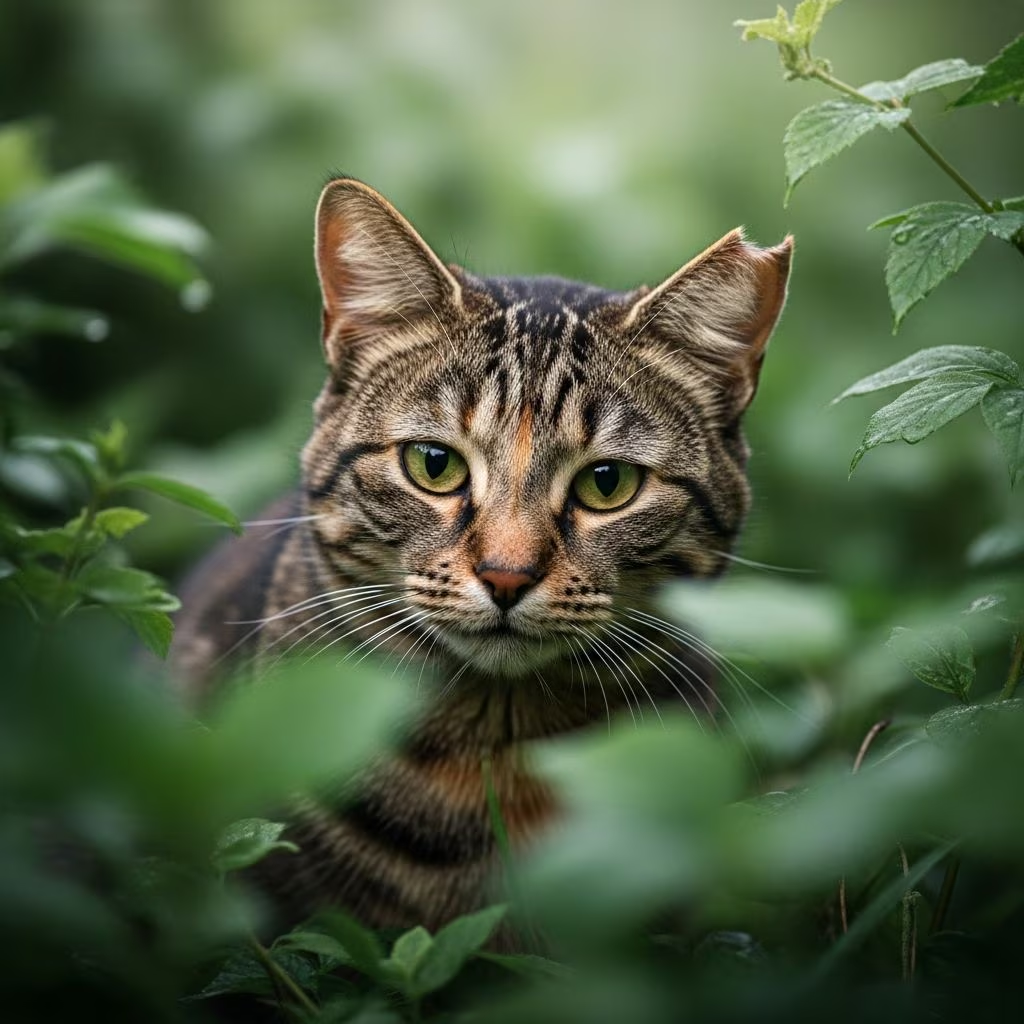
Feral cats, often seen as elusive wild felines, possess a complex relationship with humans that challenges common assumptions. While fully unsocialized adults rarely transform into affectionate pets, many can develop tolerance and even selective friendliness toward consistent caregivers through patient, non-invasive approaches. This potential hinges on understanding their innate behaviors, distinguishing them from domesticated strays, and applying evidence-based management like Trap-Neuter-Return (TNR) programs.
Defining Feral Cats: Wild at Heart but Adaptable
Feral cats are outdoor felines who either never experienced human contact or have lost socialization over time, rendering them fearful of people. Unlike pets, they prioritize survival in colonies, exhibiting instincts honed by independence. However, their adaptability shines in structured human interactions; some grow accustomed to feeding routines, showing subtle signs of recognition without seeking physical closeness.
Key traits include nocturnal activity patterns, group living in colonies, and minimal vocalization. They maintain sleek coats through self-grooming and hunting prowess, avoiding reliance on humans for sustenance. A 2011 study in Wildlife Management highlights their distinct activity cycles—nocturnal and seasonal—minimizing overlap with household pets, fostering safe coexistence.
Feral vs. Stray: Spotting the Differences
Distinguishing feral cats from strays is crucial for appropriate care. Strays, once socialized, retain familiarity with humans, often approaching homes or meowing for attention. Feral cats, conversely, evade contact, crouching low and avoiding eye contact.
| Behavior | Stray Cats | Feral Cats |
|---|---|---|
| Approach to Humans | May approach houses, porches, or people | Seeks hiding spots, avoids humans |
| Social Structure | Often solitary | Lives in colonies |
| Body Language | Tail up, eye contact, upright walk | Crouched, low to ground, tail wrapped |
| Vocalization | Meows, purrs, responds to voice | Silent, no begging |
| Activity Time | Daytime visible | Nocturnal |
| Appearance | Possibly disheveled | Clean coat, muscular (especially intact males) |
In stressful settings like traps, strays may mimic ferals by hissing or retreating, but time reveals differences: strays relax, explore toys, and tolerate proximity, while ferals remain rigid and unresponsive.
The Socialization Spectrum: Not All or Nothing
Socialization in cats isn’t binary. Kittens under 8 weeks from feral mothers can often integrate into homes with handling. Adults occupy a spectrum: “hard ferals” shun all contact, but semi-ferals—exposed to humans early—may greet familiar feeders with tail flicks or relaxed postures. Alley Cat Allies notes that caregiver familiarity can emerge over months, though indoor adoption remains unlikely.
- Kitten Potential: Early intervention yields lap cats; programs rescue thousands annually.
- Adult Tolerance: Builds via consistent feeding without forcing touch.
- Relapse Risk: Strays can feralize if isolated outdoors long-term.
Building Trust: Humane Steps for Interaction
Fostering friendliness requires respect for their boundaries. Start with distant feeding stations near shelters, maintaining 10-20 feet initially. Observe reactions: slow blinks signal progress. Never corner or chase; this entrenches fear.
TNR is foundational—trapping for neutering/spaying, vaccinating, and ear-tipping (universal feral ID) stabilizes populations humanely. Post-TNR, return to colonies reduces aggression and roaming. Chewy experts emphasize that fed ferals rarely beg, debunking pest myths, as they hunt proficiently.
- Secure food sources to avoid dependency.
- Provide insulated shelters for winter.
- Monitor health via vet checkups during TNR.
- Document behaviors for colony management.
Health and Safety Myths Debunked
Concerns about disease transmission are overstated. The CDC reports cat-to-human zoonoses as rare, especially from elusive ferals avoiding contact. Rabies risk is minimal in vaccinated TNR cats; ferals don’t spread fleas indoors like pets might.
They’re not nuisances—studies show low pet conflicts due to behavioral divergence. Communities thrive alongside managed colonies, with TNR curbing nuisances like yowling.
Challenges and Realities of Feral Life
Intact males exhibit tomcat traits: thick necks, scars, stud tail from hormones. Only 2% of U.S. ferals are neutered pre-TNR, perpetuating cycles. Females birth multiple litters yearly without intervention.
Legal landscapes vary; some areas mandate TNR, others euthanasia. Advocates push community programs, proving ferals controllable without harm.
Success Stories: From Fear to Familiarity
Numerous cases document semi-socialization. Caregivers report cats transitioning from skittish runners to porch loungers after years of routine. One colony saw 20 cats relax enough for health monitoring, per Alley Cat Allies. These bonds, though not cuddly, affirm ferals’ capacity for peaceful human adjacency.
FAQs
Can any feral cat become a pet?
Adult ferals rarely do; kittens have high success rates. Focus on TNR for adults.
How long to socialize a feral kitten?
2-6 weeks with daily handling; older ones take longer.
Are feral cats dangerous?
No, they avoid humans unless trapped, per experts.
What’s the best food for feral feeding?
Commercial wet/dry kibble; avoid milk or human scraps.
How to start a TNR program?
Partner with local rescues; learn humane trapping techniques.
Long-Term Colony Management Strategies
Sustainable feral care demands organization. Map colonies, track individuals via photos/ear-tips. Seasonal adjustments: extra calories in winter, parasite control year-round. Volunteer networks amplify impact, monitoring for illness like upper respiratory infections.
Environmental enrichment—scratching posts, elevated perches—reduces stress without taming. Data from programs show 30-60% population drops post-TNR, easing community tensions.
In urban settings, integrate with wildlife: ferals control rodents effectively, balancing ecosystems. Rural areas see them filling predator niches. Education combats misconceptions, promoting empathy.
References
- Feral and Stray Cats: An Important Difference — Alley Cat Allies. 2023. https://www.alleycat.org/resources/feral-and-stray-cats-an-important-difference/
- Feral Cat Behavior: 6 Common Misconceptions — Chewy. 2023. https://www.chewy.com/education/cat/training-and-behavior/feral-cat-behavior
- Feral or Stray – An Important Difference — Feral Cat Focus. 2023. https://feralcatfocus.org/feral-or-stray/
- Feral Cats 101 — Animal Humane Society. 2023. https://www.animalhumanesociety.org/resource/feral-cats-101
- Feral Cat Care Guide — Texas Ferals. 2023. https://texasforthem.org/feral-cat-guide/



