

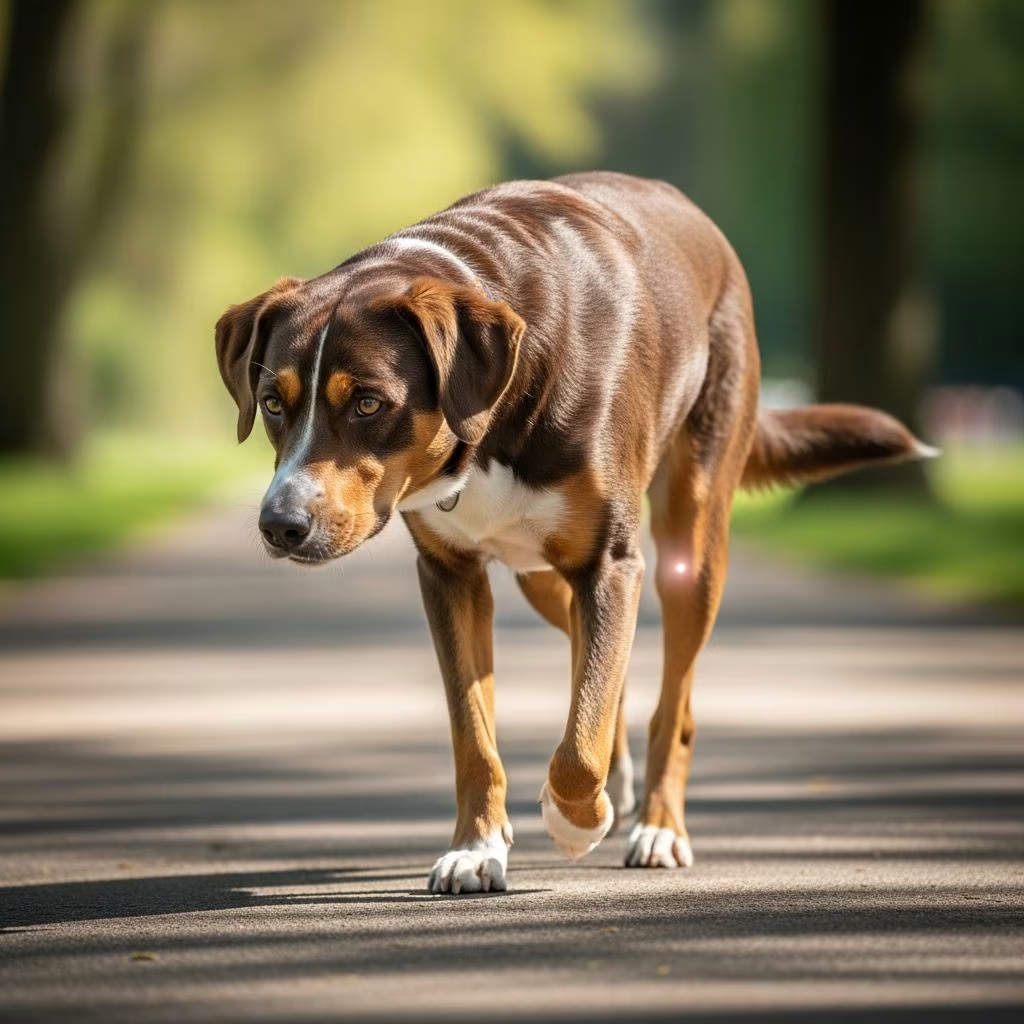
Dogs can often walk on a torn anterior cruciate ligament (ACL), also known as the cranial cruciate ligament (CCL) in veterinary terms, but doing so risks worsening the injury and accelerating joint degeneration. While many dogs exhibit limping or partial weight-bearing, continued activity without intervention leads to pain, instability, and secondary arthritis.
Understanding the Canine ACL and Its Role
The ACL is a critical ligament in a dog’s knee (stifle joint) that stabilizes the tibia relative to the femur, preventing forward sliding during movement. Unlike humans, where ACL tears often stem from acute trauma, canine tears frequently develop gradually from repetitive stress, conformational issues, or degenerative changes. This makes early detection vital, as 60% of dogs with one torn ACL develop issues in the opposite knee due to compensatory overuse.
Large breeds like Labrador Retrievers, Rottweilers, and Pit Bulls are predisposed due to their size and activity levels, but any dog can be affected. The ligament’s rupture disrupts normal gait, forcing unnatural joint mechanics that strain surrounding tissues.
Key Indicators of a Torn ACL in Dogs
Recognizing symptoms promptly allows for timely intervention. Common signs include:
- Sudden or progressive limping on a hind leg, often non-weight bearing initially
- Stiffness after rest or exercise, improving temporarily with movement
- Swelling or warmth around the knee joint
- Difficulty rising, jumping, or climbing stairs
- Toe-touching stance, where the dog barely places weight on the foot
- Audible clicking or grinding during motion, indicating instability
Partial tears may cause intermittent lameness, worsening post-activity, while complete tears lead to persistent non-use of the leg. If symptoms persist beyond 48 hours or include dragging the leg, seek veterinary care immediately to rule out fractures or other issues.
Diagnostic Process for Suspected ACL Tears
Veterinarians diagnose ACL tears through physical exams, including the drawer test (checking tibial forward slide) and tibial compression test. Imaging confirms the injury: X-rays reveal joint effusion, bone changes, or arthritis; advanced options like CT or MRI assess ligament integrity precisely. Sedation may be needed for thorough palpation in painful dogs. Early diagnosis prevents cranial cruciate ligament disease (CCLD) progression to chronic arthritis.
Non-Surgical Management Strategies
For small dogs under 50 pounds, less active pets, or those with surgical contraindications, conservative care can succeed, especially for partial tears. Core elements include:
- Strict Rest: Crate confinement for 6-12 weeks, limiting walks to 5-10 minutes on leash
- Weight Control: Reducing body weight alleviates joint stress; aim for gradual loss via diet
- Medications: NSAIDs like carprofen for pain and inflammation; avoid long-term steroids
- Supplements: Glucosamine, chondroitin, and omega-3s support cartilage health
- Physical Therapy: Passive range-of-motion exercises, massage, and controlled swims
- Knee Bracing: Custom braces stabilize the joint, promoting scar tissue healing when paired with rest
Success rates vary: up to 50% of small dogs recover functionally, but larger breeds often fail non-surgical approaches due to poor healing. Monitor for worsening lameness, signaling the need for surgery.
Surgical Interventions for ACL Ruptures
Surgery is the gold standard for medium-to-large or active dogs, offering 90-95% return to function. Procedures alter knee biomechanics to bypass the ligament.
| Procedure | Best For | Recovery Time | Success Rate |
|---|---|---|---|
| TPLO (Tibial Plateau Leveling Osteotomy) | Large/athletic dogs | 12-16 weeks | 95%+ |
| TTA (Tibial Tuberosity Advancement) | Medium-large dogs | 12-16 weeks | 90-95% |
| Extracapsular Repair (Lateral Suture) | Small dogs <50 lbs | 8-12 weeks | 85-90% |
TPLO: Cuts and rotates the tibial plateau, secured by a plate; eliminates instability regardless of ligament healing.
TTA: Advances the tibial tuberosity to balance forces; ideal for specific conformations.
Lateral Suture: External suture mimics ligament until fibrosis stabilizes; simpler, cost-effective for small dogs.
Costs range $3,000-$6,000 per knee, depending on procedure and location. Board-certified surgeons improve outcomes.
Detailed Recovery Roadmap Post-Treatment
Recovery demands patience to avoid re-injury. Phased timelines:
- Weeks 1-4: Absolute rest, short leash walks, pain meds, passive exercises
- Weeks 5-8: Introduce hydrotherapy, laser therapy, controlled rehab
- Weeks 9-12+: Gradual strengthening, return to activity under supervision
Rehab modalities enhance healing:
- Hydrotherapy: Low-impact muscle building
- Cold laser: Reduces swelling
- Acupuncture/massage: Improves circulation
Follow-up X-rays at 8 weeks verify bone healing. Full activity resumes at 4-6 months.
Preventing ACL Injuries and Contralateral Tears
Proactive steps mitigate risks:
- Maintain ideal weight to lessen joint load
- Avoid sudden twists on slippery floors
- Use ramps for cars/stairs
- Early joint supplements for at-risk breeds
- Core strengthening exercises
Since bilateral tears are common, monitor the good leg closely post-diagnosis.
FAQs on Dog ACL Tears
Can a dog live with a torn ACL without surgery?
Yes, small or sedentary dogs may manage with rest and therapy, but large dogs risk arthritis.
How long can a dog walk on a torn ACL?
Indefinitely with adaptation, but pain and degeneration progress without treatment.
Is TPLO better than bracing?
TPLO offers superior long-term stability for active dogs; bracing suits select cases.
What if my dog tore both ACLs?
Treat one knee first, then the other after 6 months; conservative management for both is rare.
Does pet insurance cover ACL surgery?
Many plans do, excluding pre-existing conditions; check policy details.
Long-Term Outlook and Prognosis
With appropriate treatment, 85-95% of dogs regain near-normal function, enjoying pain-free activity. Untreated tears lead to osteoarthritis within 1-2 years, causing chronic lameness. Owners report high satisfaction post-TPLO, with dogs resuming hikes and play. Consult a veterinary orthopedic specialist for tailored plans, prioritizing your dog’s size, age, and lifestyle.
References
- What Is The Best Treatment For A Dog With A Torn Acl? — Rearoad Animal Hospital. 2023. https://www.rearoadanimalhospital.com/best-treatment-for-a-dog-with-a-torn-acl/
- ACL (CCL) Injuries in Dogs & Available Treatment Options — Carolina Veterinary Specialists. 2020-05-14. https://www.rock-hill.carolinavet.com/site/blog/2020/05/14/acl-ccl-injuries-in-dogs-available-treatment-options
- How to Tell If Your Dog Has a Torn ACL and What to Do Next — Stack Veterinary Hospital. 2024. https://stackvethospital.com/how-to-tell-if-your-dog-has-a-torn-acl-and-what-to-do-next/
- Treating a torn ACL in dogs — Shane Veterinary Medical Center. 2024-06-25. https://www.shanevet.com/site/blog/2024/06/25/torn-acl-dogs
- Orthopedic Vet Guide: ACL Injuries in Dogs – Diagnosis & Care — Harvester Animal Clinic. 2024. https://harvesteranimalclinic.com/top-notch-veterinary-orthopedic-surgery-in-st-peters-mo/acl-injuries-in-dogs-diagnosis-treatment-and-recovery-with-an-orthopedic-vet/
- Dog ACL Tear Recovery Without Surgery: Non-Surgical Treatment — Ortho Dog. 2024. https://orthodog.com/blogs/sit-stay-heal/can-a-dog-recover-from-an-acl-tear-without-getting-surgery



