

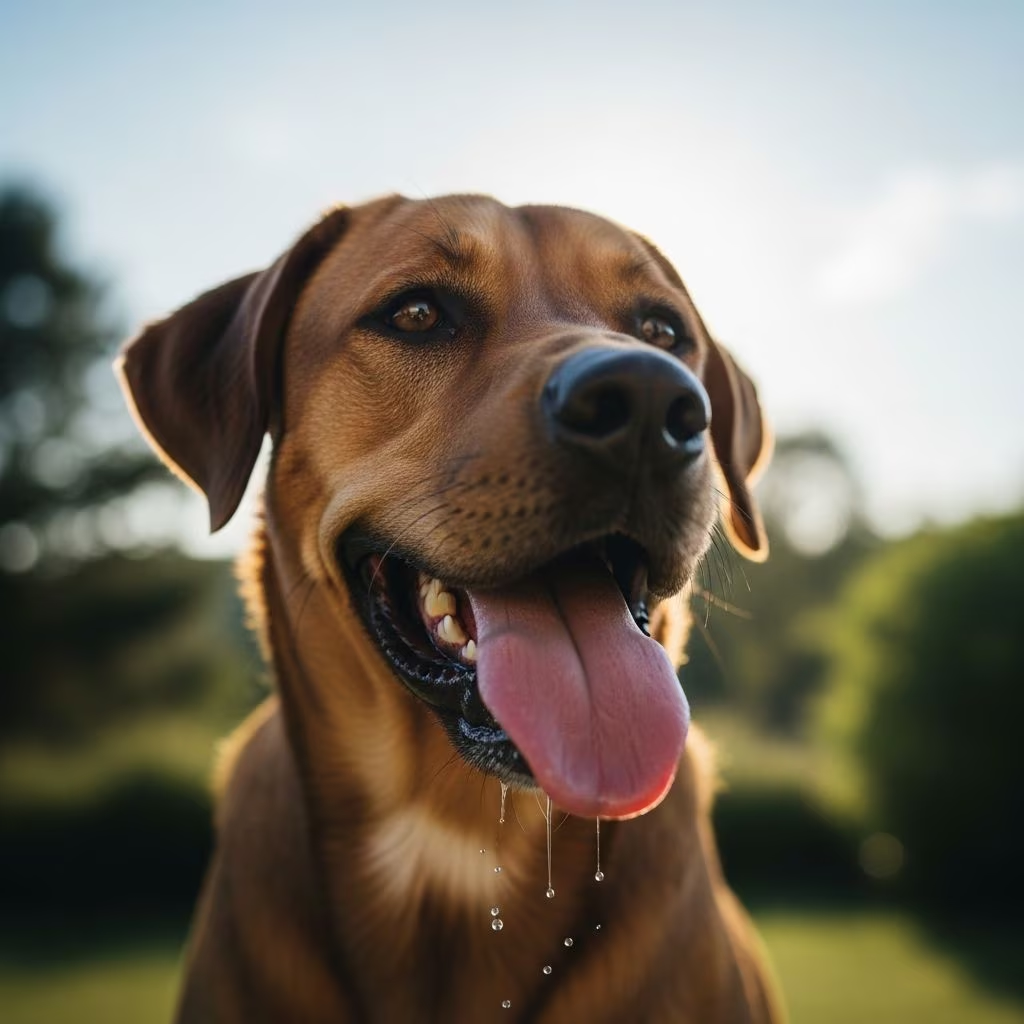
Can Dogs Sweat?
Many pet owners wonder whether their dogs can sweat, especially on hot summer days when their pups seem to struggle with heat. The answer is yes—dogs do sweat, but not in the way humans do. While humans rely on visible sweating across their entire body as their primary cooling mechanism, dogs have a much more limited sweating ability concentrated in specific areas. Understanding how dogs sweat and how they regulate their body temperature is essential for keeping your furry friend safe and comfortable in warm weather.
Types of Dog Sweat Glands
Dogs have two distinct types of sweat glands that serve very different purposes. Each type plays a specific role in your dog’s physiology, and understanding the difference between them helps explain why dogs don’t sweat like humans.
Merocrine Sweat Glands (Eccrine Glands)
Merocrine sweat glands, also called eccrine glands, function similarly to human sweat glands. These glands are made of secretory cells and are almost exclusively located on your dog’s paw pads. When your dog becomes hot or experiences stress and nervousness, these glands secrete a watery fluid that helps with temperature regulation. You might notice damp paw prints on your floor or the ground during hot weather—this is your dog’s merocrine sweat at work. The sweat that evaporates from these hairless paw pads releases a small amount of body heat, contributing minimally to overall cooling.
The fluid secreted from merocrine glands consists mostly of water. As this water evaporates from the paw pad surface, it helps cool the dog’s body, similar to how evaporative cooling works in humans. However, since these glands are only located on the paws, they provide limited cooling capacity compared to human sweating across the entire body.
Apocrine Sweat Glands
Apocrine sweat glands are fundamentally different from merocrine glands and serve an entirely different purpose. These glands are found all over your dog’s body, located at the base of hair follicles in hairy areas. Rather than participating in temperature regulation, apocrine glands primarily release pheromones that help dogs communicate and identify other dogs by scent. While veterinarians technically classify apocrine glands as sweat glands, their main function is scent communication, not cooling. The secretions from apocrine glands are not designed for thermoregulation and don’t contribute meaningfully to keeping your dog cool.
Why Dogs Don’t Sweat Like Humans
The reason dogs don’t sweat profusely across their entire body comes down to fur coverage. Most dogs are covered with thick coats of fur, which creates a significant problem for whole-body sweating. If dogs had sweat glands distributed across their fur-covered skin like humans have across their bare skin, the sweat would become trapped in the fur and fail to evaporate. Since cooling occurs through evaporation, trapped sweat would be virtually useless for temperature regulation. Evolution has made dogs much more efficient by concentrating their thermoregulatory sweat glands in hairless areas where evaporation can actually occur.
This anatomical adaptation explains why most dog sweat glands are positioned on the paws and nose—areas with minimal fur coverage. The efficiency of these placement locations allows whatever sweat is produced to evaporate and cool the dog, rather than being wasted in the fur.
How Dogs Actually Cool Down
Since sweating through skin isn’t an effective cooling mechanism for dogs, they rely on several alternative methods to regulate body temperature and prevent overheating.
Panting: The Primary Cooling Mechanism
The primary way dogs cool themselves is through panting. Panting involves rapid, shallow breathing that accelerates evaporative cooling from the moist surfaces inside the mouth and lungs. By breathing air quickly over these wet internal surfaces, dogs achieve cooling effects similar to what happens when a breeze speeds up evaporation from a sweaty human’s skin. Panting is far more effective for dogs than their limited sweating ability because it affects a much larger surface area of moist tissue. The water that evaporates from the dog’s tongue, nasal passages, and lungs helps lower body temperature significantly.
Vasodilation
Another important cooling mechanism is vasodilation, which is the expansion of blood vessels. When dogs get hot, the blood vessels in their ears, face, and other areas near the skin’s surface expand. This expansion brings hot blood closer to the surface of the skin, allowing it to cool down before returning to the heart. Vasodilation helps regulate internal body temperature more efficiently than sweating alone could achieve.
Behavioral Cooling
Dogs also cool themselves through behavioral adaptations. Seeking shade, drinking water, reducing activity levels, and resting in cool spots all help dogs manage their body temperature when it gets too hot.
Where Dogs Sweat
Understanding exactly where dogs can sweat helps you recognize signs that your dog is overheating or stressed.
| Location | Gland Type | Function | Observable Signs |
|---|---|---|---|
| Paw Pads | Merocrine (Eccrine) | Temperature regulation and possibly traction | Damp or wet paw prints on floors or ground |
| Nose | Merocrine (Eccrine) | Temperature regulation | Moist nose appearance |
| All Over Body (Hairy Areas) | Apocrine | Pheromone release and scent communication | No visible signs; odor detection by other dogs |
Is Sweat Related to Traction?
Interestingly, some experts speculate that the sweat from a dog’s paw pads may serve a dual purpose. Beyond contributing to temperature regulation, the moisture from merocrine sweat glands may help with traction and grip by making paws slightly tackier. This would make the paw pads stick better to surfaces, improving a dog’s ability to move confidently across different terrain. This secondary function could explain why dogs have evolved to maintain sweat glands specifically in this location.
Common Misconceptions About Dog Sweating
Several myths surround dog sweating and cooling. Understanding the facts helps you better care for your pet:
- Myth: Dogs don’t sweat at all. Fact: Dogs do sweat from their paw pads and possibly their nose, but it’s not their primary cooling method.
- Myth: Dogs sweat through their fur like humans do. Fact: Dogs have apocrine glands throughout their fur-covered body, but these serve scent communication, not cooling.
- Myth: You can smell dog sweat. Fact: Dog sweat from paw pads doesn’t produce a distinctive odor, though the “corn chip” smell sometimes noticed on paws results from bacteria on the skin, not sweat itself.
- Myth: Sweating is how dogs stay cool in hot weather. Fact: Panting is the primary cooling mechanism; sweating plays only a minor role.
Signs Your Dog Is Overheating
Since dogs don’t cool as effectively through sweating as humans do, it’s crucial to recognize signs of overheating and heat stress. Watch for these warning signs:
- Excessive panting or difficulty breathing
- Drooling or foaming at the mouth
- Red or pale gums
- Weakness or collapse
- Vomiting or diarrhea
- Trembling or seizures
- Lethargy or unresponsiveness
- Wet paw prints that are more pronounced than usual
If you notice any of these signs, move your dog to a cooler location immediately, offer water, and contact your veterinarian.
How to Keep Your Dog Cool
Since dogs have limited natural cooling abilities, you should take active steps to help them stay comfortable in warm weather:
- Provide plenty of fresh water: Hydration is essential for thermoregulation and panting effectiveness.
- Walk during cooler times: Exercise your dog during early morning or evening hours rather than during peak heat.
- Avoid hot surfaces: Hot asphalt, pavement, and sand can burn paw pads and overheat your dog quickly.
- Create shaded areas: Ensure your dog has access to shade outdoors and cool indoor spaces.
- Limit activity: Reduce exercise intensity during hot weather.
- Never leave dogs in cars: Parked cars reach dangerous temperatures within minutes.
- Consider cooling aids: Dog cooling vests, ice packs, and kiddie pools can help.
- Groom appropriately: While some coat trimming can help, don’t shave double-coated breeds, as fur provides insulation from both heat and sun.
Frequently Asked Questions
Q: Do all dogs sweat equally?
A: No. Some breeds with longer, finer hair may have more developed sweat glands. However, all dogs have merocrine sweat glands concentrated on their paw pads, making sweating capacity relatively limited across all breeds.
Q: Can you see dog sweat?
A: Yes, on hot days you might see damp paw prints left behind by your dog as they walk across dry surfaces. This visible moisture is the sweat produced by merocrine glands on the paw pads.
Q: Is panting the same as sweating in dogs?
A: No. Panting and sweating are different cooling mechanisms. Panting involves rapid breathing to evaporate moisture from the mouth, throat, and lungs. Sweating is the secretion of fluid from sweat glands. Dogs rely primarily on panting for cooling.
Q: Why do dogs sweat when anxious?
A: Merocrine sweat glands activate in response to both heat and emotional stress, such as anxiety or excitement. This is why nervous dogs may leave damp paw prints even in cool environments.
Q: Are certain dog breeds more prone to overheating?
A: Yes. Brachycephalic breeds (flat-faced dogs like Bulldogs and Pugs) struggle more with heat because their shortened airways limit panting effectiveness. Dark-colored dogs also absorb more heat than light-colored ones.
Q: What is the “Frito Feet” smell on dog paws?
A: The corn chip or Frito-like odor sometimes detected on dog paws comes from bacteria and yeast naturally present on the skin, not from dog sweat itself. This odor is harmless in most cases.
References
- Why don’t dogs sweat? — Science Questions with Surprising Answers. 2013-10-09. https://www.wtamu.edu/~cbaird/sq/2013/10/09/why-dont-dogs-sweat/
- Do Dogs Sweat? — PetMD. https://www.petmd.com/dog/general-health/do-dogs-sweat
- Do Dogs Sweat? How Dogs Stay Cool and Prevent Overheating — BasePaws. https://basepaws.com/blog/do-dogs-sweat
- Do Dogs Sweat? — American Kennel Club. https://www.akc.org/expert-advice/health/do-dogs-sweat/
- How Do Dogs Regulate Their Body Temperature and Is Sweating Important? — Ask Animal Web. https://askanimalweb.com/how-do-dogs-regulate-their-body-temperature-and-is-sweating-important/
- Do Dogs Sweat? Plus, How Dogs Cool Themselves Down — GoodRx. https://www.goodrx.com/pet-health/dog/do-dogs-sweat
- Do Dogs Sweat? — Live Science. https://www.livescience.com/55553-do-dogs-sweat.html



