

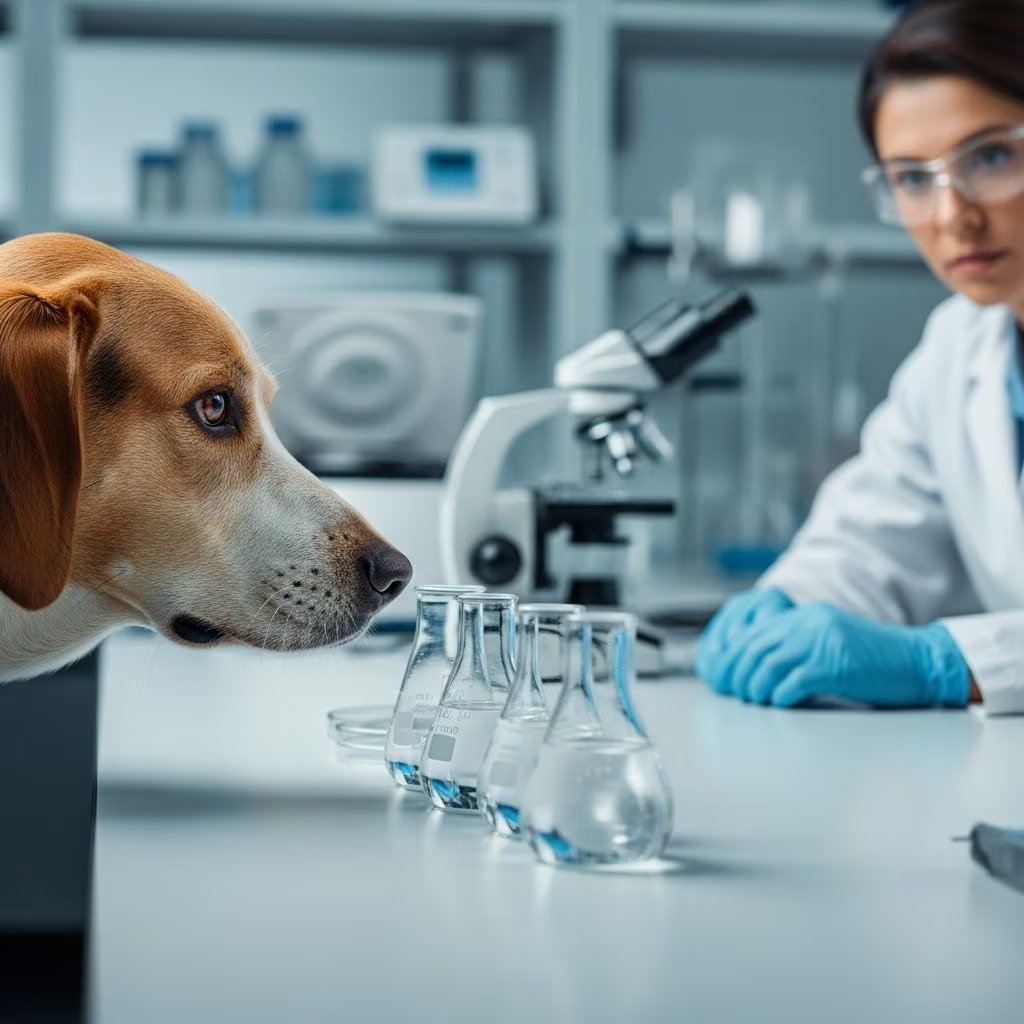
Dogs possess an extraordinary sense of smell, thousands of times more powerful than humans’, allowing them to detect volatile organic compounds (VOCs) associated with cancer cells. Multiple peer-reviewed studies confirm that trained dogs can identify various cancers in humans and even other dogs with impressive accuracy, often exceeding 90% sensitivity and specificity in controlled trials.
How Dogs’ Noses Work Better Than Machines
A dog’s olfactory system contains up to 300 million receptors compared to humans’ 6 million, enabling detection of scents at parts per trillion levels. Cancer cells emit unique VOC signatures through breath, urine, sweat, and saliva, which dogs learn to distinguish during training.
Research from the University of Wisconsin demonstrates dogs trained on canine saliva samples achieved high sensitivity and specificity in distinguishing malignant tumors from healthy controls. Similarly, studies using exhaled breath show dogs outperforming tissue-based training, with one trial reporting 91.7% sensitivity and 85.1% specificity for lung cancer detection.
Scientific Evidence: What Studies Show
Decades of research validate dogs’ cancer-detection capabilities. A landmark 2019 study in the Journal of the American Osteopathic Association found dogs 97% accurate in identifying lung cancer from breath samples.
- Lung Cancer: Dogs trained on exhaled breath achieved 71.3–97.6% sensitivity (mean 83.9%) and low false positives (mean 7.6%) across all stages and types.
- Breast and Ovarian Cancer: Detected via breath with sensitivities up to 97%.
- Prostate and Bladder Cancer: Identified through urine samples.
- Colorectal Cancer: Recognized in breath and stool.
- Canine Cancer: Dogs distinguished cancer-laden saliva from healthy samples with minimal misses.
Breath samples consistently yield superior results over urine or tissue, as dogs respond better to gaseous VOCs. Training with breath targets produced higher diagnostic rates than tissue or urine methods.
How Dogs Are Trained to Detect Cancer
Training employs positive reinforcement: dogs sniff samples (breath, urine, saliva in tubes or masks) and receive treats for correct identifications. Protocols include:
- Initial Exposure: Familiarization with cancer vs. healthy samples from confirmed cases and controls.
- Discrimination Training: Learning to ignore similar scents from non-cancer diseases.
- Blind Testing: No rewards; accuracy measured on novel samples.
- Generalization: Adapting to diverse patient demographics and environments.
Six dogs in a lung cancer study progressed through three stages, achieving peak performance with breath training (response rates 8–55% for positives). Breeds like German Shepherds, Labradors, and mixed breeds excel due to strong noses and trainability.
| Training Sample | Sensitivity | Specificity | Best For |
|---|---|---|---|
| Exhaled Breath | 91.7% | 85.1% | Lung, Breast, Colorectal |
| Urine | 5–30% response | Variable | Prostate, Bladder |
| Saliva (Canine) | High (few misses) | High | Dog Cancers |
| Tissue | 50.4% | 50.1% | Less Effective |
Types of Cancer Dogs Can Detect
Dogs identify biomarkers for multiple cancers:
- Lung Cancer: Independent of stage, type, or location; 97% accuracy in some trials.
- Breast Cancer: Breath-based detection.
- Prostate Cancer: Urine sniffing.
- Melanoma and Ovarian: Early studies show promise.
- Canine Lymphomas/Sarcomas: Saliva samples from dogs.
No significant differences in detection across histological types or tumor locations. Services like CancerDogs use breath screening for all cancer types.
Real-World Applications and Limitations
Trained dogs screen at clinics, airports, and events. During COVID-19, dogs detected viruses, paving the way for cancer programs. Organizations deploy teams for population screening where imaging is inaccessible.
Challenges:
- Handler bias and environmental interference.
- Scalability: Needs more dogs and standardized protocols.
- Validation: Larger trials required for FDA approval.
- Cost-effectiveness vs. machines debated, but dogs offer portability.
Future pilots integrate dogs with AI for hybrid diagnostics.
Can Dogs Detect Cancer in Other Dogs?
Yes—a University of Wisconsin study trained six dogs on 139 cancer and 161 healthy canine saliva samples. Results showed high accuracy, missing only four cancers total, proving dogs detect lymphoma, sarcomas, and more in fellow pets. This could revolutionize veterinary oncology.
Frequently Asked Questions (FAQs)
Can any dog be trained to sniff out cancer?
Breeds with strong scenting abilities like Labradors, Shepherds, and hounds perform best, but any motivated dog can learn with proper training.
How accurate are cancer-sniffing dogs?
Accuracy reaches 97% for lung cancer and high sensitivity/specificity for others, though results vary by sample type and training.
What samples do dogs use to detect cancer?
Primarily breath, urine, saliva, and stool; breath yields the highest success rates.
Is dog cancer detection used in vet clinics?
Emerging; proof-of-concept studies support it, with calls for larger trials.
Could my dog alert me to my own cancer?
Anecdotal cases exist, but trained medical detection dogs are far more reliable.
Future of Canine Cancer Detection
With ongoing research, dogs could become standard for early screening, especially in underserved areas. Combining canine olfaction with tech promises non-invasive, cost-effective diagnostics. Programs are expanding to felines and more cancers.
References
- Sniffer Dogs Diagnose Lung Cancer by Recognition of Exhaled Gases — Kaohsiung Chang Gung Hospital et al. 2023-02-21. https://pmc.ncbi.nlm.nih.gov/articles/PMC9954099/
- Research Suggests Dogs Can Be Trained to Sniff Out Cancer in Other Dogs — University of Wisconsin School of Veterinary Medicine. 2024. https://www.vetmed.wisc.edu/research-suggests-dogs-can-be-trained-to-sniff-out-cancer-in-other-dogs/
- Can Dogs Sniff Out Cancer? Exploring the Role of Medical Detection Dogs — Frontiers in Medicine. 2025. https://www.frontiersin.org/journals/medicine/articles/10.3389/fmed.2025.1644112/full
- Can Dogs Smell Cancer? — Roswell Park Comprehensive Cancer Center. 2020-08-27. https://www.roswellpark.org/cancertalk/202008/can-dogs-smell-cancer
- Cancer-Sniffing Dogs 97% Accurate in Identifying Lung Cancer — American Osteopathic Association. 2019-06-17. https://osteopathic.org/2019/06/17/cancer-sniffing-dogs-97-accurate-in-identifying-lung-cancer-according-to-study-in-the-journal-of-the-american-osteopathic-association/



