

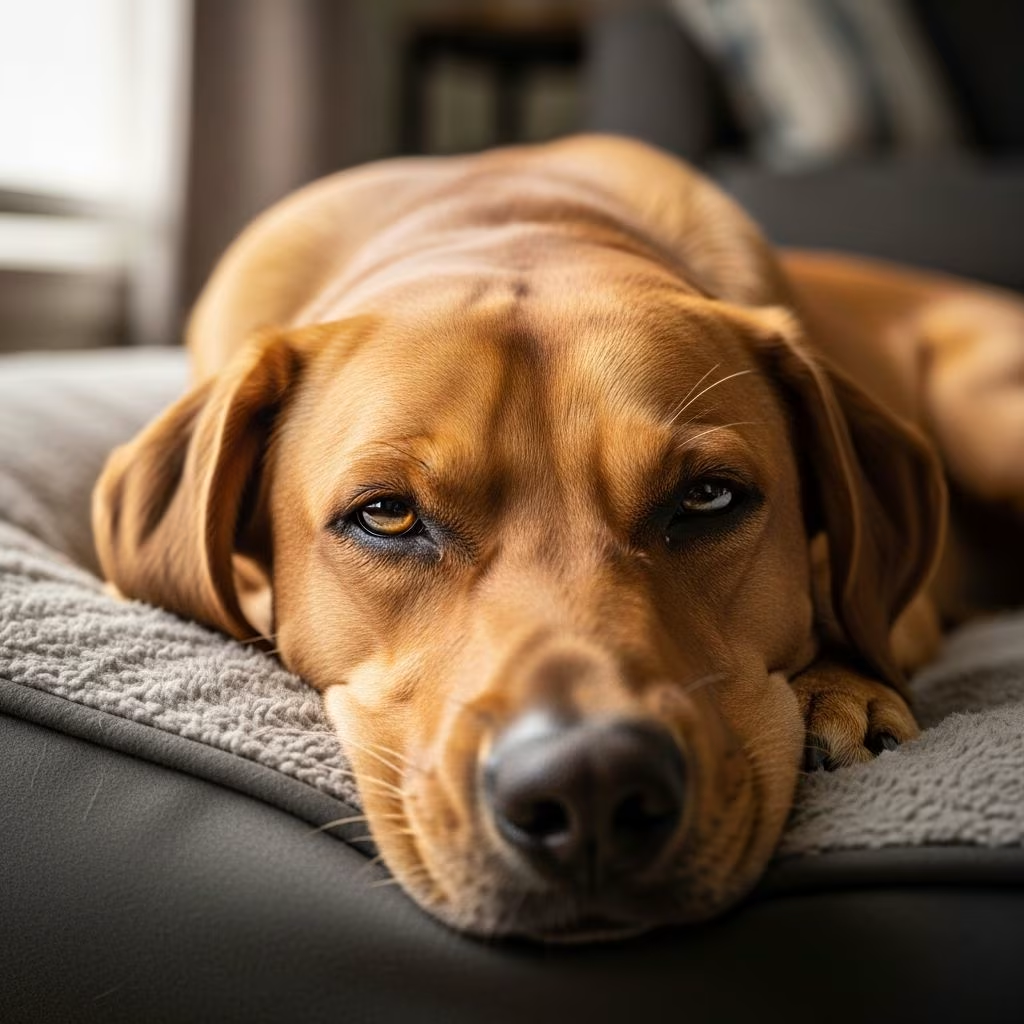
Dogs frequently sleep with their eyes open or partially open, a behavior rooted in their unique sleep cycles and anatomy. Unlike humans, who fully close their eyes during sleep, dogs enter rapid eye movement (REM) stages where eyelids may relax without fully closing, often protected by their third eyelid.
This sight can startle owners, but it’s typically harmless and linked to lighter sleep phases or evolutionary instincts. Understanding canine sleep—averaging 12-14 hours daily for adults—helps demystify it. Puppies and seniors sleep more, up to 18-20 hours.
Why Do Dogs Sleep With Their Eyes Open?
Dogs sleep with eyes open for several physiological and behavioral reasons. Experts note it’s common during lighter sleep or REM, where muscles relax deeply.
“It’s not unusual for dogs to sleep with their eyes partially open,” says Shaina Denny, co-founder of Dogdrop. This stems from eyelids not fully closing during relaxation or lighter sleep patterns.
Your Dog Is Experiencing the REM Stage of the Sleep Cycle
Dogs cycle through non-REM and REM sleep, similar to humans but with shorter cycles (about 45 minutes). REM, when dreaming occurs, features rapid eye movements under relaxed lids, often appearing open. Twitching legs, whimpers, or paddling mimic dream chases or plays—harmless unless excessive.
During REM, the brain is active but body muscles are paralyzed to prevent acting out dreams. Eyes may flutter or stay half-open, distinguishing it from seizures (stiff body, unresponsive).
The Role of the Third Eyelid (Nictitating Membrane)
Dogs possess a third eyelid, a translucent membrane in the inner eye corner that sweeps across to protect and lubricate. During sleep, it often covers the cornea when outer lids relax, creating an ‘open eyes’ illusion—actually shielded.
This ‘haw’ cleans debris and prevents drying. Breeds with prominent eyes (e.g., Pugs) rely heavily on it. Owners see a pinkish film, not exposed eyeballs.
Evolutionary Survival Instincts
Wild ancestors slept lightly to detect predators. Domesticated dogs retain this: partial eye openness maintains vigilance, tricking threats by feigning wakefulness. Alert breeds like German Shepherds exhibit this more.
Even indoors, instincts persist, especially in new environments.
Light Sleep or Dozing Phases
Dogs often nap in early non-REM stages, deeply relaxed but alert. Eyes partially open allow quick arousal—say their name, and they snap awake. This conserves energy while staying aware.
Is It Normal or a Cause for Concern?
Occasional open-eye sleep is normal, but monitor for changes. Most cases involve anatomy or sleep cycles, not issues.
- Normal signs: Occasional twitching, relaxed face, quick wake-up, no redness.
- Concerning signs: Sudden onset, excessive twitching, redness, discharge, odd sleep spots/times.
Shaina Denny advises watching for restlessness, vocalization, or discomfort alongside open eyes.
Medical Conditions That Mimic or Cause Open-Eye Sleep
Rarely, health issues present similarly:
- Cherry Eye: Third eyelid prolapses, common in Bulldogs, Beagles. Causes true exposure, dry eye risk if untreated.
- Lagophthalmos: Inability to fully close eyes (brachycephalic breeds like Pugs).
- Narcolepsy: Sudden REM collapses during activity; genetic in Labs, Dobermans.
- Seizures: Rigid, unresponsive vs. relaxed dreaming.
- Dry Eye (Keratoconjunctivitis Sicca): Irritation from poor tearing.
When to See a Vet
Consult if:
- Redness, swelling, discharge.
- Sudden behavior change.
- Falling asleep oddly (eating, walking).
- Violent tremors, incontinence.
- Breeds prone to eye issues.
Vets may check eyes, neurology, or sleep studies.
Dog Sleep Patterns Explained
Dogs sleep polyphasically: multiple short bouts. Adults need 12-14 hours; factors include age, breed, activity.
| Life Stage | Avg. Sleep Hours | Notes |
|---|---|---|
| Puppies | 18-20 | Growth-driven; frequent naps. |
| Adults | 12-14 | More active days, consolidated night sleep. |
| Seniors | 14-18 | Arthritis, cognition affect patterns. |
Breeds vary: working dogs sleep less deeply.
REM vs. Non-REM in Dogs
- Non-REM: Light dozing to deep slow-wave; restorative.
- REM: 20% of sleep; dreams, eye/twitch activity.
FAQs
Is it bad if my dog sleeps with eyes open?
No, usually normal due to third eyelid or REM. Worry if with symptoms like discharge.
Why does my dog sleep with eyes open and twitching?
REM dreaming; paddling chases dream rabbits. Distinguish from seizures by relaxation.
Can all dogs sleep with eyes open?
Common across breeds, more visible in light sleepers or those with prominent eyes.
Should I wake my dog sleeping with eyes open?
Avoid if peaceful; gentle if concerned. Sudden wakes risk injury from dream thrashing.
How to improve my dog’s sleep?
Consistent routine, comfy bed, exercise, dark/quiet space. Limit daytime naps.
Conclusion
Dogs sleeping eyes open reflects natural adaptations—REM, third eyelid, instincts—not usually worry. Observe holistically; vet for anomalies. Understanding boosts bonding, peace of mind.
References
- Can Dogs Sleep With Their Eyes Open? Strange Behavior Explained — Kinship. 2023. https://www.kinship.com/dog-behavior/can-dogs-sleep-with-eyes-open
- Is It Weird That My Dog Sleeps with Its Eyes Open? — Scenthound. 2023. https://www.scenthound.com/dogblog/is-it-weird-that-my-dog-sleeps-with-its-eyes-open
- Do dogs sleep with their eyes open? — Snoozer Pet Products. 2022-03-01. https://snoozerpetproducts.com/2022/03/do-dogs-sleep-with-their-eyes-open/
- Why Your Dog Sleeps With Their Eyes Open — PetMD. 2023. https://www.petmd.com/dog/general-health/why-your-dog-sleeps-their-eyes-open
- Dog Sleeps With Eyes Open: What Does It Really Mean? — Pawsbetter. 2023. https://pawsbetter.com/blogs/blog/dog-sleeps-with-eyes-open



