

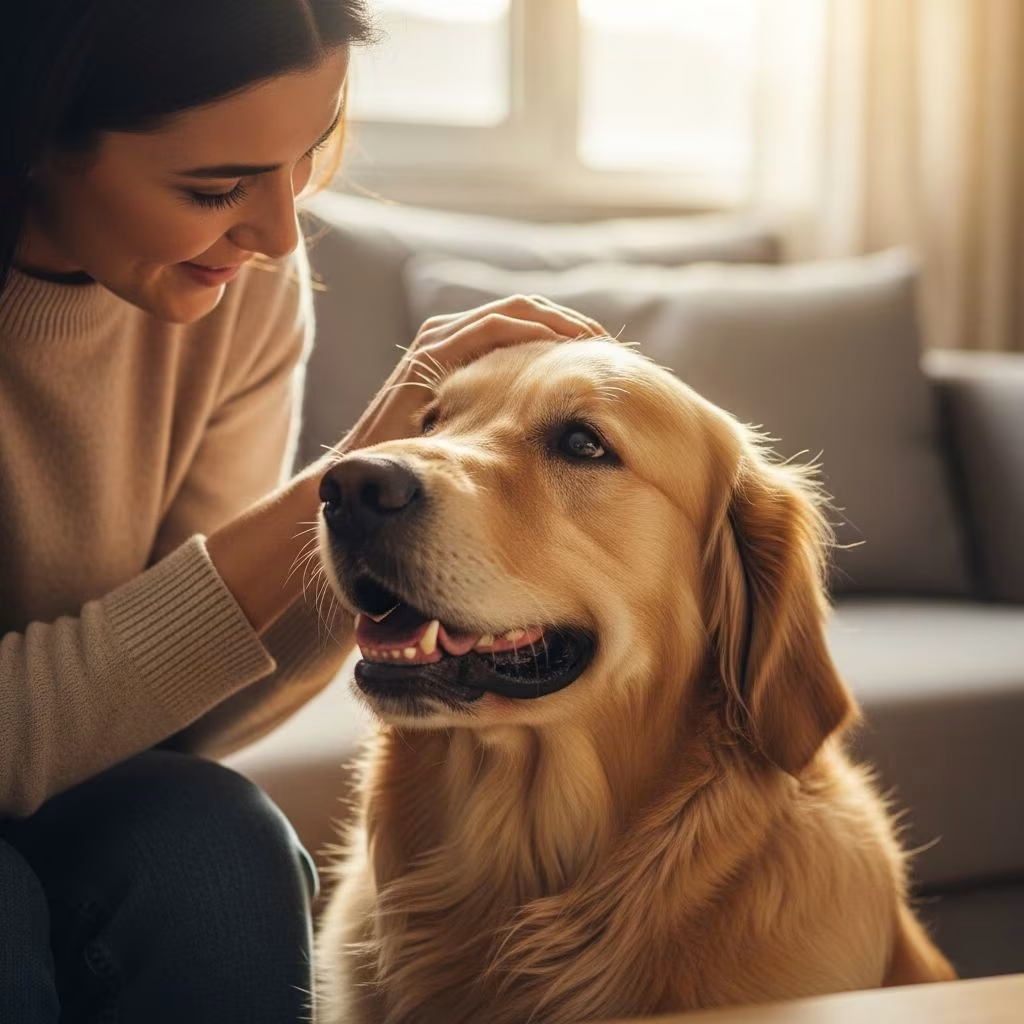
Dogs form profound emotional connections with their human companions, sensing affection through biological mechanisms like hormone release and brain activity patterns that parallel human bonding processes. Research demonstrates that these animals not only detect love but reciprocate it, strengthening the interspecies relationship that has evolved over thousands of years.
The Biological Foundations of Canine Affection
At the heart of a dog’s ability to sense love lies **oxytocin**, often called the “love hormone.” This chemical facilitates social bonding in mammals, including humans and dogs. Studies show that when dogs interact with familiar humans, their oxytocin levels rise, promoting feelings of trust and attachment.
Neuroimaging research, such as functional magnetic resonance imaging (fMRI), reveals that dogs’ brains activate reward centers when exposed to their owners’ scents. The caudate nucleus, a key reward-processing region, “lights up” specifically in response to a beloved person’s smell, indicating emotional significance.
Genetic differences from wolves further support this. Domesticated dogs exhibit heightened sensitivity to human cues, making eye contact more readily and seeking proximity, behaviors less common in their wild ancestors.
How Oxytocin Bridges Humans and Dogs
Oxytocin surges during positive interactions like petting or gazing. In one experiment, dogs and owners who engaged in mutual staring for extended periods showed elevated urinary oxytocin levels, a feedback loop absent in wolf-human interactions.
This mutual response enhances social motivation. Dogs administered oxytocin via aerosol displayed increased gazing at their owners, prompting even higher oxytocin release in the humans. Female dogs showed stronger effects, suggesting sex-based variations in bonding intensity.
- Petting for 20-30 minutes raises oxytocin in both dog and owner, fostering calm and trust.
- Dogs prioritize human presence over food, choosing to approach owners first in choice tests.
- Secure attachment forms when dogs view humans as primary emotional anchors, similar to parental bonds in humans.
Brain Science: Reading Emotions Like Humans
Dog brains process human-related stimuli much like human brains handle loved ones. fMRI scans confirm overlapping neural pathways for pleasure and attachment in dog-human and human-human relationships.
When dogs hear praise or see familiar faces, their reward systems activate more strongly than for food rewards, underscoring social needs over basic sustenance. This hierarchy places emotional connection high in canine priorities.
| Stimulus | Dog Brain Response | Comparison to Humans |
|---|---|---|
| Owner’s scent | Caudate nucleus activation | Reward center like familiar loved ones |
| Praise/voice | Stronger than food reward | Emotional validation equivalent |
| Eye contact | Oxytocin loop | Parent-infant bonding mirror |
| Unfamiliar scents | Minimal activation | Neutral or low emotional impact |
Evolutionary Path to Loving Bonds
Domestication transformed wolves into dogs uniquely attuned to human emotions. Selective breeding favored traits like gaze-following and social generosity, genetically enabling oxytocin responses not seen in wolves.
Modern studies confirm dogs’ oxytocin release targets humans, even extending to unusual cases like penguins in captive settings, highlighting adaptable affection. Unlike cats or dolphins, dogs show consistent genetic markers for this human-directed bonding.
Daily Signs Your Dog Feels Your Love
Observable behaviors reveal a dog’s emotional awareness:
- Leaning and cuddling: Physical contact boosts oxytocin mutually.
- Tail wags with full-body involvement: Indicates joy and secure attachment.
- Seeking eye contact: Strengthens the hormonal bond.
- Separation anxiety relief upon reunion: Shows longing rooted in love.
- Play initiation: Promotes pro-social behaviors tied to trust.
These actions demonstrate dogs not only sense love but thrive on it, prioritizing social interaction over solitary rewards.
Strengthening the Emotional Connection
To deepen your dog’s sense of your love, incorporate routines that trigger positive neurochemistry:
- Spend quality time with calm petting sessions.
- Use verbal praise over treats for training.
- Maintain consistent eye contact during interactions.
- Provide secure environments to build attachment.
Research emphasizes that love manifests through actions—reliable presence and responsiveness—rather than abstract feelings.
Common Myths About Dog Emotions
Misconceptions persist about canine feelings:
- Myth: Dogs only love for food. Reality: Praise often trumps meals.
- Myth: Wolves bond similarly. Reality: Lacking oxytocin loops.
- Myth: All dogs feel attachment equally. Reality: Varies by breed, sex, and upbringing.
FAQs
Do all dogs experience love the same way?
No, factors like sex (females show stronger gaze-oxytocin effects) and individual history influence bonding intensity.
Can dogs love non-humans?
Yes, oxytocin responses can target other animals in specific contexts, though humans remain primary.
How long does it take for a dog to bond?
Secure attachment develops through consistent positive interactions, often within weeks.
Does neutering affect a dog’s ability to love?
No direct evidence; bonding relies more on socialization and genetics.
Can brain scans prove dogs miss owners?
Yes, fMRI shows reward activation upon reunion scents.
Implications for Pet Ownership
Understanding these mechanisms encourages responsible care. Recognizing dogs’ emotional depth means prioritizing mental well-being alongside physical health. This science validates the intuitive joy of dog companionship, affirming that our affection is deeply felt and returned.
References
- The Science of Love—Love is an Action Word — Do No Harm Dog Training. 2023. https://www.donoharmdogtraining.com/blog/the-science-of-lovelove-is-an-action-word
- Science Proves Dogs Really Love Us But For a Surprising Reason — YouTube (Video Transcript). 2023. https://www.youtube.com/watch?v=aDVS8PlNM8M
- Do Our Dogs Really Love Us? — American Kennel Club. 2023-10-01. https://www.akc.org/expert-advice/lifestyle/can-our-dogs-really-love-us/
- The Look of Love — American Society for Biochemistry and Molecular Biology (ASBMB Today). 2023-12-01. https://www.asbmb.org/asbmb-today/science/122023/the-look-of-love
- Do Dogs Have the “Look of Love”? — Psychology Today. 2013-10-01. https://www.psychologytoday.com/us/blog/canine-corner/201310/do-dogs-have-the-look-of-love



