

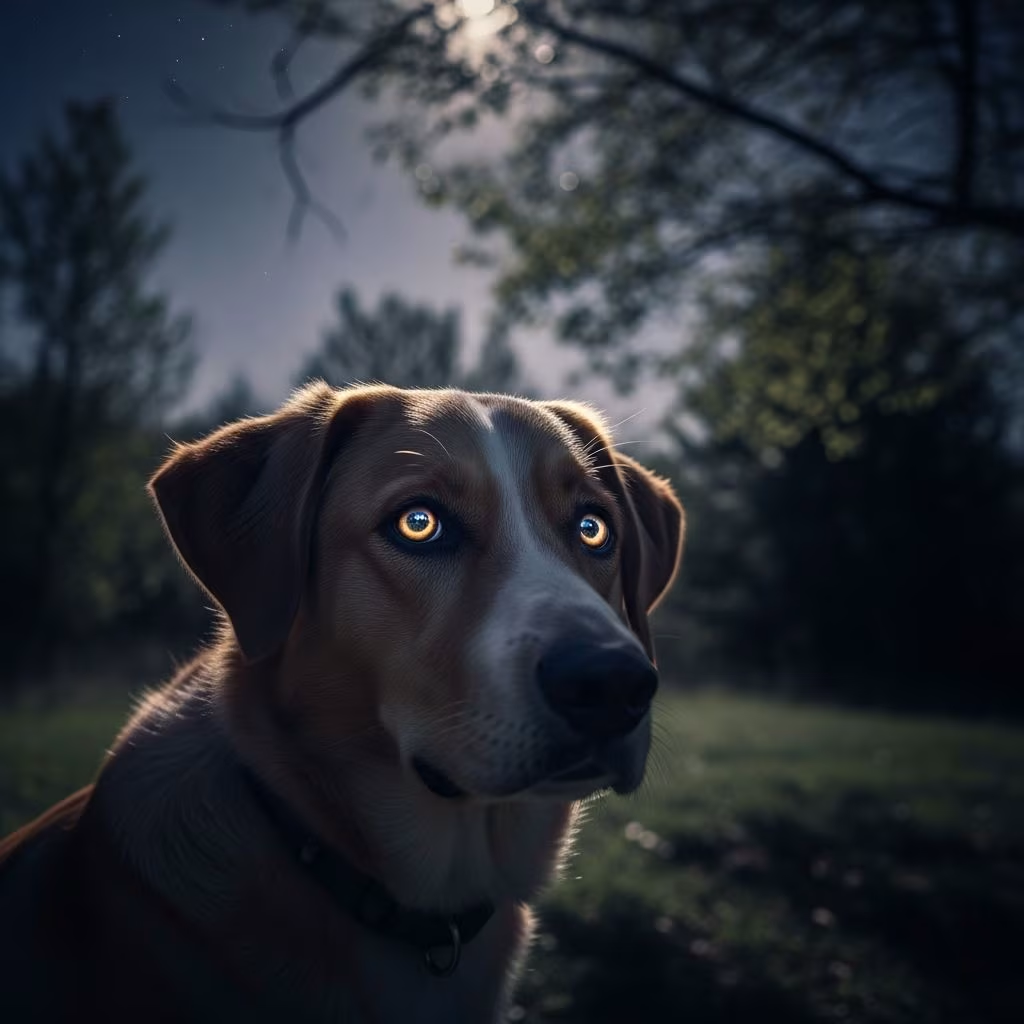
Can Dogs See in the Dark? Understanding Canine Night Vision
Many dog owners have wondered whether their furry companions can navigate dark spaces better than humans. The answer is yes—dogs possess remarkable abilities to see in low-light conditions, making them far superior to humans when it comes to night vision. However, it’s important to understand that while dogs can see exceptionally well in dim light, they cannot see in complete darkness either. Their night vision abilities stem from millions of years of evolution, inherited from their wolf-like ancestors who hunted in varying light conditions.
The Science Behind Canine Night Vision
Understanding how dogs see in the dark requires knowledge of eye anatomy and the specialized structures that make superior night vision possible. Dogs’ eyes contain several unique features that work together to enhance their ability to detect objects, movement, and shapes in low-light environments.
The Tapetum Lucidum: The Reflective Mirror
One of the most important anatomical features that enables dogs to see in the dark is the tapetum lucidum. This specialized layer of reflective cells sits behind the retina and functions like a mirror within the eye. When light enters a dog’s eye, the tapetum lucidum reflects that light back through the photoreceptor cells, giving the retina a second opportunity to register and process the light information. This reflection magnifies and enhances visual sensitivity under low-light conditions, significantly increasing a dog’s ability to detect objects in darkness.
Humans lack the tapetum lucidum entirely, which is one reason why our night vision is substantially inferior to that of our canine companions. This reflective layer is also responsible for the eerie, greenish-yellow glow you often see in your dog’s eyes when light hits them at night from headlights, flashlights, or camera flashes. This eye shine, called eyeshine or eyeglow, is a direct result of the tapetum lucidum reflecting light back toward the source.
Rod Cells and Photoreceptors
The retina of a dog’s eye contains two types of photoreceptor cells: rods and cones. While both cell types are essential for vision, they serve different functions. Rods are light-sensitive cells that excel in dim lighting conditions and help detect movement and shapes. Cones, on the other hand, function better in bright light and are responsible for color detection and overall visual sharpness.
A dog’s retina is predominantly rod-based, containing approximately 120 million rod cells compared to just 90 million in the human retina. This rod-dominated retina gives dogs superior low-light sensitivity and enhanced motion detection capabilities. In contrast, the human retina is dominated by cones, which is why we see colors well but struggle significantly in low-light environments.
The high concentration of rod cells in dogs’ eyes allows them to see in light conditions that are approximately five to six times dimmer than what humans require for vision. This means that in situations where a human would find it nearly impossible to see, a dog is navigating with relative ease.
Additional Anatomical Advantages
Beyond the tapetum lucidum and abundance of rod cells, dogs possess several other anatomical features that contribute to their superior night vision:
Larger Pupils
Dogs’ pupils can open much wider than human pupils, allowing significantly more light to flood into the eye. This wider pupil dilation enhances their ability to gather available light in dark environments, making their night vision substantially more effective.
Eye Positioning and Field of View
Most dog breeds have eyes positioned more toward the sides of their heads compared to humans. This anatomical arrangement gives dogs a wider range of vision, spanning approximately 240-250 degrees around them, compared to the 180-degree field of view that humans possess. This expanded peripheral vision allows dogs to scan their environment more quickly and detect movement even at the edges of their visual field, which is particularly advantageous in low-light conditions.
Motion Detection Sensitivity
Dogs have a higher flicker fusion threshold than humans, meaning they perceive motion at a higher frame rate. While a television screen appears to show continuous motion to humans, a dog may perceive it as flickering. This heightened sensitivity to movement allows dogs to detect slight movements in the dark far more effectively than humans can, providing them with a significant advantage when navigating dimly lit environments.
How Dogs See in Low Light Versus Complete Darkness
It’s crucial to distinguish between a dog’s ability to see in low-light conditions and their ability to see in complete darkness. While dogs excel at seeing in dim light, they cannot see in total darkness any more than humans can. In environments where there is absolutely no light available, both dogs and humans are equally unable to see, though dogs can still rely on their other highly developed senses, particularly their sense of smell and hearing.
Dogs are what scientists call crepuscular animals, meaning they are naturally active during dawn and dusk when light levels are low but not completely absent. Their eyes have evolved to be optimally adapted for these conditions rather than for complete darkness. This is why your dog may seem alert and aware during evening or early morning walks when you’re struggling to see clearly.
Color Vision and Other Visual Limitations
While dogs possess remarkable night vision capabilities, they do have certain visual limitations compared to humans. Understanding these limitations provides a more complete picture of canine vision.
Limited Color Spectrum
Dogs see fewer colors than humans do. While humans can perceive a full spectrum of colors including reds, greens, oranges, and purples, dogs can primarily see in shades of blue and yellow. Reds and greens appear grayish or brownish to dogs. This limitation exists because dogs have fewer cone cells in their retinas—the cells responsible for color vision. However, their ability to perceive blue and yellow is actually beneficial for hunting camouflaged prey in low-light conditions.
Reduced Visual Acuity at Distance
Dogs recognize objects only at much shorter distances compared to humans. What a human can clearly see from a distance may require a dog to be much closer to distinguish properly. This is why your dog might not recognize you standing in your driveway until you’re closer, even though you can see them clearly from across the yard.
Lower Depth Perception
Dogs’ depth perception is notably poorer than human depth perception. While this doesn’t significantly impact their night vision abilities, it does mean they may have more difficulty judging distances and heights, particularly in changing light conditions.
Comparison: Dog Vision vs. Human Vision in Low Light
| Vision Characteristic | Dogs | Humans |
|---|---|---|
| Rod Cells in Retina | ~120 million (rod-dominant) | ~90 million (cone-dominant) |
| Low-Light Sensitivity | Can see in light 5-6x dimmer | Requires more light for vision |
| Tapetum Lucidum | Present (reflective layer) | Absent |
| Field of View | 240-250 degrees | 180 degrees |
| Motion Detection | ~70 frames per second | ~60 frames per second |
| Color Vision | Blue and yellow primarily | Full color spectrum |
| Pupil Size | Opens wider | Opens less widely |
| Distance Acuity | Shorter distance recognition | Better long-distance vision |
Why Do Dogs’ Eyes Glow in the Dark?
If you’ve ever shone a flashlight at your dog’s eyes in the dark or taken a photo of them at night with a flash, you’ve likely noticed the distinctive greenish-yellow or reddish glow that appears in their eyes. This phenomenon is directly caused by the tapetum lucidum. When light hits the reflective layer behind the retina, it bounces back toward the light source, creating that characteristic eyeshine. This is not unique to dogs—many nocturnal and crepuscular animals possess a tapetum lucidum, including cats, deer, and raccoons.
Practical Implications for Dog Owners
Understanding your dog’s superior night vision has practical implications for how you care for and interact with your pet:
- Evening and Morning Activities: Your dog likely enjoys and handles dawn and dusk activities much better than you do. These are the times when their vision is most advantageous.
- Indoor Lighting: You don’t need to turn on as many lights for your dog’s comfort as you might think. They can navigate dimly lit spaces much better than you can.
- Safety Considerations: While dogs see better in low light, they may still face hazards in complete darkness, so supervision is still important during nighttime outdoor activities.
- Motion-Based Interaction: Your dog’s superior ability to detect movement means they’ll alert to subtle motions you might miss in dim light.
Frequently Asked Questions About Dog Night Vision
Q: Can dogs see in complete darkness?
A: No, dogs cannot see in complete darkness any more than humans can. However, they can see in light conditions that are five to six times dimmer than what humans require. In environments with absolutely no light, both dogs and humans rely on their other senses, particularly smell and hearing.
Q: Why do my dog’s eyes glow in photos taken with a flash?
A: The glow you see is caused by the tapetum lucidum, a reflective layer behind your dog’s retina. When the camera flash hits their eyes, the light reflects back, creating the characteristic greenish-yellow or reddish eyeshine that makes the glow visible in photos.
Q: Do all dog breeds have the same night vision abilities?
A: While all dogs have the anatomical features that enable night vision, there may be slight variations between breeds. Dogs with larger eyes and more pronounced rod-dominated retinas may have slightly better low-light vision than others. Breeds descended from hunting lines may have superior night vision compared to breeds that were developed for other purposes.
Q: What colors do dogs see best in low light?
A: Dogs see primarily in shades of blue and yellow. These colors are particularly useful for detecting camouflaged prey in low-light hunting conditions. Reds and greens appear more grayish to dogs in any lighting condition.
Q: Can my dog see better than cats in the dark?
A: Cats generally have superior night vision compared to dogs. While dogs see much better in low light than humans, cats have a larger tapetum lucidum with more complete coverage and a higher proportion of rod cells, giving them an edge in low-light environments.
Q: Why do dogs alert to movements in the dark before I notice anything?
A: Dogs can detect movement at a higher frame rate than humans—approximately 70 frames per second compared to 60 frames per second for humans. Combined with their superior low-light sensitivity and wider field of view, this allows them to perceive subtle movements in dim lighting that humans would miss entirely.
Conclusion
Dogs possess remarkable night vision capabilities that far exceed human abilities in low-light conditions. Through the combination of specialized anatomical features—including the tapetum lucidum, rod-dominated retinas, larger pupils, and advantageous eye positioning—dogs can see and navigate in lighting conditions that leave humans struggling. While they cannot see in complete darkness, their ability to perceive movement and objects in dim light is truly impressive and reflects millions of years of evolutionary adaptation. Understanding these capabilities helps us appreciate just how differently our canine companions perceive the world around them, particularly during those early morning walks and evening adventures when their superior night vision shines brightest.
References
- Can Dogs See in the Dark? — American Kennel Club. Accessed November 2025. https://www.akc.org/expert-advice/lifestyle/can-dogs-see-in-the-dark/
- Can Dogs See in the Dark? A Deep Dive into Canine Night Vision — Two Tails Pet Company. Accessed November 2025. https://twotailspetcompany.com/blogs/dogs/can-dogs-see-in-the-dark
- Can Dogs See Better In the Dark Than Humans? — Marin Humane. Accessed November 2025. https://marinhumane.org/can-dogs-see-better-in-the-dark-than-humans/
- Dog vs. Human Eyesight: A Science-Backed Comparison — Offleash Georgia. Accessed November 2025. https://offleashgeorgia.com/dog-vs-human-eyesight-a-science-backed-comparison/
- How Do Dogs See in the Dark? Canine Low-Light Vision Explained — PetsCare. Accessed November 2025. https://www.petscare.com/news/faq/how-do-dogs-see-in-the-dark
- Can Dogs See in the Dark? — PetMD. Accessed November 2025. https://www.petmd.com/dog/general-health/can-dogs-see-dark
- Can Dogs See in the Dark? — Zoetis Petcare. Accessed November 2025. https://www.zoetispetcare.com/blog/article/can-dogs-see-dark



