

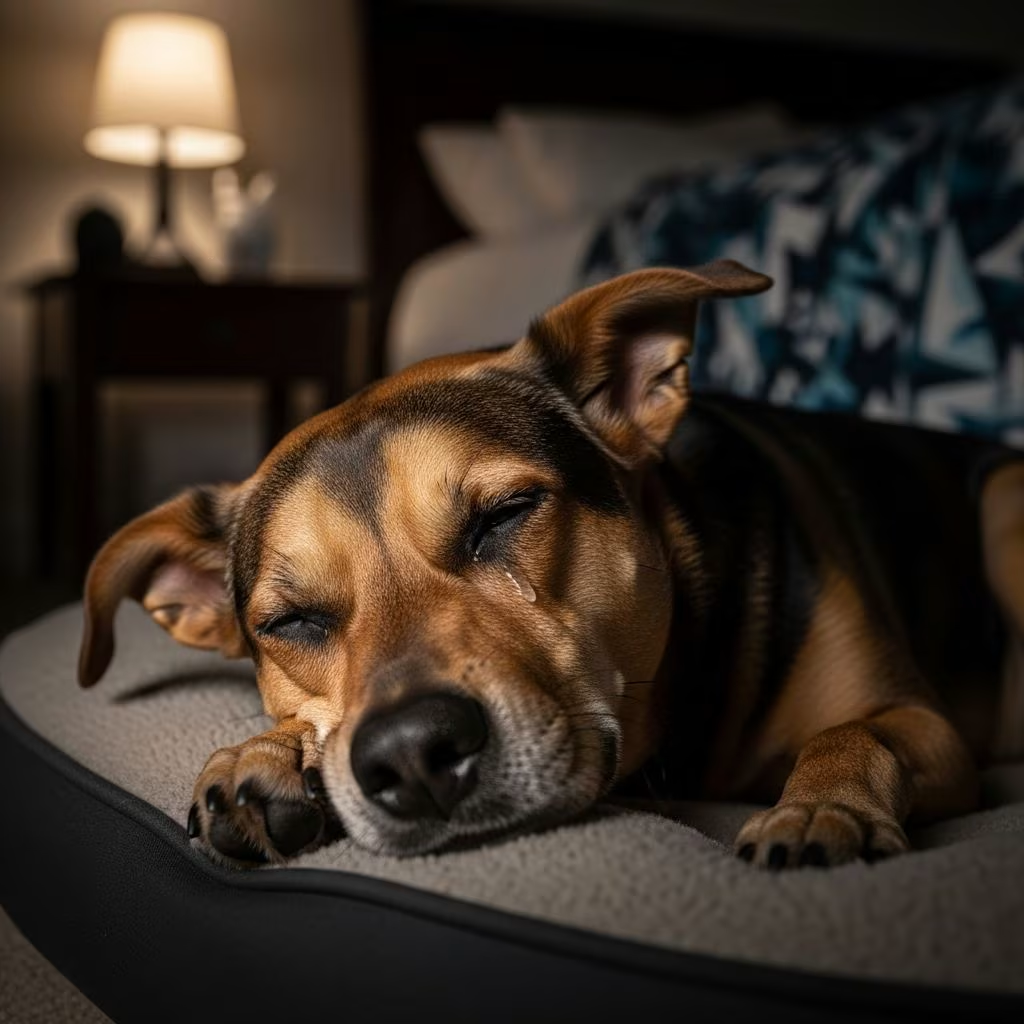
Observing your dog sleep can be fascinating—twitching paws, soft whimpers, and rapid eye movements under closed lids often make owners wonder: can dogs have bad dreams? Scientific evidence strongly indicates yes, dogs experience dreams during REM sleep, including potentially distressing nightmares similar to humans. This article examines the biology of canine sleep, recognizable signs of bad dreams, what dogs might dream about, and practical advice for supporting your pet’s healthy slumber.
How Do We Know Dogs Dream?
Dogs enter REM (Rapid Eye Movement) sleep, the stage associated with dreaming in mammals. During REM, brain activity spikes to waking levels while muscles remain paralyzed—a state called REM atonia—to prevent acting out dreams.
Landmark research from the Massachusetts Institute of Technology (MIT) used EEG to monitor six dogs’ brain waves over days. Results showed high-frequency, low-amplitude waves identical to human REM dreaming patterns. Lead researcher Dr. Matthew Wilson noted, “The similarity in brain activity between dogs and humans during REM sleep strongly suggests that dogs are likely experiencing dreams.”
Smaller breeds enter REM faster (every 10 minutes), while large breeds cycle every 45-90 minutes, spending up to 50% of sleep in REM. Observable signs like paw paddling, muffled barks, and breathing changes confirm active dreaming. An American Kennel Club survey found over 80% of owners witness these behaviors.
- Brain wave similarity: Dogs match human REM patterns via EEG.
- Physical paralysis: REM atonia keeps dogs safe.
- Frequent cycles: Puppies and small dogs dream most often.
Signs Your Dog Is Having a Bad Dream
Not all dreams are pleasant. Nightmares manifest through intensified distress signals. Common indicators include:
- Whimpering, yelping, or crying out.
- Violent twitching, thrashing, or paddling legs.
- Rapid, shallow breathing or panting.
- Barking, growling, or howling muffled by sleep.
- Facial tension: furrowed brows, flattened ears, tucked tail even asleep.
- Sudden awakenings with signs of fear like cowering or hiding.
These differ from pleasant dreams (gentle tail wags, soft sighs) by intensity. Traumatized dogs, such as service dogs from disasters, show exaggerated REM disturbances: more time in REM, intense twitching, and distress signs like heart palpitations.
| Dream Type | Signs | Intensity |
|---|---|---|
| Good Dream | Soft twitches, smiling, tail wags | Mild, relaxed |
| Bad Dream/Nightmare | Whimpers, thrashing, panting, cries | High, distressed |
What Do Dogs Dream About?
Dogs likely replay daily experiences during dreams, as hippocampal activity (memory center) activates in REM. Harvard psychologist Dr. Deirdre Barrett posits dogs dream visually about emotionally charged events: chasing squirrels, playing fetch, or interacting with owners.
MIT experiments disabling REM atonia let dogs “act out” dreams: active dogs chased/dreamed pursuits; quiet ones stayed calm, suggesting personalized content. Dogs dream “doggy things” like toys, food, walks, and people.
Strong attachments influence dreams—dogs may visualize owners’ faces/smells for comfort. PTSD research shows trauma replays: combat-exposed dogs exhibit hypervigilant nightmare patterns.
Can Dogs Have Nightmares?
Yes, dogs can have nightmares. Evidence mirrors human patterns: REM-based distress dreams processing fears/anxiety. VCA Animal Hospitals confirms nightmares occur, often from real threats. Whole Dog Journal notes whimpering/screaming in sleep.
Triggers include:
- Trauma (abuse, accidents, fireworks).
- Stress (separation anxiety, changes).
- Health issues (pain amplifying fears).
- Medications disrupting sleep cycles[10].
Puppies/seniors dream more, increasing nightmare risk. Unlike humans, dogs can’t verbalize, but behaviors confirm emotional processing.
Should You Wake a Dog Having a Bad Dream?
Waking a dog mid-nightmare risks bites from startle reflex—approach cautiously. If safe:
- Speak softly using their name.
- Pet gently from a safe distance.
- Avoid shaking/grabbing.
Let mild episodes pass naturally. Persistent severe nightmares warrant vet checks for pain/PTSD. Never punish post-wake; reassure instead.
How to Help Your Dog Sleep Better and Reduce Nightmares
Promote restful sleep to minimize bad dreams:
- Consistent routine: Same bedtime/walks signal safety.
- Comfortable environment: Quiet, cool (68°F), cozy bed.
- Daily exercise: Tire them physically/mentally to deepen non-REM.
- Calming aids: Pheromone diffusers, anxiety wraps pre-bed.
- Diet check: Avoid heavy evening meals; consider vet for supplements.
- Address trauma: Positive reinforcement training, desensitization.
Monitor patterns: Frequent nightmares may signal health issues.
Dog Sleep Cycles: A Quick Guide
| Stage | Description | Dreaming? |
|---|---|---|
| Light Sleep | Easily aroused, slowed breathing | No |
| Deep Sleep | Hard to wake, restorative | No |
| REM Sleep | Twitching, brain active, paralyzed | Yes |
Dogs sleep 12-14 hours daily, with REM prominent.
Frequently Asked Questions (FAQs)
Do all dogs dream?
Yes, all dogs experience REM sleep and dreams, more frequently in puppies/small breeds.
Why do puppies twitch more in sleep?
Puppies enter REM quickest, processing growth/learning via dreams.
Is it harmful if my dog cries in sleep?
Occasional is normal; frequent suggests stress—consult vet.
Do dogs dream in color?
Unknown, but likely visual/emotional replays like humans.
Can medications cause dog nightmares?
Yes, some disrupt neurotransmitters/sleep[10].
References
- In Dreams They Run: Unveiling the Mysteries of Canine Sleep — Canine Evolutions. 2023. https://www.canineevolutions.com/news/in-dreams-they-run
- Dreaming about Dogs: An Online Survey — PMC – PubMed Central (National Library of Medicine). 2020-10-20. https://pmc.ncbi.nlm.nih.gov/articles/PMC7603358/
- Harvard scientists discover that dogs dream of their human owners — Pawfect Stays. 2023. https://www.pawfectstays.co.uk/health/dogs-dreams/
- What Do Dogs Dream About? — American Kennel Club (AKC). 2023-08-15. https://www.akc.org/expert-advice/training/what-do-dogs-dream-about/
- Can Dogs Have Dreams and Nightmares? — Purina US. 2024. https://www.purina.com/articles/dog/behavior/understanding-dogs/do-dogs-dream
- Do Dogs Dream? — VCA Animal Hospitals. 2023. https://vcahospitals.com/know-your-pet/do-dogs-dream



