

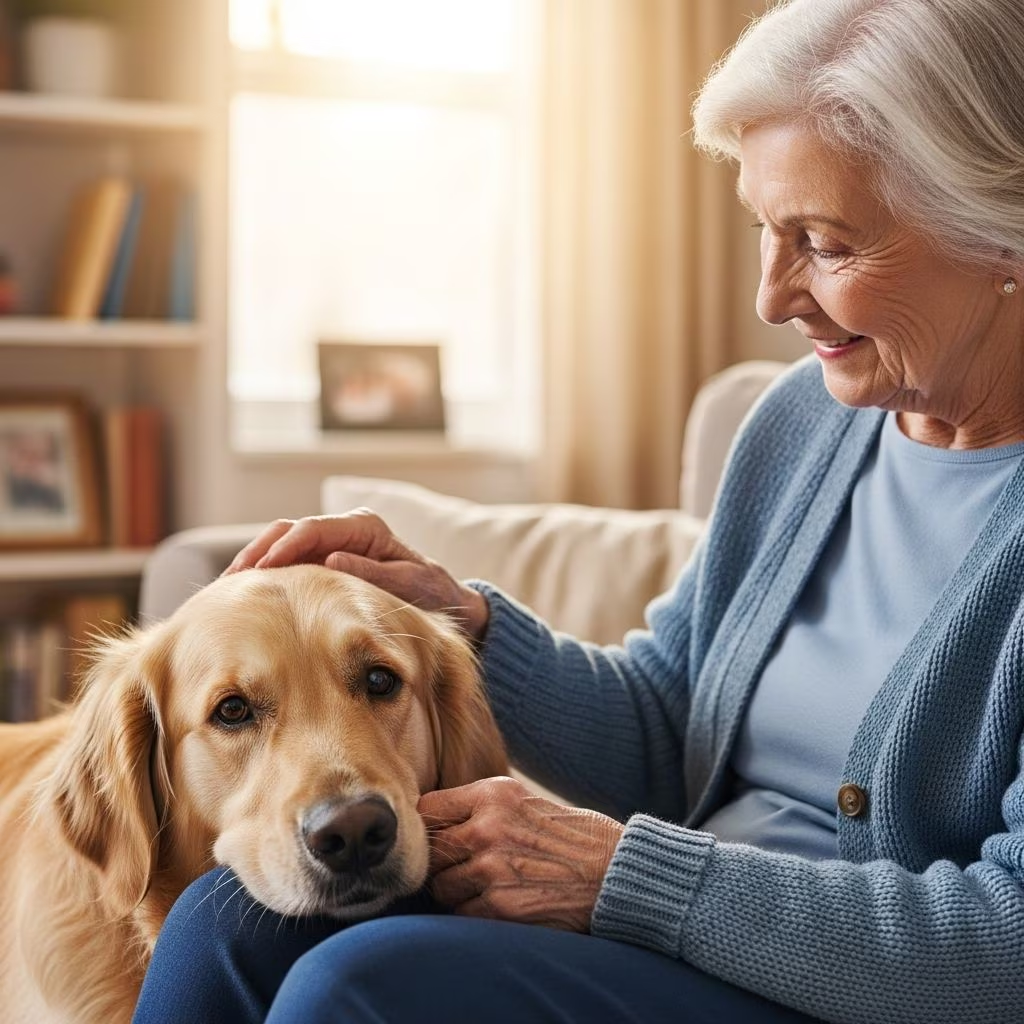
Dogs often display remarkable excitement when visiting their human grandparents, rushing to the door with tails wagging furiously or perking up at the mere mention of “grandma’s house.” This phenomenon, popularized on platforms like TikTok and YouTube, raises a compelling question: do dogs actually form special, family-like bonds with their owners’ parents? While scientific research on this specific dynamic is limited, evidence from canine behavior studies suggests that dogs can indeed develop deep attachments to extended human family members, particularly grandparents who provide consistent affection, play, and treats.
These bonds mirror the way dogs connect with their primary owners, driven by positive associations rather than an understanding of familial lineage. For many families, these relationships enrich both the dog’s social world and the grandparents’ lives, offering companionship and joy in later years. This article delves into the science, signs, benefits, and practical tips for fostering such connections.
Why Are Dogs So Obsessed With Their Human Grandparents?
Observing a dog’s unbridled enthusiasm for grandparents—bolting from the car or eagerly awaiting visits—it’s easy to wonder if there’s more to it than just fun outings. Experts like Clive Wynne, Ph.D., founding director of the Canine Science Collaboratory at Arizona State University, explain that dogs form meaningful relationships with people they interact with regularly, much like human friendships. “Just like people have particular friendships, so too do our dogs form particular relationships that are meaningful for them,” Wynne notes.
This obsession often stems from positive reinforcement: grandparents frequently spoil dogs with treats, playtime, and undivided attention. “Every criminal knows that a guard dog can be outwitted with some steak,” Wynne humorously adds, highlighting how food and fun cement these ties. Additionally, dogs who are highly social thrive on expanded social circles, making grandparents ideal playmates or caretakers during owners’ absences.
- Regular visits: Consistent exposure builds familiarity and trust.
- Treats and toys: Grandparents often provide extras not available at home.
- Low-pressure environment: Relaxed homes mean more play without daily routines.
Real-life examples abound, from dogs crazy about weekly cleaners to those who light up for grandparents’ stories and biscuits. These bonds provide stability, especially for active dogs needing extra exercise.
First of All, Do Dogs Even Understand the Concept of Grandparents?
Dogs lack the cognitive framework to grasp human family trees. According to Wynne, “Dogs don’t even recognize their own families. If they’re not living together and they’re reintroduced to a brother or sister, they may not recognize them”. Kinship with grandparents, therefore, is purely individualistic—based on personal interactions, scents, voices, and shared experiences rather than relational understanding.
Canine cognition focuses on immediate associations. A dog’s brain links specific humans to rewards like food, play, or comfort, without abstract concepts like “grandparent.” This explains why a dog might adore one set of grandparents over another: it’s about the quality of time spent, not blood ties.
| Human Concept | Dog’s Perception |
|---|---|
| Family lineage | Individual associations via scent/voice/reward |
| Grandparents | Familiar, fun humans with treats |
| Siblings | May not recognize without cohabitation |
Despite this, the emotional depth feels familial to us observers, as dogs’ loyalty and excitement mimic human grandkid-grandparent love.
Can Dogs Form Family-Like Bonds with Their “Grandparents”?
Absolutely—dogs excel at forming attachments beyond their primary owners. Social media clips show pups perking at “grandma,” sprinting to doors, or cuddling during storytime, indicating strong preferences. Wynne shares how his Greyhound adores a weekly cleaner, illustrating dogs’ capacity for selective bonds.
These ties develop quickly with regularity. Grandparents who treat dogs as grandkids—offering premium treats and play—naturally become favorites. Niamh Coleman of Canine Connection CO notes that social dogs benefit from such helpers for exercise and stimulation. Research supports this: dogs associate human voices and scents with positivity, adapting to lifestyles seamlessly.
Bonds strengthen through shared routines. Grandparents signing cards with dog names, FaceTiming with pups, or posting more about them than grandkids signal deep human-dog attachments, common among boomers combating loneliness. A Heliyon study shows boomers use social media to share pet milestones, seeing dogs as family.
Is It Good for Dogs to Bond with Their Grandparents?
Expanding a dog’s trusted human network is highly beneficial. Wynne emphasizes that multiple caretakers provide stability during disruptions like owner travel. “If you have the option of giving your dog a larger human community of people that they know and trust and like, that can be a pretty good thing,” he says.
For social, active dogs, grandparent time means extra exercise and mental stimulation. Coleman adds consistency in bedding, food, and schedules eases transitions. Even couch-potato pups gain from variety, though less intensely.
No risk to primary bonds exists unless home is drastically inferior (e.g., “sawdust for dinner” vs. steak). Elderly benefits are profound: dogs improve cognition, fend off depression, and enhance well-being. A PMC study confirms dogs positively impact older adults’ lifestyles. Older men form emotional bonds aiding mental health.
- For dogs: More socialization, backup care, reduced separation anxiety.
- For grandparents: Companionship, purpose, health boosts.
- For families: Shared joy, reliable sitters.
Signs Your Dog Has a Special Bond with Human Grandparents
Behavioral cues reveal these attachments:
- Excited reactions: Perking at names, bolting to doors.
- Relaxed demeanor: Immediate comfort, play initiation.
- Preference: Choosing grandparent over others during visits.
- Recall on return: Happy reunions without distress.
Human signs include boomers prioritizing dogs—signing cards with pet names, endless photos, milestone celebrations, vacations together, or calling dogs “grandkids”. They post more dog content online, compensating for isolation.
Benefits for Grandparents: Combating Loneliness and Boosting Health
Boomers often view pets as family more than younger generations, per 2024 surveys. Dogs provide emotional support, with research showing better memory, depression resistance. UK study on older men details attachments’ meaning. PMC review: dogs enrich elderly lives.
Grandparents gain routine, touch, purpose—key for aging well.
Tips for Nurturing Dog-Grandparent Bonds
- Encourage visits: Regular playdates build familiarity.
- Share routines: Provide food/bed details for consistency.
- Train together: Joint commands strengthen ties.
- Use tech: Video calls keep connections alive.
- Match personalities: Active dogs to energetic grandparents.
Frequently Asked Questions (FAQs)
Do dogs recognize human grandparents as family?
No, dogs bond individually based on interactions, not lineage.
Will spoiling at grandma’s ruin my dog’s training?
Unlikely, unless extremes; bonds complement home life.
Is it healthy for seniors to bond with granddogs?
Yes, improves mental health, cognition, lifestyle.
How to help shy dogs bond with grandparents?
Start slow with treats, short visits, consistency.
Why do boomer grandparents love dogs more than grandkids?
Often due to proximity, combating loneliness; dogs as family.
References
- 11 Signs A Boomer Grandparent Is More Attached To Their Dog Than Grandkids — YourTango. 2024. https://www.yourtango.com/family/signs-boomer-grandparent-more-attached-their-dog-than-grandkids
- Can Dogs Form Special Bonds with Human Grandparents? — Kinship. Accessed 2026. https://www.kinship.com/dog-behavior/can-dogs-form-special-bond-with-human-grandparents
- Older Adult Men’s Emotional Bonds with Their Dogs — University of Kentucky (UKnowledge). 2012. https://uknowledge.uky.edu/cgi/viewcontent.cgi?article=1013&context=gerontol_etds
- Elderly People in Many Respects Benefit from Interaction with Dogs — PMC (PubMed Central). 2012. https://pmc.ncbi.nlm.nih.gov/articles/PMC3351901/



