

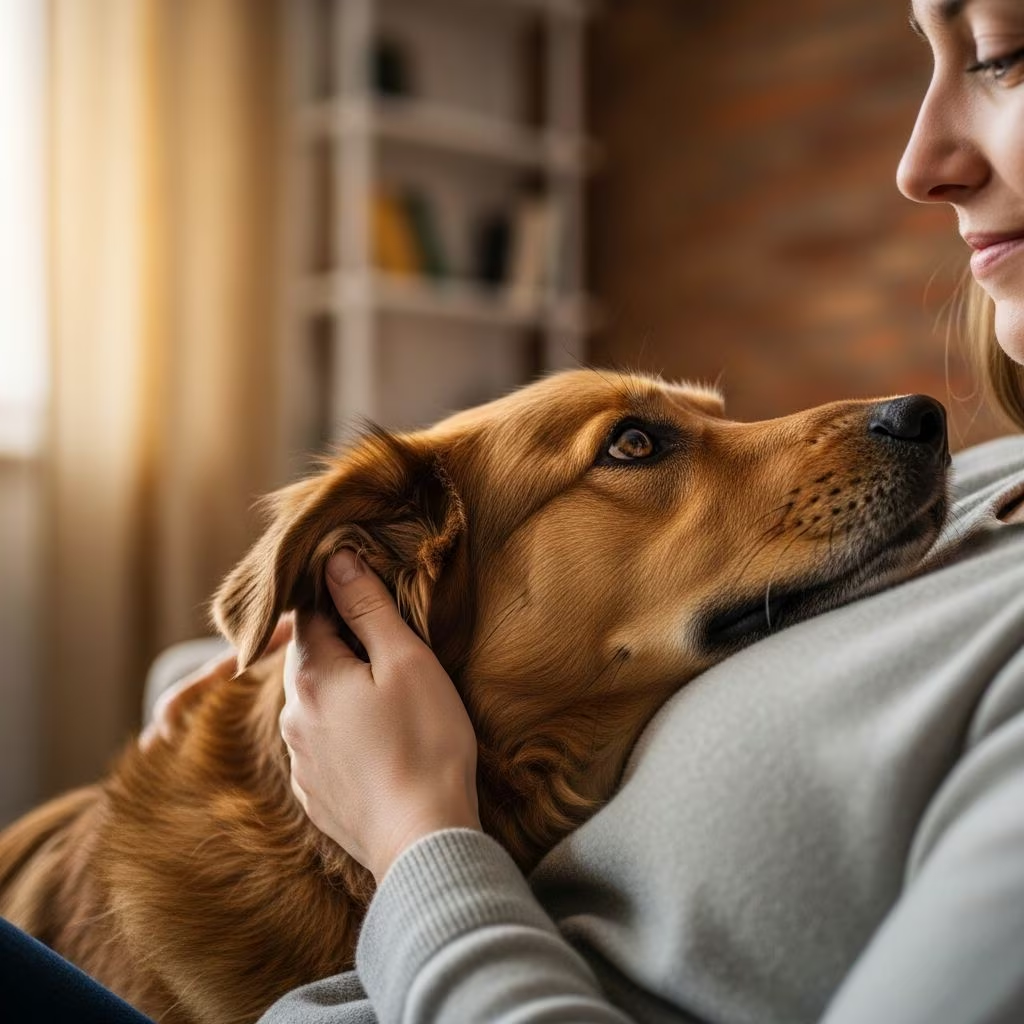
Dogs form profound emotional attachments with humans and each other, driven by biological mechanisms like oxytocin release, suggesting they experience a form of love akin to affection and bonding.
The Biological Foundations of Canine Affection
At the heart of dog-human relationships lies oxytocin, a hormone central to social bonding in mammals. When dogs and their owners engage in mutual gazing, both parties experience significant increases in oxytocin levels, mirroring the bond between human parents and infants. This mutual hormonal response strengthens trust and emotional closeness, indicating dogs are biologically equipped for deep attachments.
Research demonstrates that prolonged eye contact between familiar dogs and owners can elevate oxytocin by up to 130% in dogs and 300% in humans, a effect absent in wolf-human interactions. This specificity highlights how domestication has tuned dogs’ neural systems to elicit human bonding responses.
How Domestication Shaped Emotional Connections
Dogs’ ability to form loving bonds traces back to their domestication from wolves over thousands of years. Unlike wolves, even young dog puppies isolated from human contact show greater attraction to people, better interpretation of human gestures, and more frequent eye contact.
This innate predisposition suggests genetic adaptations that prioritize human interaction, fostering emotional ties from an early age. Studies confirm that oxytocin administration to dogs increases their gazing at owners, particularly in females, further boosting owner oxytocin levels and reinforcing the interspecies bond.
Signs Your Dog Feels Deep Affection
Dogs express love through observable behaviors rooted in their evolutionary history. Common indicators include:
- Prolonged eye contact: Seeking gazes that trigger oxytocin loops.
- Physical closeness: Leaning, cuddling, or following owners everywhere, signaling security and attachment.
- Excitement upon reunion: Joyful greetings after short separations, akin to human attachment behaviors.
- Calming presence: Dogs mirroring owners’ relaxed states during petting, with mutual oxytocin rises.
- Protective actions: Positioning between owners and perceived threats, demonstrating loyalty.
These actions are not mere conditioning but responses enhanced by neurochemical rewards, much like human love expressions.
Oxytocin Loops: Mutual Benefits for Dogs and Owners
The dog-owner relationship features a positive feedback loop where interactions like stroking, talking, and playing elevate oxytocin in both. Urine oxytocin measurements post-interaction confirm higher levels in bonded pairs compared to familiar but non-bonded humans or dogs.
This loop promotes anti-stress effects, trust, and emotional synchronization. Owners’ calm behaviors induce similar responses in dogs, enabling them to read each other’s cues effectively. Such reciprocity explains why dogs excel as service animals for conditions like PTSD and autism.
| Interaction Type | Oxytocin Increase in Dogs | Oxytocin Increase in Owners | Key Study Insight |
|---|---|---|---|
| Mutual Gazing | Up to 130% | Up to 300% | Exclusive to dogs, not wolves |
| Petting/Playing | Significant rise | Significant rise | Strengthens bonded pairs |
| Oxytocin Spray (Dogs) | N/A | Higher in female dog owners | Increases gazing behavior |
Dog-to-Dog Bonds: Love Among Canines
Beyond humans, dogs form affectionate ties with fellow dogs, influenced by oxytocin. The hormone boosts social motivation, encouraging approaches and interactions between dog pairs. Paired dogs show heightened engagement, suggesting emotional attachments similar to human friendships.
Factors like shared experiences and familiarity amplify these bonds, with calm interactions leading to mutual relaxation and trust. This capacity for inter-canine love underscores dogs’ rich emotional lives.
Gender Differences in Bonding Dynamics
Sex plays a role in how dogs bond. Female dogs exhibit stronger gazing responses to oxytocin, leading to greater owner oxytocin surges compared to males. Human females also report more positive attitudes toward dogs on average, potentially enhancing these dynamics.
These variations highlight nuanced evolutionary adaptations, where female dogs may leverage bonding for pack integration and resource access.
Strengthening the Bond: Practical Tips
To nurture your dog’s loving feelings:
- Engage in daily eye contact and gentle petting to maximize oxytocin.
- Play interactive games that require cooperation, building trust.
- Maintain consistent routines for security and attachment.
- Use positive reinforcement to associate you with joy and safety.
- Observe body language to reciprocate their affection appropriately.
These practices not only deepen emotional ties but also improve well-being for both.
Addressing Skepticism: Instinct vs. True Emotion
Some argue dog ‘love’ is survival instinct, not genuine emotion. However, oxytocin-mediated responses, absent in wild counterparts, indicate evolved feelings beyond mere utility. Dogs’ sensitivity to human emotions and proactive bonding behaviors support authentic affection.
While not identical to human romantic love, canine bonds fulfill similar psychological needs, backed by neuroscientific evidence.
Health Impacts of Canine Love
These bonds yield tangible benefits. Oxytocin reduces stress, lowers blood pressure, and enhances mood in owners. Dogs gain from reduced anxiety and stronger social support, promoting longevity and happiness.
Service dog efficacy in therapy stems from this biology, aiding emotional regulation in vulnerable populations.
FAQs
Do dogs feel love like humans?
Dogs experience love through oxytocin-driven bonding, expressing it via loyalty, joy, and physical closeness, though not with human complexity.
Can dogs love more than one person?
Yes, dogs form bonds with multiple familiars, but primary attachments mirror family ties, strongest with daily caregivers.
Why do dogs stare into owners’ eyes?
This triggers mutual oxytocin release, deepening affection and evolved from domestication.
Do male and female dogs bond differently?
Females show heightened oxytocin responses to gazing, potentially leading to stronger visual bonds.
Can wolves form similar bonds?
No, wolves lack the oxytocin surge from gazing, distinguishing domesticated dogs.
References
- How Dogs Stole Our Hearts: The Science Behind the Human-Canine Bond — Gingrapp. 2023. https://www.gingrapp.com/blog/the-science-behind-the-human-canine-bond
- How dogs stole our hearts — Science | AAAS. 2015-04-16. https://www.science.org/content/article/how-dogs-stole-our-hearts
- The Role of Oxytocin in the Dog–Owner Relationship — PMC (Peer-reviewed). 2019-10-11. https://pmc.ncbi.nlm.nih.gov/articles/PMC6826447/
- The look of love — ASBMB Today. 2023-12-01. https://www.asbmb.org/asbmb-today/science/122023/the-look-of-love
- Do Our Dogs Really Love Us? — American Kennel Club. 2023. https://www.akc.org/expert-advice/lifestyle/can-our-dogs-really-love-us/
- How The Love For Our Dogs Can Rewire Our Brains For Happiness — Paddington Pups. 2023. https://paddingtonpups.com.au/how-the-love-for-our-dogs-can-rewire-our-brains-for-happiness/



