

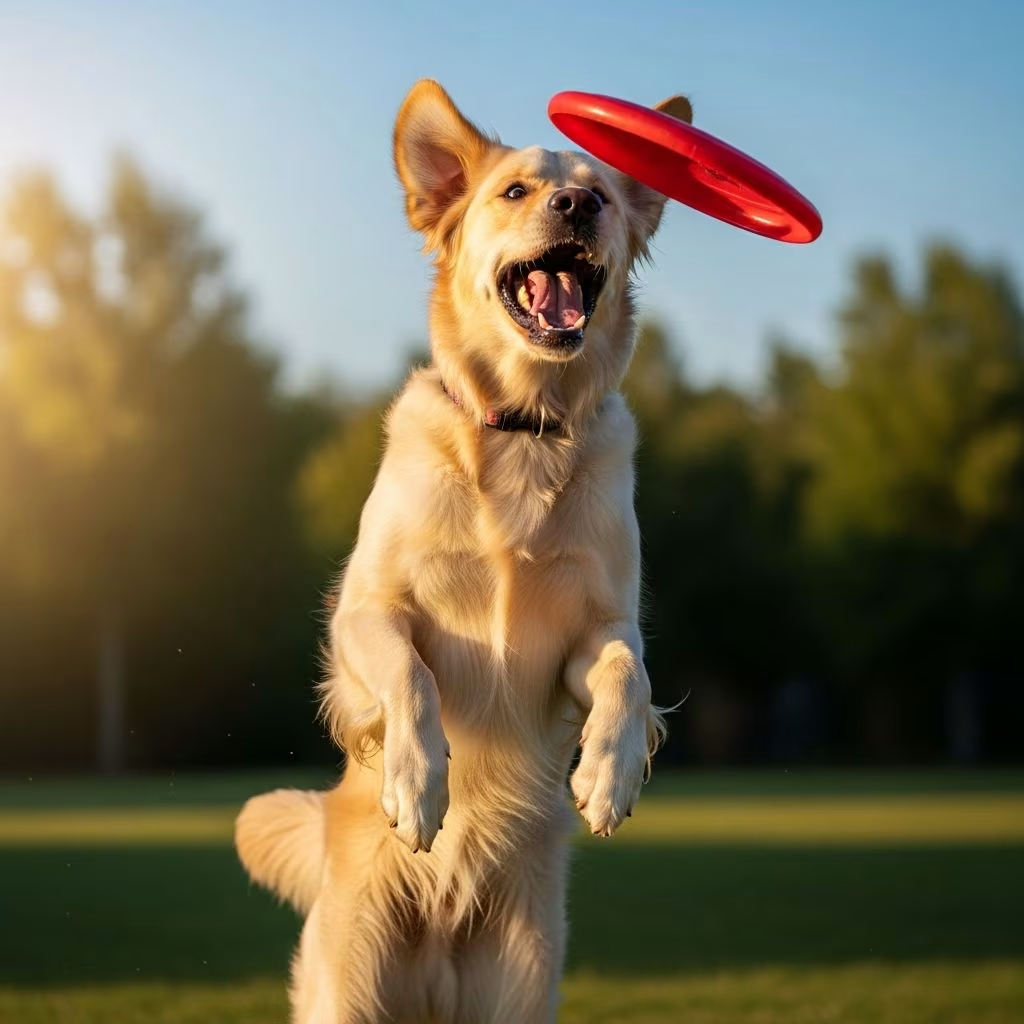
Dogs exhibit behaviors that mimic human humor through play bows, exaggerated movements, and reactions to laughter, suggesting they engage in joyful interactions that parallel a sense of fun.
The Science Behind Canine Joy
Research reveals that dogs process emotions in ways that overlap with human experiences, particularly in social contexts. Functional magnetic resonance imaging (fMRI) studies demonstrate heightened brain activity in dogs when exposed to human voices conveying happiness, indicating they distinguish positive sounds like laughter from neutral or sad ones. Limbic regions such as the amygdala activate during positive social interactions, linking neural responses to emotional processing that could underpin playful, humor-like behaviors.
Oxytocin, often called the ‘love hormone,’ plays a crucial role. Administration of nasal oxytocin influences dogs’ attention to happy human faces, increasing fixation and pupil dilation, which reduces vigilance and promotes focus on positive stimuli. This hormonal response enhances social bonding and emotional attunement, fostering interactions that appear lighthearted and fun.
How Dogs ‘Laugh’ and Play
Dogs produce a unique vocalization resembling laughter during play, characterized by breathy pants. A study found that playback of this ‘dog laughter’ to shelter dogs reduced stress indicators, promoting calmer behaviors and initiating play. This suggests dogs not only produce but respond to joy-inducing sounds, akin to how humans use laughter in social settings.
Play behaviors further illustrate this. Dogs use play bows—lowering the front body while keeping the rear elevated—to signal non-threatening fun. These actions, combined with bouncy movements and mock chases, create chaotic, enjoyable scenarios that owners interpret as mischievous humor. Such antics often elicit human laughter, reinforcing the cycle of mutual amusement.
- Breathy pants during roughhousing mimic human chuckles.
- Play bows invite extended interaction without aggression.
- Exaggerated pounces and rolls amplify the fun factor.
Emotional Recognition in Dogs
Dogs discern human facial expressions and tones. Eye-tracking research shows they allocate more attention to emotional body language than static faces, reacting with left-sided facial movements to positive social cues and right-sided to neutral objects. When owners use positive verbal stimuli, dogs respond with wide eyes, erect ears, and forward gazes; negative cues prompt defensive postures like bared teeth or averted eyes.
This sensitivity extends to cross-species empathy. Dogs differentiate happy from angry human faces, adjusting gaze and pupil responses accordingly. Such capabilities imply they navigate social nuances with an awareness that could include appreciating absurdity or surprise, elements central to humor.
Human Perceptions of Dog Emotions
People’s moods bias how they interpret dog expressions. In experiments, participants primed with happy dog images rated neutral dog videos as sadder, while those shown sad images perceived dogs as happier. Simply viewing dog videos, even negative ones, elevated viewers’ moods, highlighting the bidirectional emotional influence in human-dog bonds.
Pet ownership correlates with increased laughter frequency. Dog owners report more spontaneous laughter from pet interactions than cat owners, attributing it to dogs’ playful and active natures. This suggests dogs’ behaviors inherently provoke joy, blurring lines between perceived and actual humor.
| Human Mood Prime | Dog Emotion Rating | Effect Observed |
|---|---|---|
| Happy dog images | Sadder | Reverse bias |
| Sad dog images | Happier | Reverse bias |
| Neutral | Balanced | No significant shift |
Playful Mischief as Canine Comedy
Some dogs display deliberate antics that cause chaos for amusement. Case studies describe individuals who repeatedly perform silly actions—like stealing socks only to drop them dramatically—reveling in the resulting human reactions. These behaviors indicate intent to provoke laughter, a hallmark of humor.
Antiphonal laughter, where one party’s laugh triggers another’s, occurs more in familiar pairs, mirroring human-dog dynamics. Dogs’ responsiveness to owner giggles supports this, as they often join in with tail wags and prances, creating shared humorous moments.
Neural and Facial Clues to Canine Emotions
Facial Action Coding System (FACS) adapted for dogs reveals stimulus-specific expressions. Positive surprises elicit raised eyebrows and tilted heads; fear shows sclera flashes and side glances. These are not mere reflexes but context-driven signals, supporting emotional communication.
Brain lateralization aids emotion processing: left-hemisphere activation for positive stimuli and right for negatives. This mirrors human patterns, suggesting evolutionary convergence in social emotion handling, potentially including humor appreciation.
Do Dogs Anticipate Funny Outcomes?
While dogs lack abstract language for jokes, their play predicts joyful results. They initiate games knowing mutual engagement follows, much like humans setting up punchlines. fMRI confirms laughter-like sounds activate reward centers, reinforcing repetition.
Owners frequently cite ‘goofy’ habits—like hiding toys in plain sight—as humorous. Dogs persist despite corrections, implying enjoyment of the absurdity, a subtle humor indicator.
FAQ
Can dogs tell when humans are laughing?
Yes, brain imaging shows dogs react more to happy human sounds like laughter, distinguishing them from sad tones.
What does a dog’s play bow mean?
It signals invitation to fun, reducing threat perception and encouraging reciprocal play.
Do all dogs show humorous behaviors?
Individual personalities vary; more active breeds like Labs display antics frequently, per owner reports.
Does oxytocin affect dog play?
Intranasal oxytocin boosts focus on positive faces, enhancing playful social bonds.
Why do happy people see dogs as sad?
Mood priming reverses perceptions; upbeat viewers rate dogs sadder, per experiments.
Enhancing Humor in Human-Dog Bonds
To foster these interactions, engage in regular play sessions using toys that encourage chasing and tugging. Respond to their initiations with exaggerated enthusiasm to amplify mutual joy. Training with positive reinforcement builds trust, paving the way for spontaneous fun.
Observe subtle cues: a sudden zoomies burst or toy ‘gifts’ often seeks laughter. Recording these moments preserves memories and reinforces behaviors through attention.
References
- Current Advances in Assessment of Dog’s Emotions, Facial Expressions, and Dog Service for Post-Traumatic Stress Disorder — Nagasawa M et al. 2021-11-10. https://pmc.ncbi.nlm.nih.gov/articles/PMC8614696/
- When you’re happy, your dog might look sad — Arizona State University News. 2025-12-05. https://news.asu.edu/20251205-science-and-technology-when-youre-happy-your-dog-might-look-sad
- Can Dogs Laugh? — PetMD. N/A. https://www.petmd.com/dog/behavior/can-dogs-laugh
- Tails of Laughter: A Pilot Study Examining the Relationship between Dog Ownership and Laughter — Valeri A. 2016. https://animalsandsociety.org/wp-content/uploads/2016/04/valeri.pdf
- Do Dogs Have a Sense of Humor? — Psychology Today. 2015-12. https://www.psychologytoday.com/us/blog/canine-corner/201512/do-dogs-have-sense-humor
- Do Dogs Have a Sense of Humor? — The Farmer’s Dog. N/A. https://www.thefarmersdog.com/digest/do-dogs-have-a-sense-of-humor/
- Mischief, Mayhem, and a Dog with a Sense of Humor — Psychology Today. 2019-08. https://www.psychologytoday.com/us/blog/canine-corner/201908/mischief-mayhem-and-dog-sense-humor



