

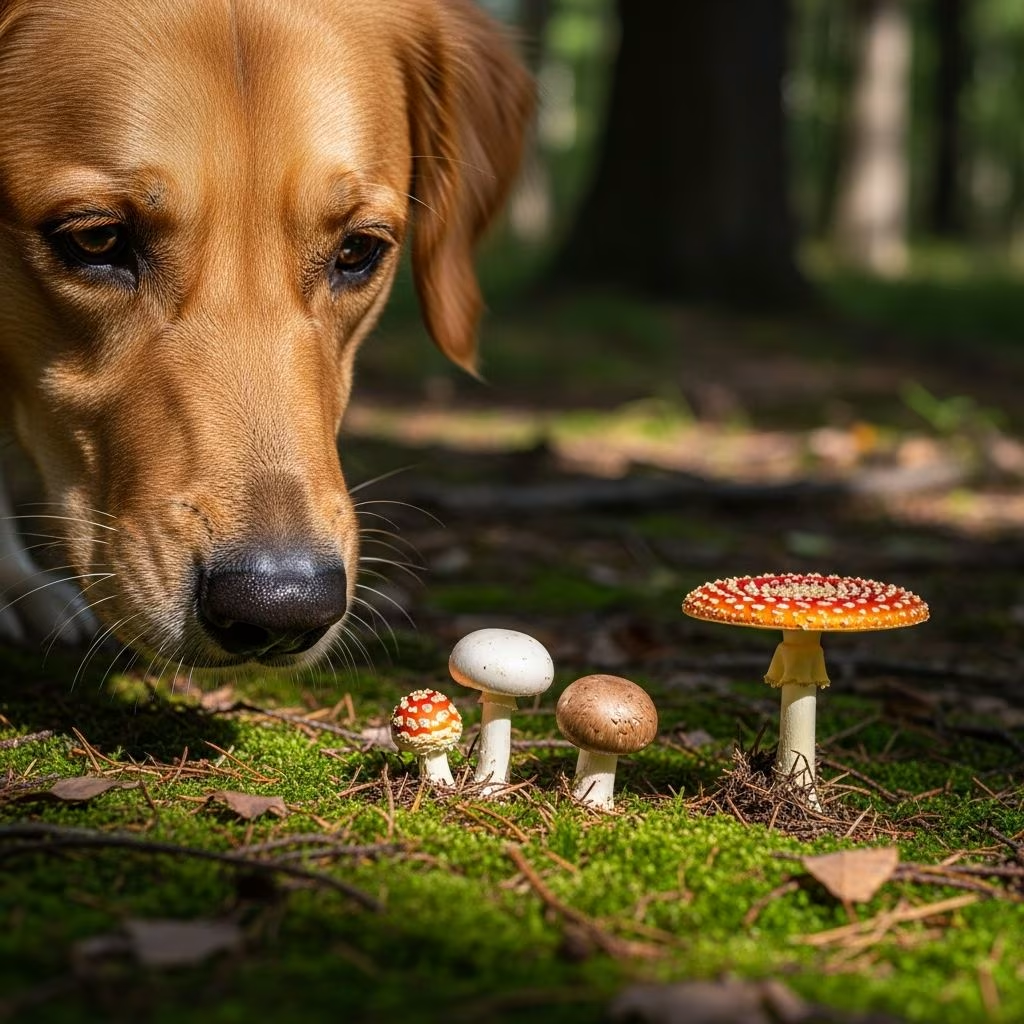
Mushrooms appear in many yards, parks, and forests, tempting curious dogs to sniff and nibble. While humans enjoy a variety of fungi in meals, canine digestive systems react differently. Most importantly, while certain cultivated mushrooms pose little risk in tiny portions, wild ones often harbor deadly toxins that demand immediate veterinary attention. Understanding these distinctions prevents tragedies, as over 10,000 mushroom species exist in places like the United States, with roughly 100 confirmed toxic to pets.
The Diversity of Mushrooms and Canine Vulnerabilities
Mushrooms belong to a vast fungal kingdom, thriving in damp environments worldwide. Dogs, with their exploratory nature and tendency to sample anything intriguing, frequently encounter these growths during walks or playtime. The challenge lies in identification: even experts struggle to differentiate safe from hazardous types on sight, making every foraged mushroom a potential threat.
Toxicity arises from specific compounds within certain species. For example, Amanita varieties produce amanitin, a potent substance targeting the liver and kidneys. Inocybe and Clitocybe species trigger muscarine, leading to excessive secretions and neurological issues. These toxins vary in onset, some striking within hours, others delayed by days, complicating timely intervention.
Safe Mushrooms: Store-Bought Varieties for Dogs
Not all mushrooms spell danger. Those purchased from grocery stores—such as white button, cremini, portobello, or shiitake—generally prove harmless when given sparingly. Veterinary sources confirm these cultivated types lack the harmful alkaloids found in wild counterparts.
- White button mushrooms: Mild flavor, low calorie, occasional treat in small slices.
- Cremini (baby bella): Similar to buttons but earthier; chop finely to avoid choking.
- Portobello: Larger caps; cook thoroughly and offer minimal amounts.
- Shiitake: Some dogs tolerate well-cooked pieces, but introduce slowly.
Moderation remains key: mushrooms offer negligible nutrition for dogs, whose diets center on balanced commercial foods. Overfeeding risks digestive upset from fiber or chitin, the tough fungal cell wall.
| Mushroom Type | Safety Level | Recommended Amount | Notes |
|---|---|---|---|
| White Button | Safe | Small slices occasionally | Plain, cooked or raw |
| Cremini | Safe | 1-2 tsp per 10 lbs body weight | Monitor for allergies |
| Portobello | Safe in moderation | Tiny pieces | Remove gills if large |
| Wild Foraged | Highly Risky | None | Seek vet immediately |
Dangerous Wild Mushrooms: Common Culprits Threatening Dogs
Wild mushrooms flourish post-rain, especially in wooded areas or mulched gardens. Species like Amanita phalloides (death cap) and Amanita pantherina (panther cap) top toxicity lists. Death caps, greenish or yellowish, cause insidious liver failure; symptoms mimic mild stomach issues initially, followed by collapse.
Other threats include:
- False morels (Gyromitra spp.): Induce violent vomiting but rarely fatal.
- Inocybe spp.: Provoke SLUDGE syndrome—salivation, lacrimation, urination, defecation, gastrointestinal pain, emesis.
- Clitocybe dealbata: Similar muscarinic effects, plus tremors.
Dogs under 20 pounds face amplified risks due to body mass; puppies and seniors suffer worse outcomes. Seasonal peaks occur in fall, heightening vigilance needs.
Recognizing Mushroom Poisoning Symptoms in Dogs
Signs manifest variably, hinging on mushroom type and ingestion amount. Early gastrointestinal effects often appear first: vomiting, diarrhea, drooling, and belly pain. Advanced stages bring lethargy, jaundice (yellow gums/eyes), ataxia (wobbling), tremors, seizures, or coma.
SLUDGE acronym aids memory:
- Salivation (drooling)
- Lacrimation (teary eyes)
- Urination (incontinence)
- Defecation (diarrhea)
- Gastrointestinal distress (cramps)
- Emesis (vomiting)
Neurological red flags include disorientation, abnormal heart rhythms, increased thirst/urination, and organ failure indicators like dark urine. Amanita poisoning features a deceptive recovery phase, masking progression to hepatic necrosis.
Immediate Steps: What to Do If Your Dog Eats a Mushroom
Suspected ingestion warrants urgency—do not wait for symptoms. Collect mushroom remnants (photos suffice if eaten) for identification, though vets stress treatment precedence over pinpointing species.
- Prevent further access; remove dog from area.
- Contact vet or poison hotline (e.g., ASPCA Animal Poison Control) immediately.
- En route, withhold food/water unless instructed; note ingestion time/amount.
- Expect diagnostics: bloodwork, ultrasound, IV fluids, activated charcoal, or antidotes like silymarin for liver support.
Prognosis hinges on speed; early decontamination boosts survival. Delays in death cap cases often prove fatal.
Preventing Mushroom Mishaps: Practical Strategies for Pet Owners
Proactive measures safeguard dogs effectively:
- Supervise outdoors: Leash walks in mushroom-prone zones; train “leave it” command.
- Yard maintenance: Rake leaves/mulch weekly; apply dog-safe fungicides sparingly.
- Educate household: Alert kids/family about risks.
- Diet control: Stick to vet-approved foods; avoid table scraps with fungi.
Annual vet checkups assess liver/kidney baselines, aiding poisoning detection.
Nutritional Myths: Do Mushrooms Benefit Dog Health?
Some tout mushrooms for immunity via beta-glucans, but evidence lacks canine specificity. Supplements exist, yet unregulated quality poses risks. Consult vets before adding; balanced kibble suffices most needs.
FAQs: Common Questions on Dogs and Mushrooms
Are all wild mushrooms poisonous to dogs?
No, but toxicity risk is high; safe identification is unreliable, so treat all as hazardous.
Can cooked store mushrooms harm dogs?
Plain cooked ones are fine sparingly, but avoid additives like garlic/onions, which are toxic.
How soon do poisoning symptoms start?
Varies: GI issues in 30 minutes-6 hours; liver toxins 24-48 hours.
What if my dog seems fine after eating a mushroom?
Seek vet anyway; delayed effects common in severe cases.
Which dog breeds are most at risk?
Small breeds, puppies, seniors due to size/metabolism; all susceptible.
In summary, while select commercial mushrooms offer safe nibbles, wild varieties demand strict avoidance. Vigilance, swift action, and vet partnerships keep tails wagging safely amid fungal temptations.
References
- Can dogs eat mushrooms? | Dogs & Mushrooms Facts — Vets Now. Accessed 2026. https://www.vets-now.com/pet-care-advice/can-dogs-eat-mushrooms/
- Can Dogs Eat Mushrooms: When Is It a Vet Emergency? — GSVS. Accessed 2026. https://gsvs.org/blog/can-dogs-eat-mushrooms-emergency/
- Mushroom Poisoning in Dogs — PetMD. Accessed 2026. https://www.petmd.com/dog/poisoning/mushroom-poisoning-in-dogs
- The Dangers Of Dogs Consuming Mushrooms — McCordsville Vet. Accessed 2026. https://mccordsvillevet.com/blog/mushrooms-and-dogs-risks-of-consumption/
- Can Dogs Eat Mushrooms? — American Kennel Club (AKC). Accessed 2026. https://www.akc.org/expert-advice/nutrition/can-dogs-eat-mushrooms/
- Mushroom Toxicity — VCA Animal Hospitals. Accessed 2026. https://vcahospitals.com/know-your-pet/mushroom-toxicity



