

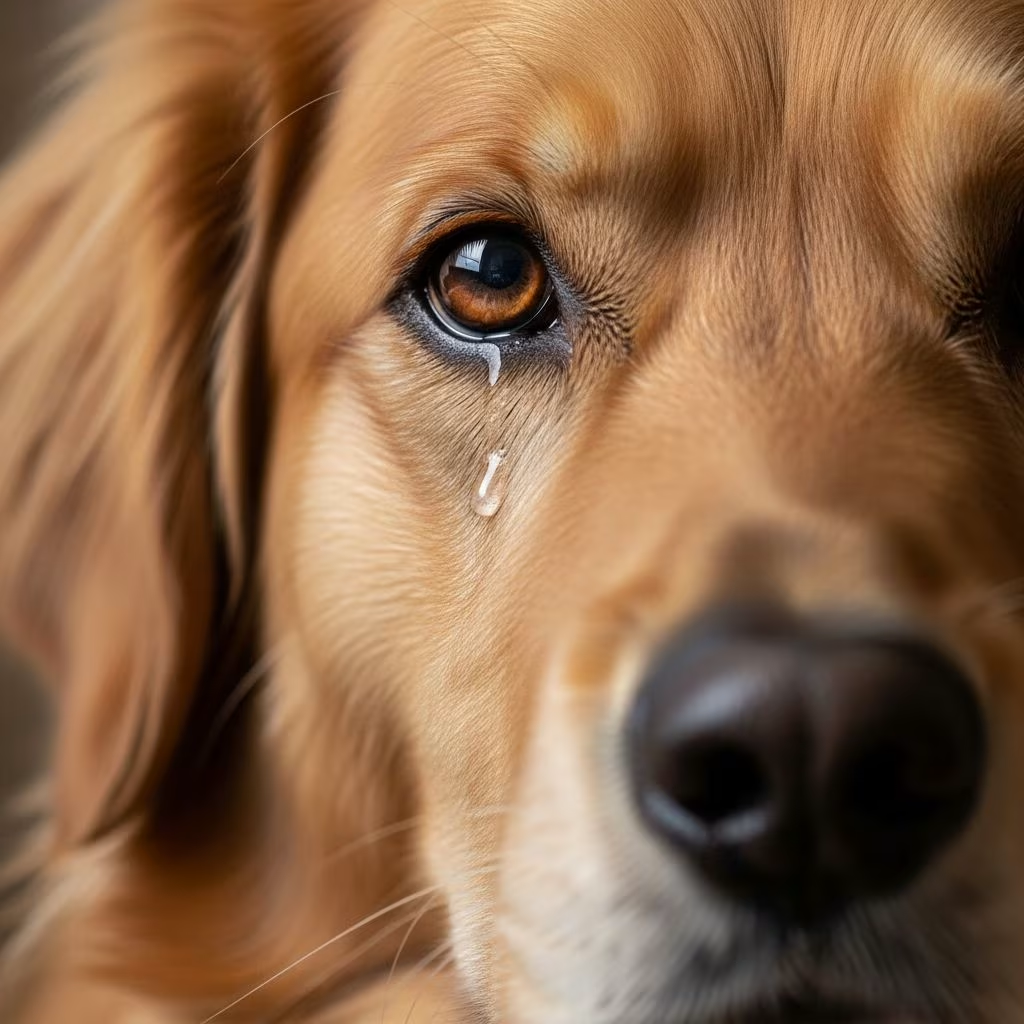
Dogs communicate emotions through tail wags, whines, and body language, but do they shed tears like humans during moments of joy or sadness? Recent research suggests dogs may produce tears associated with positive emotions, particularly during reunions with owners, challenging long-held beliefs.
How We Got Here: The Origin of the Study
The question of whether dogs cry tears stems from an intriguing observation by Dr. Takefumi Kikusui, a veterinary medicine professor at Azabu University in Japan. Six years ago, while his Standard Poodle nursed her puppies, he noticed her eyes welling up with tears—not flowing down her face like human tears, but visibly wetting her eyes, making her face appear shinier and more expressive.
This personal anecdote sparked a scientific investigation published in Current Biology. Dr. Kikusui and his team explored the link between emotions and tear production in dogs, drawing parallels to how oxytocin, the ‘love hormone,’ influences bonding in humans and animals.
Dogs Produce Tears During Reunions—But Why?
In controlled experiments, researchers separated dogs from their owners for several hours, then measured tear volume upon reunion using absorbent paper strips placed in the dogs’ lower eyelids. The results were striking: dogs produced significantly more tears—about 10% more—when reuniting with owners compared to staying home with them or greeting familiar non-owners.
This increase was visually noticeable, with eyes appearing misty and faces changing expression, prompting owners to feel more affection. The tears didn’t stream down but gathered enough to alter appearance, suggesting an emotional trigger rather than mere physical irritation.
Oxytocin: The ‘Love Hormone’ Behind Canine Tears
Oxytocin, known for fostering bonds between mothers and babies, romantic partners, and humans and dogs, emerged as a key factor. When researchers applied oxytocin drops directly to dogs’ eyes, tear production surged compared to a control solution, confirming the hormone’s role.
Petting, gazing, and reunions naturally boost oxytocin in both dogs and owners, creating a feedback loop. Nursing mothers, like Dr. Kikusui’s Poodle, release oxytocin while feeding, explaining the tears during puppy care. This positions oxytocin as a mediator between positive emotions and tear secretion in dogs.
Do Misty Eyes Make Us Love Dogs More?
A third experiment involved 74 humans rating photos of dogs—some with artificial tears added to simulate misty eyes. Participants reported stronger urges to nurture and care for the teary-eyed dogs, indicating that these tears evolutionarily encourage bonding.
Eye contact already elevates oxytocin levels, enhancing human-dog relationships. Tears amplify this, making dogs’ eyes more appealing and prompting compassionate responses, which in turn deepens interspecies bonds.
Are These Tears of Joy?
“We found that dogs shed tears associated with positive emotions,” Dr. Kikusui stated. “Their tears might play a role in the deepening of mutual relationships and further leading to interspecies bonding.”
This marks the first evidence linking canine tears to emotions, specifically joy from reunions. Unlike human emotional crying tied to sadness or rage, dogs’ tears appear happiness-induced, though the volume is subtle—not dramatic sobs, but a gentle welling.
Not All Tears Are Emotional: Real Reasons Dogs’ Eyes Water
While emotional tears are a new discovery, most canine eye watering stems from physical causes. Dogs have tear ducts to lubricate and protect eyes, draining fluid toward the throat unlike humans.
Common medical reasons include:
- Allergies: Pollen, dust, or food sensitivities cause irritation and excess tears.
- Blocked tear ducts: Congenital or injury-related blockages lead to overflow.
- Infections: Conjunctivitis or keratitis from bacteria/viruses.
- Foreign objects: Dust, eyelashes, or debris scratching the cornea.
- Breed predispositions: Brachycephalic breeds like Pugs have shallow eye sockets, promoting tearing.
- Dry eye (Keratoconjunctivitis Sicca): Insufficient tear production paradoxically causes reflex tearing.
If tears accompany redness, squinting, discharge, or pawing, consult a vet promptly. The American Kennel Club emphasizes no evidence for sadness-induced tears pre-2022 study, reinforcing medical checks.
How Dogs ‘Cry’ Without Tears
Dogs express distress vocally: whining, howling, yelping, or whimpering. These ‘auditory cries’ convey pain, fear, loneliness, or excitement effectively. Body language—lowered ears, tucked tails, avoidance—signals emotions more reliably than eye moisture.
| Human Emotional Crying | Dog ‘Crying’ |
|---|---|
| Tears from sadness/joy, visible streams | Whines/howls, no emotional tears (except possible joy) |
| Brain-heart connection | Vocal/physical signals |
| Drains via cheeks | Tears drain to throat |
This table highlights key differences, underscoring dogs’ unique expression methods.
Criticisms and Skepticism from Experts
Not all scientists agree. Clive Wynne from Arizona State University questions if excitement caused paper strips to rub eyes, producing artificial tears. Psychologist Lauren Bylsma suggests oxytocin drops irritated eyes mechanically.
Pre-study consensus held only humans shed emotional tears. Critics argue more research is needed, but even skeptics acknowledge tears influence human caregiving, strengthening bonds regardless of emotional origin.
Frequently Asked Questions (FAQs)
Do dogs cry tears when sad?
No scientific evidence supports dogs crying tears from sadness. Vocalizations and body language express sorrow; watery eyes usually indicate health issues.
Why do dogs tear up seeing owners?
Studies show increased tears post-separation due to oxytocin from joyful reunions, making eyes misty.
Is my dog’s tearing normal?
Occasional tearing can be emotional or normal, but persistent cases with symptoms warrant veterinary evaluation for infections or blockages.
Can all dogs produce emotional tears?
Research focused on typical pet dogs; results suggest yes for positive emotions, but individual and breed variations exist.
How to tell emotional vs. medical tears?
Emotional tears are subtle, reunion-linked, without discharge/redness. Medical tears often include rubbing, cloudiness, or odor—see a vet.
Key Takeaways for Dog Parents
Recognize misty eyes during reunions as potential joy tears, enhancing your bond. Monitor for medical signs, as most tearing isn’t emotional. Science deepens our understanding: dogs feel profound happiness with us, expressed uniquely.
Next time your dog greets you with glistening eyes, know it might be love—backed by oxytocin and evolutionary bonding.
References
- Increase of tear volume in dogs after reunion with owners is mediated by oxytocin — Takefumi Kikusui et al., Current Biology (via Kinship). 2022-08-10. https://www.kinship.com/dog-lifestyle/can-dogs-cry-tears
- Do Dogs Really Cry Tears of Joy When Reunited With Their Owners? — Smithsonian Magazine. 2022-08-11. https://www.smithsonianmag.com/smart-news/do-dogs-really-cry-tears-of-joy-when-reunited-with-their-owners-180980626/
- Can Dogs Cry? Do Dogs Cry Tears? — American Kennel Club (official breed/health authority). 2023-05-18. https://www.akc.org/expert-advice/health/do-dogs-cry/
- Do dogs cry ‘happy tears’ when reunited with owners? — Science Magazine (AAAS). 2022-08-10. https://www.science.org/content/article/do-dogs-cry-happy-tears-when-reunited-owners



