

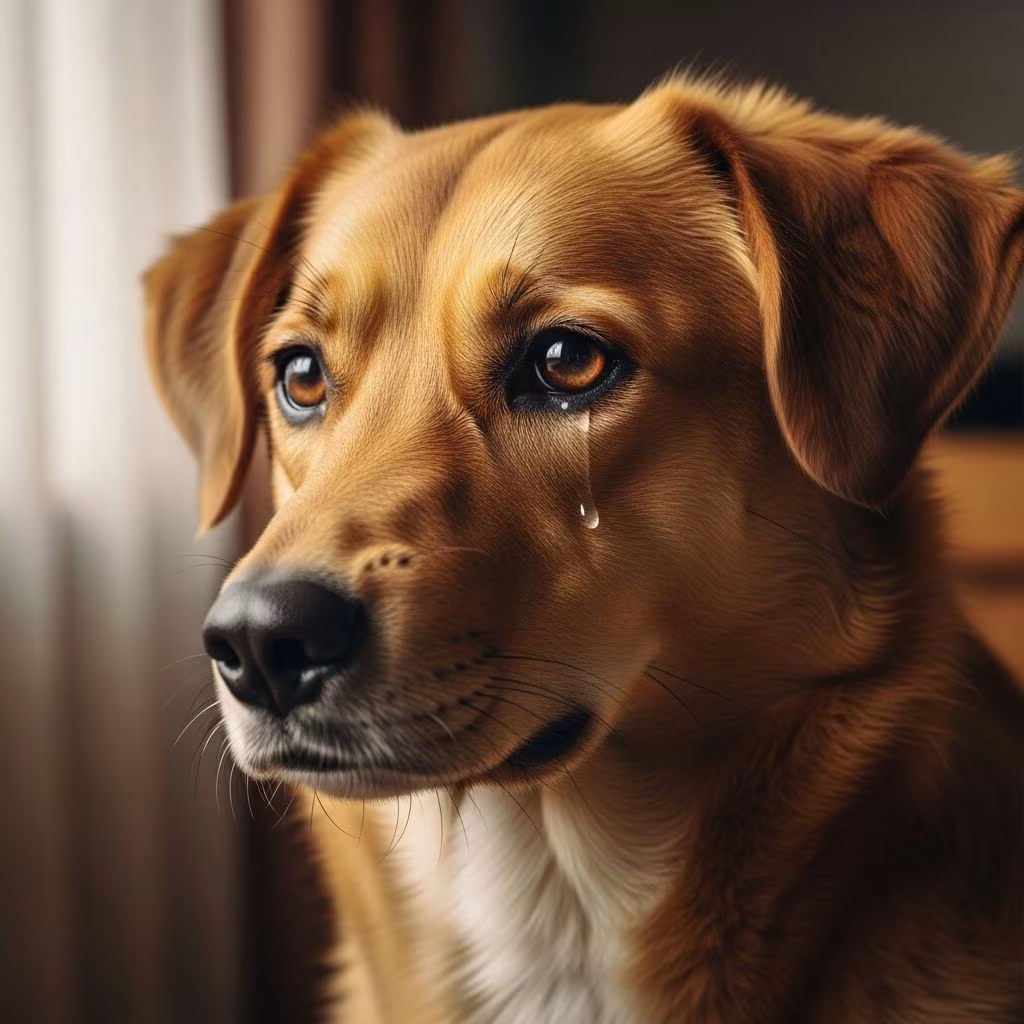
Dogs communicate a wide range of emotions through body language, vocalizations, and facial expressions, but do they shed emotional tears like humans? A groundbreaking study suggests dogs produce tears linked to positive emotions, particularly during reunions with owners, mediated by the ‘love hormone’ oxytocin. This challenges long-held beliefs and deepens our understanding of the human-dog bond.
The Study That Changed Everything: Tears of Joy in Dogs
The research began with a simple observation by Dr. Takefumi Kikusui, a veterinary medicine professor at Azabu University in Japan. While his Standard Poodle nursed her puppies, her eyes welled up with tears—not flowing down her cheeks like human tears, but visibly wetting her eyes, making her face appear softer and more endearing. This sparked the study ‘Increase of tear volume in dogs after reunion with owners is mediated by oxytocin,’ published in Current Biology.
Researchers tested 18 dogs separated from owners for 2-6 hours, then reunited them. Using tear strips placed in the lower eyelids, they measured tear volume, finding a significant 10% increase compared to baseline or reunions with familiar non-owners. Dogs tore up more with owners than others, even during casual home hangouts.
Oxytocin: The Love Hormone Behind Canine Tears
Oxytocin, known for fostering bonds in humans (romantic love, mother-infant attachment), also surges in dogs during petting and interaction. The study applied oxytocin eye drops to dogs’ eyes, resulting in increased tears versus a control peptide, confirming oxytocin’s role. Nursing releases oxytocin, explaining Kikusui’s Poodle’s tears.
This positive feedback loop strengthens: Reunions boost oxytocin, prompting tears; tears make dogs’ eyes misty, eliciting more human affection and care, perpetuating the cycle. Eye contact alone raises oxytocin levels in both species.
Do Humans Respond More to Teary-Eyed Dogs?
In a behavioral experiment, 74 participants rated photos of dogs: some with artificial tears (mimicking misty eyes), others dry. Viewers expressed stronger urges to cuddle and care for teary dogs, scoring them higher on appeal. This evolutionary advantage suggests misty eyes evolved to deepen interspecies bonds, as tears signal vulnerability and prompt nurturing.
‘We found that dogs shed tears associated with positive emotions. Their tears might play a role in the deepening of mutual relationships and further leading to interspecies bonding.’ — Dr. Takefumi Kikusui
But Wait—Do Dogs Really Cry Emotional Tears?
Not all experts agree. The American Kennel Club (AKC) states no scientific evidence proves dogs produce emotional tears; humans are unique in linking tears to feelings. Dogs have tear ducts for lubrication, draining toward the throat, not cheeks. Critics like Clive Wynne (Arizona State University) question if excitement caused paper strips to rub eyes, producing tears mechanically, or if oxytocin drops irritated eyes rather than triggered joy.
Lauren Bylsma (University of Pittsburgh) notes only humans shed emotional tears definitively. Tear increase was small (visually noticeable to sensitive owners), not dramatic like human crying. Despite skepticism, the study is first linking canine tears to emotion, marking a milestone.
How Dogs Express Emotions Without Tears
Dogs ‘cry’ vocally: whining, whimpering, howling, yelping express pain, fear, excitement, or sadness. Tail wags, ear positions, body posture, and face licking convey joy. Panting, jumping signal happiness at reunions.
- Happy signals: Tail wagging (broad, full-body), play bows, relaxed mouth, bright eyes.
- Sad/distressed: Whining, tucked tail, averted gaze, lip licking, yawning (stress).
- Pain: Limping, guarding area, excessive panting, vocal yelps.
These are clearer emotional cues than tears, which primarily lubricate eyes.
Why Do Dogs’ Eyes Water? Common Causes
Watery eyes (epiphora) aren’t emotional but medical. Consult a vet for diagnosis.
| Condition | Symptoms | Causes |
|---|---|---|
| Conjunctivitis | Redness, discharge, squinting | Bacteria, allergies, irritants |
| Blocked tear ducts | Constant overflow, staining | Congenital, infection, injury |
| Corneal ulcers | Pain, cloudiness, pawing | Scratches, foreign objects |
| Allergies | Itching, rubbing eyes | Pollen, dust, food sensitivities |
| Breed predispositions | Short-nosed breeds (Pugs, Bulldogs) | Shallow eye sockets, poor drainage |
Treatments include cleaning, antibiotics, surgery for ducts. Regular grooming prevents matting.
Frequently Asked Questions (FAQs)
Do dogs cry tears when sad?
No confirmed evidence; dogs whimper or whine for sadness, but tears are physiological, not emotional.
Why does my dog tear up seeing me?
Possibly oxytocin-driven joy tears per the Azabu study, more likely during reunions after separation.
Can dogs cry from pain?
Dogs vocalize pain (yelps, whines) but don’t produce emotional tears; watery eyes signal injury or infection.
Is the oxytocin study definitive?
Innovative first, but small sample; critics cite potential irritation or mechanics. More research needed.
How to tell if dog’s watery eyes need a vet?
Redness, discharge, squinting, pawing, or staining warrant immediate check; clean gently meanwhile.
The Deeper Bond: What This Means for Dog Owners
Whether purely emotional or oxytocin-influenced, misty eyes highlight dogs’ profound attunement to us. They read our emotions, mirror joy, seek connection. Notice subtle cues: shining eyes during pets may signal bliss. Respond with affection—petting boosts oxytocin mutually.
Past studies show dogs gaze longer at smiling faces, produce more oxytocin with owners. This tear research adds misty eyes as a bonding tool, making faces ‘cuter’ to us. Evolutionarily, it ensures care, food, safety—survival through love.
For owners, validate emotions: Your dog’s reunion excitement mirrors yours. Though tears differ, shared joy is real. Watch for health issues mimicking emotion; prioritize vet care alongside cuddles.
In conclusion, dogs may not cry like us, but science unveils emotional layers. Happy tears or not, their love shines through every wag and gaze, enriching our lives profoundly.
References
- Increase of tear volume in dogs after reunion with owners is mediated by oxytocin — Takefumi Kikusui et al., Current Biology (via Kinship). 2022-08-10. https://www.cell.com/current-biology/fulltext/S0960-9822(22)01127-2
- Do Dogs Really Cry Tears of Joy When Reunited With Their Owners? — Smithsonian Magazine. 2022-08-12. https://www.smithsonianmag.com/smart-news/do-dogs-really-cry-tears-of-joy-when-reunited-with-their-owners-180980626/
- Can Dogs Cry? Do Dogs Cry Tears? — American Kennel Club. 2023-05-15. https://www.akc.org/expert-advice/health/do-dogs-cry/
- Do dogs cry ‘happy tears’ when reunited with owners? — Science.org. 2022-08-10. https://www.science.org/content/article/do-dogs-cry-happy-tears-when-reunited-owners



