

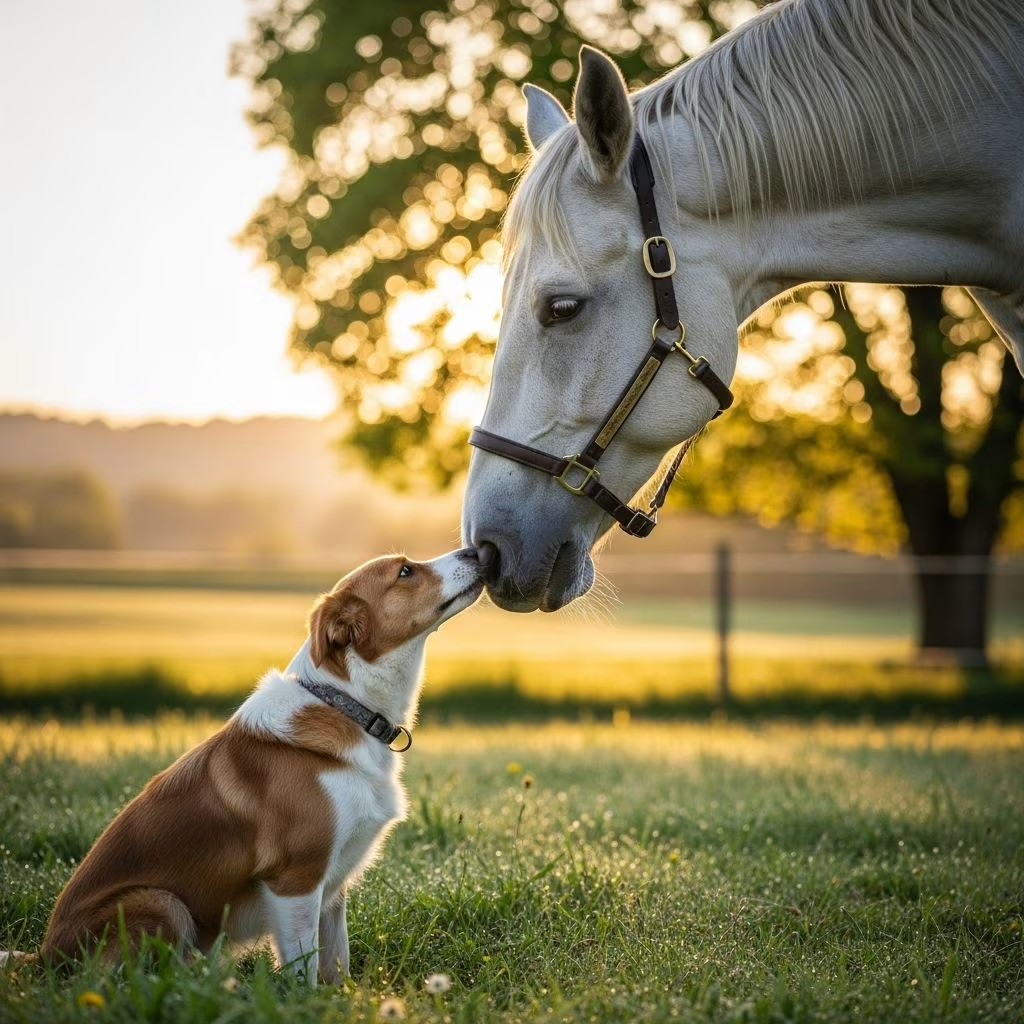
Yes, dogs and horses can develop meaningful friendships characterized by mutual respect, playful interactions, and cooperative behaviors rooted in their shared social heritages as pack and herd animals.
The Social Foundations of Interspecies Harmony
Both dogs and horses thrive in group settings, a trait inherited from their wild ancestors. Wolves, the forebears of dogs, hunted and lived in coordinated packs, fostering advanced communication skills essential for survival. Similarly, wild horses formed herds where members alternated between resting and vigilance, ensuring collective safety. This parallel evolution equips modern dogs and horses with the ability to read social cues from one another effectively.
Domestic environments amplify these instincts. On ranches, dogs often assist horses in herding livestock, demonstrating seamless teamwork. Historical records and contemporary observations show these animals suppressing predator-prey dynamics in favor of partnership, allowing them to coexist peacefully.
Emotional and Cognitive Parallels
Dogs exhibit remarkable emotional intelligence, with brain scans revealing heightened activity upon seeing familiar humans, indicating deep attachment bonds. Horses match this sensitivity; their heart rates increase in response to human anger, and they can distinguish facial expressions signaling joy or frustration. Such empathy enables cross-species understanding, where a calm dog can soothe a tense horse, and vice versa.
Learning styles further bridge the gap. Both species excel in social modeling, observing and mimicking behaviors to acquire skills. Horses demonstrate long-term memory in equestrian disciplines, recalling complex gaits like the trot or gallop, while dogs master commands through repetition and positive reinforcement. This cognitive overlap supports friendship formation when introduced gradually.
Fostering Bonds Through Structured Play
Play serves as the cornerstone of canine-equine relationships. Dogs signal play readiness with tail wags and playful bows, cues that horses reciprocate through similar expressive postures. Research notes that horses mirror dogs’ fun behaviors, much like observed in primates or meerkats, creating a feedback loop of mirrored actions that builds trust.
For young animals, these sessions sharpen social skills; for adults, they provide stress relief akin to human recreation. Despite size disparities—horses towering over even large breeds—dogs approach confidently when intentions are friendly, highlighting the role of domestication in overriding natural fears.
- Supervised Introductions: Start in neutral spaces with leashed dogs to prevent chasing instincts.
- Shared Activities: Encourage parallel play like fetching toys near grazing areas.
- Positive Reinforcement: Reward calm interactions with treats for both species.
Practical Strategies for Safe Coexistence
Successful integration requires mindful management. Horses form selective, enduring friendships, preferring stable groups over transient encounters. Domestic setups should prioritize adjoining stalls or paddocks for budding pals, minimizing stress from isolation.
Dogs, with their pack mentality, adapt well but must learn horse-specific boundaries. Training focuses on positive methods, avoiding punishment that could erode trust across species. Farms exemplify this: dogs patrol perimeters while horses manage herds, their roles complementing naturally.
| Factor | Dogs | Horses | Integration Tip |
|---|---|---|---|
| Social Structure | Pack-based, hierarchical | Herd-based, stable bonds | Maintain consistent groupings |
| Communication | Tail wags, bows, barks | Ear positions, whinnies | Observe and mimic positive signals |
| Instincts | Predatory chase | Flight response | Leash during initial meetings |
| Learning | Social modeling | Long-term memory | Use rewards for cross-training |
Real-World Examples and Benefits
Ranch life provides vivid illustrations. Dogs herd alongside mounted horses, their synergy boosting efficiency in livestock management. Hunting traditions worldwide feature similar duos, where canine scent-tracking pairs with equine speed.
Beyond utility, therapeutic applications emerge. Hippotherapy leverages horses’ calming presence, and paired with dogs, it enhances emotional support for patients. Owners report reduced anxiety in both animals from companionship, underscoring psychological gains.
Potential Challenges and Solutions
Not all pairings succeed immediately. Size differences pose risks if play escalates; a kick from a horse or nips from an excitable dog can injure. Prey drive in herding breeds like Border Collies may trigger flight in horses.
- Assess Temperaments: Match laid-back dogs with patient horses.
- Monitor Health: Ensure vaccinations and parasite control for shared spaces.
- Space Management: Provide escape routes in enclosures.
Gradual exposure mitigates issues. Studies affirm that with proper handling, conflicts are rare, and bonds strengthen over time.
Health Considerations in Multi-Species Homes
Shared living demands vigilance against zoonoses. Both animals benefit from regular vet checks, flea prevention, and tetanus shots for horses interacting with ground-level dogs. Nutritional overlaps, like access to high-fiber feeds, require separation to avoid digestive upset.
Exercise routines align well: trail walks for dogs double as light rides for horses, promoting fitness mutually.
Building Long-Term Companionship
Sustained friendships demand consistency. Avoid group disruptions, as horses stress from changing dynamics, and dogs from pack shifts. Daily rituals—joint grooming or turnout—reinforce ties.
Owners play pivotal roles, modeling calm leadership. Their presence reassures, facilitating natural rapport.
FAQs
Are certain dog breeds better suited for horse friendships?
Herding breeds like Australian Shepherds often excel due to ranch familiarity, but any calm, trainable dog can adapt with training.
How long does bonding typically take?
Weeks to months, depending on personalities; patience yields strong results.
Can puppies and foals bond safely?
Yes, under supervision—their playfulness accelerates friendship while teaching boundaries.
What if my dog chases the horse?
Redirect with training; professional behaviorists help curb instincts.
Do horses benefit emotionally from dog friends?
Absolutely; companionship reduces isolation stress in domestic settings.
References
- Can Dogs Have Horse Best Friends? — FitBark. 2023. https://www.fitbark.com/blog/can-dogs-have-horse-best-friends/
- Do Dogs and Horses Get Along? Pet Friendship — PawBoost. 2023. https://www.pawboost.com/blog/can-dogs-get-along-with-horses/
- Social Relationships in the Domestic Horse — Pet Professional Guild. 2023. https://www.petprofessionalguild.com/resource/social-relationships-in-the-domestic-horse/
- Not A Big Dog — Think Outside. 2023. https://www.outdoorssw.com/not-a-big-dog



