

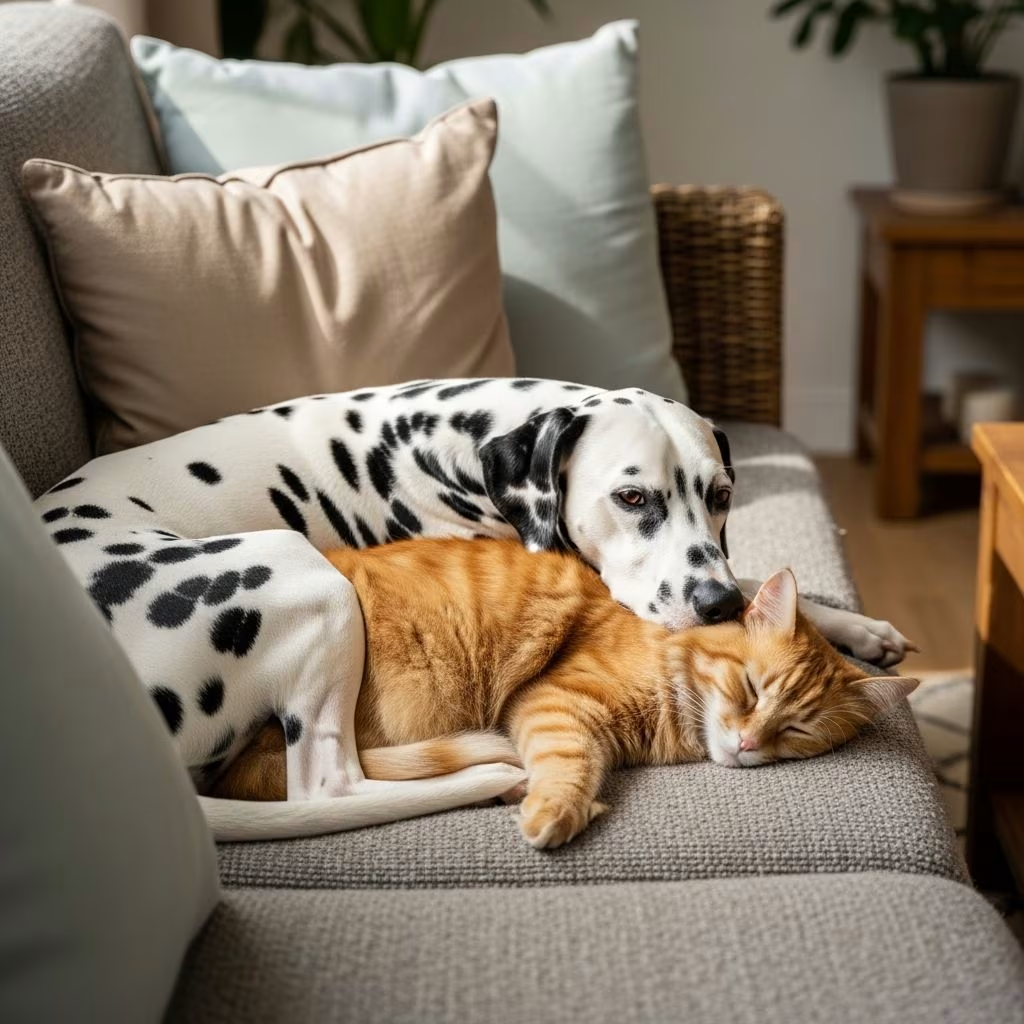
Dalmatians can form positive relationships with cats when raised together or introduced thoughtfully, thanks to their adaptable nature and lower typical prey drive compared to hunting breeds.
The Temperament of Dalmatians in Multi-Pet Homes
Dalmatians, known for their distinctive spotted coats and high energy, originated as versatile working dogs rather than specialized hunters or herders. This background contributes to their generally sociable disposition toward household pets, including cats. Unlike breeds selected for pursuing small game, Dalmatians often view cats as family members rather than targets, particularly if socialized from puppyhood.
Individual variation plays a significant role. A Dalmatian’s enthusiasm for play and movement can sometimes mimic chasing instincts, but this is rarely predatory. Well-adjusted Dalmatians thrive in environments with cats, offering companionship through shared activities like gentle play sessions. Their loyalty extends to all family members, fostering inclusive home dynamics.
Factors Affecting Dalmatian-Cat Compatibility
Several elements determine success in pairing these animals:
- Early Socialization: Puppies exposed to cats during their critical developmental window (up to 16 weeks) learn to see felines as normal parts of their world.
- Training Foundation: Commands like “leave it” and “stay” help manage excitement around quick-moving cats.
- Cat’s Personality: Confident cats that assert boundaries often fare better than timid ones.
- Dalmatian’s Background: Rescue dogs may carry past experiences influencing their reactions.
Statistics from breed experts indicate that over 70% of properly socialized Dalmatians coexist peacefully with cats, though supervision remains essential during initial phases.
Step-by-Step Guide to Introducing a Dalmatian to a Cat
Successful integration requires patience and structure. Rush introductions at your peril—stress can lead to lasting tensions.
- Prepare Separate Spaces: Equip each animal with private areas featuring beds, litter boxes (for cats), and toys. This prevents territorial disputes.
- Exchange Scents: Swap bedding or toys for 3-5 days to familiarize them indirectly.
- Visual Contact via Barriers: Use baby gates or crates for supervised viewing sessions, rewarding calm behavior with treats.
- Leashed Meetings: Allow face-to-face time with the dog on a leash in a neutral room. Keep sessions short (5-10 minutes).
- Gradual Unsupervised Time: Only after weeks of positive interactions, test brief alone time, monitoring via cameras if possible.
Monitor body language: Relaxed ears and wagging tails signal progress; stiff postures or fixated stares warrant separation.
Recognizing Warning Signs and When to Intervene
Not every pairing succeeds. Watch for these red flags:
| Behavior | Dalmatian Indicates | Cat Indicates |
|---|---|---|
| Stalking or crouching | Potential prey interest | Fear or defensiveness |
| Excessive barking | Overexcitement | Threat perception |
| Tail puffing/hissing | N/A | High stress |
| Ignoring the other | Indifference (positive) | Adjustment phase |
If aggression persists after two weeks of controlled intros, consult a professional trainer. Some Dalmatians may need rehoming to cat-free environments.
Daily Management for Lasting Harmony
Once acquainted, maintain balance:
- Schedule separate exercise: Long walks for the Dalmatian, puzzle toys for the cat.
- Feed in different rooms to avoid resource guarding.
- Enrich environments: Vertical spaces for cats, chew toys for dogs.
- Regular vet check-ups ensure health issues don’t exacerbate tensions.
Dalmatians’ stamina pairs well with cats’ independence, creating low-conflict routines.
Breed History and Its Influence on Pet Interactions
Dalmatians’ roots trace to 18th-century Europe, where they guarded carriages and ran alongside horses. This role demanded alertness without aggression toward stable animals, including cats common in coaching inns. Their non-herding, non-hunting focus reduced instincts for chasing small prey, unlike terriers or hounds.
Modern breeding preserves this versatility. The American Kennel Club notes Dalmatians’ affinity for equine company extends to calm acceptance of diverse pets.
Comparing Dalmatians to Other Cat-Friendly Breeds
How do Dalmatians stack up?
| Breed | Cat Compatibility | Energy Level | Key Trait |
|---|---|---|---|
| Dalmatian | High with socialization | Very High | Playful loyalty |
| Golden Retriever | Excellent | High | Gentle patience |
| Labrador | Very Good | High | Easygoing |
| Beagle | Moderate | Medium | Scent-driven |
Dalmatians excel for active families but demand more exercise than calmer breeds.
Real-Life Success Stories and Challenges
Owners report heartwarming bonds: Dalmatians “coaching” cats during zoomies or napping curled together. Challenges arise in high-prey-drive individuals or mismatched energies—energetic Dalmatians overwhelming sedate cats. Professional behaviorists emphasize positive reinforcement training yields 90% success rates in compatible pairs.
Health Considerations for Coexisting Pets
Dalmatians prone to deafness (affecting 10-12% unilaterally, 8% bilaterally) may misread cat cues, heightening mishaps. Annual hearing tests and uric acid monitoring (for urinary issues) support stable temperaments. Cats benefit from flea preventives to avoid cross-species irritants.
Training Techniques Tailored for Multi-Pet Homes
Focus on impulse control:
- Desensitization: Expose to cat-like movements (toys on strings) rewarding ignores.
- Mat Training: Teach settling on a mat during cat meals.
- Group Walks: Leashed outings build pack mentality.
Enroll in obedience classes emphasizing distraction-proofing.
FAQs
Are all Dalmatians safe around cats?
Most are, but individual assessment via trial intros is crucial.
How long does adjustment take?
1-4 weeks typically, varying by ages and histories.
Can adult rescue Dalmatians adapt?
Yes, with patient, structured processes—many do splendidly.
What if my Dalmatian chases the cat?
Reinforce training; persistent issues may signal incompatibility.
Do kittens fare better?
Often yes, as puppies and kittens normalize each other early.
Building a Thriving Multi-Pet Environment
Invest in durable gates, pheromone diffusers for cats, and interactive feeders. Track progress in a journal, noting triggers and wins. With consistency, Dalmatians and cats can enjoy years of mutual respect, enriching family life profoundly.
References
- Are Dalmatians Good With Cats? Vet-Verified Facts & FAQ — Dogster. 2023. https://www.dogster.com/lifestyle/are-dalmatians-good-with-cats
- Why do Dalmatians get along with cats? — The South African. 2023. https://www.thesouthafrican.com/lifestyle/pets/why-do-damaltians-get-along-with-cats/
- Are Dalmatians Good With Cats? 8 Introduction Tips — Hepper. 2023. https://articles.hepper.com/are-dalmatians-good-with-cats/
- 10 dog breeds that get along with cats — ManyPets. 2024. https://manypets.com/us/blog/dog-breeds-that-get-along-with-cats/
- Dog Breeds that Get Along with Cats — American Kennel Club (AKC). 2023-01-30. https://www.akc.org/expert-advice/lifestyle/dogs-that-are-good-with-cats/



