

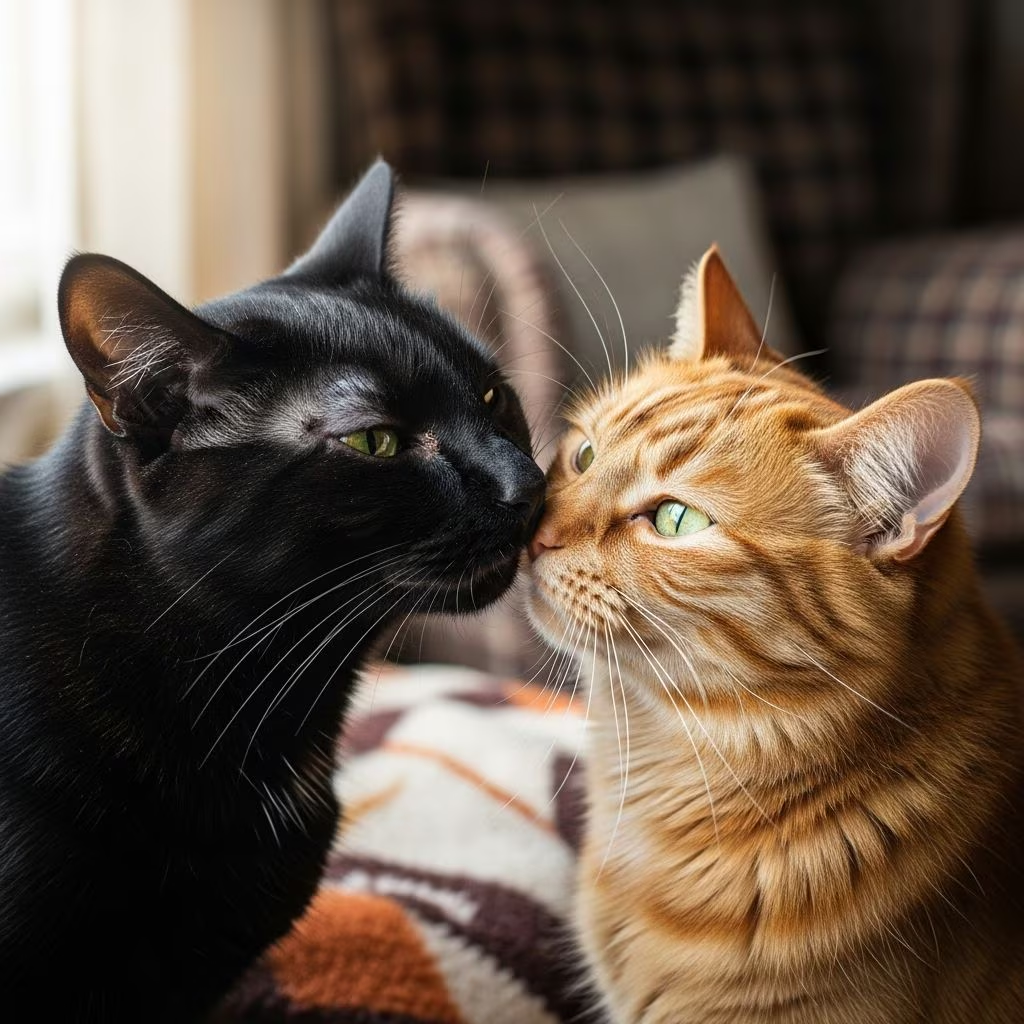
Feline Immunodeficiency Virus (FIV) is a common concern for cat owners, often sparking fears about whether an FIV-positive cat can safely coexist with healthy household pets. The good news is that yes, cats with FIV can live with other cats, provided certain precautions are taken to minimize transmission risks. Transmission primarily occurs through deep bite wounds from aggressive fights, not casual contact like sharing litter boxes or grooming. This article explores FIV basics, living arrangements, care requirements, and expert-backed advice to help you make informed decisions for your feline family.
What Is FIV in Cats?
FIV, or Feline Immunodeficiency Virus, weakens a cat’s immune system over time, similar to HIV in humans, making them more susceptible to infections. It targets white blood cells crucial for immunity, leading to progressive health decline if unmanaged. However, many FIV-positive cats live long, healthy lives with proper veterinary care.
The virus does not spread easily through everyday interactions. Unlike FeLV (Feline Leukemia Virus), FIV requires direct blood-to-blood contact via deep punctures, typically from unneutered outdoor cats fighting. Casual contact—such as mutual grooming, sharing food bowls, or using the same litter boxes—poses negligible risk because the virus does not survive long outside the body and does not cross mucous membranes efficiently.
Symptoms may not appear for years post-infection. Early stages are often asymptomatic, with later phases showing recurrent infections, weight loss, oral disease, or poor coat condition. Diagnosis involves blood tests detecting antibodies, though kittens from FIV-positive mothers may test falsely positive until six months old.
Can Cats with FIV Live with Other Cats?
Absolutely, FIV-positive cats can live successfully with FIV-negative cats in multi-cat households, as confirmed by multiple veterinary studies and shelters. A pivotal long-term study by Purdue University’s College of Veterinary Medicine observed FIV-positive cats cohabiting with FIV-negative cats for years without transmission, despite shared spaces, grooming, and minor scuffles.
Key factors for safe cohabitation include:
- Peaceful interactions: No aggressive fighting that could cause deep bites.
- Spaying/neutering: Reduces territorial aggression dramatically.
- Indoor-only lifestyle: Prevents roaming and injuries from outdoor fights.
- Slow introductions: Separate rooms initially to ensure compatibility.
Shelters like San Diego Humane Society and Best Friends Animal Society endorse mixed households when cats get along. FIV-positive cats without teeth (common due to dental disease) pose even lower risk. Real-world examples abound: owners report 9 FIV-negative cats thriving with 3 FIV-positive ones, or 16 negatives with 5 positives, all fixed and harmonious.
How Is FIV Transmitted Between Cats?
FIV spreads almost exclusively through serious bite wounds where infected saliva enters the bloodstream. This happens in:
- Intense fights between intact (unneutered) males competing for territory or mates.
- Rarely, during mating via neck bites.
- Potentially queen-to-kitten vertically, but studies show mothers rarely transmit to offspring.
Myths persist: Sharing litter boxes, bowls, or grooming does NOT transmit FIV. The virus dies quickly in the environment and requires deep penetration. Casual contact in stable homes is safe, as evidenced by Purdue’s study where cats shared everything without issue.
| Transmission Route | Risk Level | Prevention |
|---|---|---|
| Deep bite wounds | High | Neutering, indoor living, compatibility checks |
| Grooming/Sharing bowls | Negligible | None needed |
| Mother-to-kitten | Low (disputed) | Test kittens at 6 months |
| Casual contact | None | N/A |
Precautions for Multi-Cat Homes with FIV-Positive Cats
To ensure harmony:
- Vet consultation: Discuss your cats’ personalities and test statuses.
- Quarantine new cats: 2-4 weeks to check health and introduce scents under doors.
- Monitor behavior: Separate if hissing, swatting escalates to bites.
- Regular vet care: Annual checkups, vaccinations (FIV cats respond well), dental cleanings.
- Nutrition boost: High-quality diet supports immunity.
FIV-positive cats often have dental issues; toothless ones are ideal low-risk housemates. Keep all indoors to avoid external threats.
Life Expectancy and Quality of Life for FIV Cats
With management, FIV cats match non-FIV peers’ lifespans—often 10-15+ years. Focus on preventing secondary infections via:
- Balanced diet rich in antioxidants.
- Parasite control (fleas, worms).
- Stress reduction for immune health.
- Prompt treatment of illnesses.
Many live vigorously into old age, playing and cuddling without symptoms.
Caring for Cats with FIV
Dedicated care maximizes well-being:
- Veterinary monitoring: Bi-annual bloodwork tracks progression.
- Vaccinations: Core shots (rabies, FVRCP) are safe and effective.
- Antibiotics judiciously: For infections, as immunity wanes.
- Environmental enrichment: Toys, scratching posts reduce stress.
- Dental care: Frequent checkups; extractions if needed.
No cure exists, but supportive therapy yields excellent outcomes.
FAQs (Frequently Asked Questions)
Can FIV spread through litter boxes?
No, FIV does not transmit via shared litter boxes, as it doesn’t survive drying out.
Should I separate FIV+ and FIV- cats?
Not if they coexist peacefully, are fixed, and indoors.
Can FIV cats go outside?
No, keep indoors to prevent fights and new infections.
Is there an FIV vaccine?
Available in some areas but not universally recommended due to test interference.
Do FIV cats get along with kittens?
Yes, with slow intros; no vertical transmission risk proven.
More FAQs
Can humans catch FIV?
No, FIV is cat-specific.
How do I test for FIV?
ELISA blood test; confirm positives with Western Blot.
Can FIV+ cats be adopted?
Yes, many shelters place them in any loving home.
This comprehensive guide debunks myths, empowering owners to provide safe, loving homes. Consult your vet for personalized advice.
References
- Cats with FIV — San Diego Humane Society. 2023. https://sdhumane.org/resources/cats-with-fiv/
- Can FIV+ Cats Live With Other Cats? — Save A Cat. 2024-05-07. https://www.saveacat.org/blog/can-fiv-cats-live-with-other-cats
- FIV in Cats: Feline Immunodeficiency Virus FAQs — Best Friends Animal Society. 2024. https://bestfriends.org/pet-care-resources/fiv-cats-feline-immunodeficiency-virus-faqs
- FIV-positive cats — Humane World. 2024. https://www.humaneworld.org/en/all-animals/fiv-positive-cats
- FIV Information — San Francisco SPCA. 2024. https://www.sfspca.org/resource/fiv-information/
- Take It From Stan: FIV Isn’t Scary — Give Shelter. 2024. https://www.giveshelter.org/news/take-it-from-stan-fiv-isnt-scary



