

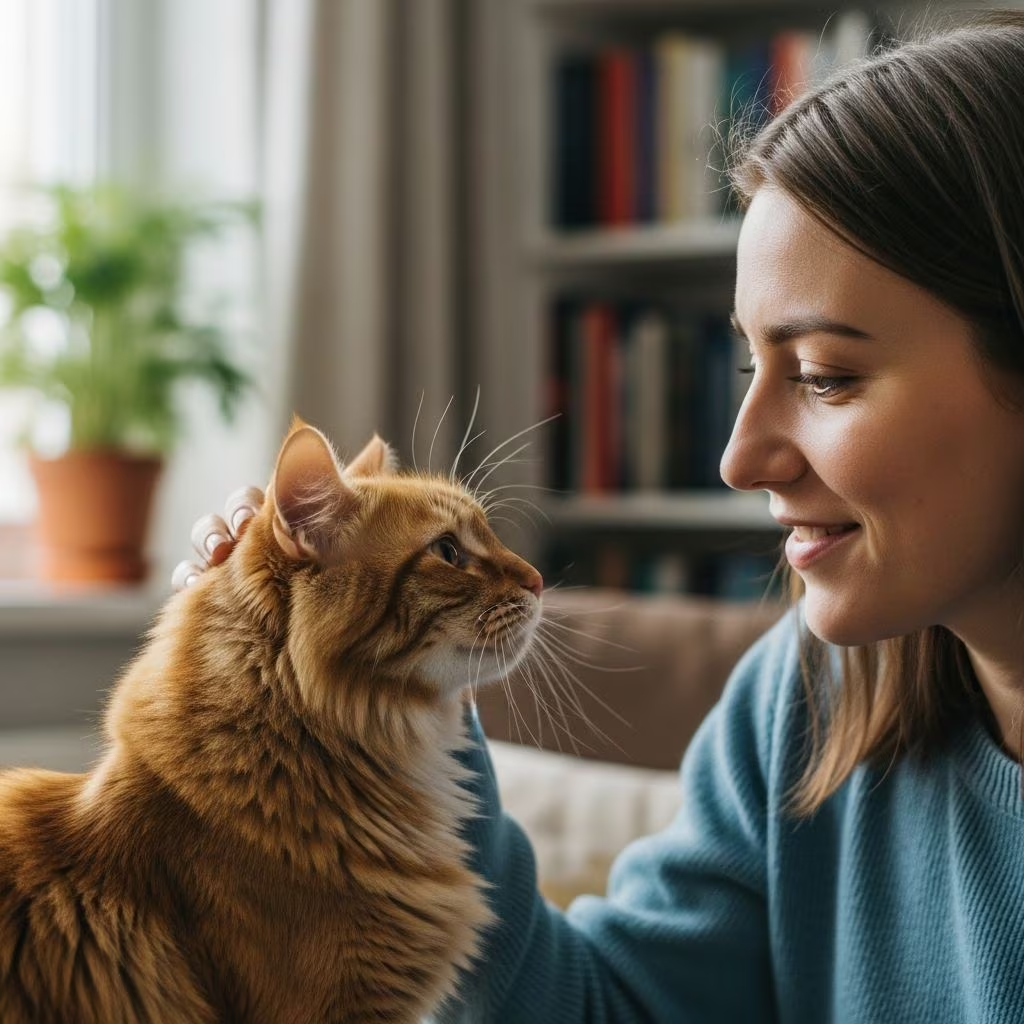
Can Cats Understand Humans and Language?
Many cat owners wonder whether their feline companions truly understand what they’re saying or if cats simply respond to patterns and associations. The answer is nuanced and reveals fascinating insights into how cats process human communication. Cats can learn to recognize human language, but it’s important to understand that for cats, language means more than just the words we speak. Body language, tone of voice, and emotional cues all play essential roles in how cats interpret our communication.
The Difference Between Recognition and Understanding
One of the most important distinctions when discussing cat comprehension is understanding the difference between recognition and true understanding. These are not the same thing, and cats excel at recognition while their level of deeper understanding remains debatable among researchers.
What is Recognition?
Recognition refers to the ability cats have to make connections between two things using their basic senses: sight, sound, touch, and smell. When you consistently say the word “treat” while using a positive, light tone and relaxed or excited body language, your cat begins to associate that word with the experience of receiving a treat. Through repetition, cats learn that certain words predict specific outcomes. This is recognition—they’ve learned that a particular sound predicts a consequence they care about.
What is Understanding?
Understanding, on the other hand, suggests a deeper comprehension of meaning and language structure. It’s thought that cats are better at recognizing words than truly understanding them in the way humans do. Rather than grasping the abstract meaning of a word, cats create connections between auditory cues, visual signals, and anticipated results. This distinction is crucial for cat owners to recognize, as it explains why cats respond to words in certain contexts but may not generalize that knowledge across different situations.
The Role of Tone and Body Language
When communicating with your cat, the tone of your voice and your body language can be just as important—if not more important—than the actual words you use. This multi-sensory approach to communication is fundamental to how cats process what we’re trying to communicate to them.
Body Language: A Universal Cat Communication Tool
Cats are natural masters of body language. They have evolved to read subtle shifts in posture, facial expressions, and movement. Research indicates that cats are likely better at reading and interpreting human body language than humans are at reading cat body language. When you interact with your cat, they’re constantly analyzing your physical position, your movements, and how alert or relaxed you appear. This skill developed through their domestication process, allowing them to better understand and respond to human needs and intentions.
Consider the difference between how different people attempt to catch a cat. One person might approach slowly and calmly, while another might walk into the room in an alert, tense manner—”like she’s getting ready to compete in a cat catching contest,” as some cat behaviorists describe it. Cats sense that stressed body language immediately and know something’s different. They respond not to what the person says, but to what their body communicates.
Vocal Tone and Emotional Expression
Your vocal tone conveys information about your emotional and mental state. Cats pick up on shifts in our emotional baseline and adjust their behavior accordingly. If you’re stressed, anxious, or angry, your cat will sense this through your tone and may respond by becoming more cautious or distant. Conversely, a calm, positive tone can help your cat feel safe and more receptive to interaction and training.
This emotional attunement affects multiple aspects of the cat-human relationship. It influences how safe your cat feels around you, whether they expect something positive or negative to happen, and ultimately your ability to communicate with and train them effectively. Being aware of what you’re projecting through your tone and emotional state is essential for healthy cat-human communication.
How Cats Learn Human Language
Cats can indeed learn to recognize human language, but the process involves much more than memorizing words. Instead, it’s a complex association-building process that incorporates multiple sensory inputs and behavioral patterns.
The Multi-Sensory Learning Process
When teaching your cat a word, you’re not simply training them to recognize a sound. Instead, consider the complete picture of what you’re communicating:
- Verbal cue: The specific word or phrase you use consistently
- Tone of voice: The emotional quality and inflection of how you say it
- Body language: Your posture, facial expression, and physical proximity
- Context: The situation and environment where the word is used
- Consequence: What happens immediately after the word and signals
Your cat learns through this integrated experience. The word “treat” alone means nothing to a cat. But “treat” combined with a happy tone, reaching for the treat container, and then receiving a reward creates a meaningful association. Over time, through repetition and consistency, your cat develops an expectation: when they hear that specific combination of signals, a treat follows.
Building Associations Through Consistency
Consistency is paramount in teaching cats to recognize human language. Each time you use a particular word, phrase, or command in the same context with the same tone and body language, you strengthen the association in your cat’s mind. Cats thrive on predictability, and consistent communication helps them understand what to expect from you.
Emotional Recognition and Social Cues
Beyond learning to recognize specific words, cats demonstrate an ability to recognize and respond to human emotional states and social cues. Research has shown that cats possess capabilities that demonstrate genuine awareness of human feelings and social signals.
Reading Human Emotions
Studies have demonstrated that cats are capable of recognizing human emotions to varying degrees. When you display different emotional states—happiness, sadness, stress, or anger—your cat can detect these through multiple channels: your facial expressions, body language, tone of voice, and even chemical signals in your scent. Some research suggests that cats can cross-modally match emotional faces with related vocalizations in both other cats and humans, demonstrating a general mental representation of emotions in their social partners.
Understanding Human Social Cues
Cats can read some of our social cues, though their understanding has limitations. For example, cats will look when you point at something, similar to how dogs and horses respond to human directional cues. This ability likely developed because it helped cats survive and thrive within human social groups. Domestic cats are capable of recognizing human emotions, and as more recently domesticated animals compared to dogs, they continue to improve at interpreting these signals through ongoing evolution and adaptation.
However, there’s an important caveat: cats respond more strongly to these social cues when their owner is the one displaying them. If a stranger smiles at your cat or uses a friendly tone, your cat will respond, but not as readily as if you were using the same signals. One area where cats seem to struggle is understanding human relationships with other humans. They may not fully grasp the social connections you have with other people in your life.
The Unique Ways Cats Communicate with Humans
Perhaps one of the most remarkable aspects of cat-human communication is how cats have adapted their own communication methods to interact with us more effectively. Cats have essentially trained humans to respond to their needs through vocalization.
The Meow: A Feline Innovation
Cats don’t naturally meow at each other—this vocalization is reserved almost exclusively for human communication. Cats have figured out that when they meow at a frequency similar to a baby’s cry, humans respond with attention and care. This is remarkable evidence of cat intelligence and adaptability. Rather than relying solely on the scent marking and body language they use with other cats, cats have learned that humans are primarily vocal communicators and have developed a method to communicate with us on our own terms.
Combining Verbal and Non-Verbal Communication
What’s particularly impressive is that cats maintain their non-verbal communication system with other cats while simultaneously developing vocal communication specifically for humans. This demonstrates a level of communication sophistication that many people don’t give cats credit for. Your cat recognizes that you speak a different language than other cats do and adjusts their behavior accordingly. They use meows with you while using scent glands and body language with their feline companions.
Factors That Influence Cat Understanding
Several factors determine how well a cat can understand and respond to human communication:
| Factor | Impact on Understanding |
|---|---|
| Early Socialization | Cats socialized with humans as kittens develop stronger communication skills and responsiveness to human signals |
| Individual Personality | Some cats are naturally more attentive and responsive to human communication due to temperament |
| Your Communication Consistency | Consistent use of the same words, tones, and body language strengthens your cat’s ability to recognize patterns |
| Bond Strength | Cats with stronger bonds to their owners are more attentive to and responsive to their communication |
| Context and Repetition | More repetitions in similar contexts help cats build stronger associations |
Do Cats See Us as Different?
Cats clearly recognize that humans are different from them. It’s not that cats think of their humans as large, furless cats. Cats understand that we look different, smell different, and behave differently from them. We don’t compete over territory the way cats do with each other, and we move and communicate in distinctly non-feline ways.
How exactly cats categorize us remains somewhat mysterious, but evidence suggests that cats view us as companions—possibly as parent-like or servant-like figures, depending on the individual cat’s personality and history. This perception likely involves mutual give and take, with cats recognizing both what we can do for them and how they can influence our behavior through their own actions.
Frequently Asked Questions
Q: Can cats really understand the words I say to them?
A: Cats can learn to recognize words and associate them with outcomes, but this is different from true understanding. They’re making connections between sounds, body language, tone, and consequences rather than understanding abstract meaning the way humans do.
Q: Why is my cat more responsive to some people than others?
A: Cats respond based on the overall communication package from a person—their tone, body language, and emotional state. Additionally, cats develop stronger bonds with people who feed them, play with them, and spend consistent time with them.
Q: Does my cat understand my emotions?
A: Research suggests cats can recognize some human emotions through facial expressions, body language, and tone of voice. They are particularly attuned to their owner’s emotional states and adjust their behavior accordingly.
Q: How can I improve communication with my cat?
A: Be consistent with the words, tones, and body language you use. Maintain a calm emotional state, use positive reinforcement, and remember that cats respond to the complete picture of your communication, not just the words themselves.
Q: Why do cats meow at humans but not at other cats?
A: Cats have learned that meowing is an effective way to communicate with humans, as we’re primarily vocal communicators. They maintain their other forms of communication (scent marking and body language) with other cats while using meowing specifically for human interaction.
Q: Can cats recognize their own names?
A: Yes, cats can learn to recognize their names through the association between the sound of their name and positive outcomes like feeding time or play. However, they respond based on the overall context and tone rather than understanding the concept of a personal name.
References
- The Mechanics of Social Interactions Between Cats and Their Owners — National Center for Biotechnology Information (NCBI). PMC8044293. https://pmc.ncbi.nlm.nih.gov/articles/PMC8044293/
- Can Cats Understand Humans and Language? — Kinship. https://www.kinship.com/cat-behavior/can-cats-understand-humans
- What Do Cats Think of Humans? — My Lovely Feline. https://mylovelyfeline.com/blogs/content/what-do-cats-think-of-humans
- 7 Reasons Your Cat Thinks You’re Weird — Kinship. https://www.kinship.com/cat-behavior/reasons-your-cat-thinks-you-are-weird



