

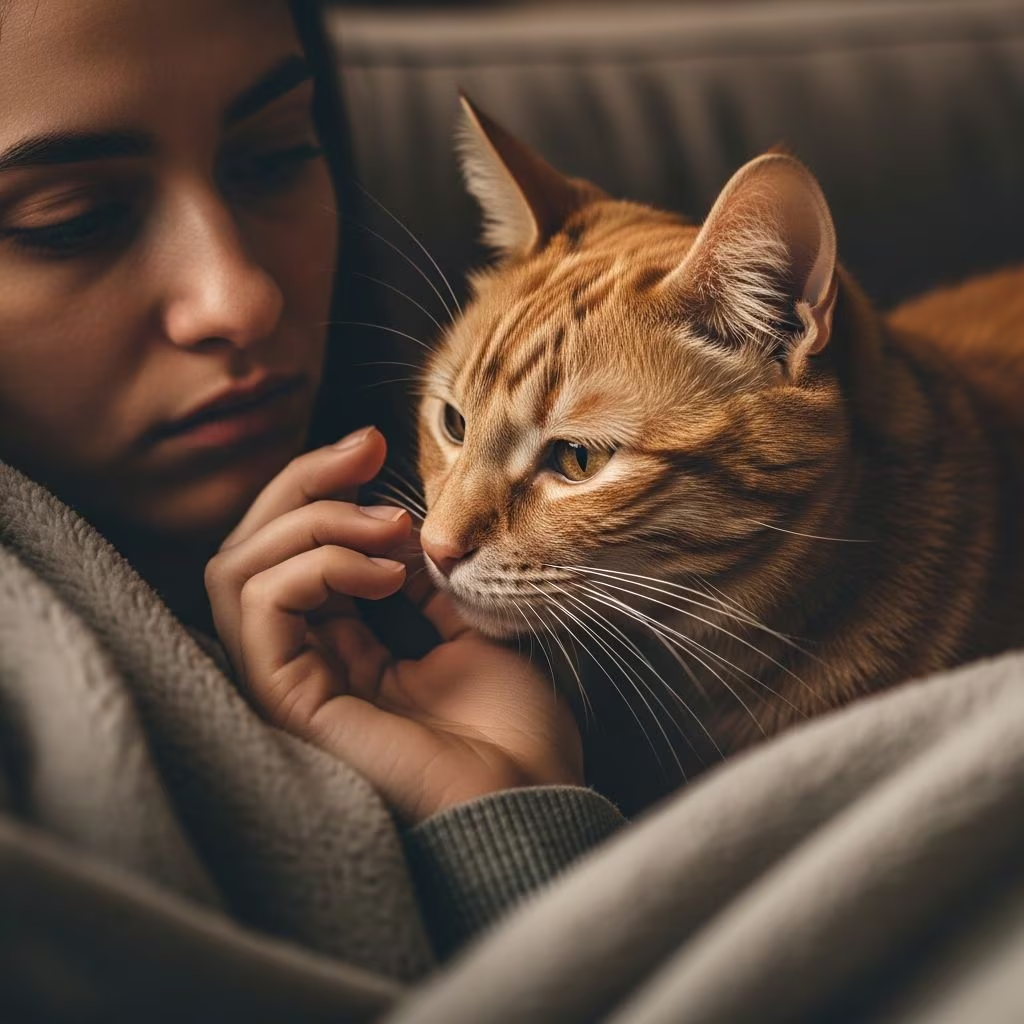
Can Cats Tell When You’re Sad?
If you’ve ever noticed your cat seeming to understand when you’re feeling down, you’re not alone. Many cat owners report that their feline companions appear to sense their emotional state and respond accordingly. But can cats actually tell when you’re sad, or is it just coincidence? The answer is yes—research demonstrates that cats can recognize human emotions, including sadness, and they respond to these emotional cues in meaningful ways.
While cats may not experience emotions identically to humans, they possess remarkable abilities to interpret our emotional signals through multiple sensory channels. This understanding has developed through thousands of years of domestication, allowing cats to become attuned to the nuances of human behavior and emotional expression.
The Science Behind Cats Sensing Human Emotions
Scientific research has revealed compelling evidence that cats can detect and respond to human emotions. A study published in Animal Cognition found that cats can integrate visual and auditory signals to recognize human emotions. This means cats are processing multiple types of information simultaneously to understand how you’re feeling.
The research involved observing how cats responded to their owners when they expressed different emotions. When owners displayed happiness, cats showed more positive behaviors compared to when they displayed anger or anxiety. Interestingly, this difference only occurred with cats that had a strong bond with their owners—cats did not respond similarly to unfamiliar people, indicating that the depth of your relationship with your cat matters significantly.
According to another study by Nottingham Trent University, cats can determine when their humans are anxious or stressed and can even mirror their human’s emotions and well-being. This mirroring behavior suggests that cats don’t just observe emotions—they may internalize them to some degree.
How Cats Detect Your Sadness
Cats detect human sadness through a combination of visual cues, auditory signals, and even chemical detection. Understanding these detection methods can help you appreciate just how perceptive your feline friend truly is.
Visual Cues
Cats are highly observant animals with excellent vision, particularly for detecting movement and changes in body language. When you’re sad, your facial expressions, posture, and overall body language change noticeably. Cats can recognize the body language and movement changes that happen when humans become sad, such as frowning, slumped shoulders, and reduced eye contact.
Your cat learns your normal patterns and behaviors, so any deviation from these patterns signals something different. They may notice that you spend more time in bed, move more slowly, or spend extended periods sitting quietly without your usual activities.
Auditory Cues
The tone and volume of your voice provide significant clues about your emotional state. When you’re sad, your voice typically becomes quieter, softer, and may carry undertones of distress. Tonal changes in your voice are an indication of how you’re feeling, with soft tones being comforting to cats while louder, sharper tones cause them to hide.
Crying is one of the most recognizable auditory signals of sadness. Cats associate crying noises with distress and may respond by attempting to comfort you or by withdrawing to a safe space. The emotional weight in your voice carries information that cats have learned to interpret over time.
Chemical Detection
One of the most fascinating ways cats detect emotions is through scent. Cats are able to distinguish a human’s fear odor, and when smelling this fear scent, cats were recorded to exhibit a stress response to it. This indicates that cats have adapted to react to human emotions through chemical signals that humans cannot consciously detect.
When you experience sadness or anxiety, your body releases different hormones and pheromones that create a distinct scent. Cats, with their highly developed sense of smell—estimated to be 14 times better than humans—can detect these chemical changes and interpret them as emotional signals.
Can Cats Sense Different Types of Sadness?
While cats can clearly sense when you’re experiencing negative emotions, research suggests they may have limitations in distinguishing between specific types of sadness. Cats may not be able to pick up certain nuances between human negative moods such as loneliness or grief, but they know when we are in a low mood compared to when we’re feeling happy.
This means your cat might not understand whether you’re sad because of a loss, rejection, or disappointment, but they will recognize that you’re experiencing a low emotional state. The ability to distinguish between happiness and sadness is well within their capabilities, but finer emotional gradations may be beyond their interpretation.
How Cats Respond When They Sense Your Sadness
Cats demonstrate their awareness of your emotional state through various behavioral responses. Understanding these behaviors can help you recognize when your cat is responding to your sadness.
Common Comfort Behaviors
- Increased proximity: Cats may come in closer proximity when their fur parents are depressed, choosing to stay near you even if they normally maintain distance.
- Purring: Some cats purr and rub themselves more once they sense their human is depressed. Purring serves a dual purpose—it comforts the cat and has been shown to lower your blood pressure and promote relaxation.
- Physical contact: Your cat may rub themselves against you, sit on your lap, or rest against your legs when they sense sadness.
- Attention-seeking: Cats engage with their humans more often when they are sad or depressed, and they approach them more frequently when their humans are anxious or agitated.
- Watchful observation: Your cat may simply stay in the same room as you, keeping a careful eye on your well-being from a comfortable distance.
Individual Personality Variations
It’s important to note that every cat is different, so if you’re asking yourself “Can my cat sense emotions?”, the answer is most likely yes, but their personality may mean that they don’t want to curl on your lap when you are feeling sad. Some cats are naturally more affectionate and demonstrative in their comfort-giving, while others prefer to offer support from afar.
Introverted cats may show their concern through subtle behaviors like positioning themselves where they can see you, maintaining eye contact, or simply being present in your space. These quieter responses are just as meaningful as more overt displays of affection.
The Bond Between You and Your Cat Matters
The strength of the relationship you share with your cat significantly impacts their ability to sense and respond to your emotions. The closer your bond is with your cat, the more likely they are to be in sync with you and understand your different moods.
Cats that have lived with you for years, receive consistent care, and have developed trust with you will be more attuned to your emotional fluctuations. This is why a cat may respond differently to sadness signals from their owner versus an unfamiliar person—they have learned your emotional baseline and can recognize deviations from it.
Building a strong bond with your cat involves:
- Regular interaction and play
- Consistent feeding schedules and routines
- Gentle handling and respecting their boundaries
- Quality time spent together
- Understanding your individual cat’s preferences and personality
Can Cats Learn to Sense Your Emotions?
Cats are learning all the time, so yes, they may come to learn what you do when you’re feeling different emotions. Through repeated associations, your cat develops an understanding of your emotional patterns.
For example, if you’re sad and give your cat extra attention, they make the association between your behavior and actions with being in an emotional state, which means you give them more attention. Over time, your cat learns that certain behaviors and signals from you correlate with specific outcomes, allowing them to predict your emotional state even more accurately.
This learning process is continuous throughout your cat’s life. The longer you live together, the more sophisticated your cat’s understanding of your emotional patterns becomes.
Cats as Therapy Animals
For cats who have bonded with their humans, they are great therapy animals because of their ability to calm their human companions. This therapeutic benefit isn’t just emotional—it has measurable physical effects.
The act of petting a cat and hearing them purr triggers the release of endorphins in your brain, natural chemicals that improve mood and reduce stress. Additionally, cat cuddles and purrs help to release endorphins that make you feel better. The simple presence of a caring cat during times of sadness can provide genuine comfort and support.
Many people find that caring for a cat during difficult emotional periods provides structure, routine, and purpose. The responsibility of feeding, playing with, and caring for your cat gives you reasons to maintain daily activities even when motivation is low.
When to Be Concerned About Your Cat’s Response
While cats responding to your sadness is generally a positive sign of your bond, it’s important to monitor whether your emotional state is negatively affecting your cat. If you notice your mood having an adverse, long-lasting effect on your cat, it’s best to speak to your vet.
Signs that your emotional state may be affecting your cat include:
- Changes in eating or drinking habits
- Excessive grooming or lack of grooming
- Litter box issues
- Increased aggression or anxiety
- Withdrawal or isolation
- Changes in sleep patterns
If you notice these signs, consult your veterinarian to rule out medical issues and discuss your cat’s well-being.
The Impact of Routine Changes on Your Cat
Beyond emotional sensing, your sadness affects your cat through changes in your normal routine. When feeling low, we can lose focus and purpose, which can affect our normal routine and our cats, too. Cats love routine, so it’ll have a negative impact on them if they’re not getting their dinner on time, for example.
Depression and sadness often disrupt sleep schedules, meal times, and activity levels. Your cat relies on these predictable patterns for their sense of security. When routines change dramatically, cats may become stressed or anxious. During difficult emotional periods, prioritize maintaining your cat’s feeding schedule, playtime, and daily routines to help them feel secure.
Frequently Asked Questions
Q: Can cats understand what sadness is?
A: Cats don’t understand sadness in the way humans do, but they recognize the physical and behavioral changes associated with sadness. They learn to associate your behaviors with emotional states and respond accordingly, even if they don’t comprehend sadness as a concept.
Q: Will my cat always try to comfort me when I’m sad?
A: Not necessarily. Every cat has a different personality, and while some cats are naturally more nurturing and affectionate, others may show support from a distance. Your cat’s comfort style depends on their individual temperament and your relationship with them.
Q: How long does it take for a cat to learn my emotional patterns?
A: Cats begin learning your emotional patterns from the moment you adopt them, but the depth of understanding increases over time. The longer you live together and the stronger your bond, the more accurately your cat can read your emotional state.
Q: Can a cat’s presence actually help with depression?
A: Yes. Research shows that petting a cat and being in their presence can lower blood pressure, reduce stress, and release endorphins. Caring for a cat also provides routine and purpose, which can be beneficial during depressive episodes.
Q: Do all cats respond the same way to human sadness?
A: No. Cat responses vary based on individual personality, past experiences, and the strength of their bond with their owner. Some cats become more affectionate, while others may withdraw to their own space—both can indicate they sense your emotion.
Q: Is my cat actually feeling sad when I’m sad?
A: Cats can mirror your emotions to some degree, but they may not experience sadness the same way you do. They respond to your emotional state through learned associations and may experience stress when they detect your distress, but this differs from human emotional experience.
References
- Can Cats Sense Sadness, Depression and Anxiety in People? — Petcube. 2024. https://petcube.com/blog/can-cats-sense-sadness-depression-and-anxiety/
- Do Cats Know When Their Humans Are Sad? — Feliway. 2024. https://us.feliway.com/blogs/news/do-cats-know-when-their-humans-are-sad
- Can Cats Sense Sadness in Their Owners? — Everypaw. 2024. https://www.everypaw.com/all-things-pet/can-cats-sense-sadness
- If Your Cat Does THIS When You’re Sad, They Feel It Too — YouTube. 2020. https://www.youtube.com/watch?v=FXSNYp3dt-o
- Can Cats Tell When You’re Sad? — Purely Pets Insurance. 2024. https://www.purelypetsinsurance.co.uk/blogs/can-cats-tell-when-youre-sad/



