

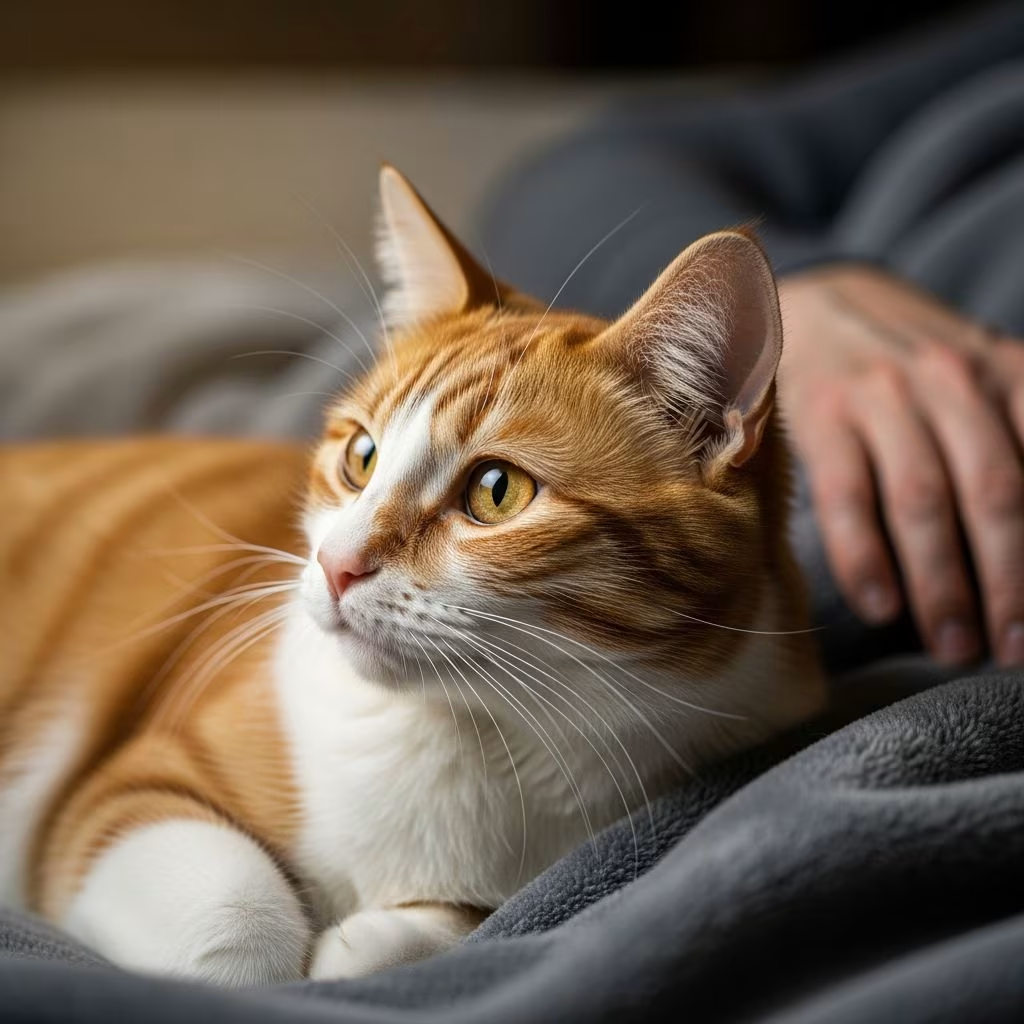
Cats possess an extraordinary ability to detect when humans are ill, primarily through their highly developed sense of smell that identifies subtle chemical changes in the body. This intuitive skill, supported by both anecdotal evidence and emerging scientific research, suggests cats can sense conditions ranging from cancer to seizures, often altering their behavior to alert or comfort their owners.
How Do Cats Know When You’re Sick?
Cats detect human illness mainly via their superior olfactory system, which includes up to 200 million scent receptors—far surpassing humans’ 5 million—allowing them to pick up volatile organic compounds (VOCs) and other chemical markers released during disease. These changes in body odor, breath, or sweat signal illness to cats, who may respond by becoming more affectionate, staring intently, or showing unusual agitation.
Beyond smell, cats observe behavioral shifts like changes in routine, mood, or movement, attuned through their strong bond with owners. For instance, a cat might nuzzle closer during fever or avoid contact if sensing distress, demonstrating their sensitivity to both physiological and emotional cues.
Cats’ Super Senses: Smell, Hearing, and Beyond
A cat’s nose is a biological marvel, with a large olfactory epithelium (about 5.8 cm², nearly twice humans’) and specialized receptors that differentiate scents at parts-per-trillion levels. This enables detection of VOCs linked to diseases, similar to how dogs are trained but leveraging cats’ natural instincts.
- Olfactory Bulb: Highly developed, processing scents rapidly for quick health assessments.
- Vomeronasal Organ: Detects pheromones and subtle hormonal shifts tied to stress or illness.
- Hearing and Vision: Cats hear ultrasonic sounds and see minor body language changes indicating pain or fatigue.
These senses combine to make cats natural health monitors, often responding before symptoms become obvious to humans.
Anecdotes: Real Cats Who Sensed Illness
Countless stories highlight cats’ prescience. One owner reported her cat obsessively pawing at a breast lump later diagnosed as cancer, refusing to leave her side until medical attention was sought. Another cat alerted to hypoglycemia by jumping on its diabetic owner’s chest and meowing frantically, prompting a blood sugar check that confirmed danger.
In seizure cases, cats have been observed becoming hyper-vigilant or lying on owners’ laps minutes before an epileptic episode, possibly detecting pre-seizure chemical auras or behavioral precursors. These anecdotes, while not scientifically controlled, align with patterns in peer-reviewed observations.
Scientific Evidence: Studies on Cats Detecting Illness
Research confirms cats’ potential in illness detection, though less extensive than for dogs. A PMC study notes cats’ acute smell rivals dogs’, with olfactory mucosa enabling tumor necrosis odor detection. CBS News reports both species sense chemical body changes from diseases like cancer and epilepsy.
Studies on VOCs show illnesses alter human scent profiles detectably by animals; cats, like dogs, distinguish these in preliminary trials. VCA Hospitals research indicates cats sense emotional states via hormones like cortisol, extending to illness-linked shifts. While training lags behind dogs, natural aptitude is evident.
What Illnesses Can Cats Detect?
| Illness | How Cats Detect It | Evidence Type |
|---|---|---|
| Cancer | Altered VOCs from tumors changing body odor | Anecdotal cases; supported by dog studies |
| Diabetes/Hypoglycemia | Scent and behavior changes during blood sugar drops | Owner reports; parallel to trained alerts |
| Epileptic Seizures | Pre-seizure chemical markers or subtle cues | Anecdotes and preliminary research |
| Infections/Fevers | Hormonal and sweat odor shifts | Behavioral observations |
Cats show particular sensitivity to cancers (e.g., skin, breast) due to proximity scents, diabetes via acetone-like breath odors, and seizures through aura detection.
Why Do Cats Act Differently When You’re Sick?
When sensing illness, cats may increase purring, kneading, or proximity for comfort—instinctual nurturing behaviors releasing healing frequencies (25-150 Hz). Alternatively, they withdraw if overwhelmed or to avoid contagion, reflecting wild survival instincts.
- Affection Surge: Snuggling to provide warmth and reduce stress hormones.
- Alerting: Vocalizing, pawing, or blocking paths to urge action.
- Guarding: Staying vigilant, mirroring pack protection from wolf ancestry parallels.
These responses strengthen the human-cat bond, potentially aiding recovery through emotional support.
Myths vs. Facts: Cats and Illness Detection
- Myth: Cats only react to visible symptoms. Fact: They detect pre-symptomatic chemical changes.
- Myth: Only dogs can be medical alerts. Fact: Cats show innate abilities, trainable with effort.
- Myth: Cats worsen illness. Fact: Their presence lowers cortisol, boosting immunity.
- Myth: All cats do this. Fact: Bond strength and individual sensitivity vary.
Enhancing the Human-Cat Bond for Health Awareness
Observe your cat’s baseline behavior to notice deviations signaling health issues. Encourage sniffing during check-ins and note persistent alerts. Integrating cat interactions into wellness routines fosters mutual health monitoring.
Future Research and Possibilities
Emerging studies explore training cats for alerts, comparing them to dogs. Healthcare integration could include pet-assisted early detection, bridging veterinary and human medicine. Ethical training methods promise non-invasive monitoring tools.
Frequently Asked Questions
Can all cats detect illness in humans?
Not all, but many with strong bonds show sensitivity; individual variation exists based on breed, age, and health.
Is scientific proof definitive that cats sense sickness?
Evidence is promising from olfactory studies and cases, but more controlled feline trials are needed beyond dog research.
Should I rely on my cat for medical alerts?
Cats provide valuable cues but not substitutes for professional diagnosis; use as complementary awareness.
Why does my cat ignore me when I’m sick?
Some cats self-protect by distancing; others comfort—personality and bond influence response.
Can cats detect mental health issues?
Yes, via stress pheromones and behavior, distinguishing anxiety from physical illness cues.
References
- How Cats Detect Illness in Humans: The Science and Secrets Behind Their Amazing Senses — ArtYourCat. 2023. https://artyourcat.com/blogs/art-your-cat-blog/how-cats-detect-illness-in-humans-the-science-and-secrets-behind-their-amazing-senses
- Dogs And Cats Can Detect Illness — CBS News. 2023-10-15. https://www.cbsnews.com/philadelphia/news/dogs-and-cats-can-detect-illness/
- Can Dogs & Cats Sense Human Emotions — VCA Animal Hospitals. 2024. https://vcahospitals.com/shop/articles/can-dogs-and-cats-sense-emotions
- Inside a mystery of oncoscience: The cancer-sniffing pets — PMC / NIH. 2019-11-12. https://pmc.ncbi.nlm.nih.gov/articles/PMC6855366/



