

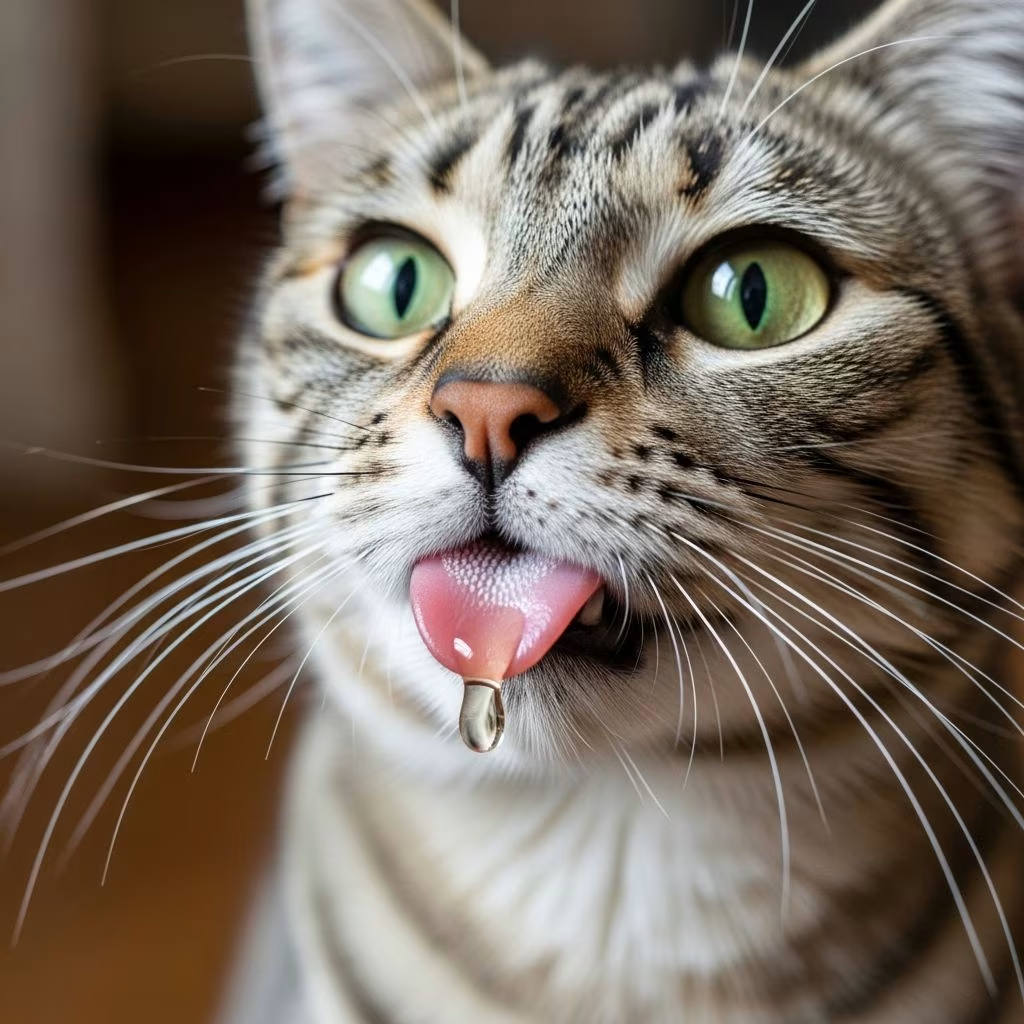
Cats cannot taste sweetness due to a genetic mutation that renders their sweet taste receptor non-functional. This unique trait stems from the pseudogenization of the Tas1r2 gene, preventing the formation of the sweet taste receptor protein essential for detecting sugars and artificial sweeteners.
What Does This Mean for Cat Owners?
For cat owners, understanding that felines lack sweet taste perception reshapes how we approach their diet and treats. Cats are obligate carnivores, thriving on meat-based nutrition rather than carbohydrates. This genetic adaptation explains their indifference to sugary foods, reducing the risk of overconsumption of unhealthy carbs. Owners should prioritize high-protein, low-carb diets to match their natural preferences and health needs.
Observing a cat ignore candy or fruit doesn’t indicate pickiness; it’s biology at work. Instead, they show strong preferences for umami-rich amino acids and fats, which align with their evolutionary needs. This knowledge helps in selecting appropriate commercial foods and homemade treats, ensuring nutritional balance without unnecessary sugars.
The Science Behind Cats’ Inability to Taste Sweets
The inability of cats to taste sweetness traces back to their taste receptor genetics. Mammals typically detect sweet flavors via a heteromeric receptor formed by two proteins: T1R2 (encoded by Tas1r2) and T1R3 (encoded by Tas1r3). In cats, Tas1r2 is a pseudogene—non-functional and unexpressed—due to mutations including a 240-base-pair deletion, disabling sweet detection entirely.
Research confirms Tas1r3 functions normally in cats, responding to amino acids and other stimuli, but without Tas1r2, the sweet-specific dimer cannot form. Neural recordings from cat taste buds show no responses to sucrose, fructose, or sweeteners, unlike dogs or humans. This molecular defect is specific to sweet modality, leaving other tastes—salty, sour, bitter, and umami—intact and hypersensitive, particularly to bitterness for toxin avoidance.
Evolutionary Reasons Why Cats Can’t Taste Sweets
Cats evolved as strict carnivores over millions of years, with the Tas1r2 pseudogene emerging as an adaptation to a meat-exclusive diet. Felids, including lions and tigers, share this trait, suggesting it arose in a common ancestor before species divergence.
In carnivorous lineages, selection pressure to maintain sweet detection relaxed because plant sugars offered no nutritional value. Energy from glucose was unnecessary; cats derive it from amino acid gluconeogenesis. This genetic change reinforced obligate carnivory, optimizing survival on prey without carbohydrate cravings. Comparative studies show dogs, omnivorous carnivorans, retain functional Tas1r2, responding to sweets.
How Many Taste Buds Do Cats Have?
Cats possess approximately 470-500 taste buds, far fewer than humans’ 9,000. Despite this, their taste system is efficient for carnivorous needs, emphasizing umami and bitter detection over sweet. Fewer buds correlate with specialized perception, prioritizing protein and safety signals over energy-dense sugars irrelevant to their diet.
Can Cats Taste Other Flavors?
Yes, cats taste salty, sour, bitter, and umami robustly. They prefer amino acids like L-proline and nucleotides, evoking savory meat flavors. Bitterness is acutely sensitive, deterring spoiled food via specialized receptors. Sour detects acidity, salty senses sodium for electrolyte balance. This profile suits hunting and scavenging, ignoring sweets irrelevant to prey.
- Salty: Essential for hydration and nerve function.
- Sour: Identifies overripe or fermented foods.
- Bitter: Warns of toxins; cats avoid many human-perceived bitters.
- Umami: Drives meat consumption via amino acid detection.
Why Do Cats Like Some Sweet Foods?
Cats may beg for ice cream or marshmallows not for sweetness, but fat, creaminess, or umami. Cold temperature or texture can intrigue them, mistaking it for appealing proteins. Licking sugary spills often stems from curiosity or fat content, not sugar taste. Owners report varied interest, but science attributes it to non-sweet cues.
Is It Healthy to Feed Cats Sweets?
No, sweets are unhealthy for cats despite their indifference. High carbs lead to obesity, diabetes, and dental issues, as felines inefficiently metabolize sugars. Veterinary guidelines recommend avoiding treats over 10% of calories, favoring meat-based options. Artificial sweeteners like xylitol are toxic, causing hypoglycemia.
| Treat Type | Why Cats Like It | Health Impact |
|---|---|---|
| Sugary Candy | Fat/texture | Obesity, diabetes risk |
| Ice Cream | Cream/fat | Lactose intolerance, weight gain |
| Fruit | Juiciness | Sugars hard to digest |
| Meat Treats | Umami/protein | Healthy in moderation |
What Should You Feed Your Cat Instead?
Opt for complete, AAFCO-approved wet or dry foods with 40-50% protein, minimal carbs (<10%). Wet food mimics prey moisture, aiding hydration. Supplements like taurine-enriched meats support heart and eye health.
- High-quality commercial kibble/wet food.
- Fresh meats (cooked chicken, fish) sparingly.
- Freeze-dried meat treats.
- Avoid grains, fillers, sugars.
Frequently Asked Questions (FAQs)
Can cats taste sweetness at all?
No, cats lack a functional sweet taste receptor due to the Tas1r2 pseudogene, confirmed by genetic studies.
Do all cats lack the ability to taste sweet?
Yes, it’s a species-wide trait in domestic cats and other Felidae, rooted in shared evolutionary genetics.
Why do some cats eat sweets if they can’t taste them?
They detect fat, protein, or texture, not sweetness. Behaviors are driven by non-sweet sensory cues.
Is the sweet taste gene broken in big cats too?
Yes, lions, tigers, and cheetahs share the Tas1r2 pseudogene, adapting all felids to carnivory.
Does this affect cat nutrition?
Absolutely; low-carb, high-protein diets match their biology, preventing obesity from unnecessary sugars.
Conclusion
Cats’ sweet blindness is a fascinating evolutionary adaptation reinforcing their carnivorous niche. Owners benefit by focusing on protein-rich nutrition, avoiding sweets that offer no appeal or value. This genetic insight enhances feline care, promoting health aligned with nature.
References
- Pseudogenization of a Sweet-Receptor Gene Accounts for Cats’ Indifference Toward Sugar — Li et al., PLOS Genetics. 2005-07-29. https://journals.plos.org/plosgenetics/article?id=10.1371/journal.pgen.0010003
- Cats Lack a Sweet Taste Receptor — Li et al., Journal of Nutrition. 2007-10. https://pmc.ncbi.nlm.nih.gov/articles/PMC2063449/
- Can Cats Taste Sweet Things? — PetMD Veterinary Review. 2023-05-15. https://www.petmd.com/cat/nutrition/can-cats-taste-sweet-things
- Myth or Fact? Cats Can’t Taste Sweetness — Antelope Pets. 2022-08-10. https://www.antelopepets.com/blogs/the-water-bowl/myth-or-fact-cats-can-t-taste-sweetness
- No Candy for Kitty — Science Magazine (AAAS). 2005-07-27. https://www.science.org/content/article/no-candy-kitty
- Why are cats unable to detect sweet tastes? — Britannica. 2021-03-15. https://www.britannica.com/video/cats-taste-receptors-sweets/-208071



