

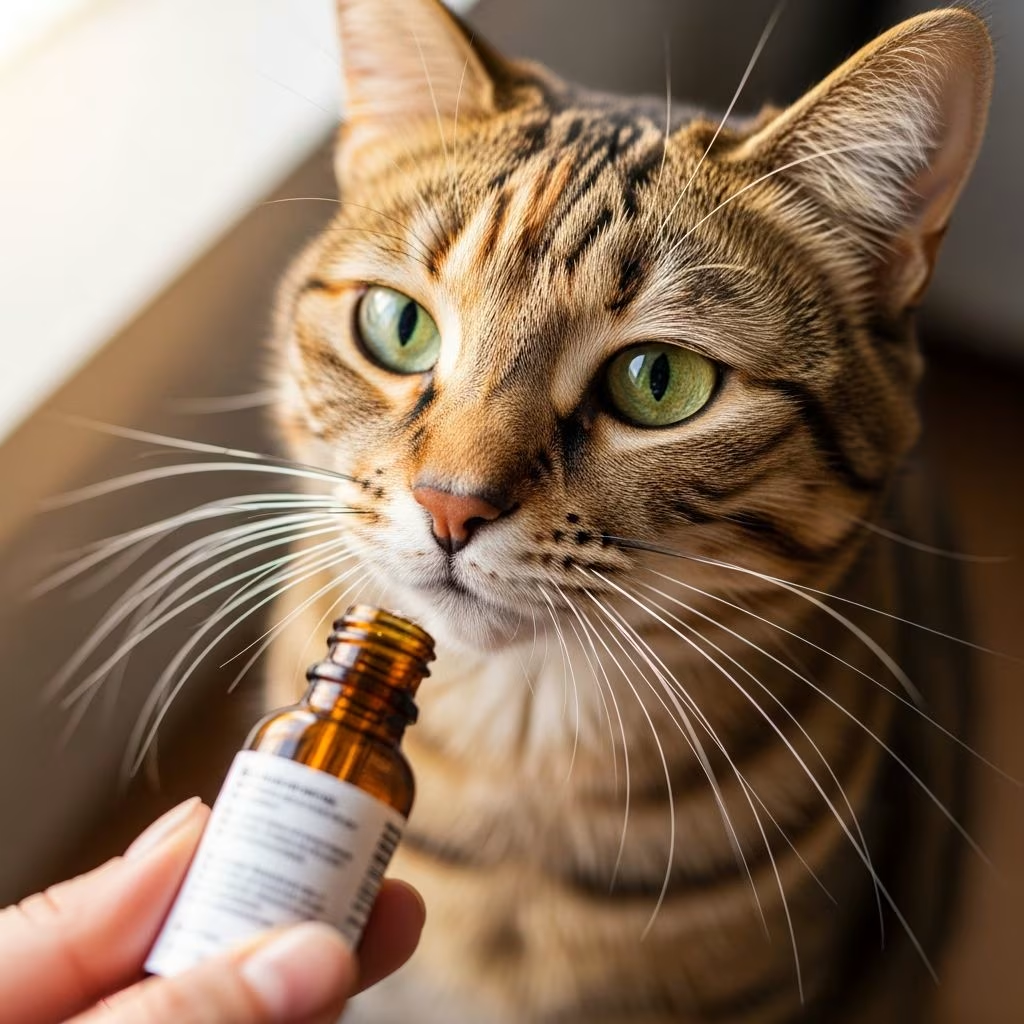
Metacam, the brand name for meloxicam, is a non-steroidal anti-inflammatory drug (NSAID) commonly used for pain relief in pets. While widely prescribed for dogs with osteoarthritis, its use in cats raises important safety questions due to FDA restrictions in the US. This article explores whether cats can safely take Metacam, its approved uses, potential risks, dosages, and alternatives, drawing from veterinary studies and guidelines.
What Is Metacam?
Metacam contains meloxicam, an NSAID that inhibits cyclooxygenase (COX) enzymes responsible for producing prostaglandins, which cause pain, inflammation, and fever. In veterinary medicine, it’s available as an oral suspension, injectable solution, or subcutaneous form, primarily formulated for dogs but adapted for cats in specific scenarios.
Unlike human NSAIDs like ibuprofen or naproxen—which are toxic to cats—meloxicam has been studied in felines. Cats metabolize drugs differently due to their unique liver enzymes, making dosage precision critical. In the US, the FDA approves only a single injectable dose of Metacam (0.3 mg/kg) for cats, typically for postoperative pain control after orthopedic surgery.
Is Metacam FDA-Approved for Cats?
No, Metacam is not FDA-approved for repeated or oral use in cats in the United States. The label carries a black box warning: “Repeated use of meloxicam in cats has been associated with acute renal failure and death. Do not administer additional injectable or oral meloxicam to cats.” This stems from early studies showing kidney damage with multiple doses.
However, a single subcutaneous injection is approved for pain and inflammation post-surgery. Outside the US, such as in Canada, Australia, the UK, and Europe, low-dose oral Metacam is licensed for long-term use in cats, like chronic arthritis management, at reduced concentrations.
| Region | Approval Status | Common Uses |
|---|---|---|
| USA (FDA) | Single injection only | Post-surgical pain |
| Europe/UK/Australia | Oral for chronic pain | Arthritis, long-term |
| Canada | Similar to Europe | Acute/chronic pain |
This table highlights regional differences, emphasizing why US vets use it off-label cautiously.
What Are the Risks Associated With Metacam?
NSAIDs like Metacam block COX enzymes, reducing pain but also affecting protective prostaglandins in the stomach and kidneys. Cats are particularly vulnerable due to slower drug clearance.
Gastrointestinal Side Effects
- Vomiting and diarrhea: Common, often mild, resolving after stopping the drug.
- Stomach ulcers: Reduced stomach protection leads to bleeding or perforation in severe cases.
- These mirror human NSAID effects but occur at lower thresholds in cats.
Renal (Kidney) Risks
The primary concern: repeated doses can cause acute renal failure. Studies show high-dose injections damage kidney tubules during excretion. Dogs tolerate it better, but cats’ kidneys are more sensitive, especially if dehydrated or pre-existing conditions exist.
In an FDA-reviewed study, eight cats received 0.3 mg/kg meloxicam (oral, IV, or subcutaneous). While effective for pain, repeated use correlated with gait issues and non-weight bearing, signaling renal compromise.
Other Risks
- Liver toxicity (rare, monitored via bloodwork).
- Behavioral changes like lethargy or appetite loss.
- Contraindicated in cats with heart disease, dehydration, or bleeding disorders.
Monitor for signs: increased thirst/urination, blood in stool, or jaundice. Always pair with blood/urine tests pre-treatment.
So, Can Cats Have Metacam?
Yes, technically—but only under strict veterinary guidance. In the US, a single low-dose injection (0.3 mg/kg) is FDA-approved and safe for most healthy cats post-surgery, like spays or orthopedic procedures.
For long-term use (e.g., arthritis), it’s off-label in the US but standard elsewhere using a cat-specific oral suspension at 0.01–0.03 mg/kg daily—about 1/4 the initial dog dose. Studies support efficacy with minimal side effects when monitored.
Vet tip: Weigh benefits vs. risks. For chronic pain unresponsive to alternatives, Metacam may improve quality of life. Baseline kidney function tests are essential.
Metacam Dosage for Cats
Dosages vary by form and indication. Never adjust without a vet.
| Form | Dosage | Frequency | Notes |
|---|---|---|---|
| Injectable (5 mg/mL) | 0.3 mg/kg SC | Single dose | FDA-approved for post-op |
| Oral Suspension (1.5 mg/mL cats) | 0.05 mg/kg initial, then 0.01–0.03 mg/kg | Daily (off-label US) | Europe standard |
Use vet-provided syringes for accuracy. Overdosing amplifies risks.
When Is Metacam Used in Cats?
- Postoperative pain: Ovariohysterectomy (spay), dental extractions, wound repair. A single shot provides 24-hour relief.
- Acute trauma: Fractures or soft tissue injuries.
- Chronic conditions: Osteoarthritis in senior cats, where mobility improves significantly per studies.
- Not for routine use or unmonitored home administration.
In a crossover study, meloxicam-treated cats showed better gait scores (soundness) and fewer rescue analgesia needs vs. butorphanol at 5–8 hours post-op.
Alternatives to Metacam for Cats
If Metacam isn’t suitable, consider:
- Opioids: Buprenorphine (sublingual) for moderate pain.
- Gabapentin: For neuropathic pain or anxiety-related discomfort.
- Solensia (frunevetmab): Monthly injection for arthritis, COX-sparing.
- Joint supplements: Omega-3s, glucosamine (adjunctive).
- Physical therapy: Laser therapy, acupuncture.
Multimodal approaches reduce NSAID reliance.
Metacam for Cats with Arthritis
Arthritis affects 90% of cats over 12. Long-term low-dose Metacam (0.01 mg/kg oral) improves activity, grooming, and pain scores in international studies. US vets may trial off-label with monthly bloodwork, balancing pain relief against ~1–2% renal risk.
Frequently Asked Questions (FAQs)
Is Metacam safe for cats after spay surgery?
Yes, a single 0.3 mg/kg injection is FDA-approved and effective for 24-hour pain control, with low side effect risk in healthy cats.
Can I give my cat Metacam at home?
Only if prescribed by your vet with exact dosing instructions. Use the feline-specific low-concentration suspension to avoid overdose.
What if my cat vomits after Metacam?
Stop the drug and contact your vet. It may indicate GI upset; anti-nausea meds or alternatives can help.
How long does Metacam last in cats?
Injectable: 24 hours. Oral low-dose: 24 hours, allowing daily use where approved.
Is meloxicam the same as Metacam?
Yes, Metacam is the brand name for meloxicam oral suspension or injection.
Final Vet Thoughts
Metacam offers valuable pain relief for cats when used judiciously. US owners: confirm off-label use with bloodwork. Internationally, it’s a cornerstone for feline pain management. Always prioritize vet consultation—your cat’s safety comes first.
References
- METACAM (meloxicam) 5 mg/mL Solution for Injection Freedom of Information Summary — FDA Animal Drugs at FDA. Accessed 2026. https://animaldrugsatfda.fda.gov/adafda/app/search/public/document/downloadFoi/751
- Can Cats Take Metacam (Or Any NSAIDs)? Facts & FAQ (Vet Answer) — Catster. 2023. https://www.catster.com/ask-the-vet/can-cats-take-metacam/
- Meloxicam (Metacam) for Cats: Uses, Dosage, Side Effects — GoodRx Vet. 2024. https://www.goodrx.com/pet-health/cat/meloxicam-for-cats
- Meloxicam: OK for Long-Term Use Despite ‘Black Box’ Warning? — Bark and Whiskers. 2013 (authoritative study reference). https://www.barkandwhiskers.com/2013-05-01-nl-meloxicam-dangers/
- METACAM – meloxicam suspension Label — NIH DailyMed. Updated 2024. https://dailymed.nlm.nih.gov/dailymed/drugInfo.cfm?setid=ed2227e6-8c69-4057-a8b2-94f74cb11264
- Meloxicam (Metacam) for Pets in 2025 — Ask a Vet. 2025. https://askavet.com/blogs/news/meloxicam-metacam-for-pets-in-2025-%F0%9F%90%BE-vet-safe-pain-relief-explained-by-dr-duncan-houston
- meloxicam – Metacam, INN – Veterinary Medicines — European Medicines Agency. 2023. https://medicines.health.europa.eu/veterinary/es/documents/download/51e20416-629d-4dbc-943c-64bbf9c502b9



