

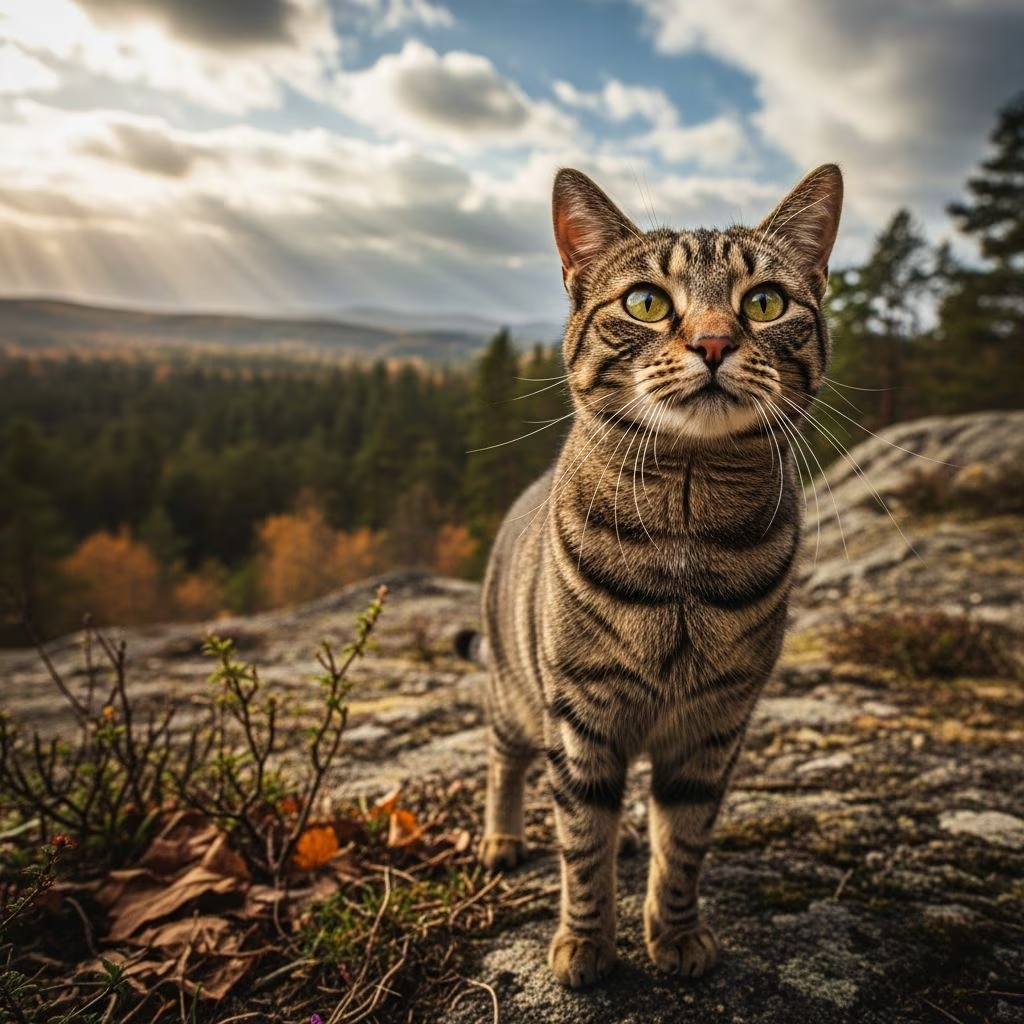
Cats have long captivated us with their mysterious independence and aloof demeanor. Unlike dogs, which seem to depend heavily on their owners for everything from food to emotional support, cats present a different picture altogether. One of the most intriguing questions pet owners ask themselves is: can cats actually survive without us? The answer might surprise you. While cats genuinely enjoy the companionship of their owners and benefit tremendously from human care, they possess remarkable survival instincts that allow them to thrive independently when necessary. Understanding the nuances of feline independence requires examining both domestic cats and their feral counterparts.
Understanding Feline Independence
At their core, cats are solitary survivalists with an impressive toolkit of natural abilities. Cats choose to be around humans rather than depend on them, which fundamentally distinguishes their relationship with people from that of dogs. This distinction is crucial when considering whether cats can survive independently. Many cat breeds are known for their affectionate nature and attachment to their chosen humans, but affection does not equal dependence. Cats possess the intrinsic ability to hunt, find water, locate shelter, and solve problems essential for survival without human intervention.
The evidence of feline independence is all around us. Millions of unowned cats exist worldwide, some of which were once domesticated and others that represent generations of feral cats living without any human support. These cats demonstrate daily that survival without human care is not merely possible but achievable across various environments and circumstances.
Domestic Cats vs. Feral Cats: Key Differences
To fully understand cat survival capabilities, it is essential to distinguish between domestic cats and truly feral cats, as these two populations face vastly different challenges and possess different skill sets.
Domestic and Stray Cats
Domestic cats and strays occupy a middle ground in the spectrum of feline independence. Stray cats are often former pets or descendants of pet cats who have become accustomed to receiving care from humans. While these cats may have learned hunting and survival skills, they frequently rely on community caregivers, restaurants, and sympathetic humans for consistent food and shelter. A domestic cat kept entirely indoors and rarely exposed to outdoor environments would face significant challenges if suddenly forced to fend for itself. Such cats might struggle initially to adjust to life without human assistance and the comfort of their familiar home environment.
Truly Feral Cats
Truly feral cats represent the opposite end of the spectrum. These cats were never pets, were never born in homes or shelters, and have never relied on humans for their basic needs. Unlike strays, feral cats are essentially wild animals with genuine independence rather than simply a strong independent streak. They are perfectly adapted to survive in outdoor environments without human intervention and would likely thrive if humans disappeared entirely from the planet.
The lifespan and living conditions of feral cats reveal the harsh realities of survival without human support. Feral cats typically experience shorter lifespans compared to their domestic counterparts, often succumbing to injuries from human activity, predation from dogs, coyotes, and raptors, malnutrition, starvation from competition for food sources, and various diseases. Yet despite these challenges, feral cats manage to reproduce successfully, with females capable of producing up to 36 kittens across multiple litters annually.
Natural Survival Instincts and Abilities
Cats possess an impressive array of natural abilities that enable survival in the wild. These instincts remain present even in domesticated cats, though they may become dormant or less refined through years of relying on human providers.
Hunting and Food Procurement
One of the most fundamental survival skills cats possess is the ability to hunt. Even house cats know how to stalk, hunt, and capture prey, making them effective predators capable of securing their own sustenance. House cats can identify and pursue small mammals, birds, insects, and other prey available in their environment. This predatory instinct remains sharp regardless of how long a cat has been domesticated.
Finding Water and Shelter
Beyond hunting, cats demonstrate resourcefulness in locating water sources and creating or finding shelter. Cats know how to find water and are quite crafty in locating shelter, abilities that enable them to meet two additional essential requirements for survival. Whether discovering hidden water sources or creating dens in abandoned buildings, under porches, or in natural formations, cats adapt quickly to their environments.
Social Cooperation
Contrary to the stereotype of cats as purely solitary creatures, feral cats demonstrate remarkable social abilities when necessary. While wild cats are fundamentally solitary creatures, they possess the capacity to form social communities and move in groups when circumstances require it. This flexibility in social structure allows feral cats to benefit from safety in numbers while still maintaining their independent nature. Feral cats running together in groups is not uncommon, and strength in numbers can provide protection and advantages in securing food.
How Long Can Cats Survive Alone?
The duration a cat can survive alone depends largely on the context: whether the cat has access to food and water, the cat’s age and health status, and whether the cat is domestic or feral.
Short-Term Alone Time
Healthy adult cats can be left alone for 8 to 12 hours at a time without significant distress. This timeframe assumes the cat has access to adequate food, water, and a clean litter box. Many adult cats actually enjoy and benefit from alone time, particularly those with independent temperaments.
Extended Periods Without Human Care
When it comes to longer periods, the picture becomes more complex. Adult cats can potentially manage for a day or two if they have access to sufficient food, water, and a clean litter box, though some may experience stress or anxiety, particularly those accustomed to constant human companionship. However, cats cannot be left alone for an entire week, even with adequate food and water provisions left out. Extended isolation can lead to illness, boredom, distress, and destructive behavior.
Survival Without Food and Water
Understanding the physiological limits of feline survival provides important context. Generally, a cat can survive approximately two weeks without eating but only three days without drinking water. However, these represent absolute limits and should never be tested deliberately. Lack of food for over 24 hours can lead to hepatic lipidosis, a severe liver condition that develops when cats metabolize fat reserves for energy, a potentially life-threatening condition requiring immediate veterinary care. Similarly, dehydration progresses quickly from mild dehydration to kidney problems and other serious health issues.
Factors Affecting Feline Survival Capability
Several factors determine whether a cat can successfully survive independently:
- Age: Kittens require constant supervision and care and cannot be left alone for extended periods. Healthy weaned kittens shouldn’t be left alone longer than four hours, while kittens aged 5-6 months can manage up to six hours. Older cats with chronic health conditions may also struggle with independence.
- Prior experience: Cats with outdoor experience and exposure to hunting are better equipped to survive independently than cats kept exclusively indoors.
- Health status: Cats with medical conditions may require regular medication and monitoring, making true independence problematic.
- Personality and temperament: Some cats are naturally more adventurous and independent, while others are anxious or dependent on routine and human interaction.
- Environmental resources: The availability of prey, water sources, and shelter dramatically influences survival rates and quality of life.
- Competition: In areas with many other cats or predators, survival becomes more challenging as cats must compete for limited resources.
Adaptation and Long-Term Feral Cat Populations
The existence and growth of feral cat populations worldwide provides compelling evidence that cats can not only survive without humans but also establish thriving communities. Feral cats have become an invasive species in many regions, demonstrating that even if individual cats live only a few years in harsh conditions, their reproductive capacity ensures population survival across generations. This reproductive success requires that enough feral cats reach sexual maturity to continue breeding, which they clearly accomplish despite the hardships of outdoor living.
What Cats Need to Survive on Their Own
From a practical standpoint, if a cat must survive independently, it requires access to three essential elements:
| Essential Element | Description | Cat’s Capability |
|---|---|---|
| Food | Protein-based sustenance for energy and health | Cats can hunt and capture prey independently |
| Water | Fresh, clean water for hydration and organ function | Cats can locate natural water sources |
| Shelter | Protection from extreme weather and predators | Cats can find or create suitable shelter |
As long as a cat has access to these three basic necessities, it has the fundamentals covered for survival. Felines possess the problem-solving abilities and instincts to secure these essentials independently, even cats that were previously domestic.
The Reality of Domestic Cat Independence
While the evidence clearly shows that cats can survive independently, it’s important to acknowledge that a domestic cat’s adjustment to such circumstances would be difficult. Many house cats, particularly those with extensive human interaction and indoor-only lifestyles, would struggle significantly to adapt to surviving without human assistance and the emotional support they’ve come to expect.
However, struggle does not mean impossibility. Some house cats would struggle to adjust after relying on owners, but if humans disappeared, they’d find a way to continue on without care and support. The capacity for adaptation is remarkable, and given time and necessity, even domesticated cats can transition to independent survival.
Important Considerations for Current Cat Owners
Understanding that cats can survive independently should not encourage owners to leave their pets unattended or neglect their care. Domesticated cats have come to expect and deserve the comfort, safety, and emotional support that responsible ownership provides. For cat owners planning to be away:
- Adult cats should not be left alone for more than 24 hours
- Hire a pet sitter to visit at least once daily when away for more than one day
- Ensure fresh food, water, and a clean litter box are available
- Provide enrichment items like scratching posts, toys, and climbing structures
- Consider the individual cat’s personality and health when determining alone time tolerance
Frequently Asked Questions
Q: Can indoor cats survive outside on their own?
A: Indoor cats would face significant challenges initially due to lack of outdoor experience, but they possess the inherent hunting and survival instincts necessary to eventually adapt and survive. However, they would likely struggle considerably during the adjustment period.
Q: How long can a cat actually live in the wild?
A: Feral cats typically have shorter lifespans than domestic cats, often only living a few years due to predation, disease, injury, and harsh environmental conditions. However, this doesn’t prevent them from successfully reproducing and sustaining populations.
Q: Do cats really need humans emotionally?
A: While many cats enjoy human companionship and form attachments to their owners, they do not emotionally depend on humans for survival in the way that dogs do. Cats choose to spend time with humans but are perfectly capable of thriving without that emotional bond.
Q: What’s the difference between a feral cat and a stray cat?
A: Stray cats are typically former pets or recent descendants of pets who may still rely on human caregivers. Feral cats were never domesticated and have no dependence on humans, making them truly wild animals.
Q: Are cats better at surviving alone than dogs?
A: Yes, cats are generally more independent than dogs and better equipped to survive without human care. While dogs can survive in feral packs, they appear to be longer-lived and happier in human company, unlike cats which actively choose independence.
Q: Can I leave my cat alone while I travel?
A: No, cats should not be left alone for extended periods. If you’ll be away more than 24 hours, arrange for a pet sitter to visit daily, provide fresh food and water, clean the litter box, and offer social interaction.
Conclusion
At their core, cats are solitary survivalists equipped with the instincts, abilities, and problem-solving skills necessary to thrive independently. Whether considering domestic cats, strays, or truly feral cats, evidence demonstrates that felines possess remarkable capacity for independent survival. While some domesticated cats might struggle with the adjustment after years of relying on human care and affection, they would ultimately find ways to meet their basic needs and continue surviving.
The distinction between domestic and feral cats reveals important truths about feline nature. Domestic cats choose companionship with humans while maintaining the capacity for independence. Feral cats represent what cats can accomplish without any human support whatsoever. Both demonstrate that cats are indeed survivors capable of thriving in diverse circumstances.
For current cat owners, this knowledge should deepen appreciation for the remarkable creatures sharing our homes while reinforcing the responsibility to provide proper care. Although cats can survive independently, domestic cats thrive best with the comfort, safety, and enrichment that responsible ownership provides. Understanding feline independence helps us respect our cats as the capable, autonomous beings they truly are.
References
- Can Cats Survive By Themselves? — YouTube. Accessed January 2026. https://www.youtube.com/watch?v=WoRKiV03Hgw
- How Long Can You Leave a Cat Alone? — Petcube. Accessed January 2026. https://petcube.com/blog/cats-home-alone/
- Could Cats Survive in a World Without Humans? Feline Independence Explained — Catster. Accessed January 2026. https://www.catster.com/cat-behavior/could-a-cat-survive-in-a-world-without-humans/
- How Long Can You Leave a Cat Alone? — PetMD. Accessed January 2026. https://www.petmd.com/cat/general-health/how-long-can-you-leave-a-cat-alone
- How to Care for Local Feral Cats in Your Community in Winter — Cat Care Society. Accessed January 2026. https://www.catcaresociety.org/how-to-care-for-local-feral-cats-in-your-community/



