

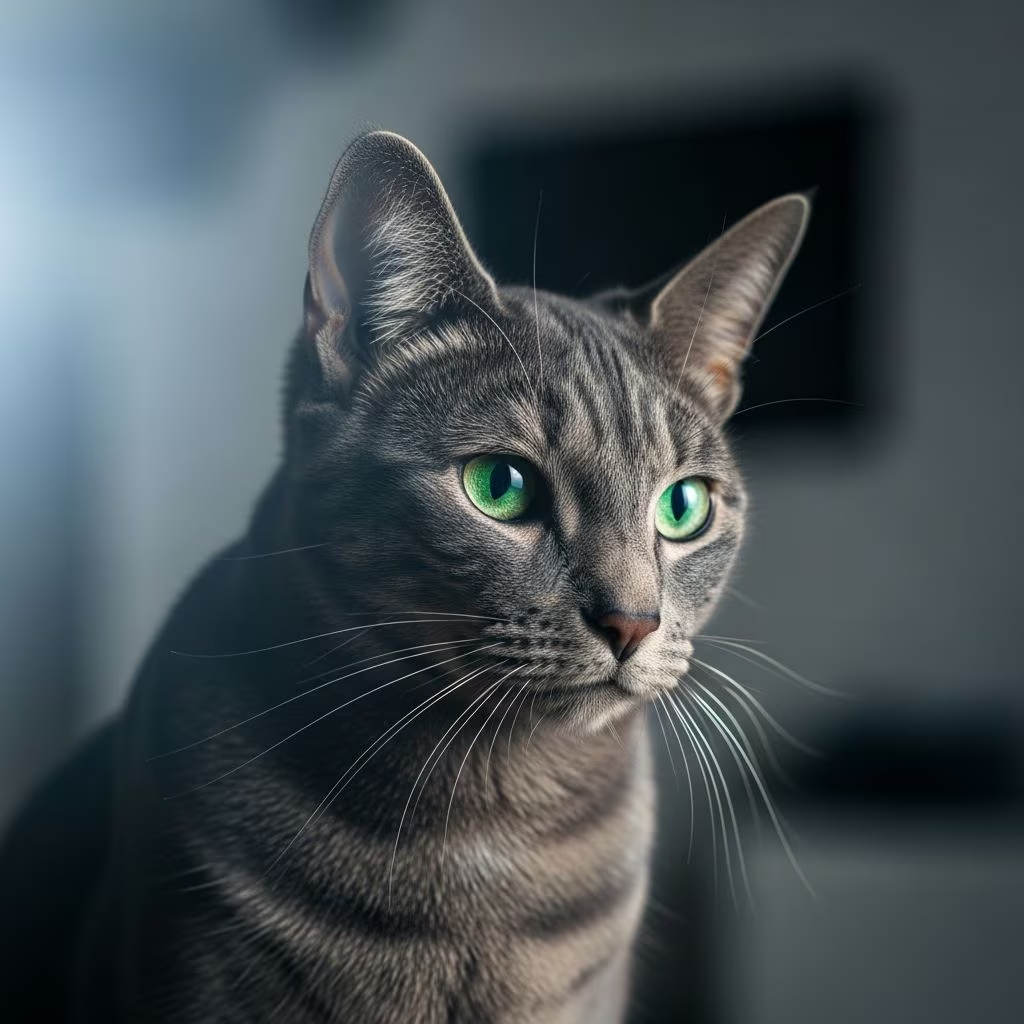
Your cat might be more perceptive than you think. Recent research reveals that cats can detect human stress through scent, particularly fear-related odors, using specific nostrils to process these emotional cues. This ability strengthens the unique bond between cats and their owners.
How Cats’ Sense of Smell Works
Cats possess an extraordinary olfactory system, estimated to be 10 times more powerful than humans’. This superpower allows them to navigate their world primarily through scent. Domestic cats have around 200 million olfactory receptors compared to humans’ 5 million, enabling them to detect subtle chemical changes in the environment.
The feline nose connects directly to the brain’s limbic system, which governs emotions and memory. This intimate link means scents can profoundly influence a cat’s mood and behavior. Cats also have a vomeronasal organ (Jacobson’s organ), which detects pheromones and other chemical signals invisible to human senses.
- Key olfactory features in cats:
- 200 million scent receptors for precise detection
- Vomeronasal organ for pheromone processing
- Direct limbic system connection for emotional responses
- Ability to differentiate familiar vs. unfamiliar scents
Can Cats Detect Human Emotions Through Scent?
Yes, emerging studies confirm cats can discriminate between human emotional odors. A pivotal 2023 study tested 22 pet cats’ responses to sweat samples from humans experiencing fear, happiness, physical stress, or neutral states. Cats displayed more stress behaviors—such as flattened ears, tail swishing, and backing away—when exposed to fear odors compared to neutral ones.
Humans emit distinct body odors based on emotions due to variations in sweat composition. Fear sweat contains higher levels of stress hormones like cortisol and adrenaline, which animals can detect. While dogs have long been known to sense these changes, cats show similar capabilities, though subtler.
| Emotion | Cat Response | Key Study Finding |
|---|---|---|
| Fear Sweat | Increased stress behaviors (ear flattening, retreat) | Preferred right nostril sniffing |
| Happy Sweat | Neutral response | No significant difference from neutral |
| Physical Stress | Mild interest | Less aversion than fear odor |
| Neutral | Baseline sniffing | Standard exploration |
The Role of Nostril Preference in Cats
Cats exhibit asymmetric nostril use when processing scents, linked to brain hemisphere specialization. The right nostril connects more to the right brain hemisphere, which handles emotional and arousal processing. In the 2023 study, stressed cats predominantly used their right nostril to investigate fearful human sweat, indicating emotional processing.
This mirrors patterns in dogs, who use the right nostril for conspecific stress smells and left for human fear. Older cats showed a general left nostril preference, possibly due to age-related sensory changes. Such lateralization highlights cats’ sophisticated olfactory cognition.
Why Do Cats Sense Our Stress?
Evolutionary adaptation plays a key role. Cats descended from solitary hunters but have co-evolved with humans, learning to read our cues for safety. Detecting owner stress via scent helps cats assess environmental threats. If you’re anxious near a carrier, your cat may pick up fear pheromones, amplifying their reluctance.
Cats also recognize familiar scents, spending less time sniffing owners’ odors compared to strangers, suggesting scent-based identity recognition. This attunement extends to emotional states, fostering empathy-like responses.
Signs Your Cat Detects Your Stress
- Behavioral changes: Hiding, excessive meowing, or avoidance
- Physical cues: Dilated pupils, flattened ears, tail flicking
- Affiliative behaviors: Increased purring, rubbing, or sitting close—cats offering comfort
- Grooming shifts: Over-grooming as stress displacement
Observe your cat during high-stress moments like vet visits. Heightened vigilance or withdrawal often correlates with your emotional state.
Impact of Human Stress on Cats
Your stress is contagious. Chronic human anxiety elevates household cortisol, triggering cats’ stress responses via scent and other cues. This can lead to feline issues like urinary problems, aggression, or appetite loss. Veterinary research links owner stress to pet anxiety, disrupting the HPA axis and causing physical illness.
Cats under stress show reduced behavioral diversity, avoiding play and exploration. Breaking this cycle benefits both parties.
How to Reduce Stress for You and Your Cat
Manage mutual stress through targeted strategies:
- Scent enrichment: Use cat pheromones (Feliway) or familiar scents to calm environments.
- Routine stability: Predictable feeding and play reduce feline anxiety.
- Human relaxation: Practice mindfulness or exercise before handling your cat.
- Environmental tweaks: Provide hiding spots, vertical spaces, and scratching posts.
- Positive associations: Pair carriers with treats to counter fear scents.
Olfactory interventions show promise but require rigorous validation. Avoid predator or stressed conspecific scents, favoring cheek gland rubs or plant attractants.
FAQs
Can cats smell fear in humans?
Yes, cats detect fear through sweat odors, showing stress behaviors and right nostril preference.
Do cats comfort stressed owners?
Often, via purring and proximity, interpreting your cues to provide reassurance.
How sensitive is a cat’s nose?
14-40 times more than humans, with specialized organs for pheromones.
Can cat stress pheromones help owners?
Limited evidence; primarily benefits cats, but calm environments aid mutual welfare.
What if my cat avoids me when stressed?
Give space, use calming scents, and rebuild trust gradually.
Conclusion
Cats’ ability to smell stress underscores their emotional intelligence and deep human bond. By understanding olfactory cues, we can foster calmer homes. Future research will refine these insights, enhancing cat welfare.
References
- Relationship between asymmetric nostril use and human emotional odours in cats — d’Ingeo, S. et al. Scientific Reports. 2023-07-06. https://avsab.org/can-cats-smell-when-youre-stressed/
- Dealing With Stress in Cats: What Is New About the Olfactory Strategy? — PMC. 2022-08-01. https://pmc.ncbi.nlm.nih.gov/articles/PMC9334771/
- Smells Like Trouble: Do Pets Feel Our Stress? — Sentient Media. 2023. https://sentientmedia.org/smells-like-trouble-do-pets-feel-our-stress/
- Cats Can Recognize Their Owner’s Scent Compared to a Stranger’s — Smithsonian Magazine. 2024. https://www.smithsonianmag.com/smart-news/cats-can-recognize-their-owners-scent-compared-to-a-strangers-new-research-suggests-180986710/
- Feline olfaction and the extraordinary superpower of cat smell — Felidae Fund. 2023. https://felidaefund.org/news/general/feline-olfaction-and-the-extraordinary-superpower-of-cat-smell



