

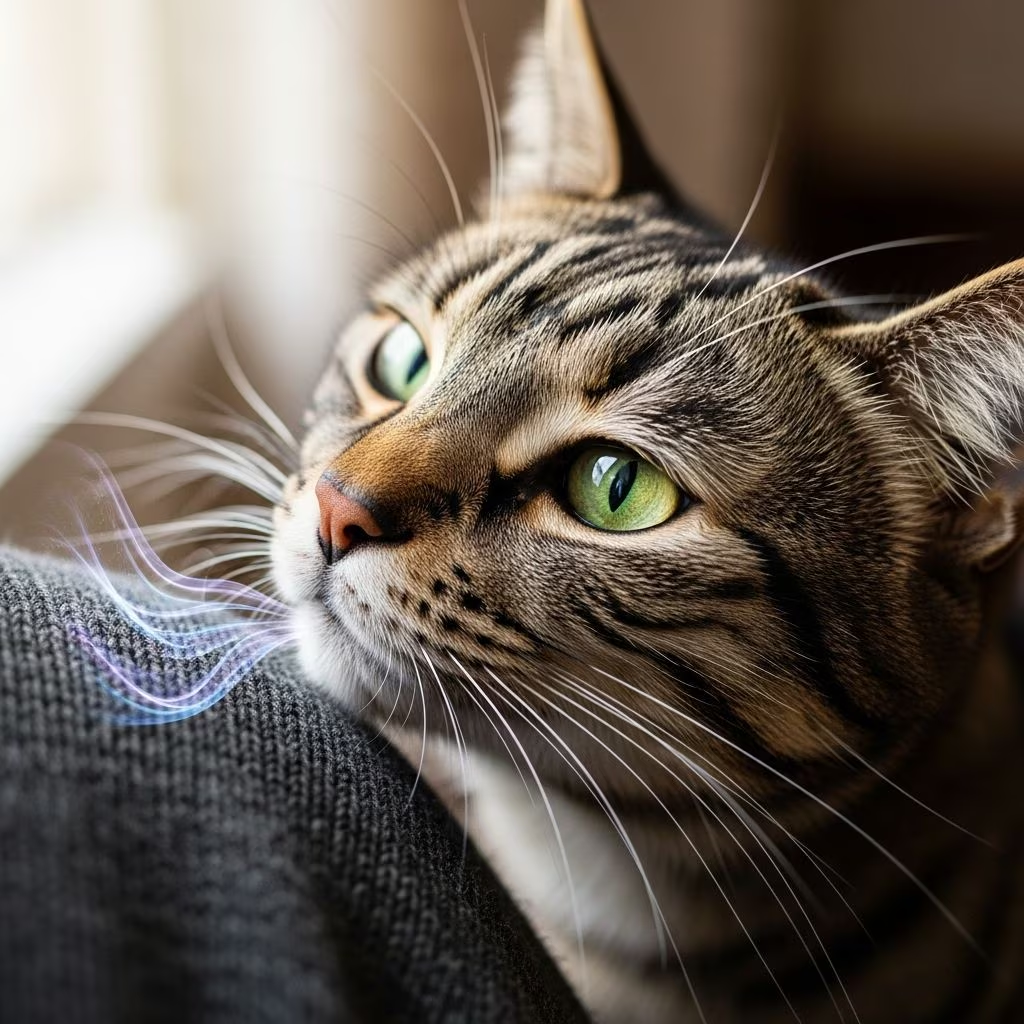
Cats possess an exceptionally keen sense of smell, far superior to humans, allowing them to detect pheromones and scents from other cats lingering on your clothing, skin, or belongings. This ability stems from specialized scent glands and vomeronasal organs that pick up chemical signals, triggering behaviors like rubbing or marking to reassert territory.
How Powerful Is a Cat’s Sense of Smell?
Cats have approximately 200 million olfactory receptors compared to humans’ 5 million, enabling them to identify individual cats, emotional states, and territorial claims through pheromones. These scents are deposited via glands on the face, paws, tail, and flanks, creating a “scent signature” that persists on surfaces and people.
Pheromones serve as personal identifiers, conveying information about sex, health, and reproductive status. When a cat encounters a foreign scent, such as from another feline on a human companion, it processes this via the Jacobson’s organ (vomeronasal organ) for detailed analysis, often leading to investigative or possessive responses.
Why Do Cats React to the Smell of Other Cats on You?
Your cat detects other cats’ scents on you as a potential territorial intrusion, prompting reactions to overwrite the foreign odor with their own. This is especially common after visits to friends with cats, vet trips, or outdoor exposure.
- Territorial Reclamation: Cats view you as part of their core territory, so alien scents signal a challenge, eliciting marking to reaffirm ownership.
- Anxiety or Stress: Unfamiliar pheromones can induce stress, particularly in multi-cat households or with outdoor cats visible nearby.
- Affiliative Bonding: Positive reactions like bunting (cheek rubbing) mix familiar scents, strengthening group identity.
Common Ways Cats Respond to Other Cats’ Scents
Rubbing and Bunting
The most frequent, friendly response is “bunting,” where cats rub their cheeks, forehead, or flanks against you. Glands in these areas release pheromones that claim you as part of their social group, effectively masking other scents. This behavior communicates affection and security: “You’re mine.”
Bunting often occurs upon your return home, with purring and tail wrapping, blending scents for communal harmony. It’s more common in neutered indoor cats feeling content.
Scratching
Cats scratch surfaces or furniture near you to deposit paw pad pheromones and leave visual claw marks. This dual marking reinforces territory along high-traffic paths, responding to detected intruders’ smells.
Provide scratching posts treated with catnip or your worn clothing to redirect this natural behavior, preventing damage to household items.
Urine Spraying or Marking
Spraying involves backing up to vertical surfaces (like walls or your legs), quivering the tail, and projecting small urine amounts. This pungent deposit, rich in pheromones, advertises ownership and counters threats. Squat marking (small urine puddles) may also occur on fabrics smelling of others.
Triggers include new pets, household changes, or frustration (e.g., empty food bowls). Unlike litter box elimination, marks are minimal volume and targeted at prominent spots like doorways or windows.
| Behavior | Description | Trigger | Scent Glands Used |
|---|---|---|---|
| Rubbing/Bunting | Cheek or head against you/objects | Affiliation, scent mixing | Cheeks, forehead, chin |
| Scratching | Paws on surfaces | Territorial visual/olfactory mark | Paw pads |
| Spraying | Urine on vertical surfaces | Threat response, anxiety | Anal sacs, bladder pheromones |
| Squat Marking | Small urine deposits on horizontal | Stress, medical issues | Bladder |
Is This Behavior Normal?
Yes, reacting to other cats’ scents is a normal, instinctual feline communication method rooted in wild ancestry, where scent marking prevented conflicts. Indoor cats retain this drive, using it for safety and social bonding. However, excessive marking (e.g., frequent spraying) may signal underlying issues like stress or health problems.
In multi-cat homes, harmonious scent-sharing prevents aggression. Neutering reduces spraying by 90% in males, per veterinary observations.
When Should You Be Concerned?
Monitor for sudden increases in marking, especially if accompanied by litter box avoidance, vocalizing, or lethargy. These could indicate urinary tract infections, diabetes, or hyperthyroidism—common in adults over 7 years. Consult a vet to rule out medical causes before behavioral interventions.
- Avoid punishment, as it heightens anxiety and worsens marking.
- Track patterns: time, location, and triggers aid diagnosis.
How Can You Help Your Cat Cope?
Environmental Enrichment
Reduce stress with vertical spaces, multiple litter boxes (one per cat +1), and pheromone diffusers like Feliway, mimicking facial glands to calm cats.
Scent Management Tips
- Wipe down with a cloth rubbed on your cat’s cheeks before reintroducing after absences.
- Exchange bedding between cats for gradual scent familiarization.
- Clean marks enzymatically to fully remove pheromones, avoiding ammonia-based cleaners that mimic urine.
Professional Help
If persistent, behaviorists recommend play therapy, diet adjustments, or medication for severe anxiety. Spaying/neutering is first-line for intact cats.
Can Cats Tell Specific Cats Apart by Scent?
Absolutely—cats distinguish familiars from strangers via unique pheromone profiles. They recognize household mates’ scents positively but react defensively to unknowns, like neighborhood strays on you.
Frequently Asked Questions (FAQs)
Why does my cat rub against me after I pet another cat?
Your cat is bunting to deposit its pheromones, reclaiming you and mixing scents for group identity. This affectionate act reassures them of your bond.
Will my cat spray if it smells another cat on my clothes?
Possibly, especially if anxious or territorial. Spraying counters perceived threats; neutering and enrichment help prevent it.
How do I stop my cat from marking when I come home smelling like other pets?
Use pheromone wipes, provide distractions like toys, and ensure clean litter access. Consult a vet for persistent issues.
Is scratching a sign my cat smells rivals on me?
Yes, paw glands release scents during scratching to mark paths. Place posts nearby to redirect.
Do all cats react this way to foreign scents?
Most do, but confident, well-socialized cats may show milder responses. Stress-sensitive ones react stronger.
Understanding Feline Scent Communication
Cats’ world revolves around olfaction, with scents forming an invisible social map. By responding to other cats on you, they’re maintaining harmony in their perceived territory. Patience, enrichment, and veterinary check-ups ensure a happy, scent-balanced home.
References
- Cat Behavior Problems – Marking and Spraying Behavior — VCA Animal Hospitals. Accessed 2026. https://vcahospitals.com/know-your-pet/cat-behavior-problems-marking-and-spraying-behavior
- Scent Marking and What It Means — Catwatch Newsletter. Accessed 2026. https://www.catwatchnewsletter.com/behavior/scent-marking-and-what-it-means/
- Feline Scent-Marking: Cat Communication — Tufts University Cummings School of Veterinary Medicine. Accessed 2026. https://www.tvmf.org/articles/feline-scent-marking-cat-communication/
- Understanding Cat Scent Marking and Spraying — Woodgreen Pets Charity. Accessed 2026. https://woodgreen.org.uk/pet-advice/cat/how-do-cats-mark-their-territory/
- Understanding Your Cat – Rubbing/Scent Marking — YouTube (Veterinary Insights). Accessed 2026. https://www.youtube.com/watch?v=KZ4JJ9P1Rbw
- Urine Marking in Cats — ASPCA. Accessed 2026. https://www.aspca.org/pet-care/cat-care/common-cat-behavior-issues/urine-marking-cats



