

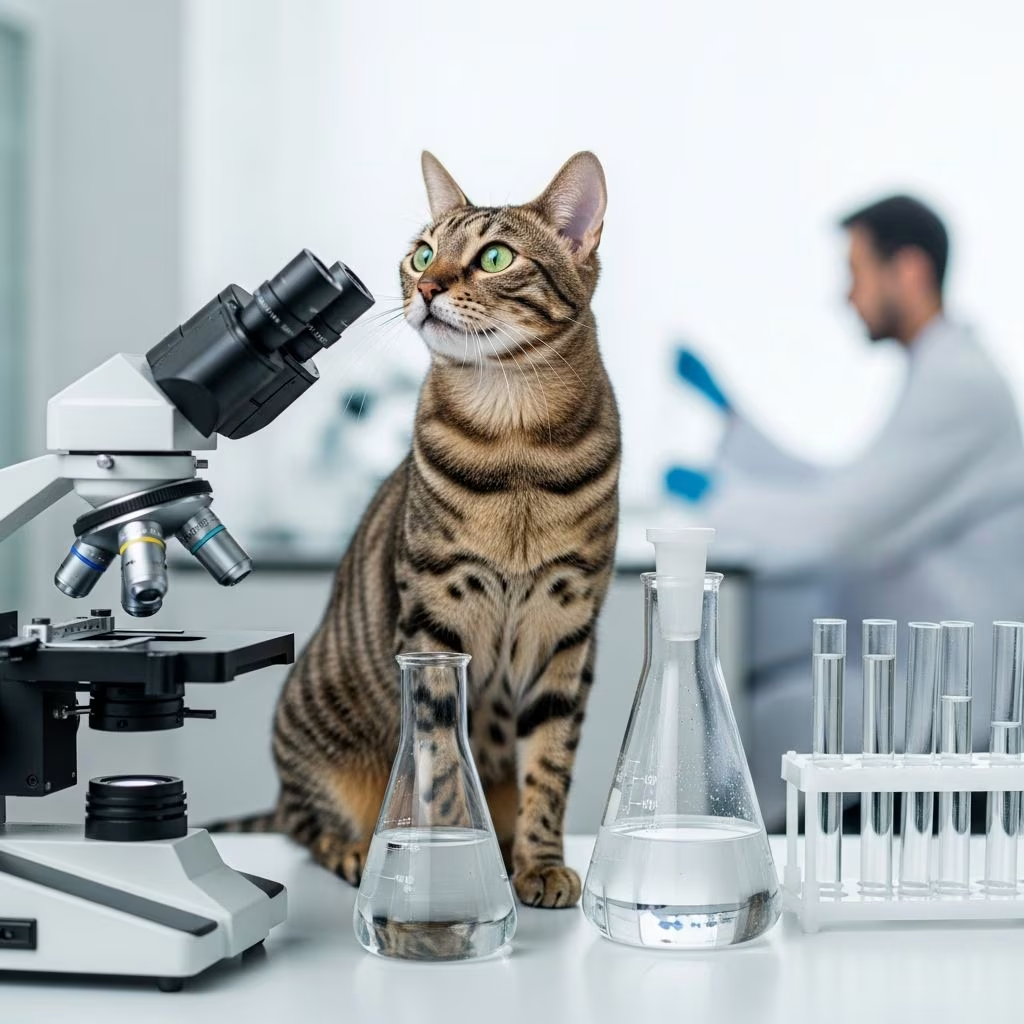
Cats possess an extraordinary sense of smell that may allow them to detect changes in human blood sugar levels, particularly hypoglycemia, based on numerous anecdotal reports from pet owners. While scientific studies on cats specifically are limited, their olfactory capabilities and documented behaviors suggest potential as diabetic alert animals, similar to trained dogs.
What Is Diabetes?
**Diabetes** is a chronic condition where the body struggles to regulate blood sugar (glucose) levels due to insufficient insulin production or ineffective insulin use. There are two primary types:
- Type 1 Diabetes: An autoimmune disorder where the pancreas produces little to no insulin, requiring lifelong insulin therapy.
- Type 2 Diabetes: The body becomes resistant to insulin, often linked to obesity, lifestyle factors, and genetics; it may initially be managed with diet and exercise but can progress to insulin needs.
Both types can lead to **hypoglycemia** (dangerously low blood sugar) or **hyperglycemia** (high blood sugar). Hypoglycemia is particularly life-threatening, causing symptoms like shakiness, confusion, fatigue, and in severe cases, seizures or coma. Diabetics, especially those on insulin, must monitor levels closely to avoid these episodes.
In humans, maintaining stable glucose is critical. Technology like continuous glucose monitors (CGMs) and glucometers helps, but failures occur. This is where pets, particularly cats, enter intriguing anecdotal narratives.
Can Cats Sense Low Blood Sugar?
Yes, multiple pet owners report that their cats detect oncoming hypoglycemia and alert them, often urgently. Stories include cats pawing at faces to wake sleeping owners, meowing insistently, or even fetching help by leading others to the person.
One notable case involves a Houston cat named Patches, whose owner credits the feline with sensing low blood sugar episodes reliably. Dr. Michael Yafi, a pediatric endocrinologist, presented Patches’ story as a case study at an international conference, highlighting its consistency.
While dogs are more commonly trained as diabetic alert animals—sniffing subtle chemical changes in breath, sweat, or skin associated with blood sugar fluctuations—cats show similar promise through owner testimonies. A student science project trained kittens for scent imprinting on low blood sugar samples; one kitten achieved 92% accuracy in detection and alerting by pressing a button, mirroring dog capabilities but suggesting fewer cats may excel.
Veterinarians note that while not all cats will do this naturally, those bonded closely with diabetic owners appear most responsive. These behaviors often emerge without formal training, underscoring cats’ innate perceptiveness.
How Do Cats Sense Low Blood Sugar?
Cats’ detection likely combines their unparalleled sense of smell with observation of behavioral cues. Here’s a breakdown:
- Superior Olfactory System: Cats have up to **200 million scent receptors** (compared to humans’ 5 million), enabling detection of volatile organic compounds (VOCs) that change with blood sugar shifts. Hypoglycemia alters acetone and other metabolites in breath and sweat, potentially detectable.
- Jacobson’s Organ (Vomeronasal Organ): Located in the mouth behind the upper canines, this secondary scent organ detects pheromones and subtle chemical signals related to health and stress. Cats ‘Flehmen’ (curl lip) to direct scents here.
- Behavioral Observation: Cats notice physical signs like pallor, sweating, irritability, or lethargy preceding full hypoglycemia.
Research on dogs supports plausibility: trained canines detect glucose drops with high accuracy via scent. Lawrence Myers, DVM, PhD from Auburn University, deems it “plausible” for cats too, given their olfactory prowess, though reliable data lags.
| Aspect | Cats | Humans | Dogs (for comparison) |
|---|---|---|---|
| Scent Receptors | 200 million | 5 million | 300 million |
| Dedicated Scent Organs | Nose + Jacobson’s | Nose only | Nose + Jacobson’s |
| Hypoglycemia Detection Evidence | Anecdotal/ Emerging | N/A | Trained success (90%+) |
This table illustrates why cats are prime candidates for scent-based medical detection.
Are There Other Conditions Cats Sometimes Pick Up On?
Beyond diabetes, cats reportedly sense various health issues:
- High Blood Sugar (Hyperglycemia): Some owners claim cats react to elevated levels, though evidence is sparser than for lows.
- Seizures: Cats may provide comfort or alert before epileptic episodes, possibly via scent or behavioral changes.
- Cancer: Anecdotes mirror dog studies where pets detect cancers (e.g., colon, lung) via breath/urine VOCs with 91-97% accuracy in trials.
- Undiagnosed Diabetes: Stories of cats fixating on owners pre-diagnosis suggest early detection.
- Emotions & Other Illnesses: Cats recognize stress, anger, or happiness, and may sense migraines or heart issues.
Obese cats themselves model human diabetes research, showing insulin resistance but maintaining normoglycemia longer than humans via hepatic adjustments—highlighting metabolic parallels.
Training Cats as Diabetic Alert Animals
Unlike dogs with established programs (e.g., Dogs4Diabetics), cat training is nascent but feasible. Methods include:
- Scent Imprinting: Expose cat to low-blood-sugar samples (breath, cotton swabs) paired with rewards.
- Alert Training: Teach specific actions like pawing, meowing, or button-pressing for treats.
- Positive Reinforcement: Reward accurate alerts during real or simulated episodes.
Success varies; the kitten study showed only 1/7 kittens reached high reliability, indicating selective aptitude. Owners report natural talents emerging in bonded cats, potentially enhanced by training. Challenges include cats’ independence, but their subtlety suits home environments where dogs may not.
Organizations are exploring feline programs, as cats offer advantages: smaller size, litter-box friendly, lower allergen profiles for some, and suitability for apartments.
Benefits and Limitations
Benefits:
- 24/7 companionship and monitoring without devices.
- Cost-effective alternative to tech failures.
- Emotional support for diabetics.
Limitations:
- Lack of formal certification programs for cats.
- Anecdotal over scientific evidence; more research needed.
- Not a replacement for medical monitoring.
Experts urge combining pet alerts with CGMs and professional care.
Frequently Asked Questions (FAQs)
Q: Can all cats detect diabetes?
A: No, while many show sensitivity, not all do; it depends on individual olfactory aptitude, bonding, and training.
Q: Is there scientific proof cats smell low blood sugar?
A: Limited direct studies on cats, but dog research and kitten experiments support plausibility via scent detection.
Q: How accurate are diabetic alert cats?
A: Anecdotes suggest high reliability in attuned cats; one trained kitten hit 92%, akin to dogs.
Q: Can cats be trained like diabetic alert dogs?
A: Yes, through scent imprinting and reinforcement, though programs are emerging.
Q: What if my cat acts strangely during my low blood sugar?
A: Monitor and test levels; consult a vet and doctor to validate and train the behavior.
Q: Do cats get diabetes themselves?
A: Yes, often Type 2-like from obesity; they model human insulin resistance research.
These insights affirm cats’ potential as health sentinels. While awaiting rigorous studies, their stories inspire hope for diabetics seeking natural aides.
References
- Can Cats Smell Diabetes? Vet-Verified Facts & FAQ — Catster. 2023. https://www.catster.com/lifestyle/can-cats-smell-diabetes/
- Pets’ Amazing Abilities: Can They Sniff Cancer, Low Blood Sugar? — WebMD. 2023-10-12. https://www.webmd.com/pets/features/pets-amazing-abilities
- Diabetic Alert Kitten — SARSEF Virtual Fair. 2025. https://virtualfair.sarsef.org/2025/diabetic-alert-kitten/
- The Cat as a Model for Human Obesity and Diabetes — PMC – NIH (Peer-reviewed). 2012-08-31. https://pmc.ncbi.nlm.nih.gov/articles/PMC3440058/
- Owners say Houston cat can sense low blood sugar — KHOU.com. 2015-07-28. https://www.khou.com/article/features/producers-picks/owners-say-houston-cat-can-sense-low-blood-sugar/285-430598589



