

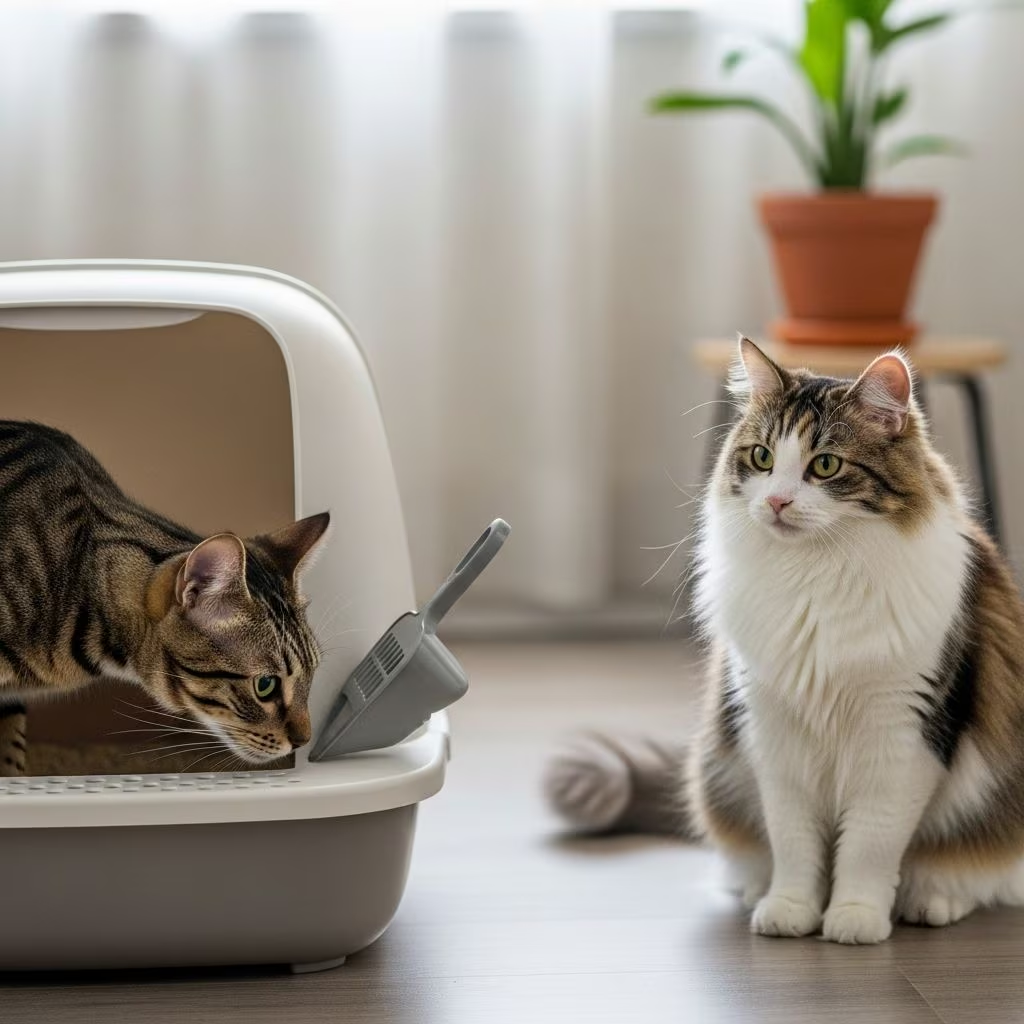
In multi-cat households, one of the most common questions cat owners ask is whether their feline friends can share a single litter box. While the idea of maintaining just one box seems convenient, feline behaviour and preferences often dictate otherwise. Cats are naturally territorial creatures, and sharing resources like litter boxes can lead to stress, aggression, or inappropriate elimination outside the box. This comprehensive guide explores the realities of litter box sharing, drawing on veterinary insights and practical advice to help you create a harmonious bathroom environment for your cats.
The Golden Rule: One Litter Box Per Cat Plus One Extra
The widely accepted guideline in feline care is the “n+1 rule,” where n represents the number of cats. For one cat, provide two litter boxes; for two cats, three boxes; and so on. This rule, endorsed by veterinary organisations, minimises competition and ensures each cat has access to a clean, private space.
References
- American Association of Feline Practitioners (AAFP) Feline Environmental Needs Guidelines — Rodan, I., et al. 2010. https://catvets.com/public/PDFs/PracticeGuidelines/Feline-Environmental-Needs-Guidelines.pdf
- Journal of Veterinary Behavior: Cats’ preferences for litter box cleanliness — Ellis, J.J., et al. 2017. https://doi.org/10.1016/j.jveb.2017.02.002
Why does this matter? Cats view litter boxes as territorial resources. Even in amicable multi-cat homes, a single box can spark dominance issues, where one cat guards it, hissing or swatting others away. Research confirms that insufficient boxes lead to stress-induced behaviours like urine spraying or defecating in unwanted areas. Providing extras reduces these risks significantly.
Pros and Cons of Cats Sharing Litter Boxes
While convenience tempts many owners to try one box, the drawbacks often outweigh the benefits. Here’s a balanced comparison:
| Aspect | Sharing One Box | Multiple Boxes (n+1 Rule) |
|---|---|---|
| **Stress Levels** | High risk of territorial disputes and aggression | Low; each cat has private access |
| **Cleanliness** | Waste builds faster, leading to avoidance | Easier to maintain; distributed use keeps boxes cleaner |
| **Odour Control** | Concentrated smells in one area | Spread out, reducing overall home odours |
| **Owner Effort** | Less initial setup but frequent deep cleans | More boxes but simpler daily scooping |
| **Accident Risk** | Higher due to pickiness and bullying | Lower; meets diverse preferences |
As shown, multiple boxes promote feline well-being and home cleanliness.
Signs Your Cats Aren’t Happy Sharing a Litter Box
Watch for these red flags indicating litter box sharing isn’t working:
- Inappropriate elimination: Urine or faeces on floors, beds, or furniture—often a cry for a cleaner or private alternative.
- Aggression around the box: Hissing, swatting, or blocking access signals dominance.
- Avoidance: A cat straining elsewhere or meowing uncomfortably shows discomfort with shared setup.
- Excessive grooming or hiding: Stress manifests as over-grooming or seclusion post-meals.
- Litter box guarding: One cat stationed nearby, deterring others.
If you spot these, add boxes immediately to restore peace.
Factors Influencing Whether Cats Can Share
Number of Cats
Two friendly cats might tolerate sharing occasionally, but three or more amplify competition. Larger groups demand strict adherence to n+1.
Age and Personality
Kittens often defer to adults, but seniors may aggressively defend “their” box. Bold personalities clash more than laid-back ones.
Relationship Dynamics
Littermates or long-term bonded pairs share better than recent introductions. Monitor new cats closely.
Health Considerations
Cats with urinary issues (e.g., crystals, infections) need exclusive access to avoid contamination. Consult a vet for persistent issues, as medical problems mimic behavioural ones.
Ideal Litter Box Setup for Multiple Cats
Creating a cat-approved setup goes beyond quantity:
- Size matters: Boxes should be 1.5 times your largest cat’s length for digging room. Extra-large open-top models suit multi-cat homes.
- Open design preferred: Uncovered boxes offer visibility and escape routes, reducing ambush fears. Avoid hooded ones that trap odours and feel confining.
- High sides for tracking: Prevent scatter with 5-8 inch walls, paired with low-dust clumping litter.
- Litter type: Unscented, fine clumping clay suits most; test preferences as cats are picky.
Strategic Placement
Distribute boxes across the home:
- One per floor or main living area.
- Quiet, low-traffic spots like laundry rooms—not near food, noisy appliances, or corners.
- Multiple entries/exits for security.
This setup mimics natural territorial spread.
Cleaning and Maintenance Best Practices
Cleanliness is non-negotiable—cats abandon soiled boxes instantly. Scoop daily, refresh litter weekly, and fully dump every 2-4 weeks.
- Daily: Remove clumps promptly; add litter to maintain 2-3 inch depth.
- Weekly: Wash box with mild soap (no harsh chemicals); dry fully.
- Tools: Use litter mats, sifting scoops, and odour neutralisers.
- Pro tip: Rotate boxes to even wear and prevent territorial fixation.
Multiple boxes ease this routine, as waste distributes.
Tips for Introducing New Cats and Litter Box Sharing
Bringing home a new cat? Separate litter boxes from day one:
- Quarantine phase: Provide exclusive boxes during adjustment (2-4 weeks).
- Gradual intros: Swap scents via bedding before face-to-face meetings.
- Monitor closely: Add extras if tension arises.
- Feliway diffusers: Pheromones calm nerves during transitions.
Patience prevents long-term issues.
Common Litter Box Myths Debunked
- Myth: Cats don’t mind dirty boxes. False—studies show they prefer immaculate ones.
- Myth: Hooded boxes contain odours best. They trap smells, stressing cats.
- Myth: One big box suffices for multiples. Size helps, but quantity prevents fights.
Frequently Asked Questions (FAQs)
Q: Can two cats share one litter box?
A: Possibly if bonded and monitored, but experts recommend 3 boxes for 2 cats to avoid stress.
Q: How many litter boxes for 3 cats?
A: Four boxes total, spread out, following the n+1 rule.
Q: Why is my cat peeing outside the litter box?
A: Often due to shared box stress, uncleanliness, or medical issues—check vet first, then add boxes.
Q: Are covered litter boxes okay for multiple cats?
A: No, open-top is better for visibility and airflow.
Q: What litter do multi-cat homes prefer?
A: Unscented clumping; experiment but prioritise low-tracking.
Q: How often to clean shared litter boxes?
A: Scoop daily, full change bi-weekly; more frequent with multiples.
By prioritising the n+1 rule, optimal setups, and vigilant cleaning, your cats can thrive without litter box drama. Happy, stress-free cats mean a cleaner, purr-fect home for everyone.
References
- American Association of Feline Practitioners (AAFP) Feline Environmental Needs Guidelines — Rodan, I., et al. 2010. https://catvets.com/public/PDFs/PracticeGuidelines/Feline-Environmental-Needs-Guidelines.pdf
- Journal of Veterinary Behavior: Influence of litter box cleanliness on cat elimination — Ellis, J.J., et al. 2017. https://doi.org/10.1016/j.jveb.2017.02.002
- Indoor Cat Initiative by Cornell University College of Veterinary Medicine — Cornell Feline Health Center. 2023. https://www.vet.cornell.edu/departments-centers-and-institutes/cornell-feline-health-center/health-information/feline-health-topics/litter-box-problems
- International Cat Care: Multi-cat households guidelines — International Cat Care. 2024. https://icatcare.org/advice/multi-cat-households/
- BSAVA Manual of Feline Behaviour — BSAVA. 2022. https://www.bsava.com/resource/manual-of-feline-behaviour-2nd-edition.html



