

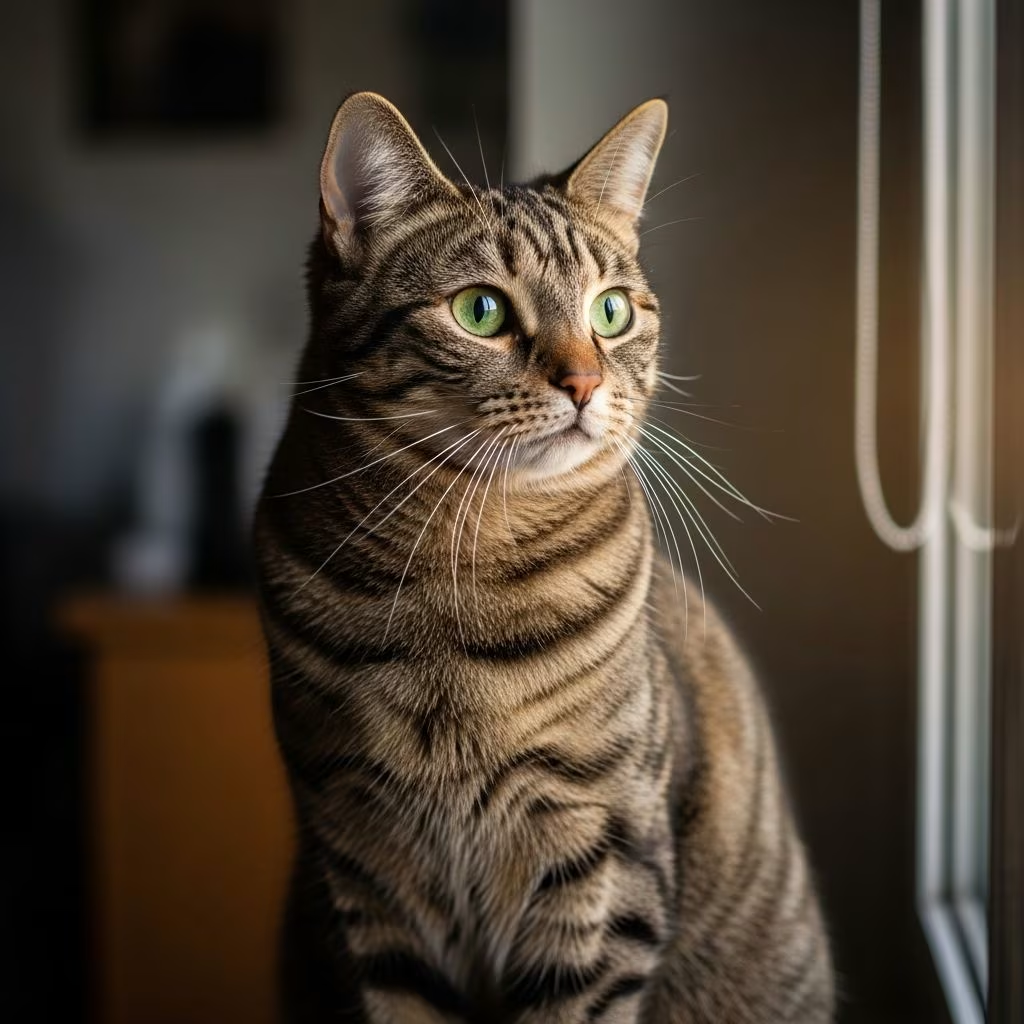
Cats possess extraordinary sensory abilities that allow them to detect subtle changes in their environment, potentially sensing when something is wrong with humans, other animals, or even impending disasters. This intuitive behavior stems from their acute hearing, smell, and sensitivity to electromagnetic fields, backed by scientific studies and veterinary observations.
How Cats Sense When Something Is Wrong
Cats rely on heightened senses to perceive irregularities. Their sense of smell is 14 times stronger than humans’, enabling detection of pheromones and chemical changes associated with illness or stress. Hearing extends to ultrasonic frequencies, picking up distress calls inaudible to people. Research indicates cats respond to human emotional cues via facial expressions and body language, showing empathy similar to dogs.
Behavioral changes in cats, such as increased affection or withdrawal, often signal their awareness of problems. For instance, cats may nuzzle owners during illness or hide before natural disasters, suggesting predictive abilities.
Can Cats Sense When You’re Sick or Ill?
Many cat owners report pets becoming unusually attentive during illness. Cats may curl up on affected body parts, purring to promote healing through vibrations that reduce pain and inflammation, as noted in veterinary studies.
Anecdotes abound: cats detecting cancer before diagnosis by sniffing out volatile organic compounds (VOCs) in breath or urine. While not as trained as medical detection dogs, cats’ olfactory prowess positions them similarly. A study on blind cats showed behavioral shifts like reluctance to jump, mirroring how healthy cats adapt to owners’ health declines.
- Increased physical contact: Cats press against painful areas, providing warmth and comfort.
- Changes in grooming: Neglect or over-grooming signals the cat’s stress response to owner’s illness.
- Vigilance: Staying awake to monitor the sick person.
Can Cats Sense Death?
Cats often exhibit profound changes before a person’s death, staying by their side or refusing to leave. This may relate to sensing physiological shutdown via scent or subtle vital sign changes. In hospice settings, cats like Oscar accurately predicted patient deaths, alerting staff hours in advance.
Evidence suggests cats detect metabolic shifts or pheromones of mortality. Similar behaviors occur with dying pets, where cats groom or guard the ill animal, indicating interspecies empathy.
Can Cats Sense Pregnancy?
Cats detect pregnancy through hormonal shifts in sweat, breath, and urine. They may become more protective, following the owner closely or lying on the abdomen. Some grow jealous of the growing belly, while others prepare by observing baby items.
Veterinary sources note increased thirst or eating changes in owners prompt feline awareness. Cats’ ability to sense elevated progesterone levels explains altered behaviors like heightened affection or nesting mimicry.
Can Cats Sense Emotions?
Cats read human emotions via micro-expressions and tone. A 2019 study found cats distinguish distress from contentment, responding with tail lifts or rubbing. They mirror owner moods, becoming playful when happy or withdrawn when sad.
During anxiety, cats offer ‘pushy affection’—head-butting or purring—to soothe. This empathy rivals dogs, challenging the ‘aloof cat’ stereotype.
Can Cats Sense Natural Disasters?
Cats sense earthquakes via infrasound, p-wave vibrations, or geomagnetic shifts up to 10 seconds before tremors. They flee to high ground or hide, as documented in seismic reports. Sensitivity to static electricity or ozone precedes storms.
| Disaster Type | Cat Sensory Cue | Observed Behavior |
|---|---|---|
| Earthquake | P-waves, infrasound | Hiding, fleeing outdoors |
| Tornado | Pressure drops, wind | Seeking shelter |
| Tsunami | Ground vibrations | Running to high ground |
Can Cats Sense Ghosts or Spirits?
No scientific evidence supports cats sensing supernatural entities. Behaviors attributed to ghosts—staring, hissing—stem from natural stimuli like ultrasound, infrared vision, or small movements. Cats’ eyes detect motion in low light, explaining ‘ghost watching.’
Skeptics attribute this to heightened sensitivity, not paranormal. Owners misinterpret normal hunting instincts.
Can Cats Sense Other Animals’ Pain?
Cats detect pain in fellow pets via vocalizations, pheromones, and mobility changes. They may groom injured animals or avoid them to prevent injury. Studies on feline social bonds show consolation behaviors post-conflict.
Why Do Cats Act Weird When You’re Sick?
During owner illness, cats increase proximity for security, sensing vulnerability. Purring aids mutual healing; altered scents signal disease. Stress from routine changes amplifies affection-seeking.
- Empathy response: Mimicking human distress signals.
- Territorial protection: Guarding the ‘weak’ pack member.
- Seeking reassurance: More lap time amid uncertainty.
Signs Your Cat Senses Something Is Wrong
Watch for these indicators:
- Sudden clinginess or shadowing.
- Refusal to eat or litter box avoidance, potentially signaling cat’s own illness.
- Unusual vocalization or pacing.
- Staring at ‘nothing’ or hiding.
- Excessive grooming or aggression shifts.
Behavioral red flags like appetite changes often indicate underlying health issues in the cat itself. Veterinary exams, including bloodwork, are crucial.
What to Do If Your Cat Senses Something Is Wrong
Trust your cat’s instincts—schedule a vet visit for persistent changes. Monitor for medical causes like hyperthyroidism causing thirst spikes. Positive reinforcement addresses stress-induced behaviors; avoid punishment devices that heighten anxiety.
Enrich environment with toys, vertical spaces. For owner illness, maintain routines to reassure the cat.
Frequently Asked Questions (FAQs)
Can cats smell illness?
Yes, cats detect chemical changes via superior olfaction, identifying diseases like cancer.
Why does my cat follow me to the bathroom when I’m sick?
They sense vulnerability, offering protection and comfort during weakness.
Do cats know when you’re sad?
Cats recognize emotional cues, responding with affection or play to cheer you.
Can cats predict death?
Anecdotal evidence from hospices suggests they sense terminal physiological shifts.
Why do cats stare at nothing?
Likely tracking insects, reflections, or scents, not spirits.
Do cats get clingy before disasters?
Yes, sensitivity to vibrations and atmospheric changes prompts escape behaviors.
Conclusion
Cats’ remarkable abilities to sense when something is wrong blend instinct, senses, and learned empathy, making them intuitive companions. While not infallible, their cues warrant attention for timely interventions.
References
- Blindness and Behavioural Changes in the Cat — Journal of Feline Medicine and Surgery. 2024. https://pmc.ncbi.nlm.nih.gov/articles/PMC10911294/
- Is Your Cat Acting Strange? Behavior Changes are a Red Flag — San Mateo Veterinary Clinic. 2023. https://sanmateoveter.com/services/cats/blog/your-cat-acting-strange-behavior-changes-are-red-flag
- Cat Behavior – Recognizing and Correcting Cat Behavior Issues — The Drake Center. 2024. https://www.thedrakecenter.com/services/cats/cat-behavior
- How Can I Fix My Cat’s Behavior Problems? — American Animal Hospital Association (AAHA). 2023. https://www.aaha.org/resources/how-can-i-fix-my-cats-behavior-problems/
- 10 Weird Cat Behaviors That Could Be Signs of a Sick Cat — Noblesville Vet Clinic. 2024. https://noblesvillevetclinic.com/10-weird-cat-behaviors-that-could-be-signs-of-a-sick-cat/



