

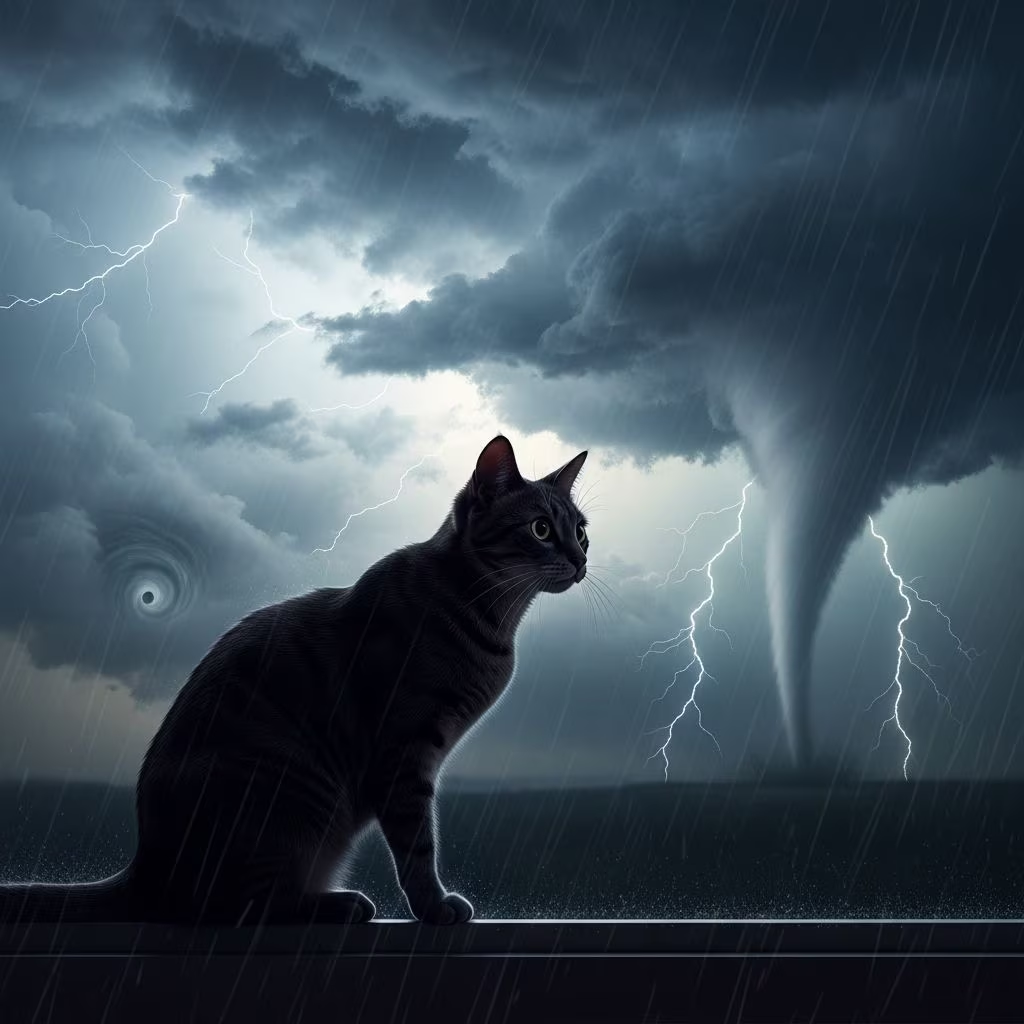
Tornadoes rank among nature’s most destructive forces, capable of demolishing homes, vehicles, and landscapes in mere minutes. While advanced meteorological tools provide humans with warnings, cats and other animals often display unusual behaviors prior to these events, hinting at an innate ability to perceive impending danger. This article delves into the science behind whether cats can sense tornadoes, examines their behavioral cues, and offers practical safety strategies to safeguard your pets during severe weather outbreaks.
How Do Cats Sense Changes in the Weather?
Cats possess remarkably acute sensory systems evolved from their wild ancestors, enabling them to detect environmental shifts imperceptible to humans. Central to this is their inner ear, which houses specialized structures like the vestibular system and cochlea. These components are highly sensitive to variations in **atmospheric pressure**, a key precursor to storm formation. As storm systems approach, barometric pressure drops rapidly, a change cats can register through these mechanisms.
Beyond pressure detection, a cat’s **superior sense of smell** plays a pivotal role. Incoming storms carry distinct odors, such as the sharp, metallic scent of ozone produced by lightning strikes or the earthy aroma of rain-soaked air. Felines, with over 200 million olfactory receptors compared to humans’ mere 5 million, can identify these cues from afar, often an hour or more before visible signs appear. Their whiskers, acting as sensitive vibriometers, may also pick up subtle air current shifts associated with rotating thunderstorms that spawn tornadoes.
This sensory prowess connects domesticated cats to their feral roots. Wild felines relied on these instincts for survival, fleeing to safety before floods, winds, or predators. Even indoor cats retain these traits, demonstrating a deep attunement to ‘Mother Nature.’ Scientific observations support this: animals across species exhibit pre-storm behaviors, underscoring a shared evolutionary adaptation.
Signs Animals Show Before Natural Disasters
Animals’ responses to impending disasters are well-documented, providing anecdotal and observational evidence of their predictive capabilities. Cats are no exception, but patterns emerge across wildlife, livestock, and pets.
- Small mammals and insects: Large groups emerge after prolonged droughts when rain finally arrives, seeking higher ground.
- Birds: Singing decreases during high winds; flocks may depart en masse before disasters, while hawks hunt openly in fog.
- Livestock: Cows refuse barns, horses pace restlessly, signaling seismic or storm activity.
- Reptiles: Increased activity noted in zoos prior to earthquakes, per sensor-monitored studies.
These behaviors stem from detecting **low-frequency vibrations**, **electromagnetic fluctuations**, and **chemical releases** from the earth. A 2013 Italian study correlated erratic dog behaviors with quakes within 60 miles, while Chinese farm observations showed pre-seismic anomalies in livestock. Though not foolproof predictors, these signs highlight animals’ environmental hypersensitivity, with cats mirroring such instincts before tornadoes.
How Will My Cat Act If They Sense a Tornado?
Individual cat personalities influence reactions to sensed tornadoes, but common patterns emerge. Routine-loving felines often grow **anxious and distressed** when atmospheric pressure plummets or unfamiliar scents waft in. Owners report varied responses: some cats become unusually affectionate, cuddling close for reassurance, while others retreat to hidden spots like closets, under beds, or basements seeking security.
Physical signs include pacing, excessive vocalization (meowing or yowling), dilated pupils, flattened ears, and tail twitching. Appetite may drop, with cats ignoring food or litter boxes amid distress. These shifts arise from their acute hearing detecting distant thunder rumbles or infrasound waves from forming supercells—low-frequency sounds below 20 Hz that humans rarely perceive.
Not all reactions signal tornadoes specifically; thunderstorms alone can trigger them. However, in tornado-prone regions like the U.S. Midwest (‘Tornado Alley’), pet parents attuned to baselines can distinguish storm anxiety from more intense pre-tornado cues. Microchipped indoor cats fare best, minimizing escape risks during chaos.
Keeping Your Cat Safe During a Tornado
Tornadoes demand swift action, often with mere minutes’ notice via alerts. Preparedness ensures your cat’s inclusion in family safety plans. Designate a **tornado-safe room**—ideally a basement, interior bathroom, or storm shelter without windows—to shield against flying debris and high winds.
1. Keep Your Pets Indoors
The foremost rule: confine all pets inside before storms brew. Outdoor cats, sensing danger, often self-shelter nearby but risk injury or disorientation. Lure stragglers with food or familiar toys; if absent, their instincts likely guide them to safety. Microchipping and updated collars/tags aid recovery if separated.
2. Crate Your Cat in Your Tornado-Safe Location
During a **tornado watch** (conditions favorable for formation), crate your cat in the safe area to prevent panicked bolting. Use a sturdy, familiar carrier lined with blankets and toys for comfort. Leashing works for dogs, but cats’ agility necessitates containment—avoid free-roaming amid evacuation stress. Stock crates with 72-hour supplies: water, non-perishable food, litter pan, medications, and waste bags.
Practice drills quarterly to desensitize cats to crating. During a **warning** (tornado sighted), gather family and pets immediately, sealing the safe room with mattresses or plywood over potential weak points.
Additional Safety Measures
| Preparation Step | Why It Matters | Action Items |
|---|---|---|
| Emergency Kit | Supports cat for 3+ days post-disaster | Food, water (1 gallon/day), meds, leash, records, flashlight |
| ID Updates | Reunites lost pets quickly | Microchip, photo, collar with phone number |
| Evacuation Plan | Accounts for pets in escapes | Pet-friendly shelter list, carrier transport practice |
| Post-Storm Check | Detects injuries/stress | Inspect for wounds, provide quiet recovery space |
ASPCA recommends these for all tornado seasons, emphasizing pets’ heightened senses as early indicators.
Frequently Asked Questions (FAQs)
What makes cats able to sense tornadoes?
Cats detect falling barometric pressure via inner ears and smell ozone/rain scents with acute olfaction.
Do all cats react the same way before a tornado?
No—some seek affection, others hide; reactions vary by personality and past experiences.
Should I let my outdoor cat inside before storms?
Yes, always bring pets indoors during watches; they sense danger but may not return easily.
Is crating necessary during tornadoes?
Essential—prevents escapes in panic; use safe rooms with supplies ready.
Can cat behavior predict tornadoes reliably?
Not scientifically proven as sole predictor, but useful alongside weather alerts.
Conclusion
Cats likely sense tornadoes through pressure drops, odors, and sounds, displaying anxiety rooted in survival instincts shared across animals. Proactive measures like indoor confinement, crating, and kits protect them effectively. In tornado alleys, blending pet cues with tech warnings enhances safety for all. Stay vigilant, prepare year-round, and honor your cat’s ancient senses.
References
- Can Cats Sense Tornadoes? Vet-Reviewed Facts & Safety Tips — Catster. 2023-10-15. https://www.catster.com/cat-behavior/can-cats-sense-tornadoes/
- How can my cat know that a thunderstorm is on its way an hour before I do? — BBC Science Focus. 2023-05-20. https://www.sciencefocus.com/nature/how-can-my-cat-know-that-a-thunderstorm-is-on-its-way-an-hour-before-i-do
- Tornado Safety for Pets — ASPCA Pet Health Insurance. 2024-03-12. https://www.aspcapetinsurance.com/resources/tornado-safety-for-pets/
- Exploring Pets’ Ability to Predict Natural Disasters — Dunedin Animal Medical Center. 2024-01-08. https://dunedinamc.com/uncategorized/exploring-pets-ability-to-predict-natural-disasters/



