

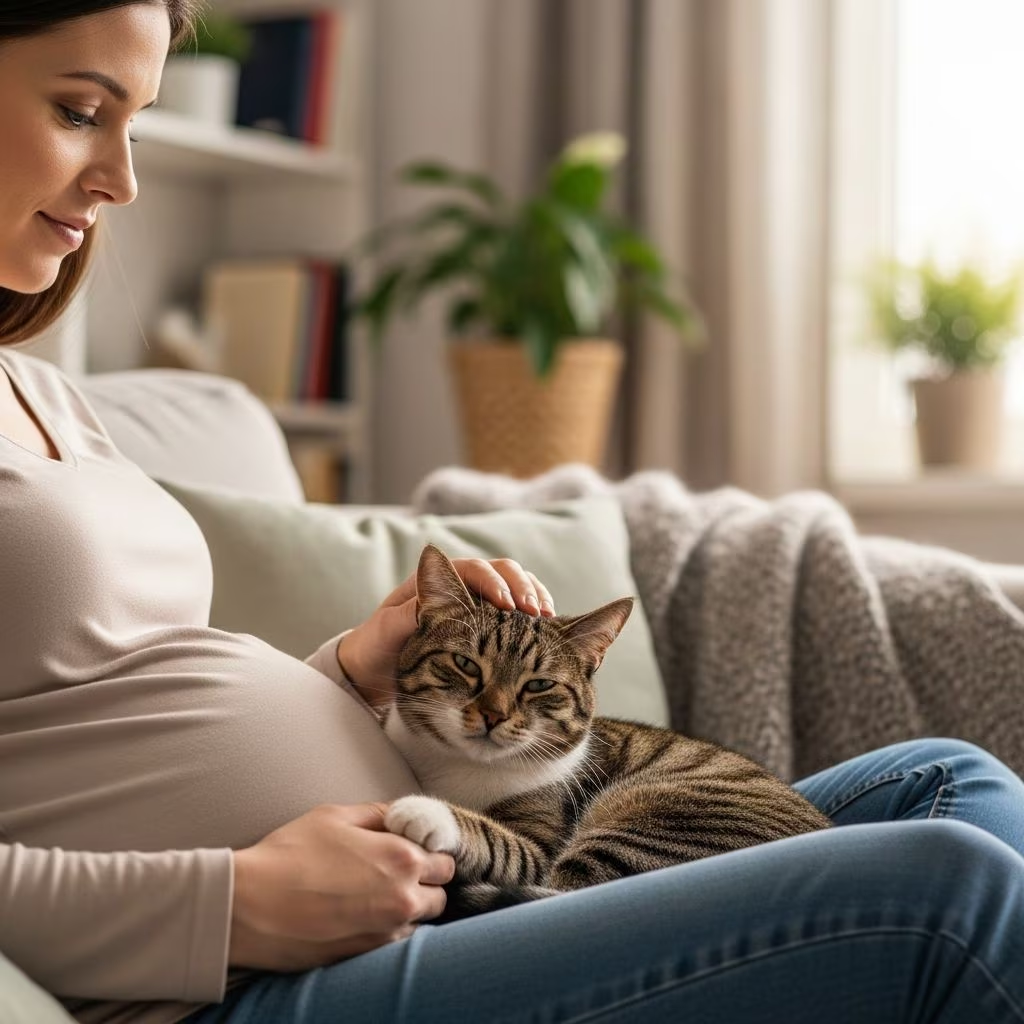
Can Cats Sense Pregnancy? The Truth Behind Common Beliefs
Many expectant mothers wonder whether their feline companions can sense pregnancy before anyone else finds out. The short answer is: cats likely sense that something is different about you, but they don’t understand pregnancy the way humans do. While there is no hard scientific evidence that changes in your cat’s behavior are definitive indicators of pregnancy detection, cats are remarkably perceptive animals with extraordinary sensory abilities that may allow them to pick up on the profound changes your body undergoes during this special time.
How Cats Detect Pregnancy: The Sensory Explanation
Cats possess several exceptional senses that could theoretically help them detect pregnancy. Understanding these abilities provides insight into why your feline friend might behave differently as you progress through your pregnancy.
Superior Sense of Smell
One of the most commonly cited explanations for feline pregnancy detection involves a cat’s extraordinary sense of smell. Cats have approximately 200 million olfactory receptors in their nasal tissue, compared to just 5 million in humans. This means their olfactory capability is roughly 14 times stronger than ours.
During pregnancy, your body produces significantly higher levels of several hormones, including estrogen, progesterone, and hCG (human chorionic gonadotropin). These hormonal surges may alter your natural scent profile. However, it’s important to note that there is no scientific evidence proving that pregnancy hormones create a detectable odor that cats can smell. While we know that other body substances—like pheromones and puberty-related hormonal changes—can produce subtle scents, whether cats can specifically detect pregnancy-related hormonal shifts remains unproven.
Exceptional Hearing Abilities
Beyond smell, cats possess remarkable hearing capabilities. They can detect higher frequencies than humans and have an extra fold on their ears that may amplify high-frequency sounds. This enhanced auditory perception could potentially allow cats to detect changes within your body that humans cannot hear.
One particularly intriguing possibility is that cats might hear your baby’s heartbeat during the later stages of pregnancy. A fetal heartbeat typically becomes audible with a stethoscope around 18 to 20 weeks of gestation. Given that cats can snuggle close to your belly, it’s conceivable they could detect this faint heartbeat before or around the same time as your healthcare provider. However, exactly how much sooner cats might hear it and how clearly they perceive it remains scientifically unclear.
Sensitivity to Body Temperature Changes
Pregnant bodies often run slightly warmer due to increased blood flow and metabolic rate. Cats are notorious heat-seekers, frequently curling up on warm laps, sunny windowsills, or under soft blankets. During pregnancy, your elevated body temperature might make you an even more appealing cuddle spot for your feline companion. However, this temperature change is typically subtle—rising only slightly during ovulation and early pregnancy—and varies significantly between individuals based on activity level and time of day.
Behavioral Changes in Cats During Pregnancy
If your cat senses that something is different about you, how might they respond? Cats may exhibit various behavioral shifts during your pregnancy, though these responses vary from cat to cat.
Increased Alertness and Observation
As your pregnancy progresses and physical changes become more apparent, your cat may become more alert and watchful. You might notice your feline friend observing you more closely, paying attention to your movements, routines, and physical appearance. Cats are excellent observers of human behavior and can detect subtle shifts in how you move, eat, or spend your time.
Behavioral Responses to Pregnancy
Different cats respond differently to their pregnant owners. Anecdotal reports from pet parents describe a variety of reactions:
- Increased affection: Some cats become clingier and more affectionate, seeking more attention and cuddle time
- Protectiveness: Other cats may display protective behaviors, staying closer to their owners than usual
- Stress or withdrawal: Some cats become more standoffish or stressed, possibly reacting to changes in routine or their owner’s emotional state
- Attraction to warmth: Many cats are drawn to nap on or near a pregnant woman’s belly, seeking the increased body heat
Response to Routine Changes
Cats thrive on consistency and routine. During pregnancy, you may naturally change your habits—visiting healthcare providers more frequently, preparing a nursery, purchasing baby supplies, or adjusting your activity level due to physical changes or morning sickness. Cats are highly sensitive to these routine disruptions and may respond with behavioral changes even if they’re not directly sensing the pregnancy itself.
What Science Actually Says About Cats and Pregnancy
While anecdotal evidence abounds, the scientific reality is more cautious. There is no substantial scientific research specifically investigating whether cats can detect human pregnancy. However, broader studies on animal behavior suggest that pets can pick up on hormonal shifts, emotional changes, and physical differences in humans. General research indicates that animals are highly attuned to their owners’ emotional states and behavioral patterns, which could explain some of the behavioral changes observed in cats during pregnancy.
The lack of rigorous scientific studies means we cannot definitively say whether cats are detecting pregnancy itself or simply responding to the many physical, emotional, and behavioral changes that accompany it. The honest scientific takeaway is that cats probably sense something is different about you, but the exact mechanisms and triggers remain largely mysterious.
Common Myths About Cats and Pregnancy
Myth: Cats Can Smell Pregnancy Hormones
While it’s true that cats have superior olfactory abilities and that pregnancy does involve significant hormonal changes, there is no proven connection between pregnancy hormones and detectable odors. Cats do not rely on smell as much as some other animals, such as dogs. This widely repeated claim often lacks scientific backing and should be considered speculative rather than fact.
Myth: All Cats Behave Differently During Their Owner’s Pregnancy
Not all cats respond noticeably to their owner’s pregnancy. Some cats show dramatic behavioral shifts, while others continue their normal routines unaffected. Factors such as the cat’s personality, age, prior socialization, and stress tolerance all influence how they respond to changes in their environment.
Is It Safe to Have a Cat During Pregnancy?
An important clarification for pregnant women: having a cat in your home during pregnancy is absolutely safe. You can enjoy kitty cuddles without concern, provided you don’t have other health reasons to avoid cat contact, such as allergies. The American College of Obstetricians and Gynecologists confirms that keeping a cat during pregnancy poses no inherent risk to you or your developing baby.
The only practical consideration is maintaining proper hygiene with litter boxes, as cat feces can potentially contain toxoplasmosis, a parasitic infection. However, this risk is easily managed through basic sanitation practices such as wearing gloves when cleaning the litter box or having someone else handle this task.
Understanding Your Cat’s Response to Pregnancy
Emotional Sensitivity
Beyond their physical senses, cats are emotionally perceptive creatures. They can detect changes in your mood, stress levels, and overall emotional state. Pregnancy often brings emotional fluctuations—excitement, anxiety, nesting instincts, and hormonal mood changes. Your cat may be responding to these emotional shifts rather than (or in addition to) physical changes.
Preparation for Change
Cats may also sense the anticipatory energy surrounding pregnancy. The preparation, planning, and excitement that accompany expecting a baby create subtle but noticeable changes in your household’s atmosphere. Your cat, as a keen observer of their environment, picks up on these signals.
Preparing Your Cat for Your Baby’s Arrival
While your cat is adjusting to your pregnancy, you can help ease the transition to life with a newborn:
- Maintain routine consistency: Keep your cat’s feeding schedule, play times, and sleep arrangements as normal as possible
- Gradual introductions: If possible, introduce baby sounds, scents, and equipment gradually before birth
- Attention management: Begin adjusting the amount of attention you give your cat so the shift doesn’t feel abrupt after the baby arrives
- Safe spaces: Ensure your cat has quiet, safe spaces away from the nursery where they can retreat and relax
- Positive associations: Create positive associations with baby-related activities by offering treats and praise during preparation activities
Frequently Asked Questions
Q: Can cats definitely sense pregnancy?
A: Cats likely sense that something is different about you during pregnancy, but there is no scientific proof they understand what pregnancy is. They may detect changes in your scent, body temperature, behavior, or routine, but exactly which cues they’re responding to remains unclear.
Q: How early can cats sense pregnancy?
A: There is no scientific data on exactly when cats might detect pregnancy. Since hormonal changes begin immediately after conception, theoretically cats with their superior senses might notice early shifts, but this is speculative. Most observable behavioral changes in cats likely occur as physical pregnancy changes become more obvious.
Q: Why is my cat acting differently?
A: If your cat’s behavior has changed during pregnancy, they may be responding to hormonal changes, increased body heat, your altered behavior or emotional state, or changes to your home routine. However, behavioral changes can also result from stress, illness, or environmental factors unrelated to pregnancy.
Q: Is it dangerous to be around cats while pregnant?
A: No, being around cats while pregnant is safe. You can continue enjoying time with your cat throughout your pregnancy. Standard hygiene practices regarding litter boxes are all that’s necessary to eliminate any minimal health risks.
Q: Can cats hear the baby’s heartbeat?
A: It’s theoretically possible that cats might hear a fetal heartbeat in the later stages of pregnancy (around 18-20 weeks or later) when they’re close to your belly, given their exceptional hearing abilities. However, there is no scientific evidence confirming this.
The Bottom Line
The question of whether cats can sense pregnancy doesn’t have a simple yes-or-no answer. While cats possess extraordinary sensory abilities and are highly perceptive creatures, there is no definitive scientific evidence that they can detect pregnancy specifically. What we can say with confidence is that cats are excellent observers of their environment and their owners. They likely sense that something significant is happening—whether through subtle hormonal changes, behavioral modifications, routine adjustments, or emotional shifts—but the exact mechanisms remain scientifically unproven.
Your cat’s apparent awareness of your pregnancy may simply reflect their remarkable ability to detect the countless small changes that pregnancy brings to your daily life, your body, and your home. Rather than viewing it as mystical pregnancy detection, it’s more accurate to appreciate it as evidence of how deeply attuned our feline companions are to the humans they live with. Regardless of whether your cat truly senses your pregnancy, you can rest assured that maintaining your close bond with your cat throughout pregnancy is safe and beneficial for both of you.
References
- Can Cats Sense Pregnancy? — GYN Women’s Centre. https://gynwc.com/can-cats-sense-pregnancy/
- Do Cats Know When You’re Pregnant? — Litter-Robot. https://www.litter-robot.com/blog/can-cats-sense-pregnancy/
- Can cats sense pregnancy? Feline myths and facts — Clearblue. https://www.clearblue.com/am-i-pregnant/can-cats-sense-pregnancy
- Can Cats Sense Pregnancy? Research Says Maybe — Healthline. https://www.healthline.com/health/pregnancy/can-cats-sense-pregnancy
- Can Pets Sense Pregnancy? — Old Troy Pike Veterinary Clinic. https://www.oldtroypikevetclinic.com/articles/418321-can-pets-sense-pregnancy



