

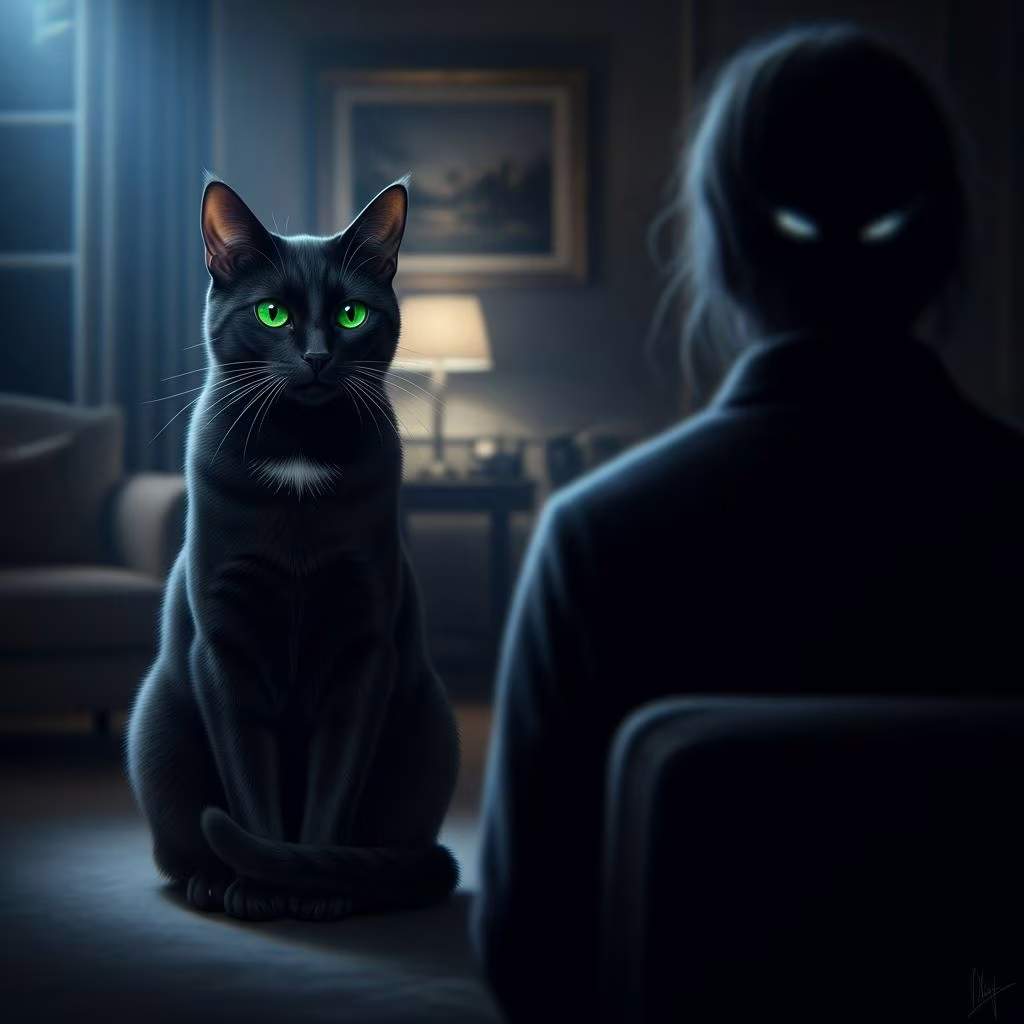
Cats have long been shrouded in mystery, often portrayed as intuitive creatures capable of perceiving things beyond human understanding. But can cats sense evil in a person? While science cannot definitively prove cats detect moral “evil,” evidence suggests they excel at reading human body language, emotional states, and subtle physiological cues that may signal harmful intentions. This ability stems from their evolutionary instincts as predators and survivors, honed over thousands of years.
Defining “evil” scientifically is challenging, as it involves subjective moral judgments rather than measurable traits. However, cats’ behaviors—such as avoiding certain individuals or displaying defensive postures—often align with humans later discovering those people had negative traits or intentions. Studies confirm cats distinguish between familiar and unfamiliar people, adjusting behavior based on observed cues. This article explores the mechanisms behind this feline perceptiveness, from sensory prowess to emotional intelligence, drawing on research and observations.
Cats Are Excellent Judges of Character—or Not
Cats are frequently hailed as superior judges of character, with anecdotal evidence abound of felines shunning “bad” people. A 1991 New York Times article highlighted personal accounts where cats avoided newcomers who later proved untrustworthy, suggesting cats distinguish good from bad humans through energy and emotion. Modern observations echo this: cats approach calm, affectionate individuals more readily while steering clear of tense or aggressive ones.
Scientific backing comes from studies on feline cognition. Research published in Animal Cognition shows cats look to humans for cues about novel objects or situations, indicating social awareness. They read body language adeptly—interpreting tense muscles, dilated pupils, heavy breathing, or trembling as potential threats. Cats also respond to emotional states; they spend more time with depressed individuals and alter behavior during human conflicts, sensing room tension.
However, cats aren’t infallible. Their judgments are instinctual, not reasoned. A cat might avoid someone due to unfamiliar scent or past negative association rather than innate “evil” detection. Personality plays a role: bold cats may confront perceived threats, while shy ones hide. Still, their accuracy in flagging problematic people is notable, often preceding human realization.
How Do Cats Sense Bad People?
Cats’ sensory arsenal equips them to detect subtle danger signals. Here’s how:
- Superior Sense of Smell: Cats possess over 200 million olfactory receptors (compared to humans’ 5 million), detecting stress hormones like adrenaline and cortisol released when someone is nervous or fearful. If you’re uneasy around a person, your cat smells it and goes defensive.
- Body Language Mastery: Felines interpret micro-gestures humans overlook—stiff postures, averted gazes, or rapid blinks signaling insincerity. Cats mirror these, hissing or arching if cues suggest danger.
- Hearing and Vibration Sensitivity: Cats hear ultrasonic frequencies and feel subtle vibrations from tense movements, amplifying threat detection.
- Facial Expression Reading: With 276 distinct expressions themselves, cats recognize human micro-expressions of anger or deceit.
These senses integrate into a “sixth sense” for survival. Cats constantly scan environments, reacting in nanoseconds via fight-or-flight instincts. When a “bad” person enters, they may puff up, vocalize unusually, or position protectively near owners.
Can Cats Sense Toxic People?
Toxic people—manipulative, aggressive, or emotionally draining—elude easy definition for cats, who lack human social constructs. Yet, felines often react negatively: hiding, hissing, or swatting. This likely stems from sensing hostility through pheromones, tone, or energy rather than labeling “toxicity.”
Anecdotes abound: cats comforting sad owners while ignoring abusive visitors. They flock to loving people, purring and rubbing, but ignore angry ones. During owner anxiety, cats may mirror unease or provide comfort, demonstrating emotional mirroring. Cats don’t psychologize relationships but simplify to safe vs. unsafe.
Real-world examples include cats avoiding partners later revealed as unfaithful or abusive, acting as unwitting sentinels. While not psychic, their instincts often validate human suspicions.
Signs Your Cat Senses a Bad Person
Watch for these behaviors indicating your cat detects ill intent:
| Behavior | Description | Possible Meaning |
|---|---|---|
| Avoidance | Hides or flees upon person’s arrival | Perceives threat via scent or posture |
| Defensive Postures | Arched back, hissing, dilated pupils | Alert to aggression or fear cues |
| Protective Actions | Positions between you and intruder | Sensing your discomfort |
| Unusual Vocalization | Excessive meowing or growling | Warding off perceived danger |
| Sudden Aggression | Swatting or biting newcomer | Strong instinctual rejection |
These signs are context-dependent; consult a vet if persistent, as they could indicate health issues.
Scientific Studies on Cats and Human Perception
Research illuminates cats’ social savvy. A study in Behavioural Processes found cats differentiate owner emotions, approaching positive cues. Another in Animal Cognition showed reliance on human gestures for guidance. Observations note cats detecting diseases via scent, paralleling “bad person” sensitivity.
Limitations exist: no direct “evil-sensing” tests due to ethical and definitional issues. Yet, convergent evidence supports cats’ proficiency.
Anecdotes and Real-Life Stories
Countless tales reinforce this. One owner reported her cat hissing at a “friendly” visitor who later stole from her home. Another’s feline comforted her during depression but shunned her toxic ex. Videos capture cats staring down strangers, owners later regretting trust. These align with cats’ history as guardians in folklore.
Frequently Asked Questions (FAQs)
Can cats sense evil spirits?
No scientific evidence supports cats detecting supernatural evil, but their sensitivity to subtle changes fuels myths.
Why does my cat hide from certain people?
Likely due to unfamiliar scents, body language, or your stress signals around them.
Do cats protect their owners from bad people?
They may act protectively by alerting via behavior, driven by bonding and instincts.
Can cats tell if someone is lying?
Not consciously, but they detect incongruent body language or stress odors.
What if my cat likes everyone?
Some cats are highly social; it doesn’t negate the trait in others.
Conclusion: Trust Your Cat’s Instincts
While cats can’t sense abstract “evil,” their acute senses make them adept at flagging potential threats. Next time your cat rebuffs someone, pay attention—it might be wiser than you think.
References
- Study in Animal Cognition on Cats’ Human Cue Reading — Animal Cognition Journal. 2019. https://link.springer.com/article/10.1007/s10071-019-01299-0
- How Cats Sense Bad People (YouTube Transcript) — YouTube/Feline Fanatics. 2024-11-10. https://www.youtube.com/watch?v=NV3YGMKxFAo
- Can Cats Sense Evil in a Person? — Catster. 2023. https://www.catster.com/lifestyle/can-cats-sense-evil-in-a-person/
- Cats Are Excellent Judges of Character — The New York Times / Two Crazy Cat Ladies. 1991/2023. https://twocrazycatladies.com/cat-behavior/can-cats-sense-bad-people/
- Can Cats See the Supernatural? — The Refined Feline. 2023. https://www.therefinedfeline.com/can-cats-see-the-supernatural-2/



