

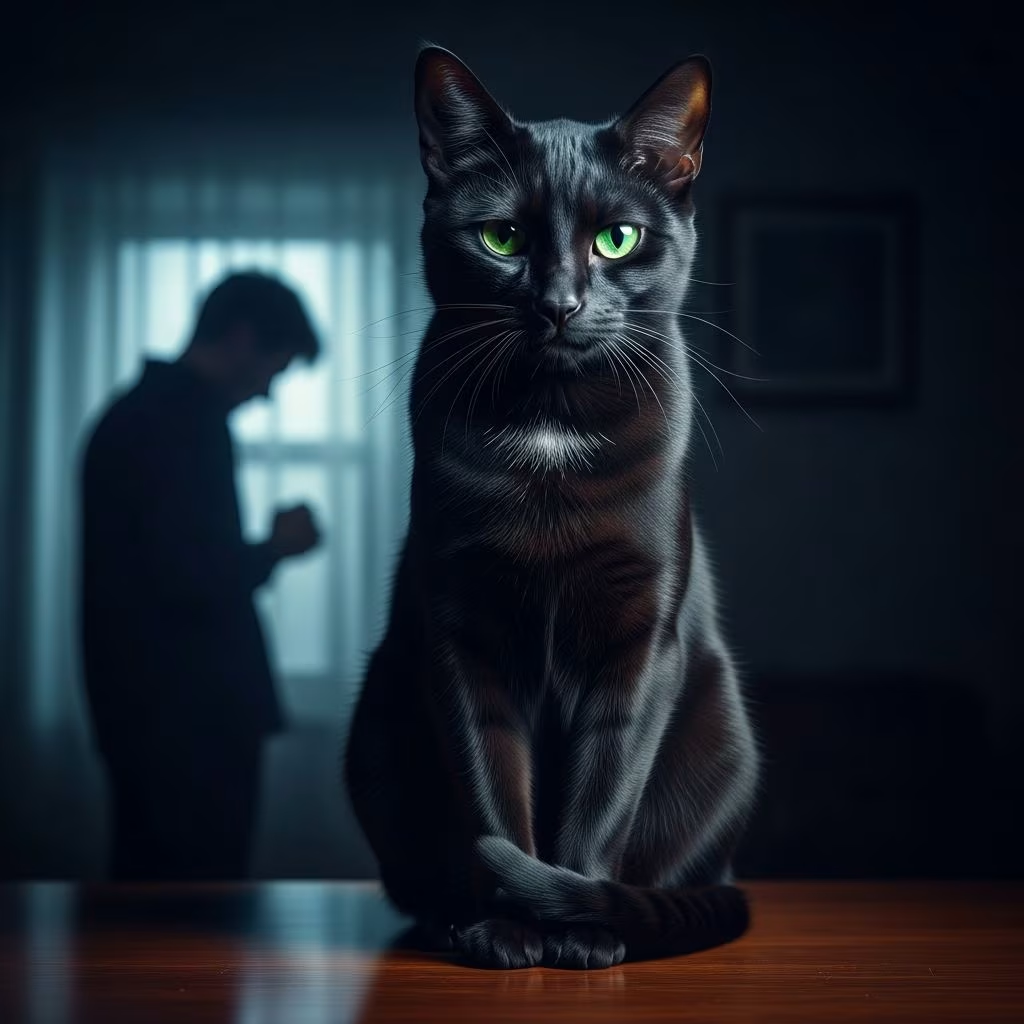
Cats possess extraordinary sensory abilities that allow them to perceive subtle cues in humans that often go unnoticed by us. While they cannot detect moral “evil” in a supernatural sense, their keen senses of smell, hearing, sight, and body language interpretation enable them to identify potentially dangerous or untrustworthy individuals.
How Cats’ Superior Senses Help Them Detect Danger
Cats have highly developed senses far superior to humans, which play a crucial role in assessing people’s intentions. Their sense of smell is about 14 times stronger than ours, allowing them to detect pheromones, stress hormones like adrenaline, and subtle chemical changes in the body.
For instance, when a person feels nervous or fearful, their body releases specific odors through sweat and hormones. Cats pick up on these immediately, even if the person is trying to appear friendly. A study highlighted in animal behavior research shows cats respond to these chemical signals by becoming defensive or avoiding the individual.
- Superior sense of smell: Detects fear pheromones and stress hormones undetectable by humans.
- Acute hearing: Picks up on tense vocal tones, rapid breathing, and subtle sound changes.
- Excellent vision: Notices micro-expressions, dilated pupils, and tense body postures.
These senses work together to create a comprehensive picture of a person’s emotional state and potential threat level.
Body Language: Cats Are Expert Readers
Cats are masters at reading human body language, often better than other humans. A 2012 study published in Animal Cognition found that cats adjust their behavior based on human body language cues, looking to their owners for guidance in unfamiliar situations.
Subtle signs like tense muscles, crossed arms, averted gaze, or fidgeting are immediately noticeable to cats. While a person might verbally assure everyone they’re fine, their body betrays true feelings, and cats don’t miss these micro-gestures.
“Cats are constantly on guard and exceptionally reactive. They will read our body language and pick up on cues that tell them whether we are safe or dangerous to be around.”
This ability explains why cats often hiss, arch their backs, or hide when certain people visit, even if those people haven’t done anything overtly threatening.
Detecting Your Fear and Stress Responses
One of the most fascinating aspects is how cats sense your emotional state around others. When you’re subconsciously uncomfortable with someone, your cat notices your physiological changes—rapid heartbeat, shallow breathing, sweaty palms—and reacts accordingly.
Your cat becomes protective, positioning itself between you and the person, or displaying defensive behaviors. This isn’t random; it’s a direct response to your stress pheromones. Cats associate these chemical signals with potential danger, putting them on high alert.
- Heavy breathing and tense muscles trigger cat’s fight-or-flight response.
- Dilated pupils and trembling are instantly recognized as fear signals.
- Sweat odors from anxiety are unmistakable to feline noses.
Micro-Expressions and Facial Recognition
Cats pay close attention to facial expressions, which reveal true emotions even when words say otherwise. Humans have around 10,000 distinct facial expressions, while cats have 276—still impressive for such nuanced communication.
A “bad” person might smile while harboring negative intentions, but their micro-expressions like furrowed brows, lip tightening, or fleeting scowls give them away. Cats remember these patterns and respond with avoidance or aggression.
Research shows cats distinguish between familiar faces and voices, forming positive or negative associations based on past interactions.
Vocal Cues: What Your Voice Reveals
Beyond visuals and smells, cats analyze vocal patterns. Tense, high-pitched, or wavering voices signal discomfort to cats. Studies demonstrate cats recognize specific human voices and respond differently based on tone.
When you’re speaking to someone you distrust, your voice might unconsciously carry stress indicators—slight tremors, faster speech, or unnatural cheerfulness. Your cat detects these vocal “tells” and adjusts its behavior.
Associative Memory: Learning from Experience
Cats form strong associative memories linking people to positive or negative outcomes. If someone previously scared them or was rough during petting, they’ll remember and avoid that person long-term.
Conversely, cats remember kind, gentle individuals and seek them out. This memory isn’t about specific events but emotional impacts—joy from treats and cuddles versus fear from loud voices or sudden movements.
| Positive Associations | Negative Associations |
|---|---|
| Gentle petting | Rough handling |
| Treats and play | Loud voices |
| Calm demeanor | Sudden movements |
| Comforting presence | Stress pheromones |
Real-Life Examples and Owner Testimonies
Numerous cat owners report their pets avoiding “bad” people before any incident occurs. One account describes a cat hissing at a visitor who later confessed harmful intentions.
In a 1991 New York Times article, the author noted their cats shied away from questionable acquaintances, later proven accurate. Modern anecdotes echo this: cats comforting owners during anxiety or warning of untrustworthy guests.
Scientific Studies Supporting Cats’ Abilities
Several studies validate these observations:
- Animal Cognition (2012): Cats respond to human body language and seek owner cues in novel situations.
- Behavioral research: Cats distinguish emotional states via pheromones and micro-gestures.
- Facial recognition studies: Cats process human expressions with remarkable accuracy.
These findings confirm cats aren’t “psychic” but possess evolved survival instincts honed over millennia.
Common Myths About Cats Sensing Evil
Myths persist that cats see spirits or possess supernatural powers. While culturally revered as spirit guardians, their abilities stem from biology, not mysticism.
- Myth: Cats see ghosts. Fact: They detect subtle environmental changes humans miss.
- Myth: Cats ward off evil spirits. Fact: They deter threats through instinctual behaviors.
- Myth: All cat avoidance means danger. Fact: Could be past trauma or simple personality clash.
Frequently Asked Questions (FAQs)
Can cats really sense if someone is bad?
Yes, through body language, pheromones, vocal cues, and your reactions. They detect stress signals indicating potential danger.
Why does my cat hiss at certain people?
Your cat perceives threat cues like tense posture, fear smells, or negative micro-expressions you’re not consciously noticing.
Do cats protect their owners from bad people?
Absolutely. They position defensively, vocalize warnings, or hide to alert you when sensing your discomfort.
Can cats tell good people from bad ones?
They form associations based on consistent behaviors and emotional energy, gravitating toward positive individuals.
Is it true cats sense negative energy?
They detect physiological stress indicators we call “negative energy”—hormones, body tension, and fearful states.
What if my cat likes everyone?
Some cats are highly social or less sensitive to subtle cues. Environment and individual personality matter.
Do all cats have this ability?
Most do, as it’s instinctual, but feral experience or socialization affects sensitivity levels.
Conclusion: Trust Your Cat’s Instincts
Your cat’s reactions provide valuable insights into people’s true nature. While not infallible, their ancient instincts often detect what our modern senses miss. Next time your cat gives someone the cold shoulder, pay attention—it might be onto something.
References
- How Cats Can Sense a Bad Person (And Other Cat Surprising Facts) — YouTube. 2023. https://www.youtube.com/watch?v=NV3YGMKxFAo
- How Your Cat Can Recognize and Warn You About Bad People — Feline Fanatics/YouTube. 2024-11-10. https://www.youtube.com/watch?v=8NEstKm0I_g
- Can Cats Sense Bad People? — Two Crazy Cat Ladies. Accessed 2026. https://twocrazycatladies.com/cat-behavior/can-cats-sense-bad-people/
- Can Cats See the Supernatural? — The Refined Feline. Accessed 2026. https://www.therefinedfeline.com/can-cats-see-the-supernatural-2/
- Do Cats Ward Off Evil Spirits? Myths & Feline Psychic Powers — Zeze Life. Accessed 2026. https://www.zezelife.com/do-cats-ward-off-evil-spirits-myths-feline-psychic-powers/



