

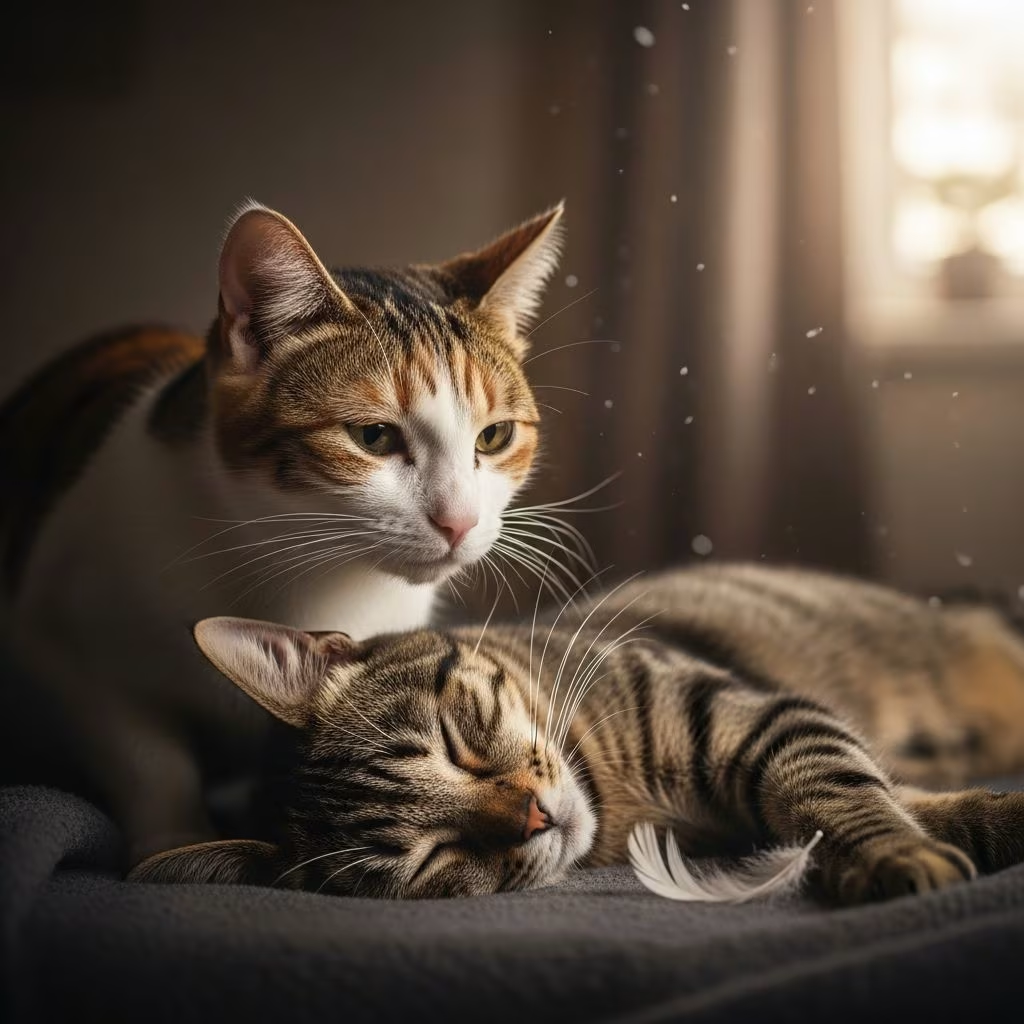
Can Cats Sense the Death of Another Cat?
The question of whether cats can sense the death of another cat has fascinated pet owners and researchers for years. While definitive scientific proof remains elusive, considerable anecdotal evidence suggests that cats possess an remarkable ability to detect when a feline companion is nearing the end of life. This phenomenon appears to be linked to their heightened sensory capabilities and intuitive nature, allowing them to pick up on subtle changes that humans often miss.
Cats are exceptionally perceptive animals with senses far more acute than our own. Their capacity to detect chemical changes, shifts in body temperature, and alterations in behavior suggests they may indeed recognize when another cat is dying. Understanding this behavior requires examining both the sensory mechanisms at play and the observed behavioral responses that suggest cats are aware of feline mortality.
The Science Behind Feline Sensory Perception
Cats possess sensory capabilities that far exceed those of humans in several crucial ways. One of their most powerful tools is their sense of smell. Cats have approximately 200 million odor-sensitive cells in their noses, compared to humans’ mere 5 million. This extraordinary olfactory system enables them to detect chemical changes in the body that occur during illness and as death approaches.
When another cat is dying, their body undergoes significant biochemical changes. Organ systems begin to shut down, and specific chemical compounds are released into the bloodstream and expelled through breath and other bodily functions. A healthy cat in the home can detect these distinctive odors, potentially signaling distress or the approach of death.
Beyond smell, cats rely on visual cues and behavioral observation. They notice when a companion cat becomes less mobile, stops grooming, or exhibits other physical changes associated with terminal illness. Cats can also detect decreased body temperature in dying animals, as a cat’s own thermal sensing capabilities allow them to perceive subtle variations in warmth.
Chemical Signals and Pheromone Detection
One of the most compelling theories regarding cats’ ability to sense death involves their capacity to detect chemical changes and pheromones. Research suggests that certain chemicals are released when an animal is dying, and cats’ sophisticated olfactory systems allow them to detect these compounds. These chemical signals may include:
- Volatile organic compounds released as organs fail
- Changes in pheromone production as the body shuts down
- Alterations in breath composition
- Chemical markers associated with severe illness
The dying cat’s body essentially broadcasts chemical signals that a healthy cat can interpret. This is not mystical intuition but rather the practical application of a biological sensory system that humans simply do not possess. Cats have been documented detecting illness in their human companions through smell alone, making it entirely plausible that they can sense the chemical changes preceding feline death.
Behavioral Changes in Cats Sensing Death
When a cat senses that another feline in the household is dying, observable behavioral changes often occur. These responses vary among individual cats, as each feline has a unique personality and relationship with their housemate. Common behavioral indicators include:
- Increased attention and proximity to the dying cat
- More frequent grooming or licking of the ill companion
- Heightened vocalization or meowing
- Restlessness or anxiety
- Changes in appetite or sleeping patterns
- Protective behavior toward the dying cat
- Unusual calmness or vigilance
Some cats become exceptionally affectionate when they sense a companion’s impending death, while others may exhibit anxiety or distress. The intensity and type of response depend on the cat’s temperament, the bond they shared with the dying cat, and their individual sensory processing abilities.
Do Cats Grieve Other Cats?
The question of whether cats experience grief for deceased companions remains partially unanswered by science. Cats seem to mourn when they lose human family members, but whether cats experience grief for other cats is less clearly understood. However, behavioral observations suggest that cats do recognize and respond to the loss of a feline housemate.
After another cat dies, surviving cats may display:
- Searching behavior, looking for the missing cat in favorite spots
- Increased vocalization, calling for the absent companion
- Changes in eating or litter box habits
- Withdrawal or depression
- Changes in sleep patterns
- Altered social behavior with human family members
Whether these behaviors constitute true grief as humans experience it, or represent confusion and adjustment to environmental change, continues to be debated among animal behaviorists. What seems certain is that cats recognize the absence of a companion and respond with behavioral modifications that suggest emotional impact.
The Role of Intuition in Cat Behavior
Beyond their physical senses, cats possess what many describe as strong intuitive abilities. Cats’ heightened intuition may enable them to anticipate death before it occurs by picking up on subtle cues that humans might not notice, including changes in breathing patterns, body movements, and even electrical signals emitted by the brain as it shuts down.
This intuitive sense likely develops through a combination of factors:
- Accumulated experience with illness and health changes
- Sensitivity to emotional states of living companions
- Recognition of pain behaviors and distress signals
- Response to environmental changes that accompany illness
- Processing of multiple subtle sensory inputs simultaneously
A cat’s intuition is not supernatural but rather the result of millions of years of evolution that has honed their ability to perceive danger, illness, and death. Survival in the wild depends on recognizing these signals early, and this instinct remains embedded in domestic cats.
Famous Cases of Cats Sensing Death
Several documented cases demonstrate cats’ apparent ability to sense death and provide companionship to dying individuals. Oscar, a cat adopted by the staff of the Steere House Nursing and Rehabilitation Center in Providence, Rhode Island, became famous for his ability to “predict” deaths, with at least 25 successful predictions in which patients died hours after the cat sat down by their beds.
Other notable examples include:
- Paddy: A black-and-white cat from an Irish care home who intuitively visited residents nearing death, offering emotional support through his calm demeanor.
- Zorro: A cat in Florida known for sensing death and offering companionship to residents at the end of their lives.
- Momo: A Canadian cat documented for quietly sitting beside terminally ill individuals, providing comfort during their final hours.
While these cases primarily involve human patients, they demonstrate that cats possess a genuine ability to sense imminent death. The principles that allow these cats to detect human mortality would equally apply to sensing the death of another cat in a shared household.
Signs Your Cat May Be Sensing Another Cat’s Death
If you have multiple cats and one is terminally ill, watching for these signs in your other cats may help you understand their response:
- Spending unusual amounts of time near the sick cat
- Becoming protective or defensive about the ill cat’s space
- Increased vocalization directed at or about the dying cat
- Changes in their own eating or bathroom habits
- Heightened anxiety or unusual calmness
- Seeking more attention from human family members
- Changes in grooming behavior
- Displays of affection toward the sick cat
These behavioral changes suggest that your healthy cat is aware of and responding to the impending loss of their companion.
Supporting Cats During the Loss of a Feline Companion
When one cat in a multi-cat household is dying or has passed away, the surviving cat requires additional care and attention. Understanding that your cat may be experiencing distress or confusion can help you provide appropriate support:
- Maintain consistent routines to provide stability
- Provide extra attention and reassurance
- Allow time for the surviving cat to adjust
- Consider consulting a veterinarian if behavior changes are severe
- Provide environmental enrichment to reduce stress
- Be patient with changes in behavior or personality
- Monitor eating and litter box habits closely
- Consider introducing a new companion gradually if appropriate
How Do Cats Know When Other Cats Are Dying?
The exact mechanisms through which cats sense the death of another cat remain not fully understood, but current evidence points to several interconnected sensory and behavioral processes. It is thought that animals, and especially cats, can detect by smell the chemical changes that occur in an animal body immediately before death. Additionally, they observe physical changes in the dying cat’s behavior and movement patterns.
Cats may also respond to the emotional distress of human family members who sense a beloved pet is dying, picking up on changes in their owners’ stress levels and behavior. This multifaceted approach to sensing death—combining olfactory detection, visual observation, and emotional awareness—creates a comprehensive system that allows cats to recognize mortality in their companions.
The Difference Between Sensing Death and Grief
It is important to distinguish between a cat’s ability to sense impending death and the question of whether cats experience grief. A cat may clearly recognize that another cat is dying through sensory mechanisms, yet the emotional experience of loss may differ significantly from human grief. Cats likely do not understand death as a permanent, final state in the way humans do. Instead, they may experience confusion at the absence of a familiar companion and require time to adjust to the changed household dynamic.
Frequently Asked Questions
Q: Can cats sense when another cat is sick before showing obvious symptoms?
A: Yes, cats’ heightened sense of smell allows them to detect chemical changes associated with illness before a sick cat displays obvious symptoms. A healthy cat may exhibit behavioral changes toward a companion long before the illness becomes apparent to humans.
Q: Will my cat be depressed after another cat dies?
A: Cats may display behavioral changes after losing a companion, including searching, vocalization, and withdrawal. While whether this constitutes true depression is debated, environmental enrichment, consistent routines, and extra attention can help your surviving cat adjust.
Q: Should I let my cat see the body of a deceased companion?
A: This is a personal decision. Some experts suggest brief exposure allows a cat to understand the companion is gone, while others recommend against it. Consult your veterinarian for guidance based on your specific situation and cats’ personalities.
Q: How long does it take for a cat to adjust after losing a companion?
A: Adjustment timelines vary greatly among individual cats, ranging from weeks to several months. Consistent routines, attention, and patience help facilitate the process.
Q: Can cats sense their own impending death?
A: Cats appear to be aware when they are nearing the end of life, often seeking out quiet spaces and becoming less active. They may also display changes in behavior toward their owners or companions.
References
- Can Cats Sense Death? The Phenomenon of Cat Intuition — Basepaws. 2024. https://basepaws.com/blog/can-cats-sense-death
- Can Cats Sense Death? — Cats.com. 2024. https://cats.com/can-cats-sense-death
- Do Cats Know When They Are Dying? — PetMD. 2024. https://www.petmd.com/cat/general-health/do-cats-know-when-they-are-dying
- Cat’s “Sixth Sense” Predicting Death? — CBS News. 2007. https://www.cbsnews.com/news/cats-sixth-sense-predicting-death/
- Can Animals Predict Death? — HowStuffWorks. 2024. https://animals.howstuffworks.com/animal-facts/pet-sixth-sense.htm



