

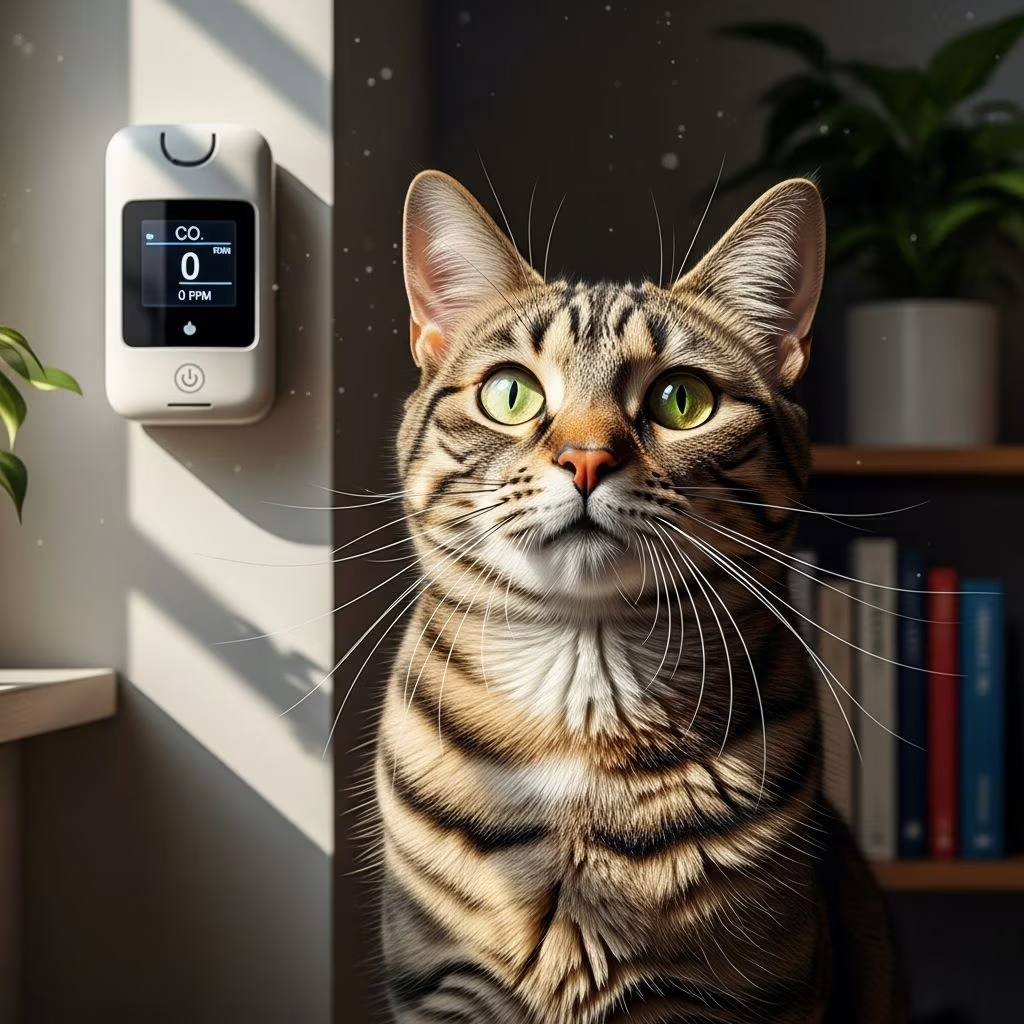
Carbon monoxide (CO) is a colorless, odorless gas produced by incomplete combustion of fuels, posing a deadly risk to both humans and pets. Cats, despite their exceptional sense of smell, cannot actively detect CO because it lacks any scent or visible cues. However, their faster breathing and metabolism cause them to exhibit poisoning symptoms earlier than people, acting as unintentional early warning signals in dangerous environments.
The Science Behind Feline Physiology and CO Exposure
Cats breathe more frequently than humans—up to 30 breaths per minute at rest compared to a human’s 12-20—and possess a higher metabolic rate. This accelerates CO absorption into their bloodstream, where it binds to hemoglobin over 200 times more strongly than oxygen, starving vital organs of oxygen. A peer-reviewed veterinary pathology study on two cats confirmed lethal carboxyhemoglobin (COHb) levels of values within toxic ranges for mammals, underscoring cats’ vulnerability without established feline-specific lethal thresholds.
In controlled scenarios, such as those mimicking poor ventilation, cats display distress signs rapidly. Unlike historical mining practices with canaries for other gases, no scientific evidence supports cats as deliberate CO sensors, but their physiological responses highlight environmental hazards.
Recognizing Carbon Monoxide Poisoning Symptoms in Cats
Early detection hinges on observing subtle behavioral shifts, as CO induces hypoxia mimicking flu-like illness. Common indicators include:
- Lethargy and weakness: Cats may appear unusually tired, reluctant to move, or collapse suddenly.
- Respiratory distress: Rapid, labored breathing or open-mouth panting signals oxygen deprivation.
- Gastrointestinal upset: Vomiting, drooling, or loss of appetite disrupts normal routines.
- Neurological signs: Disorientation, seizures, tremors, or coma in severe cases.
- Mucosal changes: Bright red gums or tongue due to cherry-red blood from CO-hemoglobin binding.
Symptoms escalate quickly in high concentrations; even brief exposure in confined spaces like garages can prove fatal. A survey revealed 53% of U.S. pet owners struggle to identify these signs, emphasizing education’s role.
| Symptom Stage | Common Signs in Cats | Human Comparison | Action Required |
|---|---|---|---|
| Mild (Low PPM) | Lethargy, mild vomiting | Headache, nausea | Ventilate, monitor |
| Moderate (50-100 PPM) | Labored breathing, weakness | Dizziness, confusion | Evacuate, fresh air |
| Severe (>100 PPM) | Seizures, unconsciousness | Loss of consciousness | Emergency vet/hospital |
This table illustrates progression based on parts per million (PPM) exposure, adapted from veterinary guidelines. Cats often advance stages faster due to physiology.
Primary Sources of Carbon Monoxide in Cat Environments
Household items and habits unwittingly expose cats to CO. Key culprits include:
- Malfunctioning appliances: Gas furnaces, water heaters, or stoves with blocked vents release fumes indoors.
- Portable heaters: Kerosene or propane models in unvented spaces concentrate toxins.
- Vehicle exhaust: Idling cars in attached garages permeates homes via shared air systems.
- Fire-related incidents: House fires produce massive CO alongside smoke, suffocating pets rapidly.
- Wood-burning devices: Faulty chimneys or unmaintained fireplaces allow backdrafting.
Winter months amplify risks as families rely more on heating, with poorly serviced equipment implicated in most pet poisonings. Cats’ curiosity draws them to warm spots near leaks, worsening exposure.
Distinguishing CO from Detectable Gas Leaks
Unlike pure CO, natural gas or propane leaks include mercaptan odorants for human detection, which cats’ superior olfactory systems pick up readily—14 times stronger than humans’. A cat avoiding an area or pawing at sources might signal such leaks, prompting investigation. However, this doesn’t apply to CO, reinforcing the need for technology over reliance on pet instincts.
Veterinary Diagnosis and Treatment Approaches
Suspected cases warrant immediate vet attention. Diagnosis involves:
- History review: Exposure context like fire rescue or faulty heater use.
- Blood tests: COHb measurement via co-oximetry confirms binding levels; normal feline baselines are 0-4%, toxic above 20-30% extrapolated from mammals.
- Supportive exams: Blood gas, pH, and complete blood count rule out differentials like smoke inhalation.
Treatment prioritizes 100% oxygen therapy via chamber or mask to displace CO, often resolving milder cases within hours. Hyperbaric oxygen accelerates recovery in critical instances. Prognosis improves with swift action; delays risk permanent organ damage.
Proven Prevention Strategies for Pet Owners
Prevention trumps reaction. Essential steps include:
- Install detectors: Place battery-backed CO alarms near bedrooms, furnaces, and garages; test monthly.
- Annual maintenance: Service combustion appliances per manufacturer guidelines.
- Ventilation practices: Crack windows near fuel-burning devices; never run vehicles in enclosed spaces.
- Pet-safe habits: Keep cats away from workshops or idling engines; monitor during power outages with generators outdoors only.
U.S. Consumer Product Safety Commission recommends interconnected alarms for whole-home alerts. Combining with smoke detectors covers overlapping fire risks.
FAQs: Carbon Monoxide and Cats
Do cats warn of carbon monoxide before humans?
No, they can’t smell it, but symptoms appear faster due to physiology. Rely on detectors, not pets.
How quickly does CO affect cats?
Minutes to hours based on concentration; high levels (>400 PPM) cause collapse in under an hour.
Can cats survive CO poisoning?
Yes, with prompt oxygen therapy; untreated severe cases are often fatal.
Is a CO detector enough protection?
Primary defense, yes—but pair with maintenance and ventilation.
What if my cat acts strangely near heaters?
Check for leaks, ventilate, test CO levels, and consult a vet.
Real-World Implications and Owner Awareness
Pet owners sharing living spaces with cats face amplified responsibilities. Historical anecdotes of pets collapsing first echo mining canaries, but modern forensics leverage animal COHb data to investigate human incidents, as pets mirror exposures. A 2021 survey highlighted awareness gaps: 61% of Canadian pet owners couldn’t spot symptoms, urging proactive education.
Integrating safety means routine home audits: inspect flues, seals, and exhausts seasonally. For multi-pet homes, zone detectors strategically. Awareness campaigns from bodies like the CDC stress CO’s ‘silent killer’ status, applicable to veterinary contexts.
In emergencies, evacuate to fresh air, call 911 and a vet poison hotline (e.g., ASPCA at 888-426-4435). Post-incident, professional cleaning prevents residue risks.
References
- Can a Cat Detect Carbon Monoxide? The Interesting Answer! — Catster. 2023. https://www.catster.com/cat-behavior/can-cat-detect-carbon-monoxide/
- Can cats actually sense carbon monoxide, or is that just a myth? — Dial A Vet. 2023. https://www.dialavet.com/vet-answers/post/cats-sense-carbon-monoxide-49858
- Carbon Monoxide Poisoning in Cats: Causes, Symptoms, & Treatment — Cats.com. 2023. https://cats.com/carbon-monoxide-poisoning-in-cats
- Pathology of carbon monoxide poisoning in two cats — PMC/NCBI (Peer-reviewed). 2018-03-15. https://pmc.ncbi.nlm.nih.gov/articles/PMC5836452/
- Carbon Monoxide Poisoning in Cats: Signs & Prevention — Hill’s Pet Nutrition. 2023. https://www.hillspet.com/cat-care/healthcare/carbon-monoxide-poisoning-in-cats
- Pets Carbon Monoxide Poisoning is Real — CarbonMonoxide.com. 2020-12. https://carbonmonoxide.com/2020/12/pets-carbon-monoxide-poisoning.html
- Survey: Majority of U.S. and Canadian Pet Owners Unable to Identify Symptoms — PR Newswire. 2021-04-14. https://www.prnewswire.com/news-releases/survey-majority-of-us-and-canadian-pet-owners-unable-to-identify-symptoms-of-carbon-monoxide-poisoning-in-their-pets-301133382.html



