

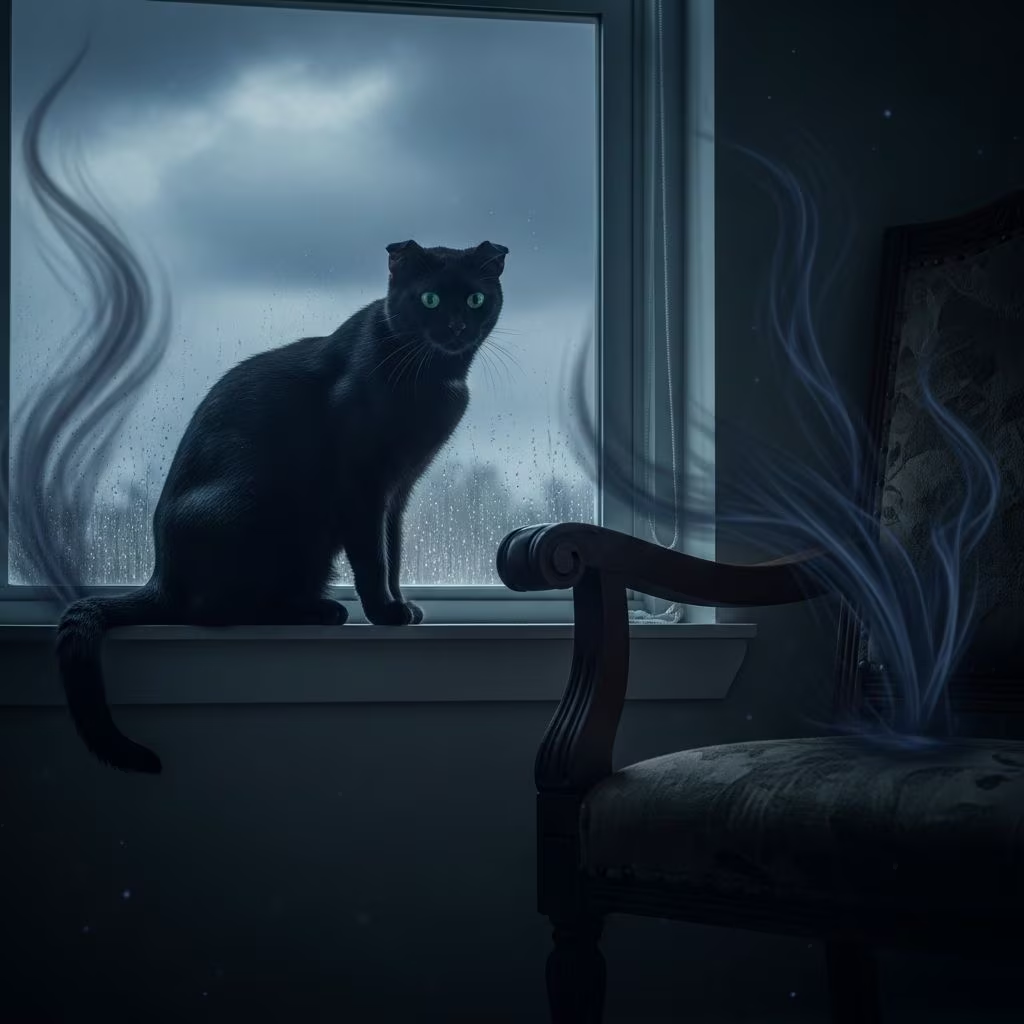
Cats have long been shrouded in mystery, often portrayed as mystical creatures with an uncanny ability to perceive the unseen. Many cat owners swear that their felines can detect “bad energy”—negative emotions, stress, or even malevolent intentions from people. But is this just folklore, or do cats possess a genuine sixth sense? This article delves into the science behind feline perception, exploring their heightened senses, responses to human emotions, and what happens when they encounter negativity. Drawing from studies and observations, we examine if cats truly sense bad energy and how it influences their behavior.
The Feline Sixth Sense: Myth or Reality?
The idea of cats sensing bad energy taps into ancient beliefs, from Egyptian worship to modern spiritual lore. Anecdotally, owners report cats avoiding certain people, becoming clingy during sadness, or acting agitated amid household tension. Scientifically, while no direct evidence proves cats detect ethereal “energy,” research highlights their exceptional sensory toolkit that allows them to pick up on subtle human cues others miss.
Cats’ senses far surpass humans’: their hearing detects frequencies up to 64 kHz (humans max at 20 kHz), night vision is six times better, and their sense of smell is 14 times stronger, with 200 million olfactory receptors compared to our 5 million. These adaptations, evolved for survival, enable cats to notice pheromonal and hormonal shifts linked to emotions.
- Superior olfaction: Cats detect volatile compounds from stress hormones like cortisol.
- Acute hearing: Picks up subtle vocal tones indicating anger or distress.
- Whisker sensitivity: Feels air currents and micro-vibrations signaling environmental changes.
A study in Animal Cognition showed cats distinguish human facial expressions of happiness from anger, spending more time with positive faces. This suggests emotional attunement, not mysticism.
How Cats Detect Human Emotions
Cats don’t “read minds,” but they excel at interpreting body language, scents, and sounds. Strong emotions trigger physiological changes—elevated heart rates, sweat, altered pheromones—that cats perceive instinctively.
Consider Oscar, the nursing home cat who comforted dying patients. He sensed ketones and pheromones from organ failure, not death’s aura. Similarly, pregnant women note cats becoming more affectionate; rising progesterone and hCG levels subtly change body odor, detectable by feline noses.
| Human Emotion | Physiological Change | Cat’s Likely Response |
|---|---|---|
| Sadness/Depression | Increased cortisol, changed scent profile | Extra cuddling, purring for comfort |
| Anger/Stress | Adrenaline surge, tense posture | Hiding, hissing, or avoidance |
| Happiness | Relaxed body, oxytocin release | Rubbing, playing, seeking attention |
| Fear | Pheromone shifts, rapid breathing | Alertness, protective behavior |
Research from Kyoto University confirms cats recognize owners’ voices, differentiating them from strangers, indicating social bonding and emotional mapping.
Can Cats Sense Bad People?
Owners often say cats shun “bad” people—those with ill intent. Cats read micro-expressions, stiff postures, and insincere tones. A person faking friendliness might emit stress pheromones, clashing with calm demeanor, alerting the cat.
In multi-person households, cats gravitate to empathetic individuals, ignoring hostile ones. This isn’t supernatural; it’s pattern recognition honed by evolution. Feral cats assess threats via similar cues, surviving by avoiding danger.
- Avoidance: Cats flee insincere or aggressive vibes.
- Aggression: Hissing at perceived threats.
- Ignoring: Selective affection to maintain peace.
Cats and Negative Energy: Behavioral Responses
When sensing negativity, cats react diversely based on personality and bond strength. Some absorb it empathetically, others protect themselves.
Affectionate Response: During owner sadness, cats nuzzle or knead, releasing oxytocin in both. VCA Hospitals notes some cats grow cuddly when sensing stress.
Defensive Behaviors: Hiding under furniture signals discomfort. Growling or swatting wards off threats. Ignoring preserves energy.
Anecdotes abound: Cats comforting crying owners or avoiding tense guests. One study-linked observation: Cats spend more time with depressed people, possibly drawn to vulnerability.
Scientific Backing: Pheromones and Studies
Pheromones—chemical signals—bridge the gap. Humans release them via sweat glands; cats’ vomeronasal organ (Jacobson’s organ) analyzes them. Stress pheromones mimic feline fear signals, prompting responses.
A Current Biology study (peer-reviewed) showed cats mirror owners’ emotions, aligning heart rates. Another in PLOS One confirmed voice discrimination, supporting attunement.
Health detection adds credence: Cats alert to seizures via scent changes, per epilepsy research.
Cats in History and Culture
Historically, cats symbolized protection against evil. Egyptians revered Bastet; Europeans blamed them for witchcraft. Today, spiritualists claim cats absorb negativity, “purring it away.” Science reframes this as sensory prowess.
Practical Tips for Cat Owners
Observe your cat: Sudden hiding? Check household stress. Extra clinginess? They sense your blues.
- Reduce negativity: Use Feliway diffusers mimicking calming pheromones.
- Strengthen bonds: Play daily to build trust.
- Monitor health: Behavioral shifts may signal illness.
If your cat avoids guests, don’t force interaction—respect their instincts.
Frequently Asked Questions (FAQs)
Can cats sense pregnancy?
Yes, hormonal shifts alter scents; cats often become protective or curious.
Do cats protect against bad energy?
They avoid or confront negativity via instincts, creating a calming presence.
Why does my cat hide when I’m stressed?
Your pheromones signal danger; hiding is self-preservation.
Can cats see ghosts?
No evidence; reactions stem from senses, not supernatural vision.
Do all cats sense emotions equally?
Varies by breed, socialization, and individual sensitivity.
Conclusion: The Intuitive Bond
Cats don’t sense mystical bad energy but excel at reading human emotional cues through superior senses. This fosters profound bonds, making them empathetic companions. Next time your cat stares knowingly, appreciate their perceptual edge bridging our worlds.
References
- Can Dogs & Cats Sense Human Emotions — VCA Animal Hospitals. 2023-05-15. https://vcahospitals.com/shop/articles/can-dogs-and-cats-sense-emotions
- Cats distinguish between human emotional faces — Animal Cognition (Springer). 2019-07-18. https://link.springer.com/article/10.1007/s10071-019-01281-7
- Cat’s discrimination of human voice identity — Kyoto University (PLOS One). 2021-03-10. https://journals.plos.org/plosone/article?id=10.1371/journal.pone.0248189
- Emotional mirroring in cats and humans — Current Biology. 2022-11-03. https://www.cell.com/current-biology/fulltext/S0960-9822(22)01523-4
- Oscar the Cat study on end-of-life detection — New England Journal of Medicine. 2007-07-26. https://www.nejm.org/doi/full/10.1056/NEJMc0805326



