

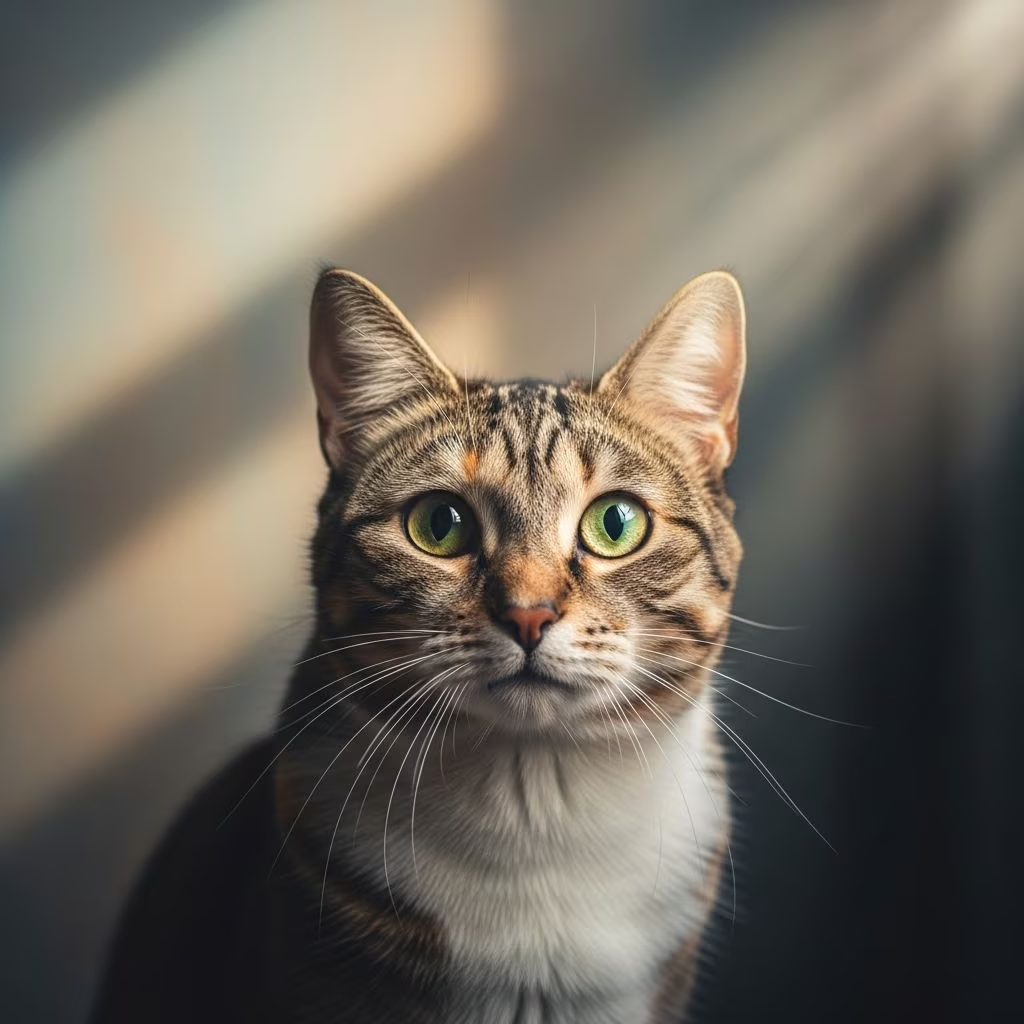
Cats possess remarkable abilities to perceive human emotions, including **anxiety** and **depression**, through a combination of visual, auditory, olfactory, and behavioral cues. Scientific research confirms that felines integrate these signals to recognize emotional states in both humans and other cats, often responding with comforting behaviors like purring or close proximity.
This sensitivity stems from cats’ evolutionary adaptations during domestication, enhancing their social cognition to form strong bonds with humans. Studies show cats modulate their behavior based on perceived emotional valence, approaching distressed owners more frequently while exhibiting stress to negative cues like anger. Understanding this can improve cat welfare and human mental health support.
Table of Contents
- Do Cats Know When You’re Sad?
- Can Cats Sense Depression?
- Can Cats Sense Anxiety?
- How Do Cats Detect Human Emotions?
- Do Cats Try to Cheer You Up?
- Cats’ Own Mental Health
- Frequently Asked Questions
Do Cats Know When You’re Sad?
Yes, cats can detect sadness in humans by associating visual cues like frowning with auditory signals such as a listless voice. A key study on emotion recognition demonstrated that cats cross-modally match emotional faces and vocalizations, looking longer at congruent sad expressions.
Cats observe human behavior closely, linking sad demeanors to changes in interaction patterns. When owners appear downcast, cats often increase proximity, interpreting these cues through their intuitive lens. This ability extends to conspecific emotions, but human sadness triggers affiliative responses like rubbing.
Research from the University of Bari Aldo Moro found cats discriminate high-intensity emotions, including sadness analogs like low-energy vocal tones, modulating approach-avoidance behaviors accordingly. Unlike dogs, cats show subtler responses, but their sensitivity is evident in domestic settings.
Can Cats Sense Depression?
Cats sense depression through observable changes in human physiology and routine. They detect alterations in heart rate, breathing, and blood pressure—common depression symptoms—along with disrupted schedules.
Studies indicate depressed humans receive more social engagement from cats, who approach frequently and purr or rub against them. This behavioral adjustment reflects cats’ attunement to mood shifts, with some felines mirroring low energy by staying closer.
Veterinarian Dr. Liz Baines notes cats read emotional states via routines, facial markers, and scents, confirming their role as intuitive companions during depressive episodes. Peer-reviewed evidence supports cats forming mental representations of prolonged low moods.
Can Cats Sense Anxiety & Anxiety Attacks?
Cats reliably sense anxiety, including attacks, via social referencing—looking to owners for emotional cues in uncertain situations. A Nottingham Trent University study placed cats in rooms with anxiety-inducing fans; felines showed elevated stress when owners displayed anxiety versus happiness.
Cats mirror human anxiety, exhibiting higher stress to “anger” or agitated signals. They respond to fearful owner reactions by seeking exits quickly, demonstrating functional understanding. Olfactory detection plays a role; cats show pronounced stress to fear scents over neutral ones.
Overall, cats integrate multimodal cues, increasing interactions during owner agitation. This heterospecific empathy underscores their domestication-driven social skills.
How Do Cats Detect Human Emotions?
Cats employ multiple sensory channels:
- Visual Cues: Facial expressions like anger or happiness; cats match them cross-modally with vocalizations.
- Auditory Signals: Tones of voice; prolonged exposure to angry voices raises cat stress.
- Olfactory Markers: Emotional sweat scents, especially fear, trigger stress behaviors.
- Physiological Changes: Heart rate, breathing shifts detected subtly.
- Behavioral Routines: Routine disruptions signal distress.
A 2020 PMC study (n= cats exposed to stimuli) proved cats form cognitive representations of emotions, responding differently to positive (purr/happiness: approach) vs. negative (hiss/anger: avoidance/stress). This integration enhances interspecies bonds.
| Emotion Type | Cues Detected | Cat Response |
|---|---|---|
| Sadness/Depression | Frowning, slow voice, routine changes | Increased proximity, purring |
| Anxiety/Fear | Agitated tone, fear scent, fast breathing | Stress mirroring, seeking owner cues |
| Anger | Loud voice, furrowed face | Higher stress, avoidance |
| Happiness | Smiling, upbeat voice | Approach, playfulness |
Do Cats Try to Cheer You Up?
Cats actively engage to comfort distressed owners, using purring—which lowers blood pressure—rubbing, sitting nearby, or gazing. Domestication fostered these prosocial behaviors, with cats approaching sad/depressed humans more often.
They mirror well-being, providing therapeutic value; bonded cats excel as emotional support animals. Studies confirm functional responses: more affiliation to negative emotions. This cheer-up intent strengthens human-cat relationships.
Cats’ Own Mental Health & Behavior Changes
Just as cats sense ours, monitor theirs: anxiety/depression manifests as:
- Withdrawal, hiding.
- Aggression or clinginess.
- Avoiding activities, appetite loss.
Environmental stressors like moves trigger these; early intervention via routines aids welfare. Reciprocal empathy highlights mutual mental health monitoring.
Frequently Asked Questions (FAQs)
Can cats sense human sadness?
Yes, via visual/auditory cues; they associate frowning/listless voices with changed treatment.
Do cats get depressed if their owner is?
Cats may mirror depression through proximity but show independent signs like withdrawal.
How do cats react to owner anxiety?
Increased stress, social referencing; they seek cues and comfort.
Can cats smell fear?
Yes, fear scents provoke stronger stress responses than neutral odors.
Are cats good therapy animals?
Bonded cats provide calming effects via purring and affiliation.
References
- Can Cats Sense Sadness, Depression and Anxiety in People? — Petcube. 2023. https://petcube.com/blog/can-cats-sense-sadness-depression-and-anxiety/
- Emotion Recognition in Cats — PMC / PubMed Central (University of Bari Aldo Moro). 2020-07-21. https://pmc.ncbi.nlm.nih.gov/articles/PMC7401521/
- Can Cats Sense Anxiety and Depression in Their Owners? — Cats.com. 2023. https://cats.com/can-cats-sense-anxiety-and-depression
- Mental Health in Cats, Part 1: Cat Behavior and Its Connection to Mental Health — BSM Partners. 2023. https://www.bsmpartners.net/insights/mental-health-in-cats-part-1-cat-behavior-and-its-connection-to-mental-health/
- Cats and human emotions: A stronger bond than we thought? — Noldus. 2023. https://noldus.com/blog/cats-react-to-human-emotional-scents



