

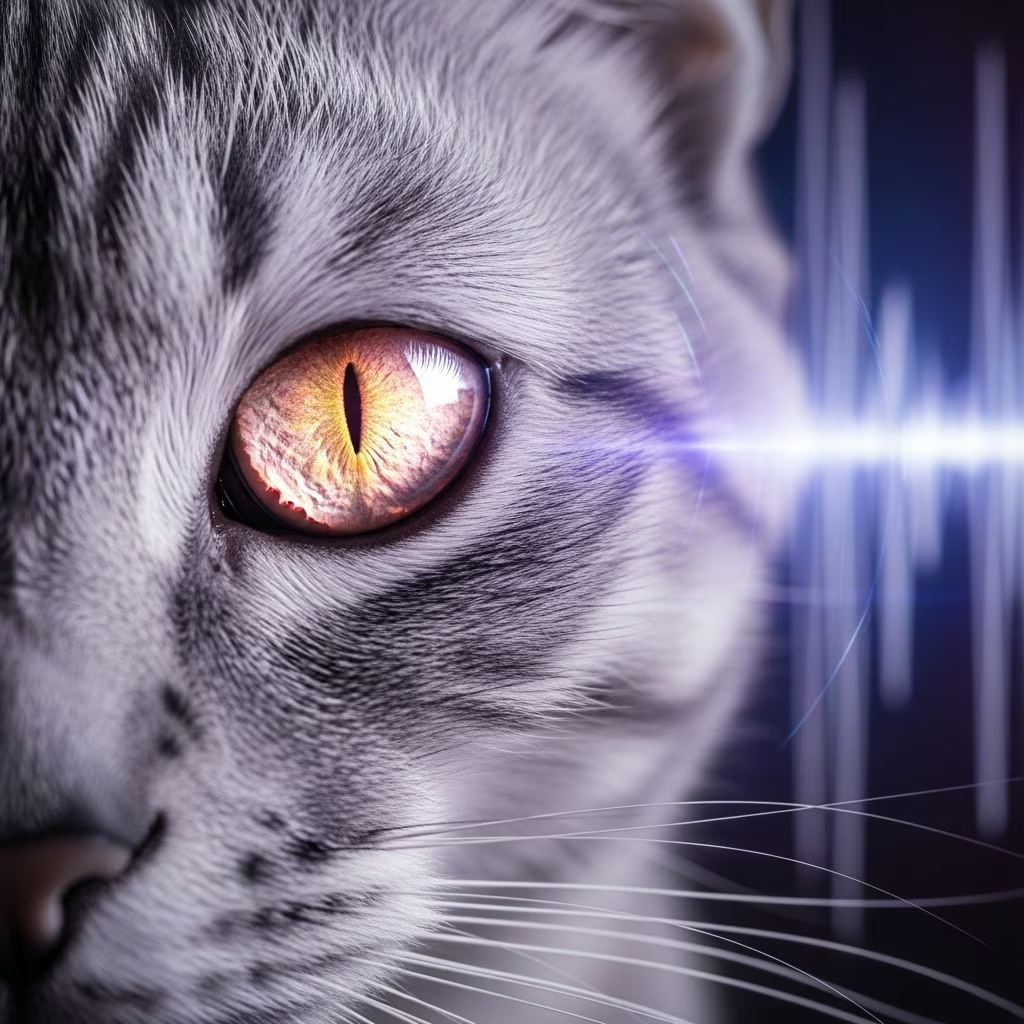
Can Cats See Infrared Lights? Understanding Feline Vision
Many cat owners believe their feline companions possess supernatural abilities to perceive things invisible to human eyes. While cats do have remarkable vision capabilities in certain areas, there’s a common misconception about their ability to detect infrared light. The straightforward answer is that cats cannot see infrared lights, just like humans. Although cats possess superior night vision and a broader field of view compared to people, infrared radiation remains invisible to their eyes.
Understanding why cats lack infrared vision requires knowledge about light, the electromagnetic spectrum, and how different organisms perceive the world around them. This article explores the fascinating aspects of feline vision, comparing it to human sight and explaining why some animals can detect infrared while others cannot.
What Is Infrared Light?
Infrared light, also known as infrared radiation, represents a type of radiant energy that exists beyond the visible light spectrum. Both cats and humans cannot see infrared rays with their eyes, though we can perceive it differently—as heat. Every object in the universe emits some level of infrared radiation, with two of the most obvious sources being fire and the sun.
The infrared spectrum consists of different wavelengths, each with unique characteristics. The shorter “near-infrared” waves, such as those emitted from a television remote control to change channels, don’t produce any detectable heat. In contrast, the longer infrared waves can be felt as intense heat and exist closer to the microwave section of the electromagnetic spectrum.
Heat transfer occurs through three primary mechanisms: radiation, convection, and conduction. Infrared radiation is one of these three methods, making it fundamental to how energy moves throughout the universe.
Why Cats Can’t See Infrared Lights
Understanding why cats cannot perceive infrared light involves examining the biological characteristics of warm-blooded mammals. Cats are warm-blooded mammals, and this biological classification is directly related to their inability to detect infrared radiation.
If warm-blooded creatures like cats and humans could see infrared light, their own body heat would create massive interference in their vision. Their eyes would interpret the world as a landscape of temperature rather than color, making normal vision impossible. This thermal interference would essentially blind them to the visible light spectrum, which would be detrimental to survival.
In contrast, cold-blooded animals such as certain snake species can detect infrared radiation without this problem. These creatures have adapted specialized sensory organs that allow them to perceive heat signatures from prey animals, giving them a significant hunting advantage.
It’s important to note that prolonged exposure to infrared lights, particularly those near the microwave section of the electromagnetic spectrum, can be harmful. Excessive infrared exposure raises the internal temperature of the eyes in any creature, potentially “baking” and damaging the delicate ocular tissues.
How Cat Vision Differs From Human Vision
While cats cannot see infrared light like humans cannot, their vision does differ in other significant ways. Cats have developed remarkable adaptations for low-light conditions, though they sacrifice some capabilities that humans possess.
Night Vision Advantages
Cats possess superior night vision compared to humans, allowing them to see in light levels six times lower than what humans require. This advantage comes from several anatomical features. Cats have a layer of tissue called the tapetum lucidum that reflects light back to the retina, allowing their eyes to capture as much available light as possible. This reflective structure is responsible for the distinctive glow cats’ eyes produce when illuminated by flashlights in the dark.
Although cats can’t see infrared, they can detect it as heat. Cats possess specialized heat receptors that enable their uncanny ability to locate warm spots anywhere in their environment. This heat-sensing capability, while not true infrared vision, serves important functions for feline comfort and survival.
Color Vision Limitations
Despite their night vision superiority, cats have more limited color perception than humans. The human eye contains ten times more light receptors called cones compared to cats’ eyes. These cones function optimally in bright light and give humans up to twelve times better motion detection in bright conditions than felines.
Humans are trichromats, meaning they have three types of cones that enable them to perceive a broad color spectrum including blue, green, and red. While cats are also technically trichromats, the distribution of their cone cells differs significantly from humans. This structural variation means cats cannot see the full range of colors that humans can distinguish.
The Electromagnetic Spectrum and Animal Vision
The electromagnetic spectrum extends far beyond what any single species can perceive. Visible light, which both cats and humans can detect, represents only a small portion of this spectrum. Other animals possess the ability to perceive different sections of this spectrum that remain invisible to human eyes.
Some species can detect ultraviolet light, while others perceive infrared radiation. These capabilities evolved to help animals survive in their specific environments, hunting prey, avoiding predators, and finding food sources. The diversity of animal vision demonstrates nature’s remarkable adaptability and the vastly different ways creatures interpret the world around them.
Can You Treat Cats With Red Light Therapy?
Although cats cannot see infrared lights in the traditional sense, they can benefit significantly from therapeutic red light exposure. Red Light Therapy represents a natural, chemical-free, holistic, and non-invasive therapeutic approach that addresses various feline health conditions without the need for pharmaceutical intervention.
Red light therapy utilizes red and low levels of infrared light wavelengths to treat numerous pet issues, including:
- Joint pain and arthritis
- Wounds and soft-tissue injuries
- Infections and inflammations
- Sprains and strains
- Swelling and edema
- General muscle maintenance
This therapeutic approach has gained recognition in veterinary medicine for its effectiveness in promoting healing and reducing inflammation without the side effects associated with medications.
How Does Red Light Therapy Work on Cats?
The mechanism behind red light therapy’s effectiveness in treating cats involves heat penetration rather than visual perception. Although cats cannot see infrared lights, they can feel infrared as heat on their skin. This tactile sensation is precisely why practitioners expose cats to near-infrared and low levels of red light wavelengths.
Red light rays primarily reach surface tissues and can heal surface-level wounds effectively. Infrared rays, however, penetrate deeper into tissues including ligaments, muscles, and bones. When cells absorb these wavelengths, they boost energy levels at the cellular level, hastening the body’s natural healing processes. The increased cellular energy production accelerates recovery from injuries and reduces inflammation in affected areas.
A common concern among cat owners is whether red light therapy might burn or harm their cat’s skin. Rest assured: red light therapy does not hurt or burn a cat’s skin. The treatment is designed to be safe and beneficial, providing therapeutic benefits without adverse effects when administered properly.
What Animals Can See Infrared Lights?
Several animal species possess the remarkable ability to perceive infrared radiation, which is absent in cats and most mammals. These animals have evolved specialized sensory organs or visual structures that allow them to detect thermal signatures.
Snakes: Masters of Infrared Detection
Snakes represent perhaps the most well-known infrared-detecting animals. Species such as boas, rattlesnakes, and pythons possess specialized sensory structures called pit organs located on their faces. These hole-like receptors enable snakes to integrate infrared capacity with their regular vision, creating a dual sensory system.
When heat from prey animals reaches these pit organs, it activates protein channels in the receptors, allowing snakes to see in complete darkness. The pit organs enable snakes to detect a prey animal’s image from considerable distances by sensing thermal cues radiating from the animal’s body. This infrared sense acts as an incredible supplementary sense, complementing their regular vision and making them formidable hunters capable of striking with precision even in total darkness.
Other Infrared-Detecting Animals
Beyond snakes, other cold-blooded and certain warm-blooded animals can detect infrared radiation. Frogs and specific species of fish possess infrared detection capabilities. Even insects like mosquitoes can perceive infrared energy, using this sense to locate areas where blood flows closest to the skin surface—areas with greater warmth—to feed effectively.
Comparing Cat Vision to Other Animals
| Animal | Infrared Vision | Night Vision | Color Vision |
|---|---|---|---|
| Cats | No | Excellent | Limited (Blue, Green) |
| Humans | No | Poor | Full Spectrum |
| Snakes | Yes (pit organs) | Good | Limited |
| Mosquitoes | Yes | Good | Limited |
The Tapetum Lucidum: Cat Eyes’ Secret Advantage
The distinctive glow that appears in cats’ eyes when flashlight beams hit them is not a supernatural phenomenon but rather a remarkable biological adaptation. The tapetum lucidum, a layer of tissue behind the retina in cats’ eyes, reflects light back toward the retina rather than allowing it to pass through. This reflective structure acts like a biological mirror, giving light-sensitive cells a second opportunity to register photons.
By reflecting light this way, the tapetum lucidum enables cats’ eyes to gather as much available light as possible, explaining their exceptional night vision. This anatomical feature is why cats can navigate in darkness with surprising ease, though it comes with a trade-off—less precise color vision compared to humans.
Frequently Asked Questions (FAQs)
Q: Can cats see in complete darkness?
A: Cats cannot see in absolute darkness, but they require only one-sixth the light level that humans need to see. Their excellent night vision makes them appear to see in the dark, but some ambient light must be present.
Q: Why do cats’ eyes glow in the dark?
A: Cats’ eyes glow when light hits them because of the tapetum lucidum, a reflective layer behind their retinas that bounces light back, enhancing their night vision.
Q: Can red light therapy hurt my cat?
A: No, red light therapy is safe for cats when administered properly. It does not burn or damage the skin and provides therapeutic benefits for various health conditions.
Q: Do all animals that see infrared have the same type of vision?
A: No, different animals detect infrared in different ways. Snakes use pit organs, while other animals may use different sensory structures adapted to their specific needs.
Q: What colors can cats see?
A: Cats see primarily in shades of blue and green but cannot distinguish red as humans do. Their color vision is more limited than human color perception.
Q: Why is infrared dangerous to eyes?
A: Prolonged exposure to infrared light, especially near-microwave wavelengths, can raise internal eye temperature and potentially damage delicate ocular tissues through thermal injury.
References
- Can Cats See Infrared Lights? Feline Vision Facts — Catster. Accessed 2026. https://www.catster.com/lifestyle/can-cats-see-infrared-lights/
- Animals See a World That’s Completely Invisible to Our Eyes — All About Vision, by Tom Mangan. Accessed 2026. https://www.allaboutvision.com/eye-care/pets-animals/how-animals-see/
- Light and the Electromagnetic Spectrum — National Aeronautics and Space Administration (NASA). Accessed 2026. https://science.nasa.gov/ems/
- Mammalian Vision and the Evolution of Color Vision Genes — Nature Neuroscience, peer-reviewed research. 2007. https://www.nature.com/articles/nn1975
- Infrared Radiation and Thermal Imaging in Biology — Journal of Applied Physiology. 2012. https://journals.physiology.org/



