

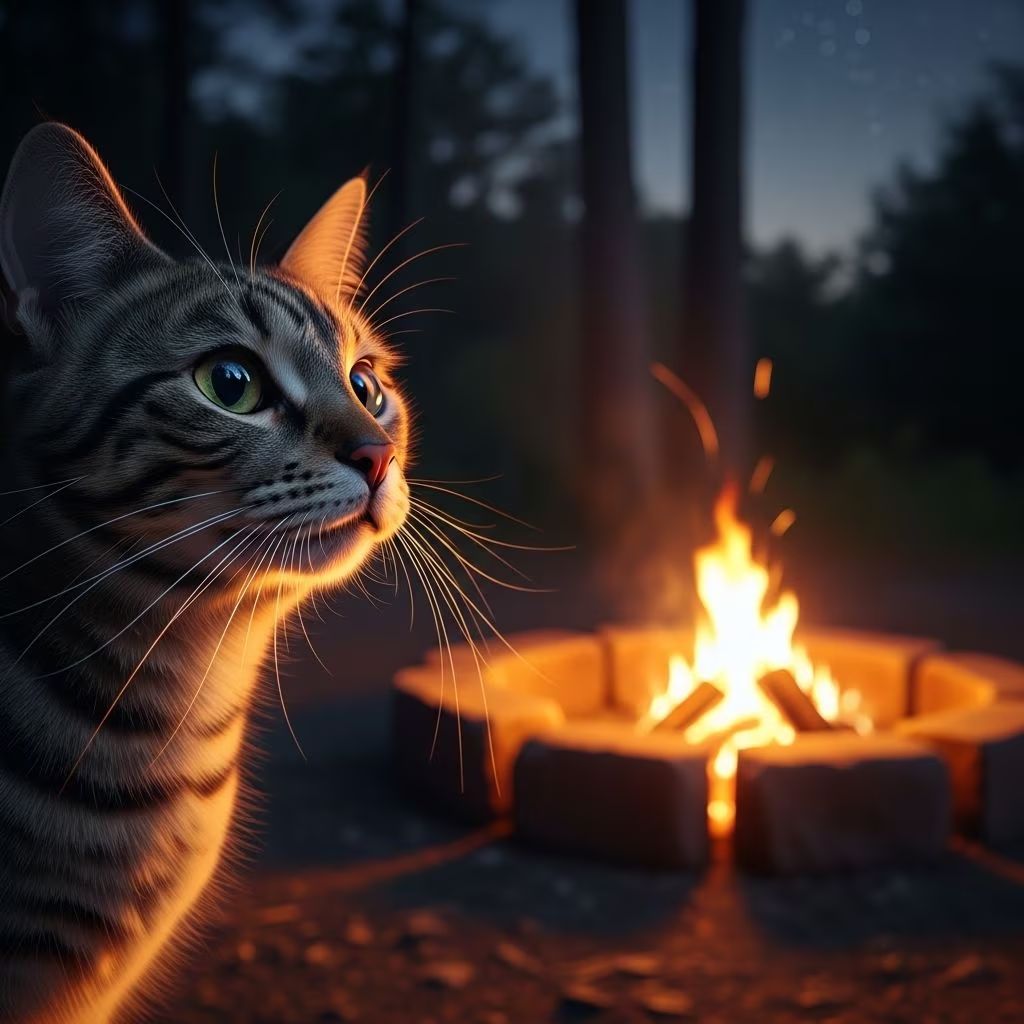
Cats possess a unique visual system that allows them to perceive fire, primarily through movement, brightness, and contrast rather than color. Their eyes, optimized for hunting in low light, detect the flickering flames effectively, making fire highly noticeable to them.
Table of Contents
Cat Vision Basics
Cats have evolved remarkable eyesight tailored for nocturnal hunting. Unlike humans, who rely on a balance of rod and cone cells for both low-light detection and color vision, cats prioritize rods—photoreceptors specialized for dim conditions and motion sensitivity.
Their retinas contain a higher density of rod cells, enabling superior night vision. This adaptation allows cats to see in light levels as low as one-sixth of what humans require. Complementing this is the tapetum lucidum, a reflective layer behind the retina that bounces unabsorbed light back through the photoreceptors, amplifying available light and creating that eerie glow in their eyes at night.
In terms of color perception, cats are dichromats, possessing cones primarily sensitive to blue and green wavelengths. They lack the full range of red-sensitive cones found in humans, so their world appears in muted blues, greens, and grays, with poor discrimination of reds and oranges. This limited color palette means everyday objects like ripe tomatoes or autumn leaves blend into grayscale for cats.
- Key Differences in Feline vs. Human Vision:
| Aspect | Cats | Humans |
|---|---|---|
| Night Vision | Excellent (6x better) | Moderate |
| Color Vision | Blue/Green (dichromatic) | Full spectrum (trichromatic) |
| Motion Detection | Superior | Good |
| Distance Vision | Sharper up close (<6 ft) | Sharper at distance |
| Field of View | 200 degrees | 180 degrees |
Additionally, cats can detect ultraviolet light, invisible to humans, aiding in spotting urine trails or camouflaged prey. However, they cannot see infrared, limiting their thermal vision capabilities compared to snakes.
How Cats See Fire
Yes, cats can see fire. Flames emit light across the visible spectrum (400-700 nm), which overlaps with cats’ detectable range. The intense brightness and rapid flickering stimulate their rod cells and motion-sensitive neurons profoundly.
Fire’s orange-red hues, dominant in human perception, appear desaturated or grayish to cats due to their weak red cone response. Instead, they emphasize the flame’s luminance—the stark contrast against darker backgrounds—and erratic movement, which mimics prey like fluttering insects.
In low-light settings, such as evenings by a fireplace, the tapetum lucidum heightens this effect, making flames appear unnaturally vivid and pulsating. Studies on feline retinal responses confirm heightened sensitivity to dynamic light patterns, explaining why even small candle flames captivate cats from across a room.
- Factors Influencing Fire Perception:
- Brightness and contrast: Flames stand out sharply.
- Movement: Flickering triggers hunting instincts.
- Environment: Dim rooms amplify visibility via tapetum.
While cats perceive fire, their understanding lacks human context—no innate recognition of combustion risks. They view it as an intriguing stimulus, blending visual allure with emanating warmth.
Cat Reaction to Fire
Cats’ responses to fire vary by temperament, experience, and environment but stem from innate instincts. The hypnotic flicker often draws initial curiosity, activating their predatory gaze—pinned ears, dilated pupils, and crouched stalking posture.
However, self-preservation kicks in quickly. Sensitive whiskers detect radiant heat, while acute smell identifies smoke particulates far earlier than humans. Most cats maintain distance, observing warily rather than pouncing, though bold individuals may bat at low flames.
Past encounters shape behavior: Cats burned by curiosity learn aversion, while those socialized around controlled fires (e.g., gas logs) grow desensitized. In wild ancestors, fire signaled danger or opportunity (prey fleeing flames), imprinting caution.
- Common Reactions:
- Fascination: Staring, slow blinking.
- Caution: Ears back, tail flicking.
- Exploration: Pouncing if safe-feeling.
- Retreat: Hiding if overwhelmed.
During emergencies, cats may hide instead of evacuating, complicating rescues. Their superior smoke detection (via 200 million olfactory receptors vs. humans’ 5 million) provides early warnings, but panic overrides flight.
Cat Fire Safety
Given cats’ attraction to flames, proactive measures are essential. Never leave candles, stoves, or fireplaces unattended with cats present. Install sturdy screens on fireplaces and elevate candles beyond jump reach (typically 5-6 feet).
Create safe alternatives: Heated mats or window perches satisfy warmth-seeking without risk. Use motion-activated toys to redirect hunting impulses. In multi-cat homes, monitor interactions—jealousy may spur flame approaches.
- Essential Safety Tips:
- Screen fireplaces and use glass doors.
- Secure candles in high, stable holders.
- Install smoke detectors; test monthly.
- Prepare escape plans accounting for hiding.
- Train with carrier drills for evacuations.
For apartments, opt for electric mimics like LED fire projectors. Statistics from fire safety organizations underscore pet-related incidents: Over 1,000 U.S. home fires yearly involve pets, often via knocked-over candles. Vigilance prevents tragedy.
Frequently Asked Questions
Can cats see fire?
Yes, cats can see fire due to its visible light wavelengths, brightness, and movement, which their rod-rich eyes detect effectively.
How do cats perceive flames differently from humans?
Cats see flames in desaturated tones, focusing on flicker and glow rather than orange-red colors, thanks to limited cone cells.
Why are cats attracted to flickering flames?
The unpredictable motion triggers hunting instincts, mimicking prey, while warmth adds appeal.
Do cats know fire is dangerous?
Not innately; they sense heat and smell but may approach out of curiosity without risk understanding.
Can cats detect fire before humans?
Yes, via superior smell for smoke and whiskers for heat changes.
How to protect cats from fire hazards?
Use screens, elevate flames, provide alternatives, and plan for emergencies.
Can cats see in complete darkness?
No, but far better than humans; some light is needed for tapetum function.
Do cats see infrared or ultraviolet?
No infrared; yes, some UV for hunting aids.
References
- What Colours Can Cats See? | The Feline Perspective — Feline Fancy. 2023. https://felinefancy.co.uk/blogs/news/what-colours-can-cats-see
- How Cats See and Perceive Flames: A Scientific Guide — PetsCare. 2024. https://www.petscare.com/news/post/can-cats-see-flames
- Cat Vision Explained: Do They See Flames and Fire? — We Buy Fire Damaged Houses. 2023. https://webuyfiredamagedhouses.com/can-cats-see-flame-understanding-their-vision-and-reaction-to-fire/
- Exploring the Mysteries of Cat Vision — A-Z Animals. 2024. https://a-z-animals.com/pets/cats/cat-facts/exploring-the-mysteries-of-cat-vision/



