

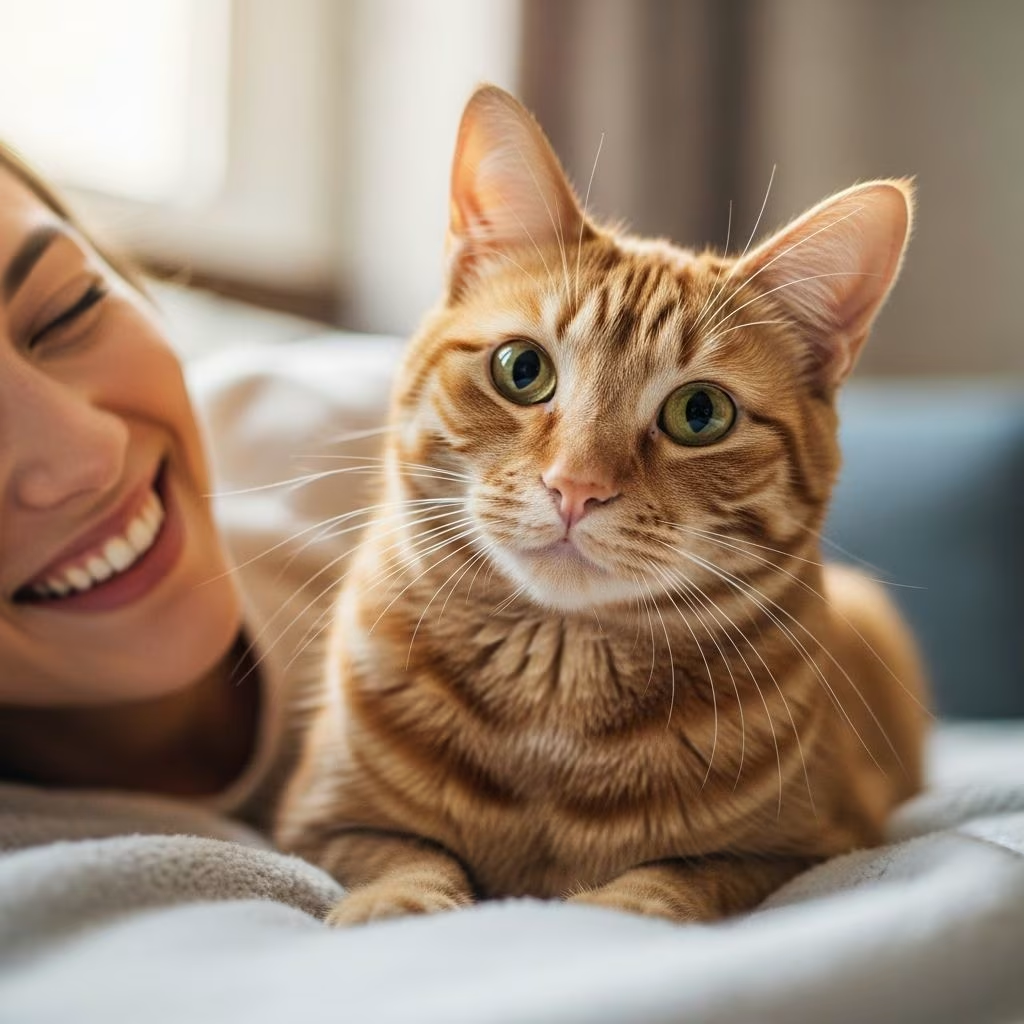
Cats possess a sophisticated system of over 276 distinct facial expressions, far more than dogs’ 27 or humans’ typical combinations, primarily used to communicate with other cats. While they excel at reading feline cues like ear positions and whisker movements, their ability to interpret human smiles remains limited, as cats prioritize visual signals such as slow blinks and body postures over broad facial grins.
The Complexity of Feline Facial Communication
Recent research reveals cats employ nearly 300 unique facial movements, combining elements like ear twitches, pupil dilation, nose licks, and whisker adjustments to convey emotions ranging from friendly play to aggression. About 45% of these expressions signal friendliness, 37% aggression, and 18% ambiguity, highlighting a nuanced vocabulary that rivals chimpanzees. Unlike humans, who rely heavily on mouth shapes for smiles, cats focus on eyes, ears, and whiskers for inter-cat interactions.
This richness suggests cats are highly attuned to subtle facial changes in their own kind, but human smiles—with exposed teeth and wide mouths—may register differently, potentially as neutral or even threatening due to teeth visibility, a common aggression cue in animals.
Key Facial Features Cats Rely On
Cats decode emotions through specific markers:
- Ears: Forward and rounded indicate relaxation; flattened back signal fear or anger.
- Eyes: Slow blinks or half-closed lids show trust; dilated pupils with direct stares convey challenge or fear.
- Whiskers: Relaxed and sideways for contentment; tensed forward for curiosity or back for hostility.
- Mouth: Rarely central, but parted lips or lip licks appear in aggressive or playful contexts.
These elements form the basis of cat-to-cat dialogue, where a ‘play face’—dropped jaw and retracted mouth corners—mirrors human and canine grins during fun.
How Cats Perceive Human Expressions
Cats bond with humans via learned associations rather than innate smile recognition. A smile paired with soft tones and slow blinks may elicit purring or approach, but the cat responds to the overall context, not the curve of your lips. Studies indicate cats distinguish human emotions through voice pitch, gaze direction, and body posture more reliably than isolated facial features.
| Human Expression | Cat’s Likely Interpretation | Supporting Cues |
|---|---|---|
| Smile (teeth visible) | Neutral or wary | Relaxed eyes/voice encourage positivity; teeth alone may alarm |
| Slow blink | Trust and affection | Cats reciprocate, strengthening bonds |
| Frown or scowl | Threat or stress | Narrowed eyes prompt defensive ears |
| Wide-eyed stare | Challenge | Leads to pupil constriction or retreat |
Owners often anthropomorphize smiles, but cats view them through their visual framework, emphasizing eye contact and ear signals over mouth movements.
Signs Your Cat Is Responding Positively
Observe these indicators of feline approval:
- Slow blinking back at you, akin to a feline kiss.
- Ears perked forward with relaxed whiskers.
- Head bunting or rubbing, depositing scent pheromones for ownership.
- Loaf position or stretched body, signaling safety.
To test, try smiling softly while slow-blinking; mutual blinks confirm connection, independent of your mouth shape.
Common Misinterpretations in Human-Cat Interactions
Pet parents frequently misread cues:
Staring as Affection: Prolonged direct gazes unsettle cats, prompting defensive postures. Opt for averted eyes or blinks.
Teeth in Smiles as Friendly: Exposed teeth evoke hissing in cats; pair smiles with closed-mouth calm.
Ignoring Ear Positions: Backwards ears mean ‘back off,’ overriding any human grin.
Understanding these prevents stress, fostering harmony.
Enhancing Communication with Your Cat
Build rapport using cat-preferred methods:
- Master Slow Blinks: Hold gaze briefly, then close eyes slowly. Cats mirror this trust signal.
- Adopt Feline Postures: Crouch low, avoid looming to reduce intimidation.
- Use Voice Modulation: Soft, high pitches soothe; mimic purrs for calm.
- Respect Space: Let cats initiate contact via bunting.
Consistent cues train cats to associate your presence with positivity, mimicking how they interact with peers.
Scientific Insights into Cat Emotions
Peer-reviewed analysis of 276 expressions shows cats direct friendly cues (ears/whiskers forward) at allies and hostile ones (flattened ears, narrowed pupils) at foes. While human smile decoding isn’t directly studied, cross-species parallels suggest cats generalize safe patterns from repeated exposures. Future research may clarify if domestic cats adapt better to human faces than ferals.
International Cat Care emphasizes pupil size and ear rotation: outward ears with small pupils indicate frustration, flat ears with dilated pupils fear. Integrating these refines owner perceptions.
Addressing Stress and Health Through Facial Reads
Subtle shifts like tense whiskers or squinty eyes signal pain or anxiety. Monitor for prolonged changes:
- Flat ears + lip licking: Discomfort or aggression.
- Wide eyes + stiff posture: Fear or overstimulation.
- Relaxed face absent: Potential illness.
Early detection via faces aids vet visits, improving welfare.
FAQs: Decoding Cat-Human Smiles and More
Do cats smile back at humans?
Cats don’t smile like humans but show a ‘play face’ with open mouths during joy. Reciprocate with slow blinks for bonding.
Why does my cat ignore my smiles?
Cats prioritize eyes and ears over mouths. Combine smiles with blinks and soft speech.
What if my cat flattens ears when I smile?
Teeth exposure may threaten; try closed-mouth expressions and observe.
Can kittens learn to ‘understand’ smiles?
Socialized kittens adapt via positive reinforcement, associating faces with rewards.
How many facial expressions do cats have?
Nearly 300, combining 26 movements for nuanced talks.
Practical Tips for Daily Interactions
Implement these for joyful cohabitation:
- Daily slow-blink sessions to affirm trust.
- Chart ear/whisker positions during play.
- Avoid direct stares; use peripheral vision.
- Reward relaxed faces with treats or pets.
Such practices elevate relationships, leveraging cats’ visual prowess.
References
- Cats Make Nearly 300 Different Facial Expressions — Smithsonian Magazine. 2024-10-01. https://www.smithsonianmag.com/smart-news/cats-make-nearly-300-different-facial-expressions-180983185/
- Cat Facial Expressions and Emotions Explained — The Refined Feline. 2023-05-15. https://www.therefinedfeline.com/cat-face-expressions-101-understanding-different-cat-emotions/
- Cat Communication — Wikipedia (referencing primary ethology studies). 2025-01-10. https://en.wikipedia.org/wiki/Cat_communication
- Cats Have Nearly 300 Facial Expressions — Science.org / AAAS. 2024-10-02. https://www.science.org/content/article/cats-have-nearly-300-facial-expressions
- Cat Communication — International Cat Care (.org official resource). 2024-08-20. https://icatcare.org/articles/cat-communication
- Cat Body Language — Cats Protection (UK charity official). 2024-11-05. https://www.cats.org.uk/help-and-advice/cat-behaviour/cat-body-language



