

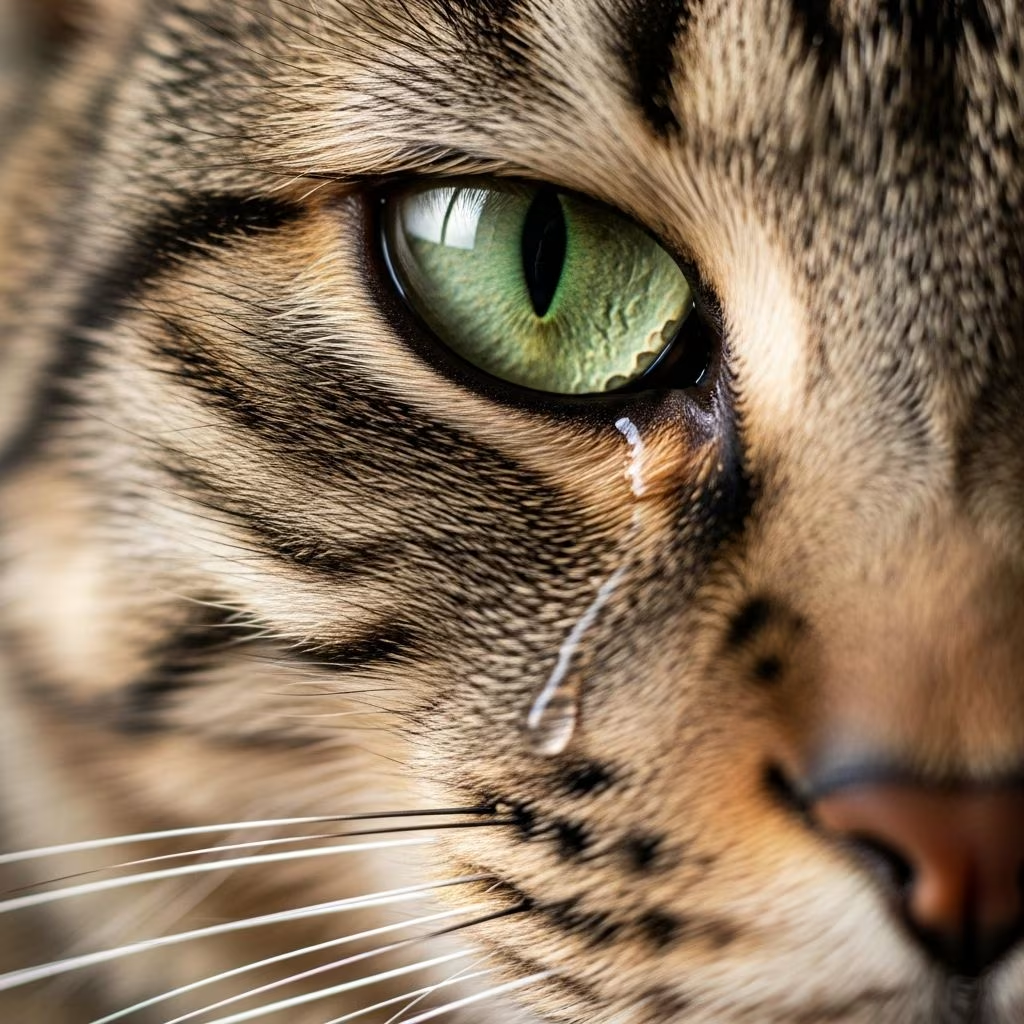
Cats can produce tears, primarily to lubricate and protect their eyes, not to express emotions like sadness as humans do. Understanding feline tear production helps cat owners distinguish normal eye function from potential health issues requiring veterinary attention.
Table of Contents
- Do Cats Produce Tears?
- Why Do Cats Produce Tears?
- Do Cats Cry?
- Excessive Tearing (Epiphora) in Cats
- Dry Eye Syndrome (Keratoconjunctivitis Sicca)
- Tear Duct and Nasolacrimal Issues
- The Schirmer Tear Test in Cats
- When to See a Vet for Cat Eye Issues
- Frequently Asked Questions
Do Cats Produce Tears?
Yes, cats produce tears through specialized glands, including the lacrimal gland at the top outer edge of the eye and the gland of the third eyelid. These glands secrete a tear film consisting of aqueous (watery), mucin (mucous), and lipid (oily) components essential for eye health. Unlike humans, cat tears serve physiological functions rather than emotional expression.
The tear production process in cats is continuous to maintain ocular surface moisture, remove debris, and provide antimicrobial protection. The nasolacrimal duct system drains excess tears from the eyes into the nasal cavity, preventing overflow. Disruptions in this system can lead to visible tearing or dryness.
Research confirms cats’ baseline tear production. For instance, the Schirmer Tear Test 1 (STT-1), a standard diagnostic tool, measures aqueous tear secretion by placing absorbent paper in the conjunctival fornix for 60 seconds. Normal STT-1 values in healthy cats range from approximately 8-22 mm/min, varying slightly by study and conditions.
Why Do Cats Produce Tears?
Tears in cats fulfill critical roles in maintaining eye health:
- Lubrication: The tear film keeps the cornea moist and smooth, enabling clear vision and protecting against friction during blinking.
- Nutrient Delivery: Tears supply oxygen and nutrients to the avascular cornea.
- Debris Removal: Blinking and tear flow flush out dust, allergens, and microbes.
- Antimicrobial Defense: Tears contain lysozyme and immunoglobulins that combat infections.
- pH and Osmolarity Regulation: Maintains optimal ocular surface conditions.
Sympathetic innervation influences tear secretion, with stress potentially increasing production via norepinephrine release, though mechanisms require further study. Factors like breed (e.g., Sphynx cats show lower production and higher blink rates as compensation) and anesthesia affect measurements.
Do Cats Cry?
Cats do not cry tears of emotion like humans. Emotional distress in felines manifests through vocalizations (meowing, yowling), body language (hiding, aggression), or behavioral changes, not watery eyes. Observed tears in cats indicate physical issues, not sadness or pain in the human sense.
While cats experience pain or stress, their tear response is reflexive. Acute stress can elevate STT-1 values from 17.5 mm/min (stress-free) to 22.2 mm/min, remaining within normal ranges but highlighting environmental influences on testing. In contrast, a study found no significant STT difference under simulated stress, suggesting variability.
Excessive Tearing (Epiphora) in Cats
Epiphora occurs when tears overflow due to overproduction or drainage failure. Common causes include:
| Cause | Description |
|---|---|
| Conjunctivitis | Viral (e.g., feline herpesvirus) or bacterial inflammation increases tear production. |
| Corneal Ulcers/Injuries | Reflex tearing protects damaged cornea. |
| Entropion/Ectropion | Eyelid malpositions irritate the eye. |
| Distichiasis/Ectopic Cilia | Abnormal eyelashes cause irritation. |
| Allergies/Glaucoma | Irritation or elevated intraocular pressure. |
Epiphora often presents as wet fur below eyes, staining, or squinting. Treatment targets underlying causes, such as antibiotics for infections or surgery for anatomical defects.
Dry Eye Syndrome (Keratoconjunctivitis Sicca)
Dry eye (KCS) results from insufficient tear production, leading to corneal inflammation, ulceration, and pain. The lacrimal and third eyelid glands fail to produce adequate tears, causing dull, sticky eyes and thick discharge.
Symptoms include:
- Red, inflamed eyes
- Thick, mucoid discharge
- Frequent blinking or squinting
- Corneal opacity or pigmentation
Causes encompass immune-mediated destruction, trauma, or neurological issues. Diagnosis uses STT-1 (<5 mm/min indicates KCS). Lifelong management involves artificial tears, cyclosporine ointment, and antibiotics.
Tear Duct and Nasolacrimal Issues
The nasolacrimal system drains tears; blockages cause epiphora. Congenital absence, infections, or trauma obstruct ducts. Less common in cats than dogs, issues may be present at birth or acquired.
Diagnostic flushing reveals patency. Treatments include flushing, surgery (dacryocystorhinostomy), or stents. Chronic cases risk secondary infections.
The Schirmer Tear Test in Cats
STT-1 quantifies basal and reflex tearing; STT-2 isolates reflex. Normal ranges: STT-1 11-22 mm/min. Stress may elevate values, but cat-friendly handling minimizes artifacts.
Shorter durations (30s) correlate strongly with 60s (r=0.98), aiding fractious cats. Breed variations exist; monitor bilaterally for discrepancies.
When to See a Vet for Cat Eye Issues
Consult a vet if you notice:
- Persistent tearing or discharge
- Redness, cloudiness, or squinting
- Behavioral changes like pawing at eyes
- One eye affected (suggests local issue)
Early intervention prevents complications like ulcers or vision loss. Diagnostics include STT, fluorescein staining, and tonometry.
Frequently Asked Questions (FAQs)
Do cats cry tears when sad?
No, cats don’t produce emotional tears. Tears indicate physical irritation or disease.
What is normal tear production in cats?
STT-1 values of 8-22 mm/min are normal; below 5 mm/min suggests dry eye.
Why does my cat have watery eyes?
Commonly due to infections, allergies, ulcers, or duct blockages.
Can stress cause cat tears?
Acute stress may increase tear production, but values stay normal.
How is dry eye treated in cats?
Artificial tears, cyclosporine, and antibiotics; lifelong management often needed.
References
- Impact of stress on the tear production of healthy cats — PMC/NCBI. 2024. https://pmc.ncbi.nlm.nih.gov/articles/PMC10983608/
- Evaluating tear testing and tear production in cats — EveryCat Health Foundation. 2023. https://everycat.org/cat-health/evaluating-tear-testing-and-tear-production-in-cats/
- Disorders of the Nasal Cavity and Tear Ducts in Cats — Merck Veterinary Manual. 2025. https://www.merckvetmanual.com/cat-owners/eye-disorders-of-cats/disorders-of-the-nasal-cavity-and-tear-ducts-in-cats
- Eye Discharge (Epiphora) in Cats — VCA Animal Hospitals. 2024. https://vcahospitals.com/know-your-pet/eye-discharge-or-epiphora-in-cats
- Eye Discharge (Epiphora) in Cats – Causes, Treatment — Vetster. 2024. https://vetster.com/en/symptoms/cat/eye-discharge
- Ocular surface physiology and aqueous tear secretion in cats — Wiley Online Library. 2021. https://onlinelibrary.wiley.com/doi/10.1111/vop.13051
- Dry Eye Syndrome in Cats — PetMD. 2024. https://www.petmd.com/cat/conditions/eyes/c_ct_keratoconjunctivitis_sicca



