

Can Cats Help with Anxiety? Benefits & Science
In an increasingly stressful world, many people are seeking natural ways to manage anxiety and improve their mental health. One surprising solution may be as simple as spending time with a feline companion. Scientific research has demonstrated that cats can play a significant role in reducing anxiety and promoting emotional well-being. Whether you’re a devoted cat lover or considering adopting a cat, understanding the connection between feline companionship and anxiety relief can help you make informed decisions about your mental health care.
The Science Behind Cats and Anxiety Relief
Multiple peer-reviewed studies have shown that interacting with cats produces measurable physiological changes that reduce anxiety symptoms. When you interact with your cat, your body releases oxytocin, often called the “bonding hormone,” which has been shown to have anxiety-reducing properties and promotes feelings of well-being. Research from the University of California, Davis, found that anxious individuals may actually benefit from cat ownership, as anxiety is associated with increased trust and affection for cats, creating a positive feedback loop.
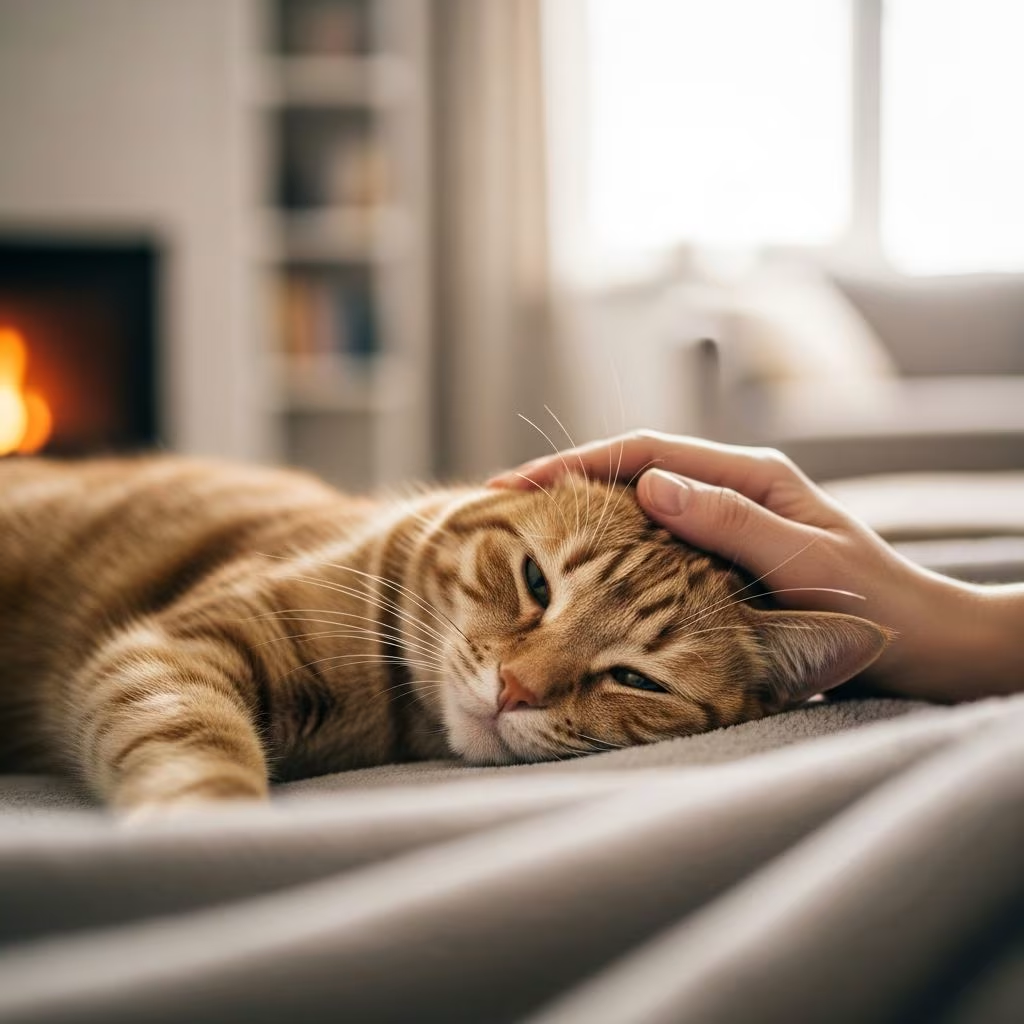
The physiological response to petting a cat is particularly noteworthy. A study from Cornell University’s College of Veterinary Medicine found that petting cats and dogs for just 10 minutes decreased cortisol levels—a primary stress hormone—in saliva samples. This demonstrates that even brief interactions with cats can produce measurable stress-reducing effects that last beyond the immediate interaction.
How Cat Interaction Affects Your Body
Understanding the specific ways that cats affect your physiology can help explain why so many people find relief from anxiety through cat ownership. The mechanisms are complex but well-documented through scientific research.
Heart Rate and Blood Pressure
One of the most consistent findings in research on cats and anxiety is the effect on cardiovascular health. Before engaging in stressful tasks, cat owners demonstrated lower resting heart rates and blood pressure compared to those without pets. During stress-inducing activities, cat owners showed even more impressive results: they perceived challenges as less threatening and maintained lower heart rates and blood pressure throughout the tasks. Additionally, they recovered faster physiologically after stressful situations, suggesting that cats provide lasting protective effects against anxiety.
Stress Hormone Reduction
Cortisol is the body’s primary stress hormone, and elevated levels are associated with chronic anxiety. Research has consistently shown that interactions with cats decrease cortisol levels. The hormone oxytocin, which increases during positive interactions with cats, actively works to suppress cortisol production and activate the parasympathetic nervous system—the part of your nervous system responsible for relaxation and recovery. This creates a natural biochemical pathway through which cat ownership alleviates anxiety symptoms.
Brain Activity and Mood
Interacting with cats has positive effects on brain activity. Research shows that petting a cat activates the prefrontal cortex and inferior frontal gyrus, brain regions associated with emotional regulation, mood improvement, and cognitive function. This activation contributes to both immediate improvements in mood and longer-term psychological health benefits.
Emotional and Psychological Benefits
Beyond the measurable physiological changes, cats provide substantial emotional and psychological support for anxiety sufferers. According to the American Psychiatric Association, cat owners report multiple mental health benefits from their feline companions.
Reduced Feelings of Loneliness
People with cats reported experiencing fewer negative emotions and feelings of isolation compared to those without cats. Notably, single people with cats often reported higher happiness levels than single people without cats, and even than people living with both a cat and a partner. This suggests that cats provide meaningful companionship that significantly impacts emotional well-being and combats the loneliness that often accompanies anxiety.
Companionship and Trust
Cat owners were more likely than dog owners to report that their pets offer companionship, provide a calming presence, and help reduce stress and anxiety (69% of cat owners cited these benefits). Research from UC Davis found that anxious individuals often develop particularly strong bonds with their cats, suggesting that those who most need emotional support from a companion animal may be the ones most likely to benefit from cat ownership.
Unconditional Love and Support
According to recent surveys, 69% of cat owners reported that their cats provide unconditional love and support, while 63% described their cats as true friends. This sense of being loved and accepted without judgment is particularly valuable for individuals struggling with anxiety, who may feel self-conscious about their mental health challenges.
Cats and Anxiety in Special Populations
Research has demonstrated that cats can be particularly beneficial for specific groups dealing with anxiety and related conditions.
Children with Autism Spectrum Disorder
A groundbreaking study from the University of Missouri examined the effects of cat adoption on families with children diagnosed with autism spectrum disorder. Researchers found that families reported an instant bond between the child with autism and their new cat, with significant improvements in multiple areas. Children who had cats demonstrated increased empathy, decreased separation anxiety, and fewer problem behaviors including bullying, hyperactivity, and inattention. These improvements are particularly significant because anxiety and social difficulties are core challenges for many children with autism, making cats a potentially valuable therapeutic tool for this population.
Pet Selection Matters
The quality of the human-cat relationship depends partly on the individual cat’s temperament. In the autism study, adopted cats were carefully screened for calm temperament to ensure they were good matches for children with autism. This highlights the importance of selecting cats with appropriate personality traits when using them specifically for anxiety management.
Key Benefits at a Glance
- Stress Hormone Reduction: Measurable decreases in cortisol levels after just 10 minutes of interaction
- Lower Cardiovascular Stress Response: Reduced heart rate and blood pressure during challenging situations
- Improved Mood: Activation of brain regions responsible for emotional regulation and well-being
- Decreased Isolation: Reduced feelings of loneliness and improved emotional connection
- Faster Recovery: Quicker physiological recovery from stressful situations
- Enhanced Emotional Bonding: Increased oxytocin production promoting trust and affection
- Improved Social Skills: Particular benefits for children with autism, including increased empathy
Making the Most of Cat Ownership for Anxiety Relief
If you’re considering getting a cat to help with anxiety, or if you already own a cat and want to maximize the anxiety-reducing benefits, certain approaches can enhance the positive effects.
Consistency Matters
Research indicates that the positive effects of cat ownership increase with duration. The benefits of even short interactions with a cat are more pronounced if you have owned your cat for more than two years. This suggests that building a long-term relationship with your cat strengthens the mental health benefits over time.
Physical Contact is Key
Direct physical interaction, particularly petting and gentle stroking, appears to be the most effective way to access the stress-reducing benefits of cats. The frequency of petting your cat was inversely correlated with the rate of decrease in parasympathetic activity, meaning that more frequent gentle contact produces stronger physiological benefits.
Create a Calm Environment
Since cats themselves can be stressed by certain environmental factors, creating a calm home environment supports both your anxiety management and your cat’s well-being. This creates a positive feedback loop where a relaxed cat promotes relaxation in their owner, further enhancing the anxiety-reducing effects.
Important Considerations and Research Limitations
While the research on cats and anxiety is generally positive, it’s important to understand the nuances and limitations of current scientific knowledge.
Individual Variation
The benefits of cat ownership for anxiety vary among individuals. Some people experience dramatic improvements in anxiety symptoms, while others notice more modest effects. Individual personality traits, living situations, and the specific cat involved all influence the degree of benefit. Additionally, some research suggests that the relationship between stress hormones and anxiety relief is more complex than previously understood, involving multiple interconnected biological systems.
Not a Replacement for Professional Treatment
While cats can significantly reduce anxiety symptoms, they should not be considered a replacement for professional mental health treatment. Individuals with moderate to severe anxiety disorders should continue working with mental health professionals alongside pursuing the benefits of cat ownership.
Research Continues to Evolve
Scientists emphasize that while current research is promising, larger and more detailed studies are needed to fully understand the mechanisms by which cats reduce anxiety. As research continues to develop, our understanding of the human-cat relationship and its mental health benefits will likely become even more sophisticated.
Frequently Asked Questions
Q: How quickly do cats help reduce anxiety?
A: Research shows that even 10 minutes of interaction with a cat can reduce cortisol levels and lower heart rate and blood pressure. However, the benefits are typically more pronounced when you have owned your cat for longer than two years, suggesting that building a relationship over time increases the anxiety-reducing effects.
Q: Do all cat breeds help with anxiety equally?
A: While all cats can provide anxiety-reducing benefits, individual temperament matters more than breed. Calm, affectionate cats who enjoy human interaction typically provide greater benefits than anxious or aloof cats. When selecting a cat specifically for anxiety management, consider the individual cat’s personality and ability to form bonds with humans.
Q: Can cat ownership help with severe anxiety disorders?
A: Cats can significantly reduce anxiety symptoms and provide valuable emotional support, but they should complement, not replace, professional mental health treatment for severe anxiety disorders. If you have been diagnosed with an anxiety disorder, work with a mental health professional to develop a comprehensive treatment plan that may include cat ownership as a supportive element.
Q: Are there any downsides to cat ownership for people with anxiety?
A: For most people, cat ownership provides benefits with minimal downsides. However, some people with anxiety may find that responsibility for a pet increases stress. Additionally, people with cat allergies should not pursue cat ownership for anxiety relief. It’s important to honestly assess whether cat ownership will feel supportive or burdensome in your specific situation.
Q: Can cats help with anxiety in children?
A: Research specifically supports the anxiety-reducing benefits of cats for children with autism spectrum disorder, with studies showing decreased separation anxiety and improved emotional well-being. For other children, cats can provide similar benefits as they do for adults, though supervision and appropriate socialization are important.
Q: How does petting a cat reduce anxiety?
A: Petting a cat triggers several physiological responses: it increases oxytocin (the bonding hormone), decreases cortisol (stress hormone), lowers heart rate and blood pressure, and activates brain regions responsible for emotional regulation. These combined effects create a measurable reduction in anxiety symptoms.
References
- Effects of Interactions with Cats in Domestic Environment on Physiological and Psychological Stress Responses of Owners — National Institutes of Health, PubMed Central. 2023-08-10. https://pmc.ncbi.nlm.nih.gov/articles/PMC10340037/
- Feeling Anxious? Why a Cat May Be Your Purr-fect Companion — University of California, Davis. 2020. https://www.ucdavis.edu/news/feeling-anxious-why-cat-may-be-your-purr-fect-companion
- Cats may help increase empathy, decrease anxiety for kids with autism — University of Missouri Research Center for Human-Animal Interaction. 2021. https://showme.missouri.edu/2021/cats-may-help-increase-empathy-decrease-anxiety-for-kids-with-autism-2/
- Benefits of Being a Cat Lover According to Science — Healthline Media. 2024. https://www.healthline.com/health/benefits-of-being-cat-lover
- Pet Your Cat to Reduce Stress — Cornell University College of Veterinary Medicine. https://www.vet.cornell.edu/pet-your-cat-reduce-stress
- Americans Note Overwhelming Positive Mental Health Impact of Pets — American Psychiatric Association. https://www.psychiatry.org/news-room/news-releases/positive-mental-health-impact-of-pets



