

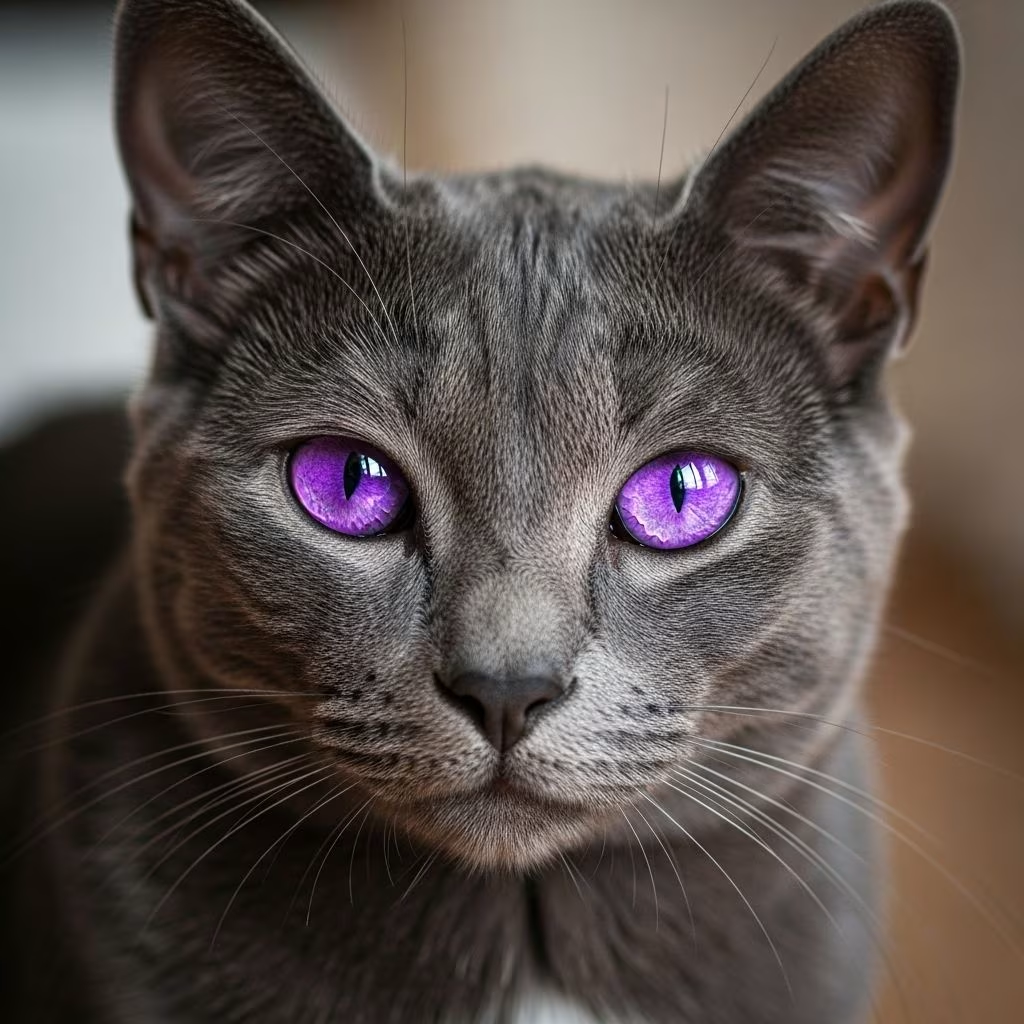
While fairy tales might paint pictures of mystical purple-eyed cats, the reality is more grounded in genetics and biology. Cats cannot have true purple eyes like those in legends, but certain rare conditions produce a lilac or violet-like hue in albino or point breeds. This article dives deep into feline eye color genetics, debunking myths and explaining what determines your cat’s gaze.
What Determines Cat Eye Color?
A cat’s eye color is primarily governed by genetics, stemming from physical characteristics passed down through generations. The key players are melanocytes—pigment-producing cells in the iris that dictate melanin levels.
- No melanocytes: Results in blue eyes, as light scatters without pigment.
- Low melanocytes: Produces green or yellow eyes.
- Moderate levels: Leads to orange or copper shades.
- High melanocytes: Creates intense gold, amber, or brown eyes.
Eye color develops post-birth. All kittens start with blue eyes due to immature melanocytes. Pigment distribution begins around 3-6 weeks, stabilizing by 3-4 months. Factors like breed, coat color linkage, and mutations influence the final hue.
Can Cats Have Violet or Purple Eyes?
True purple eyes do not exist in cats—or humans—due to the absence of genetic mechanisms for purple pigmentation. What appears ‘purple’ is often a lilac or reddish-blue tint from low melanin combined with blood vessel visibility in the iris.
In humans, violet eyes (extremely rare) arise from albinism or Alexandria’s genesis myth, but genetics like OCA2 and HERC2 on chromosome 15 regulate melanin, not producing purple. Cats follow similar rules: no mutations yield purple.
However, some cats exhibit a ‘lilac’ appearance:
- Albino cats: Complete albinism (c/c genotype) lacks all melanin, resulting in pinkish eyes that can look lilac under certain lights due to vascular effects.
- Pointed breeds: Like Siamese, with cs/cs genotype, show blue eyes paling to lilac in extremes.
Vet consensus: No cat has purple eyes; lilac is the closest optical illusion.
Cat Eye Colors Explained
Feline eyes span a spectrum beyond human norms, tied to coat genetics via the C locus (colorpoint genes) and melanin types: eumelanin (black/brown) and phaeomelanin (red/yellow).
| Eye Color | Melanin Level | Common Breeds/Conditions |
|---|---|---|
| Blue | Absent/Low | Siamese, Ragdoll, white cats, kittens |
| Green | Low-Moderate | American Shorthair, Oriental Shorthair |
| Gold/Amber | Moderate-High | British Shorthair, Bengal |
| Orange/Copper | High | Manx, Ocicat |
| Odd-Eyed (Heterochromia) | Varies | Turkish Van, Sphynx |
Heterochromia, or odd-eyed cats, feature one blue and one colored eye. Often linked to white spotting gene (W), it’s common in Turkish Van cats where 15-20% exhibit it. Causes include uneven melanin migration during fetal development.
The Genetics of Cat Eye Color
Cat eye color genetics mirror human but with unique twists, dominated by the C locus alleles:
- C (full color): Normal melanin, varied eyes.
- b (Burmese): Temperature-sensitive, darker points.
- cs (Siamese): Blue points from heat-inhibited melanin.
- cb (Tonkinese): Mink/aqua eyes.
- c (albino): No pigment, pink/lilac eyes.
Sex-linked orange gene (O on X chromosome) influences copper eyes in females (tortoiseshell/calico). Agouti (A), brown (B), and dilute (D) loci modify shades.
Inheritance: Eye color links to coat. White cats (epistatic W gene) often have blue eyes from melanocyte failure to migrate to fur/eyes.
Health Concerns with Unique Eye Colors
Rare colors signal potential issues:
- Blue eyes in non-Whites: Linked to deafness (80% in white cats with blue eyes).
- Albinism: Photophobia, skin cancer risk, vision impairment from nystagmus.
- Heterochromia: Usually benign, but check for injury or tumors.
Regular vet checks essential. Blue-eyed adults may need ear exams; albinos require UV protection.
Breeds with the Rarest Eye Colors
Certain breeds showcase unique eyes:
- Ojos Azules: Intense blue eyes regardless of coat (rare, breeding halted due to defects).
- Khao Manee: Odd-eyed diamond points from Thailand.
- Turkish Van: Famous odd-eyes with white coats.
- Siamese: Vivid blue ‘sapphire’ eyes.
- Albino variants: Sphynx albinos with lilac glow.
Breeders select for color, but ethics prioritize health.
Caring for Your Cat’s Eyes
Maintain eye health:
- Weekly wipes with saline for discharge.
- Monitor cloudiness, squinting, redness—signs of infection/ulcers.
- UV-safe environments for light-eyed cats.
- Annual vet vision checks, especially seniors.
Diet with taurine supports retinal health.
Frequently Asked Questions (FAQs)
Can cats have purple eyes?
No, true purple eyes aren’t possible. Lilac hues in albinos mimic it via low melanin and light.
Why do some cats have blue eyes as adults?
Genetic points (Siamese) or white coats prevent melanin development.
Is heterochromia harmful?
Typically cosmetic and harmless; developmental, not disease.
Do eye colors change with age?
Kittens’ eyes shift 3-12 weeks; adults stable unless illness.
Can diet affect eye color?
No, genetics rule; nutrition prevents issues like cataracts.
References
- Purple Eyes: Unraveling the Myth and Genetics — Debby Burk Optical. 2023-05-15. https://debspecs.com/blog/-purple-eyes-unraveling-the-myth-and-genetics/
- Can Cats Have Purple Eyes? Vet-Reviewed Facts — Catster. 2024-08-20. https://www.catster.com/lifestyle/can-cats-have-purple-eyes/
- Why do cats have different coloured eyes? — Cats Protection. 2023-11-10. https://www.cats.org.uk/cats-blog/why-do-cats-have-different-coloured-eyes
- Heterochromia — Wikipedia (citing primary genetic sources). 2025-01-01. https://en.wikipedia.org/wiki/Heterochromia
- Cat Coloring – Where Do Eye and Coat Colors Come From? — Colorado Feline Foster Rescue. 2022-09-12. https://coloradofelinefosterrescue.org/cat-coloring-where-do-eye-and-coat-colors-come-from/
- Cat Genetics 2.0: Colours — Laboratoire de génétique vétérinaire. 2024-03-28. https://labgenvet.ca/en/cat-genetics-2-0-colours/



